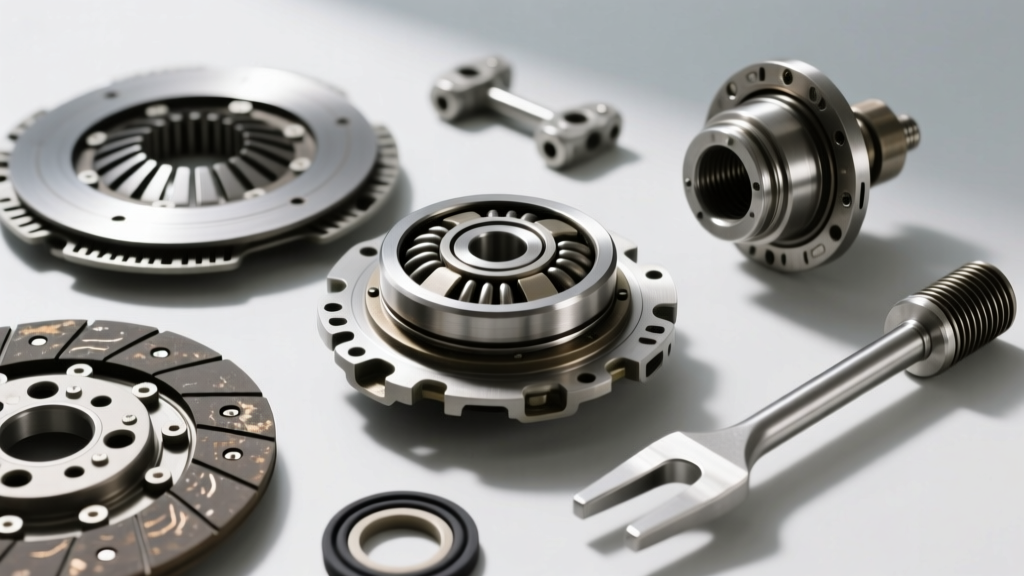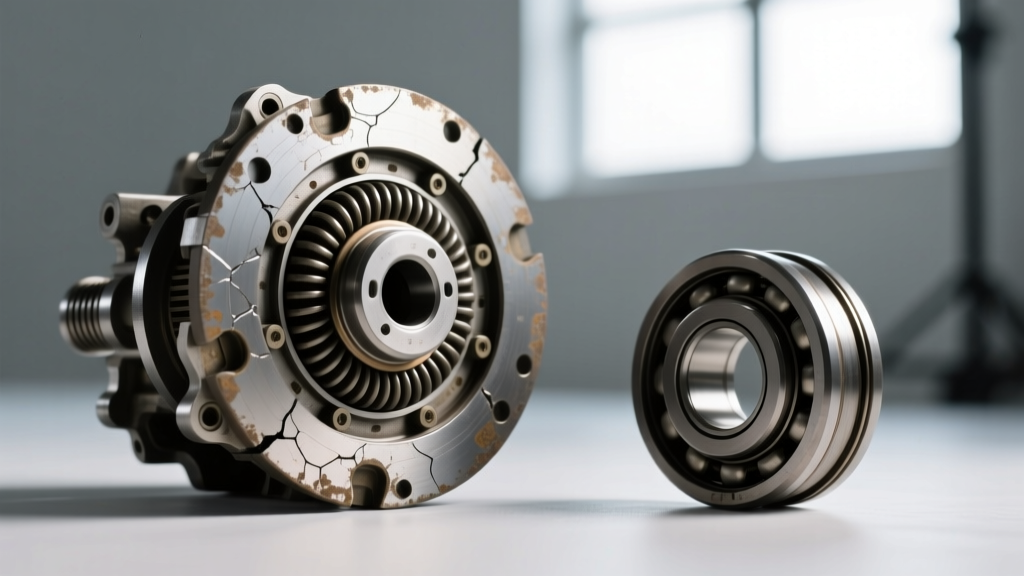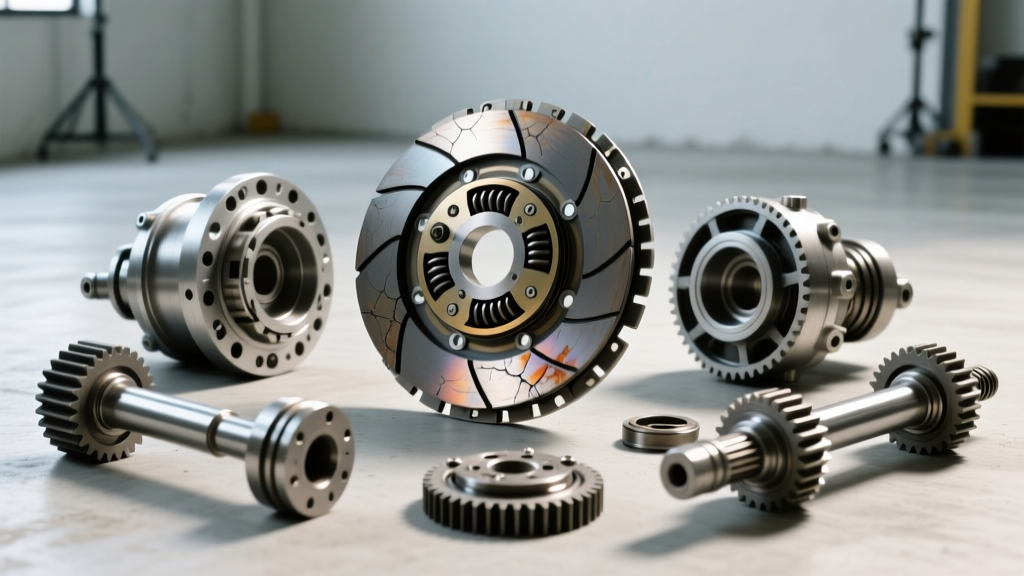
Executive Summary: The 2026 Clutch Manufacturer Landscape
When diagnosing manual transmission drivetrains, identifying the root cause of a failure is only half the battle; understanding how specific clutch manufacturers engineer their friction materials, diaphragm springs, and hub assemblies is the other. As of 2026, the aftermarket has seen a massive shift toward high-torque 4-cylinder engines and heavily modified diesel platforms, placing unprecedented stress on clutch assemblies. A slipping clutch or severe engagement chatter is rarely a random event—it is a mechanical signature dictated by the manufacturer's design philosophy and the installer's adherence to precision tolerances.
This buyer's guide and diagnostic manual compares the top five clutch manufacturers (LuK, Sachs, Exedy, ACT, and South Bend) through the lens of failure mode analysis. By understanding the inherent failure signatures of each brand, you can make informed purchasing decisions and accurately diagnose whether a failure stems from a manufacturer defect, application mismatch, or installer error.
Brand-by-Brand Failure Signatures & Root Cause Analysis
1. LuK (Schaeffler Group): The DMF & CSC Specialists
LuK dominates the European and domestic OEM replacement market, particularly with their RepSet Pro kits that include the Concentric Slave Cylinder (CSC) and Dual-Mass Flywheel (DMF). LuK's engineering prioritizes NVH (Noise, Vibration, and Harshness) dampening over ultimate clamping force.
- Common Failure Mode: Low-RPM Chatter and DMF Internal Spring Sag.
- Root Cause Analysis: The internal torsional springs within the DMF (e.g., part prefix 05-XXX for VW/Audi 2.0 TSI applications) are designed to absorb idle harmonics. When subjected to aggressive tuning (Stage 2+ ECU calibrations exceeding 280 lb-ft of torque), these springs prematurely sag or fracture. This results in a metallic clunking at idle and severe chatter during 1st and 2nd gear engagement.
- Installer Error Signature: CSC internal seal blowout. If the hydraulic lines are not properly bled, or if contaminated DOT 4 fluid is introduced, the CSC seals degrade, leading to a sinking pedal and incomplete disengagement.
2. Sachs (ZF Group): The SAC Mechanism & European OEM
Sachs, a subsidiary of ZF, is the gold standard for BMW, Porsche, and Mercedes-Benz manual platforms. Their hallmark technology is the SAC (Self-Adjusting Clutch), which utilizes a wear-compensating sensor ring to maintain consistent pedal feel over the friction disc's lifespan.
- Common Failure Mode: Immediate Pedal Stiffness or Slipping Post-Installation.
- Root Cause Analysis: The SAC pressure plate contains an adjustment ring that must be reset using a specialized SAC removal tool before installation. According to Schaeffler's technical documentation and ZF service bulletins, forcing the SAC pressure plate onto the flywheel without resetting the compensator ring will permanently bind the mechanism. The diaphragm spring fingers will sit at the wrong depth, resulting in a rock-hard pedal or immediate clutch slip under load.
- Torque Spec Note: Sachs M8x1.25 pressure plate bolts must be torqued to exactly 22 Nm (16 lb-ft) in a strict star pattern to prevent warping the SAC sensor ring.
3. Exedy: OEM Honda/Subaru & Hyper Single Racing
Exedy supplies OEM clutches for nearly all Japanese automakers and produces the legendary Hyper Single and Stage 1 organic replacements. Their hub assemblies feature highly tuned damper springs designed for specific engine harmonic frequencies.
- Common Failure Mode: Hub Damper Spring Fatigue and Rattle (Subaru EJ257 / Honda K-Series).
- Root Cause Analysis: Exedy's OEM-style organic discs use multi-stage damper springs. On modified Subaru WRX STI platforms running E85 and producing over 350 lb-ft of torque at the wheels, the primary damper springs can bottom out and fatigue. This manifests as a persistent metallic rattle at neutral that disappears when the clutch pedal is depressed.
- Application Mismatch: Using an Exedy Stage 1 organic disc on a track-focused Honda K20 build will result in rapid friction material glazing due to the disc's inability to handle the thermal load of aggressive launch control.
4. ACT (Advanced Clutch Technology): High-Clamp Performance
ACT is the premier choice for high-horsepower street and track builds. Their Heavy Duty (HD) pressure plates increase clamp load by 25% to 50% over OEM, utilizing a Monoloc hub design for extreme durability.
- Common Failure Mode: Input Shaft Galling and Throw-Out Bearing Wear.
- Root Cause Analysis: ACT's unsprung puck clutches (e.g., the XT-Race line) offer zero torsional dampening. While this provides instantaneous engagement for drag racing, the lack of dampening transfers severe engine idle harmonics directly into the transmission input shaft. Over time, this causes the splines on the clutch disc to gall against the input shaft splines, leading to a dragging clutch and gear clash.
- Buyer's Note: For daily-driven performance cars, always select ACT's sprung hub variants (e.g., ACT HD-SS) to protect the transmission synchros and input shaft. Reference the ACT technical installation guides for precise alignment tool requirements.
5. South Bend Clutch: Heavy-Duty Diesel & Kevlar Friction
South Bend Clutch (SBC) specializes in heavy-duty towing and diesel applications (Cummins 5.9L/6.7L, Ford PowerStroke). They are famous for utilizing Kevlar and ceramic friction materials paired with multi-disc configurations.
- Common Failure Mode: Kevlar Glazing and High-RPM Slipping.
- Root Cause Analysis: Kevlar requires a specific, rigorous bedding-in process to transfer an even layer of friction material to the flywheel. If a buyer installs an SBC Stage 3 Daily (Kevlar organic) and immediately drives it on the highway or performs heavy towing within the first 500 miles, the Kevlar will glaze. The root cause is thermal shock before the resin in the Kevlar weave has properly cured.
- Pricing & Value: SBC dual-disc setups (e.g., SDD3250-6) range from $1,400 to $1,800. While expensive, their failure rate is near zero when the ARP flywheel bolts are torqued to the required 125 lb-ft and the bedding procedure is followed.
Diagnostic Matrix: Symptoms vs. Manufacturer Defects vs. Installer Error
Use this matrix to cross-reference your drivetrain symptoms against common root causes before condemning a specific manufacturer.
| Failure Symptom | Root Cause | Commonly Affected Brands | Diagnostic / Correction Protocol |
|---|---|---|---|
| Clutch Chatter at 1,500 RPM | Flywheel hotspotting or DMF spring sag | LuK (DMF), Exedy (OEM) | Check flywheel runout with a dial indicator (Must be < 0.005"). Replace DMF with a Single-Mass Flywheel conversion if tuned. |
| Pedal Sinks to Floor | CSC seal failure or master cylinder bypass | LuK RepSet Pro, OEM Sachs | Inspect bellhousing for DOT 4 fluid. Bleed system using a pressure bleeder at 15 PSI. |
| Slipping in 4th/5th Gear | SAC ring bind or friction disc glazing | Sachs (SAC), South Bend (Kevlar) | Verify SAC reset tool was used. For Kevlar, drag-race bed the clutch to burn off glaze. |
| Gear Clash on Downshifts | Input shaft spline galling / Dragging clutch | ACT (Unsprung Pucks) | Remove transmission. Inspect input shaft splines for metal burrs. Apply high-moly spline grease. |
Deep Dive: Critical Failure Modes & Precision Diagnostics
1. Marced Input Shaft Splines (The Chatter Culprit)
When diagnosing clutch chatter, mechanics often blame the friction material or the pressure plate. However, root cause analysis frequently points to the interface between the clutch disc hub and the transmission input shaft. If the splines are dry or damaged during installation, the disc cannot float axially. During engagement, the disc binds, snaps forward, and causes violent chassis chatter. Pro-Tip: Always use a minimal amount of high-molybdenum grease (such as ARP Spline Lube) on the input shaft. Never use standard wheel bearing grease, which can sling onto the friction material and cause catastrophic slipping.
2. Diaphragm Spring Fatigue & Thermal Runaway
Diaphragm springs are rated for specific clamp loads (e.g., an ACT HD pressure plate for a Honda K20 generates roughly 3,200 lbs of clamp load compared to the OEM 2,100 lbs). When a clutch slips, even microscopically, it generates immense heat. This heat transfers through the pressure plate ring into the diaphragm spring fingers. Once the steel exceeds 400°F (204°C), it loses its temper and metallurgical memory. The root cause of a clutch that "suddenly" slips without warning is often a prior event of minor slipping that annealed the spring fingers, permanently reducing the clamp load.
3. Hydraulic Release System Preload Mismatches
In modern hydraulic setups (e.g., GM LS T56 Magnum or Ford MT-82), improper release bearing preload is a massive source of premature failure. If the pushrod length is not adjusted to provide the correct air gap (typically 0.100" to 0.150" between the release bearing face and the diaphragm fingers), the bearing will ride constantly. This generates friction, melts the bearing collar, and bends the diaphragm fingers, leading to a heavy pedal and incomplete engagement. Always measure the air gap with a feeler gauge through the inspection window before finalizing the bellhousing torque sequence.
Buyer's Decision Framework: Selecting the Right Brand for Your Drivetrain
Choosing among the best clutch manufacturers requires matching the brand's engineering strengths to your specific torque output and driving style. Use the following 2026 buyer's framework:
- For OEM Replacements & Daily Commuting: Buy LuK or Sachs. Do not deviate from their DMF and SAC designs unless you are prepared to sacrifice NVH for a single-mass conversion. Budget: $300 - $600.
- For Mildly Modified Street Cars (Stage 1/2): Buy Exedy Stage 1 or ACT Heavy Duty Organic (Sprung Hub). These provide a 20-30% increase in torque capacity while retaining daily drivability. Budget: $500 - $800.
- For Track / Drag / Unsprung Performance: Buy ACT XT-Race or Puck designs. Accept that NVH will increase and ensure your transmission synchros are upgraded to handle the shock loads. Budget: $700 - $1,100.
- For Heavy Towing & Diesel (Cummins/PowerStroke): Buy South Bend Clutch. Their Kevlar and dual-disc setups are unmatched for high-torque, low-RPM towing scenarios, provided you strictly follow their 500-mile bedding procedure. Budget: $900 - $2,000+.
Conclusion
Diagnosing clutch system symptoms requires looking past the immediate failure and understanding the mechanical intent of the manufacturer. Whether you are dealing with a seized Sachs SAC ring, a glazed South Bend Kevlar disc, or a chattered LuK DMF, the root cause almost always traces back to application mismatch, thermal abuse, or a failure to adhere to precise installation torque specs and runout tolerances. By leveraging this failure mode analysis, you can select the correct manufacturer for your 2026 build and ensure your drivetrain survives the torque you put to the ground.
For further reading on drivetrain tolerances and friction material science, consult the technical whitepapers provided by the South Bend Clutch Tech Info Portal and SAE International automotive engineering databases.