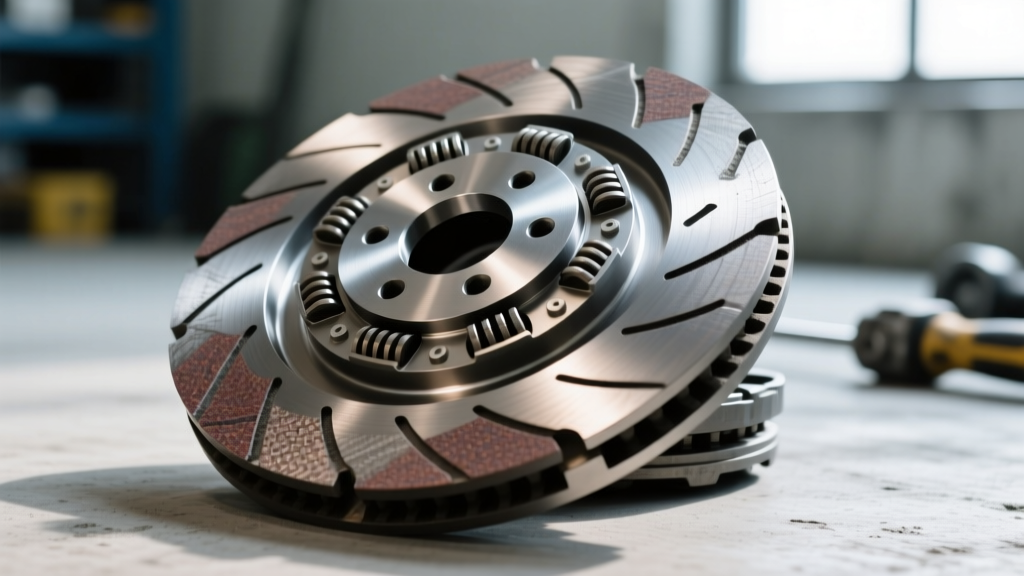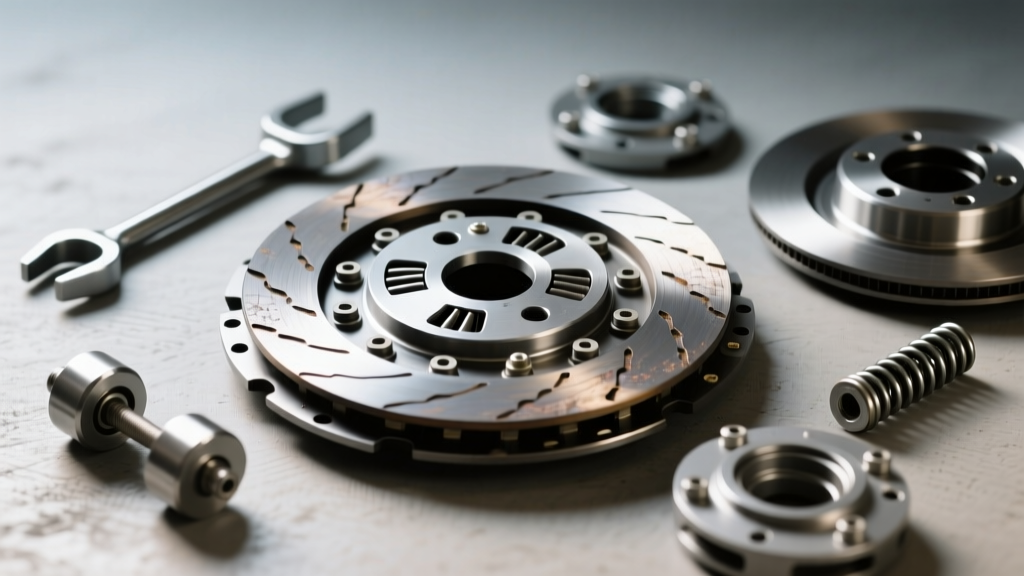
The Heart of the Manual Transmission: Understanding the Pressure Plate
When you decide to upgrade or replace the manual transmission components in your vehicle, you will quickly encounter the term 'clutch kits.' For beginners, a clutch kit can seem like a mysterious box of heavy metal parts. However, the true muscle of this assembly lies in a single, critical component: the pressure plate. As we navigate the 2026 aftermarket landscape, where street-driven vehicles are routinely pushing 600 to 1,000 wheel-horsepower, understanding how a pressure plate functions—and which type to choose—is no longer just for professional drag racers. It is essential knowledge for anyone building a reliable street car, track toy, or weekend cruiser.
At its core, the manual clutch system is a mechanical sandwich. The flywheel is bolted directly to the engine crankshaft, spinning at engine RPM. The clutch disc (the friction material) sits against the flywheel. The pressure plate is bolted over the disc, clamping it tightly against the flywheel to transfer engine torque to the transmission input shaft. When you press the clutch pedal, the release bearing pushes against the pressure plate's springs, lifting the clamping surface away from the disc and interrupting power flow. Selecting the right pressure plate dictates your car's drivability, pedal feel, and ultimate torque capacity.
Diaphragm vs. Borg & Beck: The Two Dominant Designs
If you are shopping for clutch kits, you will primarily encounter two distinct pressure plate architectures. Each has a unique mechanical leverage ratio, spring design, and ideal use case.
1. The Diaphragm Pressure Plate
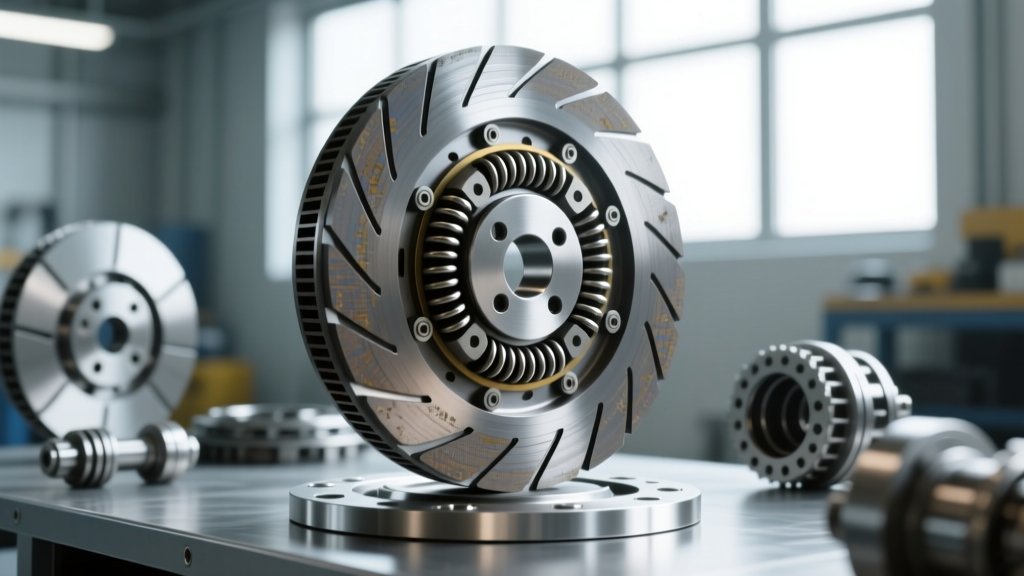
The diaphragm style is the undisputed standard for modern manual vehicles, from a 2005 Subaru WRX to a 2024 Ford Mustang Dark Horse. Instead of multiple individual coil springs, it uses a single, large conical spring (the diaphragm spring) with fingers extending inward toward the center.
Why beginners love it: Diaphragm plates offer a progressive pedal feel. As you press the clutch pedal and the fingers are pushed inward, the spring actually passes over-center, meaning the pedal effort decreases at the end of the stroke. This makes sitting in stop-and-go traffic far less fatiguing. Furthermore, diaphragm plates are less susceptible to centrifugal force at high RPMs. In older multi-spring designs, high RPMs can cause the springs to bow outward and lose clamping pressure; the diaphragm design inherently resists this, making it incredibly reliable for high-revving engines like the Honda K20 or Ford Coyote V8.
2. The Borg & Beck (Multi-Finger) Pressure Plate
Often referred to as a 'three-finger' or 'multi-finger' design, the Borg & Beck style relies on multiple heavy-duty coil springs and distinct release levers. This is the classic design found in vintage muscle cars, early Broncos, and dedicated drag racing applications.
Where it shines: According to the engineers at McLeod Racing, the Borg & Beck design provides immense, immediate clamping force with a very direct, mechanical pedal feel. However, the pedal effort is significantly higher than a diaphragm plate, and it does not have the 'over-center' relief. It is generally not recommended for daily-driven modern builds unless you are restoring a classic vehicle to factory specifications or building a dedicated strip car where heavy pedal effort is irrelevant.
Clamping Force vs. Pedal Effort: The Inevitable Trade-Off
The most common mistake beginners make when buying clutch kits is assuming 'more clamping force is always better.' Clamping force is measured in pounds (lbs) and dictates how much engine torque the clutch can hold before slipping. However, increasing clamping force directly increases pedal effort. Below is a breakdown of what to expect in the current market.
| Pressure Plate Tier | Avg. Clamping Force | Pedal Effort vs. OEM | Ideal Application | Estimated Kit Price (2026) |
|---|---|---|---|---|
| OEM Replacement | 1,800 - 2,200 lbs | 1:1 (Baseline) | Daily driving, stock engines | $150 - $250 |
| Heavy Duty (HD) Single | 2,800 - 3,200 lbs | 15% - 30% Stiffer | Mild bolt-ons, tuning, towing | $400 - $650 |
| Racing / Puck Single | 3,500 - 4,500+ lbs | 40% - 60% Stiffer | Track use, drag racing, no daily | $500 - $800 |
| Twin-Disc (Modular) | 2,400 lbs (x2 surfaces) | 10% - 20% Stiffer | High HP street/track (600+ whp) | $1,200 - $2,500 |
Note: Pricing reflects complete clutch kits including the disc, pressure plate, release bearing, and alignment tool.
The 2026 Solution: Twin-Disc Kits for High Horsepower
If you are building a modern street car making 700+ wheel-horsepower (such as a supercharged LS3 swap or a built Nissan VR38DETT), you might look at the table above and panic. A single-disc plate with 4,500 lbs of clamping force will make your left leg feel like it is going to the gym, and the aggressive 'puck' friction material required to handle that torque will make the car nearly impossible to drive smoothly in a parking lot.
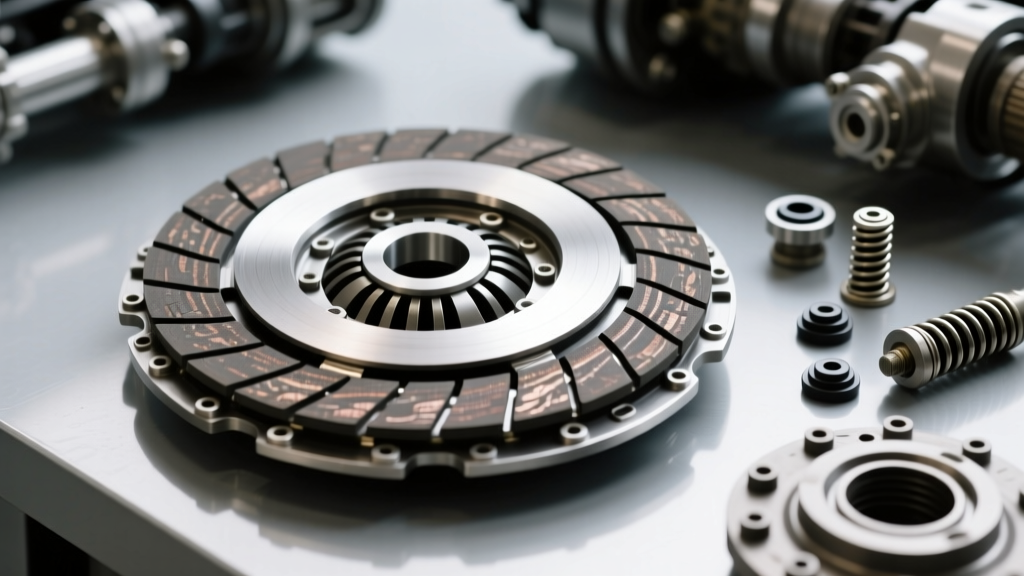
The modern solution is the Twin-Disc Clutch Kit. By adding a second clutch disc and an intermediate 'floater' plate, you double the friction surface area. This allows manufacturers like ACT Clutches to use a much lighter, street-friendly diaphragm spring (e.g., 2,400 lbs of clamping force) while still achieving the torque capacity of a brutal 4,800 lb single-disc setup. You get massive holding power with a pedal that feels remarkably close to stock.
Installation Realities: Torque Specs and Alignment
Selecting the right kit is only half the battle; installing it correctly is where beginners often fail. A pressure plate must be installed with absolute precision to avoid warping the diaphragm spring or causing premature release bearing failure.
- Flywheel Resurfacing: Never install a new pressure plate on a glazed or grooved flywheel. For dual-mass flywheels (common in modern European cars), replacement is usually mandatory as they cannot be machined. For single-mass cast or billet steel flywheels, a machine shop must remove 0.010' to 0.020' of material to ensure a perfectly flat mating surface.
- Alignment is Mandatory: The clutch disc must be perfectly centered on the pilot bearing. Always use the plastic alignment tool included in your clutch kit. If the disc is off-center by even a millimeter, the transmission input shaft will not slide through the splines, and you risk bending the disc hub or damaging the pilot bearing.
- Pressure Plate Torque Sequence: The bolts securing the pressure plate to the flywheel are under immense stress. For standard M8x1.25 bolts (common on GM LS and Ford Modular engines), the torque spec is typically 22 to 25 lb-ft. For larger 3/8-16 bolts found on big block applications, expect 30 to 35 lb-ft. Always use a star-pattern sequence, tightening in increments of 5 lb-ft to draw the plate down evenly. Uneven tightening will permanently distort the pressure plate housing.
- Engine-to-Block Torque: While you are in there, ensure the flywheel itself is torqued correctly. For example, GM LS engine flywheel bolts require 74 lb-ft (often with a thread locker), while Ford Coyote 5.0L flywheel bolts require 59 lb-ft.
Expert Break-In Tip: After installing a new organic or Kevlar clutch kit, you must bed the friction material to the flywheel and pressure plate. For the first 300 to 500 miles, avoid aggressive launches, high-RPM shifts, and stop-and-go traffic if possible. Drive conservatively in higher gears at lower RPMs to generate moderate heat, which glazes the friction surfaces evenly and prevents permanent 'hot spots' on your new pressure plate.
Final Thoughts on Selection
Choosing the right pressure plate within your clutch kit requires an honest assessment of how you drive. If your car sees 90% street use, prioritize a diaphragm-style heavy-duty single disc or a modular twin-disc setup to preserve your left leg and maintain drivability. Save the brutal, multi-finger Borg & Beck racing plates for the dedicated track cars where every ounce of clamping force matters and comfort is an afterthought. By matching the pressure plate architecture and clamping force to your actual torque output and use case, you will build a manual drivetrain that is both bulletproof and a joy to shift.