The Hidden Variable in Clutch Plate Replacement Cost: Clamp Load
When enthusiasts and mechanics evaluate a failing manual transmission, the immediate focus is often the baseline clutch plate replacement cost. In 2026, a standard OEM-style replacement for a daily driver ranges from $950 to $1,500 at an independent shop, factoring in labor, fluid, and standard organic discs. However, for modified platforms—such as a supercharged 5.3L LS, a high-boost Honda K20, or a track-prepped Ford Coyote—simply swapping the friction disc without understanding pressure plate clamp load selection is a recipe for catastrophic mechanical and financial failure.
Clamp load, measured in pounds (lbs) or Newtons (N), is the axial force the pressure plate exerts on the clutch disc against the flywheel. Selecting the wrong clamp load doesn't just result in poor drivability; it fundamentally alters the long-term clutch plate replacement cost by accelerating wear on the friction material, flywheel, and transmission input shaft.
Diaphragm vs. Multi-Finger Spring Mechanics
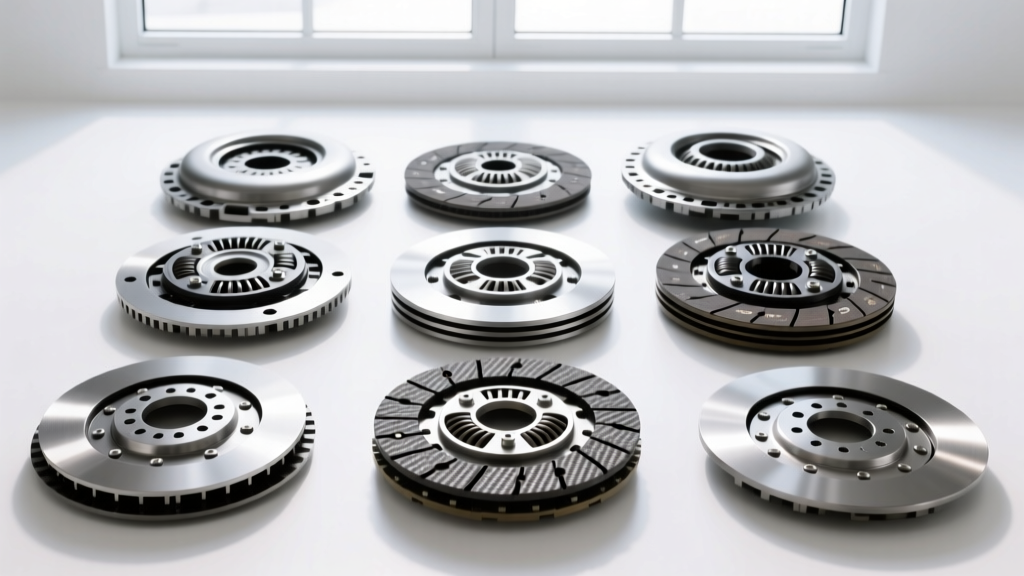
To understand clamp load, you must understand the spring mechanism generating it. Modern performance clutches primarily utilize two designs:
- Diaphragm Springs: The industry standard for street and mild track use. A single, conical belleville spring provides a progressive clamping force. As the friction material wears, the diaphragm spring actually increases its clamp load slightly before dropping off at the end of its travel. This yields a lighter pedal effort (typically 20–35 lbs of force at the pedal pad) while maintaining excellent holding power.
- Multi-Finger (Borg & Beck) Springs: Utilizing multiple coil springs or levers, these provide massive, static clamp loads (often exceeding 4,500 lbs). They are reserved for dedicated drag racing or heavy-duty commercial towing. The pedal effort is punishing (50–80+ lbs), making them unsuitable for stop-and-go traffic, but their holding capacity is unmatched.
'Matching the pressure plate's clamp load to the engine's peak torque output and the vehicle's weight is the single most critical factor in preventing slip-induced thermal failure.' — Drivetrain Engineering Principles, SAE International
The Physics of Holding Power
Calculating the required clamp load requires understanding the torque capacity formula. The theoretical torque capacity (in ft-lbs) of a clutch assembly is calculated as:
Torque Capacity = (Clamp Load × μ × Mean Radius × Number of Friction Surfaces) / 12
- Clamp Load: Axial force in lbs.
- μ (Coefficient of Friction): Organic (~0.30-0.35), Kevlar (~0.35-0.40), Ceramic/Sintered (~0.45-0.55).
- Mean Radius: The average distance from the center of the disc to the center of the friction material (in inches).
- Friction Surfaces: 2 for a single-disc, 4 for a twin-disc.
For example, a 9.5-inch single-disc setup with an organic material (μ = 0.33) and a mean radius of 4.25 inches requires roughly 2,800 lbs of clamp load to safely hold 420 ft-lbs of torque with a 15% safety margin.
How Misapplication Inflates Your Clutch Plate Replacement Cost
Choosing a pressure plate based on brand marketing rather than engineering data directly impacts your wallet. Here is how incorrect clamp load selection triggers cascading failures:
Scenario A: Under-Clamping (Slippage and Thermal Runaway)
If you install a 2,200 lb street pressure plate on a 600-whp turbocharged build, the clutch will slip under heavy load. Slippage generates extreme kinetic heat, pushing surface temperatures past 1,200°F. This heat glazes the organic friction material, effectively destroying the disc. Worse, the thermal shock cracks the cast-iron flywheel and can overheat the transmission input shaft seal. What was supposed to be a $450 clutch disc swap suddenly becomes a $2,400+ repair involving a new billet flywheel, disc, pressure plate, and seal.
Scenario B: Over-Clamping (Drivetrain Shock and Bearing Failure)
Conversely, installing a 4,500 lb sintered-iron puck clutch on a mildly modified daily driver introduces severe drivetrain shock. The aggressive engagement transfers instantaneous torque spikes directly to the transmission input shaft splines, causing galling and premature wear. Furthermore, the extreme pedal effort accelerates throwout bearing failure and can even bend the clutch fork or over-stress the firewall mounting points. The resulting clutch plate replacement cost now includes transmission teardown and input shaft replacement.
Application-Specific Clamp Load Selection Matrix
Use the following matrix to select the appropriate pressure plate clamp load and friction material based on your platform's output and intended use case.
| Application Profile | Est. Torque (ft-lbs) | Recommended Clamp Load | Ideal Friction Material | Est. Pedal Effort |
|---|---|---|---|---|
| OEM Daily Driver (e.g., Civic Si, BRZ) | 180 - 240 | 1,800 - 2,300 lbs | Organic Full Face | Light (15-25 lbs) |
| Mild Street / Weekend (e.g., LS1 Camaro, Mustang GT) | 350 - 450 | 2,600 - 3,200 lbs | Organic / Kevlar Blend | Moderate (25-35 lbs) |
| Track / Autocross (e.g., C5 Z06, 86 Track Car) | 450 - 600 | 3,200 - 4,000 lbs | Ceramic Puck / Sintered | Heavy (40-55 lbs) |
| Drag / High Boost (e.g., Supra, Twin-Turbo LS) | 700 - 1,000+ | 4,500+ lbs (Twin Disc) | Sintered Iron / Cerametallic | Very Heavy (Hydraulic Assist) |
Critical Installation Torque Specifications
Even the most perfectly matched pressure plate clamp load will fail if the mating hardware is not torqued to OEM specifications. Improper flywheel or pressure plate torque leads to runout, causing clutch chatter and uneven friction material wear—another hidden driver of premature clutch plate replacement costs.
- GM LS-Series Flywheel Bolts (M10x1.5): Torque to 74 lb-ft, then turn an additional 90 degrees. (Always use new TTY bolts).
- Ford Coyote 5.0 Flywheel Bolts (M12x1.0): Torque to 85 lb-ft, then turn an additional 90 degrees.
- Standard Pressure Plate to Flywheel Bolts (M8x1.25): Torque to 22–25 lb-ft in a crisscross star pattern to ensure even diaphragm spring seating.
- Transmission Bellhousing to Block: Typically 35–40 lb-ft. Misalignment here causes input shaft binding, mimicking the symptoms of an over-clamped pressure plate.
Real-World Part Selection Examples
For a 420-whp C5 Corvette, the Centerforce DY302161 Dual Friction kit provides approximately 2,800 lbs of clamp load via their patented centrifugal weight-assisted diaphragm, maintaining OEM-like pedal feel while increasing holding capacity by 30%. For a 750-whp drag application, the McLeod Street Twin (Part #75207) utilizes two sintered iron discs and a multi-finger/belleville hybrid setup generating over 4,500 lbs of clamping force, safely distributing the load to prevent flywheel warping.
Expert Verdict: Protecting Your Drivetrain Investment
The true clutch plate replacement cost is never just the price of the friction disc. It encompasses the longevity of your flywheel, the health of your transmission input shaft, and the reliability of your throwout bearing. By calculating your required torque capacity, understanding the physics of diaphragm versus multi-finger springs, and strictly adhering to installation torque specs, you ensure that your clutch system performs flawlessly without triggering premature, cascading failures. Always consult manufacturer technical data—such as the engineering resources available at McLeod Racing and Centerforce—before finalizing your pressure plate selection.
For further reading on advanced friction materials and dual-mass flywheel dynamics, refer to the SPEC Clutch Technical Information database to match your exact chassis and power output requirements.