Understanding Torque Converter Diagnostic Trouble Codes
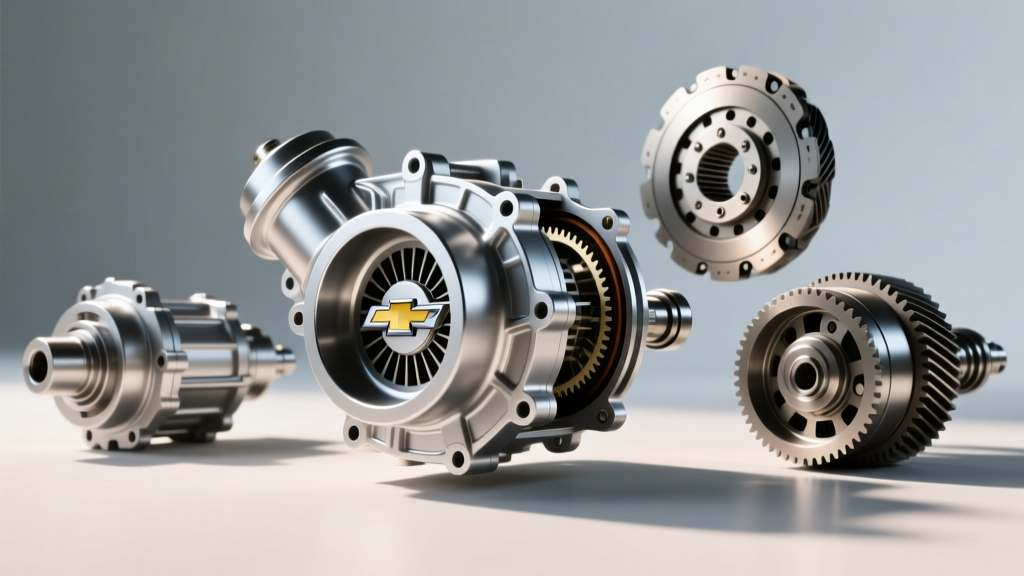
When your check engine light illuminates and your vehicle begins to shudder at highway speeds, the culprit is often hiding within the bellhousing. For both daily drivers and performance enthusiasts running premier torque converters, understanding Diagnostic Trouble Codes (DTCs) is the first step toward a reliable fix. Modern automatic transmissions rely on the torque converter to multiply engine torque during acceleration and provide a direct mechanical lockup during cruising to maximize fuel efficiency. When this delicate hydraulic and electronic balance fails, the Transmission Control Module (TCM) steps in to protect the drivetrain by logging specific fault codes.
As of 2026, OBD-II and emerging OBD-III protocols have become incredibly granular. The TCM no longer just looks for 'slip'; it monitors solenoid duty cycles, fluid temperature compensation, and micro-slip tolerances down to single-digit RPMs. Whether you are driving a daily-driven Silverado with a GM 6L80, a Ford F-150 with the 6R80, or a luxury sedan equipped with a ZF 8HP, the foundational logic behind torque converter clutch (TCC) diagnostics remains remarkably consistent. This beginner-friendly explainer will demystify the 'Big Four' TCC codes, provide real-world diagnostic strategies, and outline the exact costs and specifications you need to know.
How the TCM Monitors Lockup and Slip
Before diving into the codes, it is crucial to understand how your vehicle's computer monitors the torque converter. The TCM uses Pulse Width Modulation (PWM) to control the TCC apply solenoid. By rapidly pulsing the solenoid on and off, the TCM can modulate hydraulic pressure to smoothly apply the TCC friction clutch, eliminating the traditional 'clunk' of older lockup converters.
To verify that the premier torque converter is actually locking up, the TCM compares two critical sensor inputs: the Engine Speed Sensor (ESS) and the Transmission Input Shaft Speed Sensor (TSS). When the TCC is fully applied, engine RPM and input shaft RPM should be nearly identical (usually within 10 to 20 RPM of each other). If the TCM commands a 100% duty cycle to the solenoid but detects 150 RPM of slip, it recognizes a performance fault and triggers a DTC. For a deeper look into standard OBD definitions, you can reference the OBD-Codes P0740 Database, which remains an industry-standard resource for technicians.
The 'Big Four' TCC Codes Explained
While there are dozens of manufacturer-specific codes, the generic OBD-II P074X series covers 90% of all torque converter complaints. Below is a breakdown of the most common codes, their root causes, and current 2026 market pricing for repairs.
| DTC | Definition | Primary Culprit | 2026 Avg Repair Cost |
|---|---|---|---|
| P0740 | TCC Circuit Malfunction | Wiring harness chafe, bad ground | $150 - $350 |
| P0741 | TCC Performance / Stuck Off | Worn clutch lining, low fluid, bad solenoid | $800 - $1,600 |
| P0742 | TCC Stuck On | Valve body debris, seized solenoid | $400 - $900 |
| P0743 | TCC Electrical Circuit Fault | Internal open/short in solenoid coil | $250 - $500 |
P0741 (Performance/Stuck Off) is the most dreaded code for DIYers. It means the computer is trying to lock the converter, but it physically cannot. This is often caused by the friction material inside the torque converter wearing away, or a failure in the transmission's internal sealing rings (such as the turbine shaft seals in the GM 6L80).
P0742 (Stuck On) is incredibly dangerous for the engine. If the TCC remains mechanically locked when you come to a stop, the engine will stall violently, just like dropping the clutch on a manual transmission without pressing the pedal. This is almost always a hydraulic issue, such as a stuck TCC regulator valve in the valve body or debris jamming the solenoid.
Beginner's Step-by-Step Diagnostic Strategy
Do not immediately throw parts at a torque converter DTC. Follow this systematic approach to isolate the failure, saving you hundreds of dollars in unnecessary repairs.
Step 1: Fluid Level and Condition Check
Hydraulic pressure is the lifeblood of TCC apply. A low fluid level will cause delayed lockup and trigger P0741. Check the fluid at operating temperature (usually 180°F - 200°F) with the engine idling in Park.
- GM 6L80 / 8L90: Requires Dexron VI. Capacity is roughly 11.2 quarts for a pan drop and filter change.
- Ford 6R80 / 10R80: Requires Mercon LV or Mercon ULV. Capacity is roughly 13.1 quarts.
- ZF 8HP (Chrysler/BMW/Audi): Requires ZF LifeguardFluid 8. These are highly sensitive to fluid levels; an underfill of just 0.5 liters can cause TCC shudder.
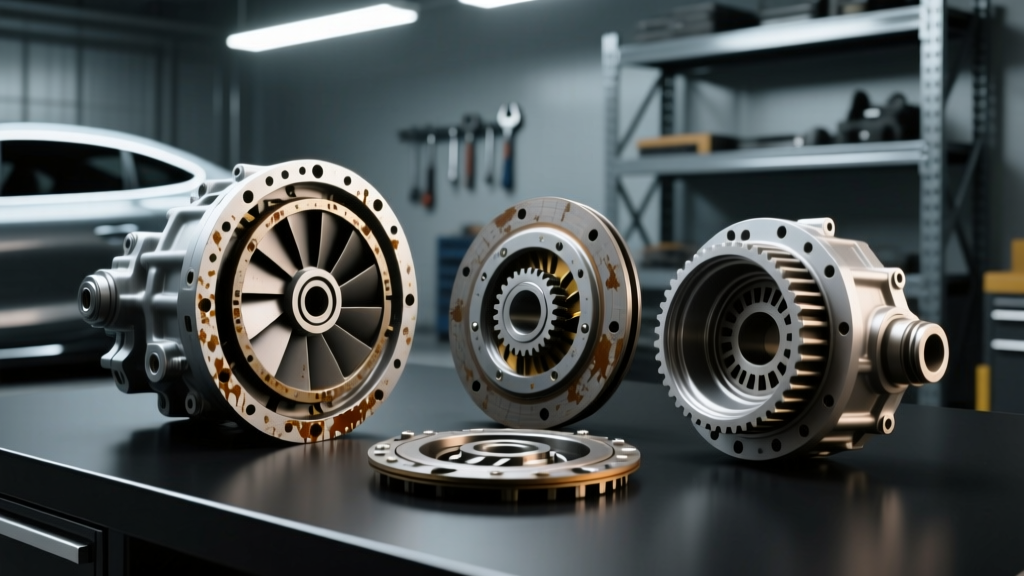
Pro Tip: Wipe the dipstick on a white paper towel. If the fluid smells burnt or contains fine grey glitter, the woven carbon or Kevlar friction lining inside your premier torque converter has disintegrated. No solenoid replacement will fix this; the converter must be replaced, and the transmission cooler must be aggressively flushed to prevent debris from destroying the new unit.
Step 2: Electrical and Solenoid Testing
If the fluid is clean and at the correct level, move to electrical diagnostics. For codes like P0740 or P0743, you need a digital multimeter. Locate the main transmission wiring harness connector on the outside of the transmission case.
- Disconnect the harness and inspect the pins for green corrosion or pushed-back terminals.
- Set your multimeter to Ohms (Ω). Consult a factory wiring diagram to identify the TCC solenoid pins.
- Measure the resistance across the solenoid pins. A healthy PWM TCC solenoid typically reads between 10 and 15 ohms at 68°F (20°C). If it reads 'OL' (Open Loop), the internal coil is broken. If it reads near 0.0 ohms, it is internally shorted.
On the GM 6L80 and 6L90 transmissions, the TCC solenoid is integrated into the TEHCM (Transmission Electro-Hydraulic Control Module). If the solenoid fails, you must replace the entire TEHCM assembly (GM Part #24253955 or updated revisions), which costs between $400 and $600 for the part alone, plus a mandatory TCM reprogramming session via a J2534 pass-through tool.
Step 3: Mechanical and Hydraulic Checks
If the wiring and solenoid test perfectly, but P0741 persists, the issue is mechanical. Internal sealing rings on the stator support or turbine shaft wear down over time, allowing apply pressure to bleed off before it reaches the TCC piston. Diagnosing this requires a transmission pressure gauge. You will need to tap into the TCC apply port on the transmission case and monitor line pressure during a road test. If the commanded pressure is 150 PSI but the gauge only shows 40 PSI, you have an internal hydraulic leak requiring a transmission teardown.
When to Upgrade to a High-Stall Premier Converter
If your diagnostic steps confirm that the torque converter's internal clutch is destroyed, you face a decision: replace with an OEM-equivalent unit or upgrade. For enthusiasts, towing rigs, or modified vehicles, upgrading to one of the premier torque converters on the aftermarket (from brands like Circle D, Precision Industries, or Vigilante) is highly recommended. These units feature furnace-brazed fins, heavy-duty stator supports, and high-friction Kevlar TCC linings that resist the shudder and slip that plague cheap, remanufactured OEM converters.
When installing a new torque converter, precision is mandatory. Always pre-fill the converter with at least 2 to 3 quarts of fresh ATF before mating it to the transmission to prevent immediate dry-start pump cavitation. Furthermore, torque the converter-to-flexplate bolts to the manufacturer's exact specification—typically 35 to 45 lb-ft for M10x1.5 bolts, using a threadlocker like Loctite 242. Bellhousing bolts should be torqued to 35 to 50 lb-ft in a star pattern to prevent case distortion.
By understanding the logic behind these DTCs and following a methodical diagnostic path, you can accurately pinpoint torque converter failures, avoid unnecessary transmission removals, and keep your drivetrain operating flawlessly for years to come. For ongoing industry updates and advanced rebuilding techniques, resources like Transmission Digest and SAE International Standards remain invaluable tools for both beginners and seasoned transmission specialists.