The Hidden Cost of Ignoring ATF in High-Stall Builds
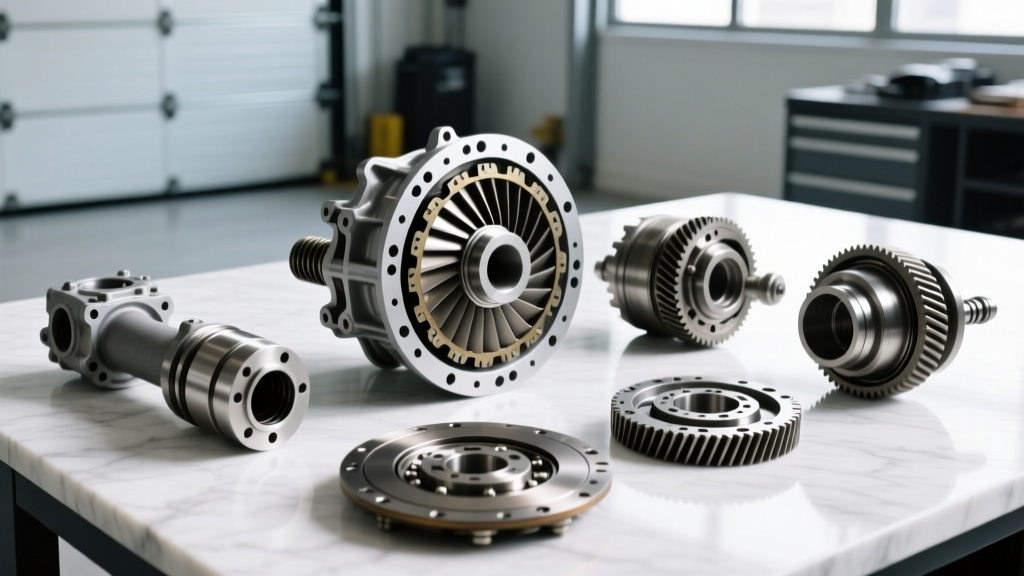
The Predator Ghost torque converter has earned a formidable reputation in the street/strip and pro-touring communities. Typically spec'd between 3,200 and 3,800 RPM stall for GM 4L60E, 4L80E, and TH400 applications, the Ghost series utilizes heavy-duty needle bearings, furnace-brazed fins, and reinforced impeller hubs to handle extreme torque multiplication. However, bolting on a high-stall converter without addressing the underlying hydraulic ecosystem is a recipe for catastrophic failure. High stall inherently means high slip, and high slip generates massive thermal loads and hydraulic shear.
As we evaluate performance drivetrain builds in 2026, the most common point of failure in aftermarket converter setups is not the mechanical hardware itself, but rather severe torque converter fluid issues. Automatic Transmission Fluid (ATF) is not merely a lubricant; it is the hydraulic coupling medium that transfers power from the engine to the transmission input shaft. When fluid dynamics break down, even the most robust Predator Ghost unit will suffer from cavitation, ballooning, and torque converter clutch (TCC) shudder. This guide provides expert-level troubleshooting, fluid selection matrices, and line pressure specifications to keep your high-stall setup alive.
Why the Predator Ghost Demands Specific Fluid Dynamics
Stock torque converters are designed for minimal slip, maximizing fuel economy and keeping fluid temperatures low. The Predator Ghost, by design, delays the coupling point to keep the engine in its peak powerband during launch. During street driving, this extended slip phase subjects the ATF to extreme mechanical shearing. The fluid molecules are literally torn apart as they pass through the narrow clearances between the stator, turbine, and impeller. If the fluid's viscosity index (VI) improvers break down, the ATF thins out, leading to a drop in hydraulic pressure, inadequate lubrication of the internal thrust washers, and ultimately, metal-on-metal contact.
According to the Torque Converter Remanufacturers Association (TCRA), over 60% of premature converter failures returned for warranty analysis show signs of fluid starvation, aeration, or severe thermal degradation. Understanding how to manage these fluid issues is the difference between a 100,000-mile street/strip car and a $1,200 replacement bill after a single track weekend.
Top 3 Fluid Issues Plaguing High-Stall Converters
1. Cavitation and Micro-Aeration at High RPM
Cavitation occurs when the suction pressure on the impeller side drops below the vapor pressure of the hot ATF, causing the fluid to literally boil and form microscopic vapor bubbles. When these bubbles move to the high-pressure side of the impeller and collapse, they create micro-jets of fluid that pit and erode the converter fins—a phenomenon known as spalling.
In GM 4L60E applications, the most notorious cause of converter aeration is a flattened or degraded pump pickup tube O-ring. When the O-ring fails to seal, the pump draws in air from the pan alongside the fluid. This aerated, compressible fluid is sent directly into the Predator Ghost converter, resulting in a spongy feel, erratic line pressure, and a distinct whining noise at high RPM. Expert Fix: Always replace the pickup tube O-ring (GM part # 24200815 or a high-temp Viton equivalent) and ensure the pickup tube is seated perfectly flush. Torque the 4L60E pump bolts to 11 Nm (97 lb-in) in a crisscross pattern to prevent pump slide binding.
2. Thermal Breakdown and Viscosity Shear
A 3,500 RPM stall speed generates immense friction heat before the converter couples. If your transmission cooler is undersized, fluid temperatures will easily exceed 240°F (115°C). At these temperatures, standard mineral-based ATFs oxidize rapidly, forming varnish and sludge that clogs the converter's internal passages and the transmission's valve body.
Furthermore, high-stall converters require a fluid with a robust shear stability rating. If the fluid shears down from a 7.5 cSt viscosity to a 5.0 cSt viscosity under load, the hydraulic charge pressure will bleed off internally. This lack of charge pressure allows the converter cover to flex outward under torque—a destructive failure mode known as ballooning, which can destroy the transmission's input shaft and rear main seal.
3. TCC Lockup Shudder and Friction Modifier Depletion
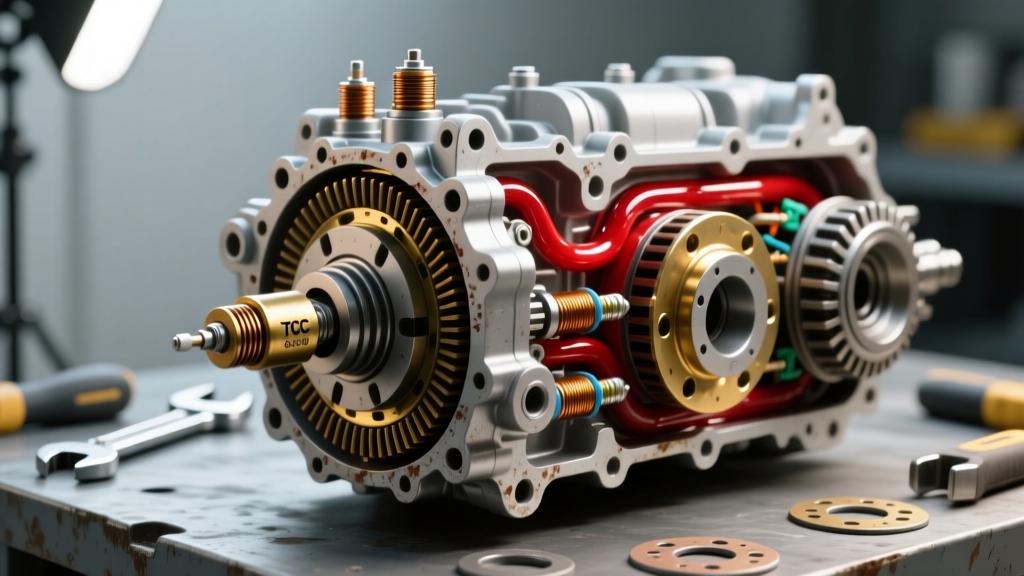
Modern iterations of the Predator Ghost feature a high-performance Torque Converter Clutch (TCC) to eliminate slip at highway cruising speeds. The TCC apply plate relies on specific friction modifiers within the ATF to engage smoothly. If you run a fluid lacking these modifiers, or if the modifiers have been depleted by excessive heat, the TCC will aggressively grab and release, causing a violent vibration known as 'ghost shudder' through the chassis.
Running older, non-modified fluids like Type F in a computer-controlled 4L80E or 4L60E without custom valve body modifications will guarantee severe TCC shudder and eventual apply plate glazing.
2026 Fluid Selection Matrix: What to Run
Choosing the right fluid is critical. Below is a comparison of common ATF profiles and their suitability for high-stall Predator Ghost applications. For deeper chemical breakdowns, refer to the Red Line Synthetic Oil ATF Technical Guide.
| ATF Type / Brand | Viscosity cSt @ 100°C | Friction Modifiers | Shear Stability | Best Application for Predator Ghost |
|---|---|---|---|---|
| GM Dexron VI (OEM) | ~5.5 cSt | Yes (TCC compatible) | Moderate | Mild street builds; requires massive cooling due to low viscosity. |
| Type F (Racing) | ~7.5 cSt | None | High | Non-lockup TH350/TH400 drag builds only. Will cause TCC shudder in 4L60E/4L80E. |
| Red Line D4 / D6 | ~6.5 - 7.5 cSt | Optimized for TCC | Exceptional | Ideal for street/strip 4L60E/4L80E with 3000+ stall. Resists thermal shear. |
| Amsoil Signature Series | ~6.2 cSt | Yes (TCC compatible) | Very High | Heavy-duty towing and pro-touring; excellent anti-wear additive package. |
Expert Troubleshooting Protocol: Diagnosing Fluid Starvation
When diagnosing sluggish spool-up or erratic shifting in a vehicle equipped with a Predator Ghost converter, follow this systematic diagnostic protocol before condemning the hardware:
- Check Base Line Pressure: Install a 0-300 PSI mechanical gauge on the transmission line pressure port. For a 4L60E with a high-stall converter, you need a minimum of 180-220 PSI in 3rd and 4th gears under load. If pressure is low, the converter charge circuit is starving. Consider installing a TransGo 4L60E-HD2 shift kit to boost line pressure and reinforce the charge circuit.
- Inspect for Milky Fluid: Drop the transmission pan. If the fluid looks like a strawberry milkshake, your internal transmission cooler (located in the radiator) has failed, allowing engine coolant to mix with the ATF. This destroys the friction paper on the TCC and the transmission clutches.
- Evaluate Pan Debris: A light gray paste on the pan magnets is normal clutch wear. However, if you find brass-colored glitter (indicative of thrust washer wear) or chunky ferrous metal, the converter's internal needle bearings have likely failed due to lubrication starvation.
- Perform a Stall Test (Safely): With the transmission at operating temperature, hold the brakes and apply throttle to see where the engine RPM peaks. If the stall speed is significantly lower than the Predator Ghost's rated spec (e.g., it stalls at 2,200 RPM instead of 3,500 RPM), you likely have a restricted converter, a clogged cooler circuit, or severe fluid aeration preventing proper hydraulic coupling.
Cooler Sizing and Line Pressure Best Practices
You cannot separate torque converter fluid health from the cooling system. The Predator Ghost requires aggressive thermal management. The factory single-pass radiator cooler is entirely insufficient for high-stall applications.
Best Practice Cooler Routing: Run the transmission output line to an external, dual-pass plate-and-fin cooler (rated for a minimum of 28,000 GVW), and then route the return line back to the transmission. Bypass the radiator cooler entirely for dedicated track cars, or run the external cooler in series *after* the radiator for street cars to ensure the ATF reaches optimal operating temperature (175°F - 190°F) quickly in cold climates.
Furthermore, ensure your cooler lines are free of restrictions. Many modern quick-disconnect fittings (such as the 1/2"-20 UNF fittings on GM trucks) feature internal plastic check valves that severely restrict flow. Remove these restrictive check valves and replace the lines with high-flow -6 AN braided stainless steel hoses to guarantee maximum fluid volume reaches the converter charge circuit.
Conclusion
The Predator Ghost torque converter is a precision piece of hydraulic engineering, but it is entirely dependent on the quality, pressure, and temperature of the fluid feeding it. By eliminating aeration paths, selecting a high-shear synthetic ATF, and verifying line pressure and cooler flow rates, you can eliminate the most common fluid-related symptoms and ensure your drivetrain performs flawlessly on the street and the strip.