The Predator 212 Drivetrain Ecosystem: Centrifugal Clutch Dynamics
The Harbor Freight Predator 212cc engine (both Hemi and Non-Hemi variants) has become the undisputed benchmark for small-engine motorsports, generating approximately 6.5 horsepower and 8.1 ft-lbs of torque. However, transferring this rotational force to the rear axle relies entirely on a deceptively simple component: the centrifugal clutch. Unlike the complex hydraulic and electronic management systems found in modern automotive transmissions, the Predator 212 centrifugal clutch operates on pure mechanical physics. As engine RPM increases, centrifugal force overcomes spring tension, forcing friction shoes outward against the inner diameter of the clutch drum.
While robust, these clutches are consumable wear items. Diagnosing a failing centrifugal clutch requires an understanding of friction material degradation, thermal limits, and bearing tolerances. In this technical deep-dive, we will explore the definitive wear signs, lifespan indicators, and diagnostic measurements required to maintain optimal power transfer in high-load applications like stage 1 go-karts and heavy-duty mini bikes.
Anatomy of Failure: Primary Clutch Wear Symptoms
Identifying clutch wear before catastrophic failure prevents secondary damage to the engine crankshaft, drive chain, and rear sprocket. Here are the most common diagnostic symptoms of a degrading Predator 212 centrifugal clutch.
1. High-RPM Slipping and Glazed Friction Material
If the engine surges to high RPMs without a proportional increase in vehicle speed, the clutch is slipping. In a centrifugal clutch, this is almost always caused by glazed friction shoes or an out-of-round drum. When a driver repeatedly 'rides' the clutch at partial engagement (operating in the 1,800 to 2,200 RPM slip zone), the friction material overheats. This bakes the binding resins, creating a glass-like surface that drops the coefficient of friction from roughly 0.4 to below 0.15. Once glazed, the shoes cannot bite the drum, resulting in severe power loss and rapid thermal buildup.
2. Premature Engagement and Spring Fatigue
A healthy standard clutch should engage between 2,300 and 2,500 RPM. If the kart begins to creep forward at idle (1,400 to 1,600 RPM), the tension springs have suffered from heat-induced annealing and fatigue. Weak springs allow the shoes to make contact with the drum before sufficient centrifugal force is generated to lock them tightly, causing continuous micro-slipping and massive heat generation. Upgrading to heavy-duty springs (often color-coded orange or red for higher RPM engagement) is a common fix, but only if the friction shoes have not already been compromised.
3. Audible Rattle and Parasitic Drag at Idle
A distinct metallic rattling at idle, accompanied by the rear wheels turning slightly even when the clutch is disengaged, indicates internal bearing or bushing wear. Most budget clutches use a simple oil-impregnated bronze bushing, while premium units like the Hilliard Extreme Duty utilize a sealed needle bearing. If the needle bearing loses its grease or ingests debris, the inner hub binds on the crankshaft, creating parasitic drag that forces the shoes to lightly contact the drum at idle.
Diagnostic Tolerances and Measurement Specifications
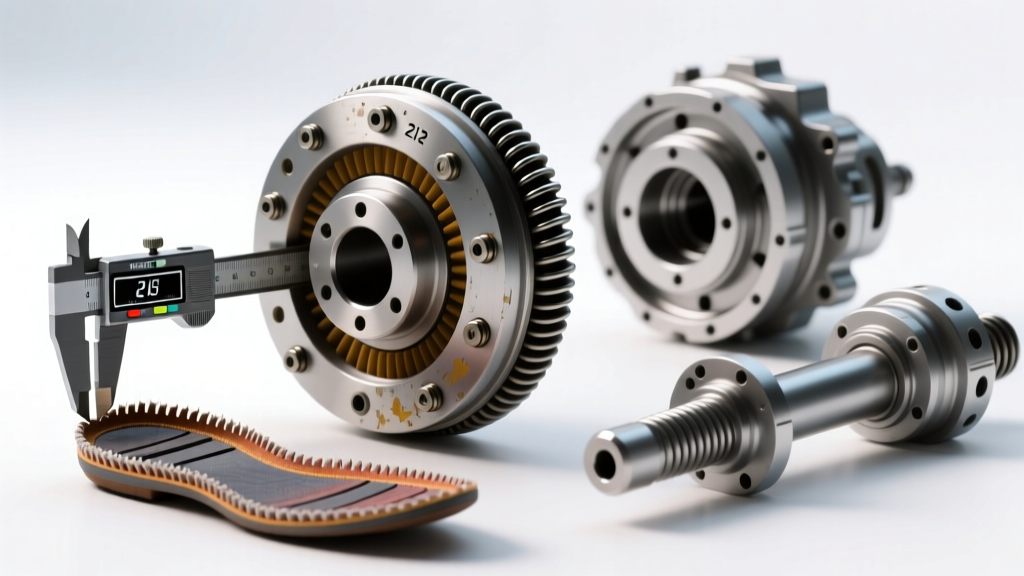
Visual inspection is insufficient for precise diagnostics. To accurately determine if a Predator 212 clutch has reached the end of its service life, you must measure critical clearances using calipers and micrometers. Below are the standard engineering tolerances for a 3/4-inch bore, 10-tooth #35 chain centrifugal clutch.
| Component | Nominal Specification | Maximum Wear Limit | Diagnostic Tool |
|---|---|---|---|
| Drum Inner Diameter (ID) | 3.000 in. | 3.015 in. | Internal Calipers |
| Friction Shoe Lining | 0.125 in. (thickness) | 0.040 in. (remaining) | Dial Calipers |
| Bore Bushing / Bearing ID | 0.750 in. | 0.758 in. | Telescoping Gauge |
| Drum Runout (Lateral) | 0.000 in. | 0.020 in. | Dial Indicator |
| Spring Engagement RPM | 2,300 - 2,500 RPM | Less than 1,800 RPM | Digital Tachometer |
Note: If the drum ID exceeds 3.015 inches, the drum is effectively 'belled' from thermal expansion and centrifugal stress. Replacing the shoes will not fix the slip; the entire drum assembly must be replaced.
Automotive Parallels: Centrifugal vs. Torque Converter Clutches
As an automotive transmission specialist, it is highly instructive to compare the Predator 212 centrifugal clutch to the Torque Converter Clutch (TCC) found in modern automatic transmissions, such as the GM 6L80 or the ZF 8HP. Both systems serve the exact same fundamental purpose: mechanically locking the engine to the transmission input shaft to eliminate slip and improve efficiency.
In a GM 6L80, the TCC is a multi-plate wet clutch pack housed inside the torque converter. The Transmission Control Module (TCM) monitors input and output shaft speed sensors to detect micro-slip, triggering a DTC P0741 if slip exceeds calibrated thresholds. The 6L80 relies on Automatic Transmission Fluid (ATF) for both hydraulic actuation and thermal cooling. Conversely, the Predator 212 clutch is entirely air-cooled and lacks electronic slip monitoring. The 'TCM' in a go-kart is the driver's ear and a tachometer. Because the Predator clutch lacks liquid cooling, its thermal mass is the only defense against overheating. When the clutch drum turns blue or purple, it indicates surface temperatures have exceeded 400°F, a threshold that instantly destroys the organic friction linings, much like burning out the TCC friction discs in a 6L80 due to a failed cooler circuit.
Lifespan Indicators: Rebuild vs. Replace Economics
The lifespan of a Predator 212 clutch varies wildly based on application and maintenance. A standard OEM-style clutch (typically retailing for $25 to $40) may last 50 hours in a light-duty yard kart but can fail in under 5 hours on a heavy, off-road mini bike with large tires. Upgrading to a premium unit like the Hilliard 1002 (10-tooth) or 1003 (12-tooth), which costs between $85 and $110, extends lifespan to 300+ hours due to superior needle bearings, thicker steel drums, and high-temperature friction compounds.
When to Rebuild
Rebuilding is cost-effective if the drum and bearing are within spec. A rebuild kit (new shoes, springs, and snap rings) costs around $20 to $30. Rebuilding is recommended if:
- The friction shoes are worn below 0.040 inches but the drum ID is still under 3.010 inches.
- The tension springs show visible sagging or heat discoloration.
- The clutch was subjected to a single overheating event but the bearing remains smooth.
When to Replace the Complete Assembly
Complete replacement is mandatory if you observe any of the following terminal lifespan indicators:
- Thermal Bluing: The outer drum exhibits blue, purple, or straw-colored heat tinting.
- Bearing Seizure: The inner hub does not spin freely on the crankshaft by hand, or exhibits lateral play exceeding 0.010 inches.
- Chain Throw: The clutch throws the #35 drive chain, indicating severe lateral runout or a bent drum bell.
Installation Specifications and Torque Requirements
Proper installation is just as critical as the diagnosis. A loose clutch will wallow out the engine crankshaft keyway, resulting in a destroyed crankshaft (a $150+ replacement part). When installing a new or rebuilt centrifugal clutch on a Predator 212, adhere strictly to these specifications:
- Keyway Alignment: Use a standard 3/16 in. x 3/4 in. square key. Ensure it sits flush or slightly below the crankshaft surface. Never force the clutch on with a hammer; use a harmonic balancer puller or a threaded installation tool to press it on.
- Fastener Torque: The crankshaft retention bolt is an M8 x 1.25. Apply a medium-strength threadlocker (such as Loctite 243) to the threads. Torque the bolt to 18 to 22 ft-lbs (24 to 30 Nm). Do not exceed 25 ft-lbs, as you risk snapping the crankshaft tip.
- Chain Alignment: Use a laser chain alignment tool or a precision straight edge. The offset between the clutch sprocket and the rear axle sprocket must not exceed 0.030 inches. Misalignment induces severe lateral loads on the clutch needle bearing, guaranteeing premature failure.
- Chain Slack: Maintain 3/8 in. to 1/2 in. of vertical slack in the #35 chain. An overtightened chain will pull the clutch hub outward, destroying the internal bearing and causing immediate drag.
Final Diagnostic Takeaways
The Predator 212 centrifugal clutch is a brilliant piece of mechanical simplicity, but it demands respect for its thermal and physical limits. By monitoring engagement RPMs, listening for idle parasitic drag, and utilizing precision measuring tools to verify drum and shoe tolerances, you can accurately predict the remaining lifespan of the drivetrain. Whether you are maintaining a fleet of rental karts or tuning a competitive stage 1 racer, treating the clutch as a precision wear component—rather than a disposable afterthought—ensures maximum power transfer and drivetrain longevity. For further technical specifications and heavy-duty aftermarket upgrades, consult resources from GoPowerSports and NR Racing.