The Misdiagnosed Failure: When Oil Chemistry Destroys Mechanical Hardware
Walk into any independent motorcycle repair shop in 2026, and you will inevitably find a technician replacing a worn clutch lifter fork, a scored pivot ball, or a bent pushrod. The standard diagnostic conclusion? Normal wear and tear, or perhaps a heavy-handed rider. However, a massive percentage of these clutch fork and pivot issues are not mechanical failures at all. They are the secondary casualties of a chemical mistake: using automotive car oil in a motorcycle wet clutch.
When a rider fills a shared-sump motorcycle engine with modern automotive oil, the friction modifiers designed to improve car fuel economy wreak havoc on the wet clutch pack. The resulting slippage triggers a chain reaction of rider over-adjustments that places catastrophic, continuous load on the clutch actuation mechanism. In this expert diagnostic guide, we break down exactly how car oil induces clutch fork and pivot wear, how to differentiate it from true mechanical failure, and the precise torque specs required to fix it.
The Chemistry of Slippage: JASO MA2 vs. API SP
To understand the mechanical damage, we must first understand the chemical catalyst. Modern automotive engine oils (classified under API SP and ILSAC GF-6A standards) are heavily dosed with friction modifiers, primarily Molybdenum Dialkyldithiocarbamate (MoDTC). In a car’s dry clutch or torque converter, these modifiers reduce parasitic drag and improve MPG.
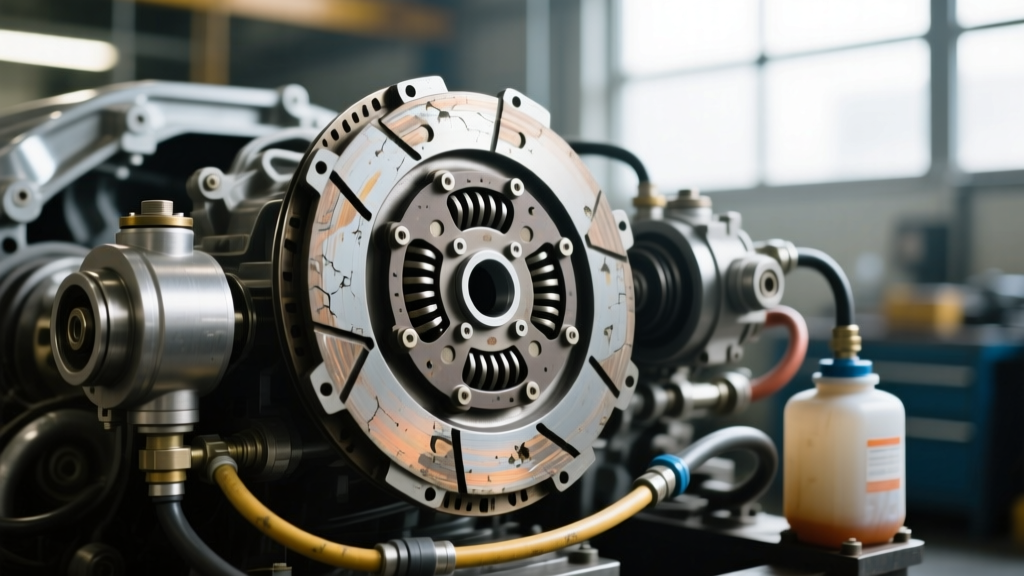
In a motorcycle wet clutch, the clutch plates rely on high-friction paper or Kevlar linings bathed in the engine oil. According to the JASO T 903:2016 Standard, motorcycle-specific oils must meet the JASO MA or MA2 specification, which strictly limits friction modifiers to ensure a dynamic friction index greater than 1.8. When car oil is introduced, the MoDTC coats the clutch friction plates, causing them to slip under load.
Expert Insight: The American Petroleum Institute (API) explicitly warns that energy-conserving automotive oils (marked with the 'Starburst' symbol) are incompatible with wet clutch systems. Yet, budget-conscious riders continue to use 10W-30 or 5W-30 car oils, initiating the failure cycle.
The Mechanical Chain Reaction: How Slippage Breaks Forks and Pivots
How does a chemical slip translate to a bent clutch fork or a flat-spotted pivot ball? The answer lies in rider compensation and the elimination of free-play.
- The Slip Occurs: The rider notices the engine RPMs flaring without proportional acceleration in 3rd or 4th gear.
- The Over-Adjustment: Assuming the clutch cable has stretched, the rider tightens the cable adjuster or shortens the hydraulic pushrod to force the clutch to engage harder.
- Loss of Free-Play: By over-tightening, the rider eliminates the mandatory 1/8 to 1/4 inch of free-play at the lever.
- Constant Pre-Load: Without free-play, the clutch release mechanism (fork, pivot ball, or ramp) is held in a state of constant, high-pressure engagement against the clutch pack springs.
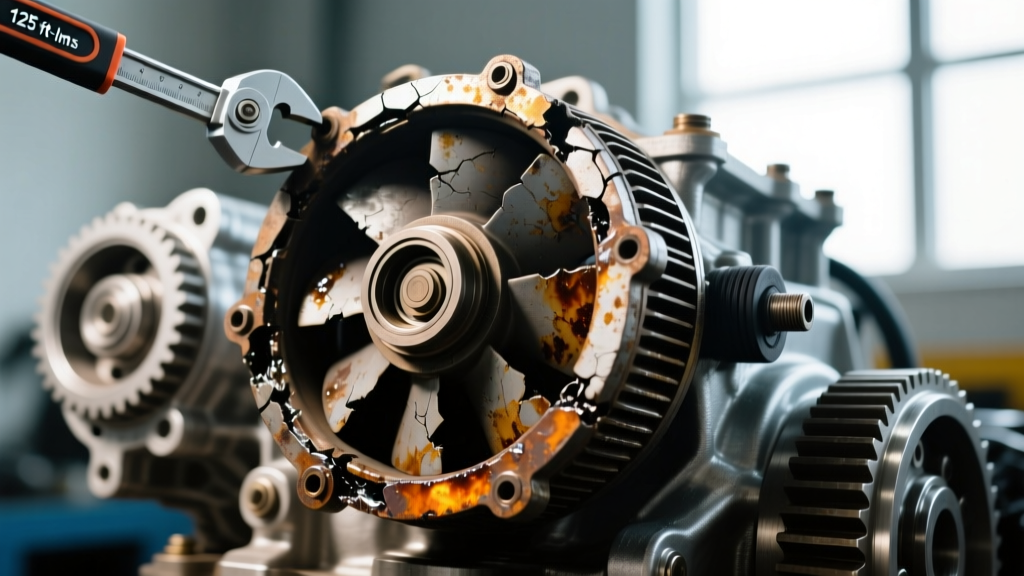
- Hardware Destruction: The continuous rotational friction against a stationary pivot ball or clutch lifter fork generates immense localized heat, galling the metal, bending the fork tines, and wearing flat spots onto the pivot shaft.
Case Study 1: Vintage Honda SOHC Clutch Lifter Fork
On classic Honda SOHC inline-fours (e.g., CB750, CB550), the clutch is actuated by a literal clutch lifter fork that pivots on a pin inside the right crankcase cover.
- OEM Fork Part Number: 22830-357-000
- OEM Pivot Pin: 22835-357-000
Case Study 2: Harley-Davidson Sportster Diaphragm Ramp
Harley-Davidson Sportsters utilize a clutch release bearing and pivot ramp mechanism rather than a traditional fork, but the physics of pre-load destruction remain identical.
- Clutch Release Bearing: 37958-90A
- Pivot Screw / Ramp: 37969-90A
Diagnostic Matrix: Oil Contamination vs. True Mechanical Wear
Before ordering replacement parts, use this diagnostic matrix to determine if the clutch fork/pivot wear is a root-cause failure or a secondary symptom of oil contamination.
| Diagnostic Indicator | True Mechanical Wear (Age/Mileage) | Secondary Wear (Car Oil Contamination) |
|---|---|---|
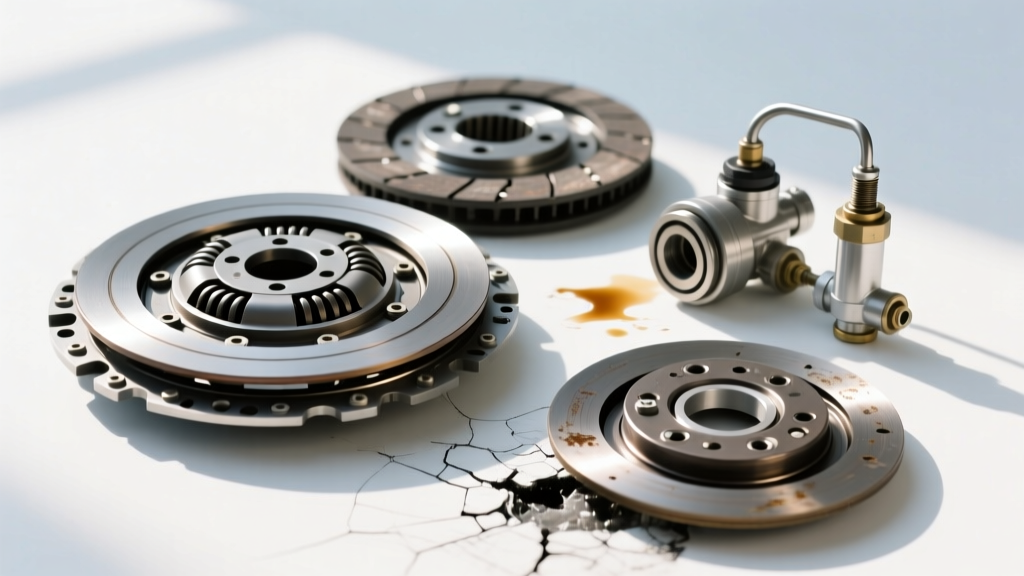
| Clutch Plate Condition | Plates measure within spec; steel plates show normal bluing. | Friction plates are glazed, cork/paper is delaminating; steel plates warped from slip-heat. |
| Pivot / Fork Wear Pattern | Even wear on contact surfaces; pivot pin shows uniform polishing. | Severe galling, flat-spotting, or heat-bluing on one side of the pivot; fork tines bent inward. |
| Clutch Cable / Hydraulic Rod | Normal free-play maintained; cable shows standard fatigue. | Cable adjusted to the absolute maximum limit; zero free-play at the lever or actuator arm. |
| Engine Oil Appearance | Dark but normal viscosity; smells of combustion. | Oil smells burnt (clutch material); may contain excessive metallic/cork particulate. |
Step-by-Step Remediation and Torque Specifications
If you confirm that automotive oil has compromised your clutch pack and damaged the actuation fork or pivot, a simple parts swap will not suffice. You must execute a full system remediation.
1. Flush and Refill with JASO MA2 Fluid
Drain the contaminated oil while the engine is warm. Because clutch friction material and MoDTC additives cling to the transmission gears, perform a double-flush. Fill with a cheap JASO MA oil, run the engine for 10 minutes on the center stand, drain, and then fill with your premium JASO MA2 synthetic (e.g., Motul 7100 or Amsoil Metric). Never use oils labeled 'Energy Conserving'.
2. Replace and Torque the Actuation Hardware
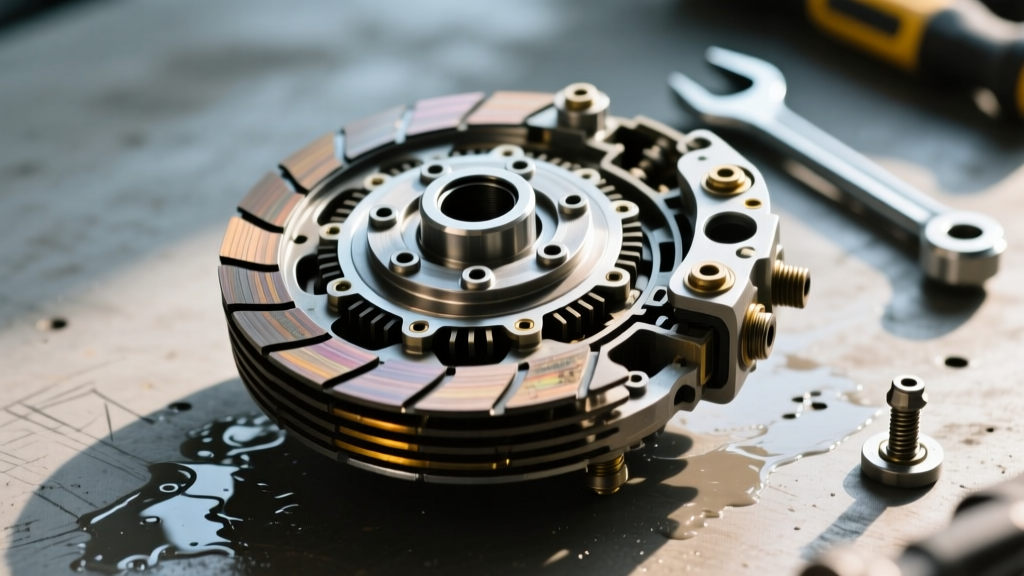
Inspect the clutch fork, pivot ball, and pushrod. If the pivot ball has a visible flat spot, or the fork tines are spread by more than 1mm, replacement is mandatory. Use the following torque specifications during reassembly (always verify against your specific 2026 service manual):
- Harley Sportster Primary Cover Bolts: 84-108 in-lbs (Use Loctite 243 on the inner primary bolts).
- Harley Clutch Spring Bolts: 70-90 in-lbs in a star pattern to prevent warping the pressure plate.
- Honda Right Crankcase Cover Bolts (8mm): 10-12 Nm (89-106 in-lbs). Over-torquing here will crack the casting around the pivot pin bore.
- BMW R-Series Clutch Actuator Lever Pivot Nut: 25 Nm (18 ft-lbs) with a drop of medium threadlocker.
3. Reset the Free-Play (The Critical Step)
The most vital step in preventing recurring fork and pivot damage is re-establishing mechanical free-play.
- Cable Systems: Adjust the lever free-play to exactly 1/8" - 1/4" (3-5mm). The cable must go completely slack when the lever is released.
- Hydraulic Systems: Ensure the master cylinder pushrod has 0.5mm to 1.0mm of free-play before it contacts the piston. If the hydraulic fluid expands from engine heat and there is no free-play, the system will self-apply, dragging the clutch and destroying the throw-out bearing pivot.
Cost Breakdown: OEM vs. Aftermarket Solutions
Budgeting for a clutch actuation repair requires understanding the price delta between OEM dealer parts and high-quality aftermarket alternatives. Below is a 2026 pricing estimate for common clutch fork and pivot components.
| Component | OEM Part Cost | Aftermarket Cost | Expert Recommendation |
|---|---|---|---|
| Clutch Lifter Fork (Honda SOHC) | $55.00 - $70.00 | $35.00 - $45.00 | Stick to OEM. Aftermarket castings often have poor heat-treating and bend prematurely. |
| Pivot Ball / Screw (Harley Sportster) | $22.00 - $30.00 | $15.00 - $20.00 | Aftermarket (e.g., Barnett or Drag Specialties) is acceptable if hardened steel is verified. |
| Clutch Release Bearing | $40.00 - $55.00 | $25.00 - $35.00 | OEM only. Cheap aftermarket bearings lack high-temp grease and fail under primary heat. |
| JASO MA2 Oil (4 Quarts) | N/A | $50.00 - $75.00 | Mandatory. Do not compromise on fluid chemistry. |
Final Diagnostic Takeaway
As transmission and drivetrain specialists, we see the aftermath of the 'car oil shortcut' every week. A worn clutch fork or a scored pivot ball is rarely just a mechanical failure; it is a physical record of a chemical incompatibility. By recognizing the symptoms of friction-modifier-induced slippage, enforcing strict JASO MA2 fluid standards, and meticulously resetting actuator free-play, you can save hundreds of dollars in misdiagnosed mechanical repairs and ensure your motorcycle's drivetrain survives the long haul.