The Unique Demands of a Positive Differential
When automotive enthusiasts and technicians refer to a positive differential, they are typically describing a limited-slip differential (LSD), Positraction, or a locking differential designed to distribute torque to both wheels rather than defaulting to the path of least resistance. While open differentials rely solely on gear lubrication, a positive differential introduces complex internal friction components—such as clutch packs, cone clutches, or mechanical locking governors. These components generate immense localized heat and shear forces, making gear oil condition a critical indicator of the entire axle assembly's health.
Ignoring the visual and olfactory cues of your differential fluid can turn a routine $60 preventive maintenance service into a $2,500 complete axle rebuild. This guide provides a professional-grade diagnostic framework for evaluating gear oil condition, identifying failure modes, and executing precise maintenance on modern and classic solid-axle setups.
Visual Diagnostics: Fluid Color and Condition Matrix
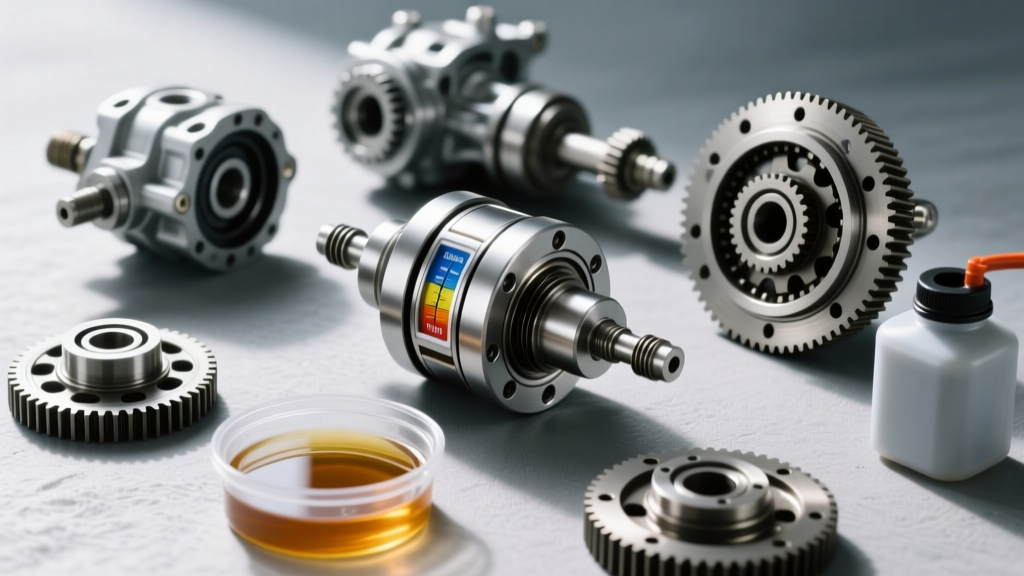
Before draining the axle, extract a small sample using a fluid transfer pump or loosen the fill plug to catch a few drops. Evaluate the sample against this diagnostic matrix to determine your next course of action.
| Fluid Appearance | Odor Profile | Primary Diagnosis | Required Action |
|---|---|---|---|
| Clear, Amber to Honey | Mild sulfur/chemical | Healthy, within service life | Reinstall plug, torque to spec |
| Opaque Dark Brown/Black | Burnt toast, acrid | Thermal breakdown, clutch glazing | Flush immediately, inspect clutches |
| Milky, Chocolate Emulsion | Damp, musty, or neutral | Water ingress, seal failure | Flush, replace axle seals/breather |
| Grey with Fine Glitter | Metallic, sharp | Normal ring/pinion break-in wear | Change fluid, clean magnetic plug |
| Black with Metal Flakes | Burnt oil and hot iron | Bearing or gear tooth spalling | Drop cover, inspect carrier bearings |
Deep Dive: Interpreting Fluid Degradation
Thermal Degradation and Clutch Glazing (Burnt Fluid)
In a positive differential equipped with clutch-type limited-slip mechanisms (such as the Ford 8.8 Traction-Lok or Dana Trac-Lok), the clutches require specific friction modifiers to slip smoothly during low-speed cornering. When the gear oil exceeds its thermal threshold—typically above 250°F (121°C) in sustained heavy-load scenarios—the base oil oxidizes, and the friction modifier polymers break down.
The Result: The fluid turns pitch black and emits a harsh, burnt odor. More critically, the clutches begin to chatter, glaze, and eventually weld together. If you pull a burnt fluid sample from a GM 8.5-inch 10-bolt with a G80 locker or Eaton Posi, you must not only replace the 75W-90 GL-5 synthetic gear oil but also aggressively flush the housing and replenish the exact dosage of limited-slip additive (e.g., ACDelco part #10-9003 or Motorcraft XL-3). Failing to address burnt fluid will result in the notorious "chatter and bind" sensation during tight parking lot turns.
Water Ingress and Emulsification (Milky Fluid)
If your extracted sample resembles a milkshake or chocolate milk, water has breached the axle housing. This is exceptionally common in off-road vehicles, trucks, and SUVs that traverse deep water crossings. The culprit is rarely the axle seals themselves; instead, it is usually a clogged or submerged axle breather tube. As the differential heats up during driving, internal pressure expands. When the axle is suddenly submerged in cold water, the housing rapidly contracts, creating a vacuum that sucks water past the axle shaft seals or pinion seal.
Water-contaminated gear oil loses its hydrodynamic film strength almost entirely. According to lubrication engineers at Red Line Synthetic Oil, even a 1% water contamination by volume can reduce the load-carrying capacity of gear oil by up to 50%. Immediate flushing with a cheap mineral-based GL-5 oil, followed by a fill of premium synthetic and clearing of the axle breather vent, is mandatory to prevent catastrophic ring and pinion scoring.
Metallurgical Wear Indicators (Glitter vs. Chunks)
It is vital to distinguish between normal wear and active mechanical failure. A fine, grey paste on the magnetic fill plug is normal for the first 15,000 to 30,000 miles as the ring and pinion gears undergo their final micro-polishing phase. However, if you discover distinct metallic flakes, needle bearing shards, or brass-colored material, the differential is actively destroying itself. Brass indicates thrust washer wear inside the carrier, while shiny steel flakes point to failing carrier bearings or spalling on the hypoid gear teeth. At this stage, a simple fluid change is insufficient; the differential cover must be removed for a physical backlash and gear pattern inspection.
Axle Capacity, Specification, and Torque Matrix
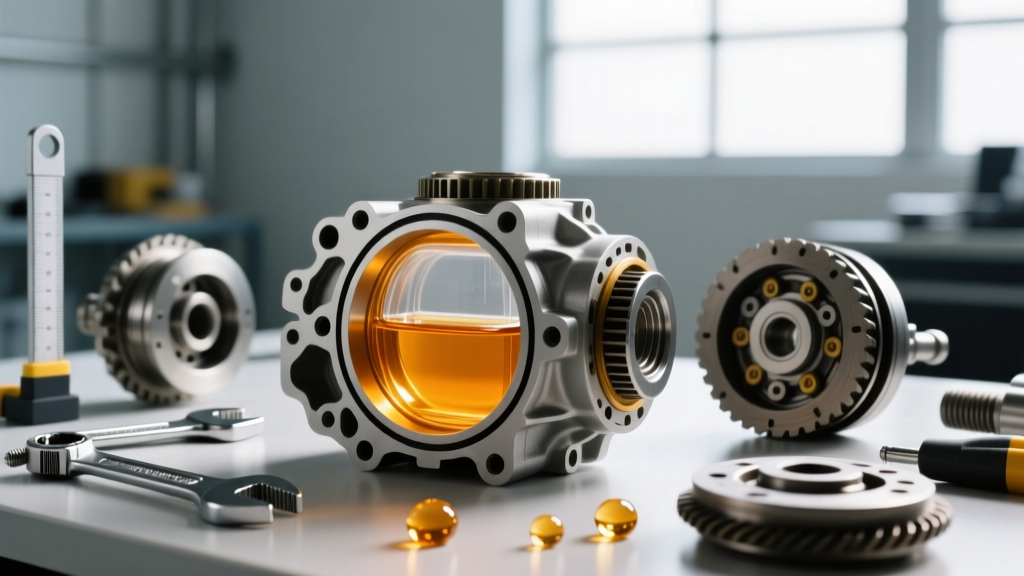
Preventive maintenance requires strict adherence to manufacturer specifications. Overfilling can cause fluid aeration and foaming at high speeds, while underfilling starves the pinion bearings. Below is a reference matrix for common solid-axle configurations found in trucks and performance vehicles.
| Axle Configuration | Fluid Capacity | Recommended Viscosity | Friction Modifier Req. | Fill Plug Torque |
|---|---|---|---|---|
| GM 8.5" / 8.6" 10-Bolt (LSD) | 4.2 Pints | 75W-90 Synthetic GL-5 | Yes (ACDelco 10-9003) | 22 lb-ft |
| Ford 8.8" (Traction-Lok) | 3.5 - 4.0 Pints | 75W-140 Synthetic GL-5 | Yes (Motorcraft XL-3) | 30 lb-ft |
| Dana 44 (Trac-Lok / Jeep) | 3.5 Pints | 80W-90 or 75W-90 GL-5 | Yes (Spicer Additive) | 25 lb-ft (Plug) / 30 lb-ft (Cover) |
| Chrysler 8.75" (Sure-Grip) | 3.75 Pints | 75W-90 Synthetic GL-5 | Yes (Mopar Limited Slip) | N/A (Cover Removal Only) |
Note: Always consult the specific Spicer Dana technical service bulletins or OEM service manuals for your exact year and model, as capacities can vary slightly based on aftermarket differential covers and braking setups.
Step-by-Step Preventive Inspection Protocol
To execute a professional-grade fluid inspection and service on a positive differential, follow this standardized protocol:
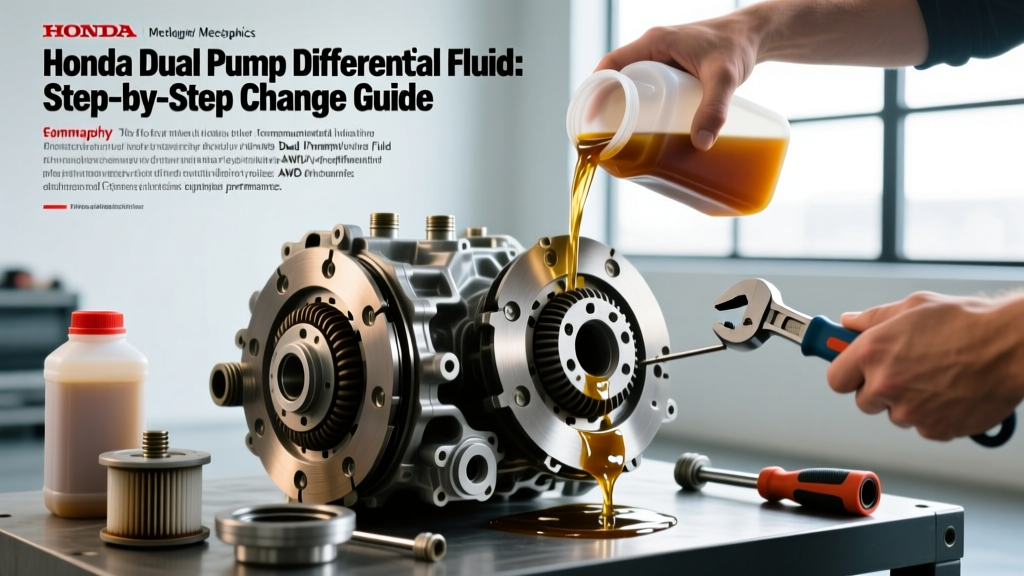
- Pre-Warm the Axle: Drive the vehicle for 10-15 minutes to bring the gear oil up to operating temperature. This suspends contaminants in the fluid and allows for a more complete drain.
- Extract or Drain: If equipped with a drain plug, remove it. If not, use a pneumatic or manual fluid transfer pump inserted through the fill hole. Extracting via pump prevents the need to break the RTV seal on the differential cover, saving time and reducing the risk of vacuum leaks.
- Inspect the Magnet: Wipe the magnetic plug clean. Evaluate the debris using the diagnostic matrix above.
- Verify Breather Functionality: Locate the axle breather tube (usually on the upper driver-side axle tube). Ensure it is routed high into the frame rail and capped with a functioning one-way vent.
- Refill with Precision: Pump in the new synthetic gear oil. For limited-slip positive differentials, add the friction modifier before the base oil to ensure proper mixing. Fill until the fluid level is exactly flush with the bottom edge of the fill hole (typically 0 to 0.5 inches below the plug threads).
- Torque and Clean: Reinstall the fill plug and torque to the manufacturer's specification (e.g., 22 lb-ft for GM 10-bolts). Wipe down the housing to establish a clean baseline for future leak inspections.
Economic Impact: Maintenance vs. Reactive Rebuild
The financial argument for rigorous fluid condition monitoring is undeniable. A proactive fluid service using high-quality synthetic 75W-90 or 75W-140 gear oil and the correct friction modifier costs between $60 and $90 for DIYers, or $130 to $180 at an independent drivetrain shop.
Conversely, ignoring burnt fluid or water contamination leads to accelerated wear on the clutch packs and hypoid gears. Rebuilding a Ford 8.8 or GM 10-bolt positive differential—including a new master rebuild kit, ring and pinion set, carrier bearings, and specialty labor—routinely costs between $1,400 and $2,200 in 2026. Furthermore, if the pinion bearing fails catastrophically due to lubrication starvation, the resulting debris can destroy the axle housing seals, leading to secondary damage to the rear brake shoes or parking brake mechanisms. By treating fluid color and condition as a vital diagnostic window, technicians and owners can preserve the longevity and traction capabilities of their positive differential systems for hundreds of thousands of miles.