The Critical Role of Fluid Analysis in Posi-Traction Differentials
For enthusiasts and daily drivers alike, the GM Positraction (Posi Track) differential remains one of the most iconic and widely used clutch-type limited-slip differentials (LSDs) in automotive history. Whether you are running a classic 12-bolt 8.875-inch rear end in a Chevelle or a modern 8.625-inch 10-bolt in a Silverado, the lifeblood of your Eaton-designed Posi unit is its gear oil. Unlike an open differential that simply transfers torque, a Posi Track differential utilizes internal preload springs and clutch packs to distribute power to both wheels. This internal friction generates immense heat and shear stress.
Performing a preventive maintenance fluid analysis is not just about adhering to a mileage interval; it is about reading the physical and chemical breakdown of the oil. By inspecting the differential fluid color, texture, and odor, you can diagnose impending clutch pack failure, ring-and-pinion scoring, or moisture intrusion long before a catastrophic mechanical lock-up occurs. In this 2026 preventive maintenance guide, we will decode exactly what your posi track differential fluid is trying to tell you.
Baseline: What Fresh Posi Track Fluid Looks and Smells Like
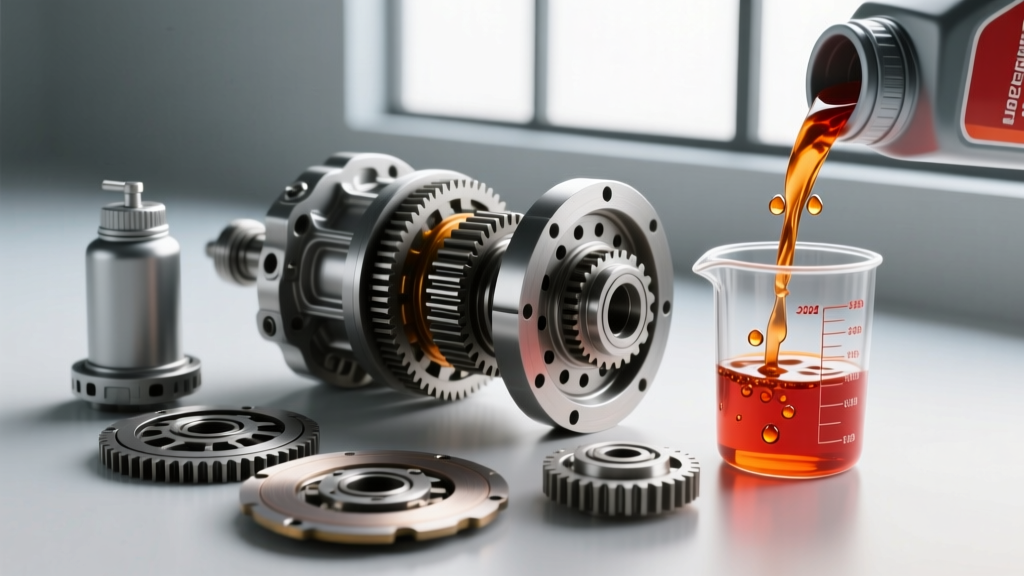
Before you can diagnose a problem, you must understand the baseline. Fresh, high-quality API GL-5 synthetic gear oil (such as ACDelco Dexron 75W-90 Synthetic, Part # 88862624) typically presents as a clear, bright amber or honey-colored liquid. It should be translucent when held up to a shop light.
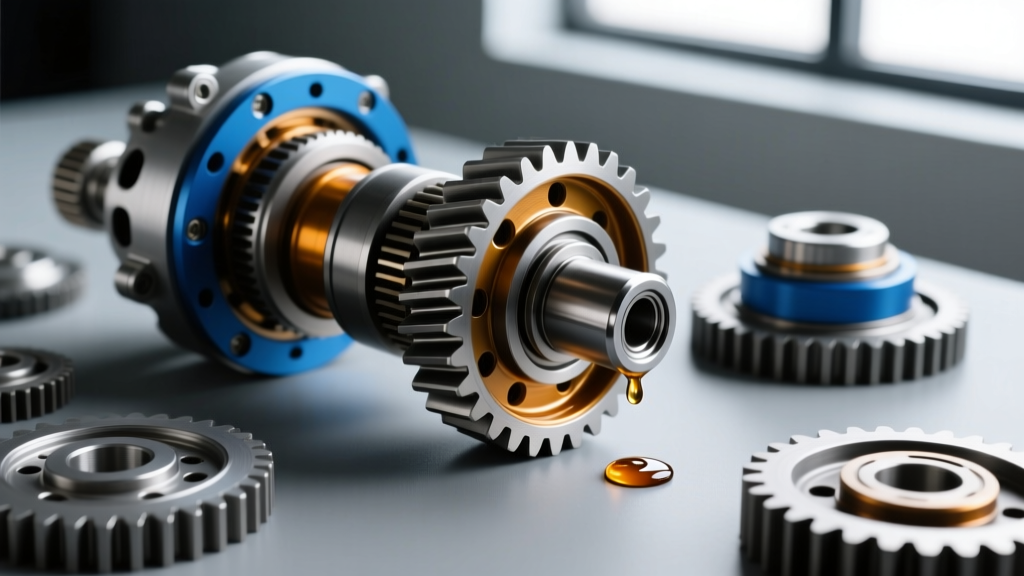
Because Posi-Traction units require a specific friction coefficient to prevent stick-slip chatter during cornering, the gear oil must be supplemented with a limited-slip friction modifier (like GM Part # 88900333 or Red Line Part # 70304). These modifiers are composed of long-chain fatty acids that coat the carbon-fiber or rayon clutch discs. When mixed, the fluid retains its amber hue but takes on a distinct, sharp sulfur or 'rotten egg' odor. This smell is completely normal and is a byproduct of the sulfur-phosphorus extreme pressure (EP) additives required to protect the hypoid ring and pinion gears under high-load sliding contact.
Differential Fluid Color Diagnostic Chart
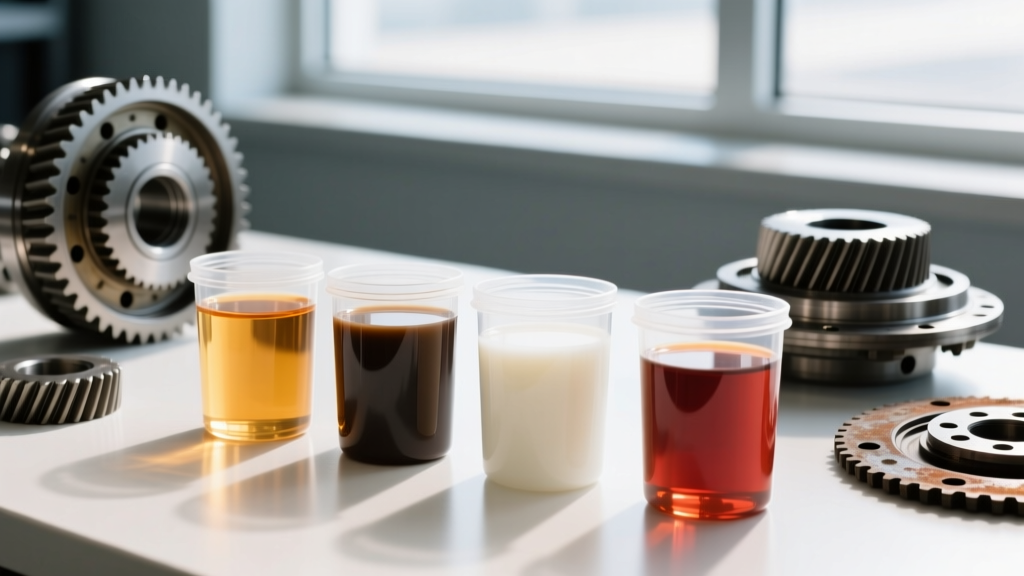
When you pull the fill plug or drop the differential cover, the visual state of the fluid is your first indicator of internal health. Use the following diagnostic matrix to interpret your findings.
| Fluid Color | Visual Texture | Primary Diagnosis | Recommended Action |
|---|---|---|---|
| Bright Amber / Honey | Smooth, translucent | New or excellent condition. | Reinstall plug; no service needed. |
| Dark Brown / Opaque | Thick, sludgy | Severe oxidation, thermal breakdown, or heavy clutch pack wear. | Immediate fluid flush; inspect clutch packs for glazing. |
| Milky / Chocolate Milk | Emulsified, frothy | Water intrusion via axle seals or clogged axle vent. | Flush immediately; replace axle seals and clear vent hose. |
| Jet Black | Gritty, carbon-heavy | Burnt friction modifiers; clutch disc material shedding. | Drop cover, clean magnet, rebuild Posi clutch packs. |
| Grey / Silver Metallic | Reflective paste or flakes | Ring and pinion gear wear or bearing cage degradation. | Inspect gear backlash and bearing preload; consult Ring-Pinion.com for wear patterns. |
Decoding Texture and Particulate Contamination
Color only tells half the story. To truly assess the health of your posi track differential, you must evaluate the fluid's texture and the debris trapped on the magnetic fill plug or the internal differential cover magnet.
The Magnetic Plug Test
When you remove the magnetic fill plug, expect to see a fine, dark grey paste. This is normal wear material from the thrust washers and side gears. However, the type of metallic debris you find is critical:
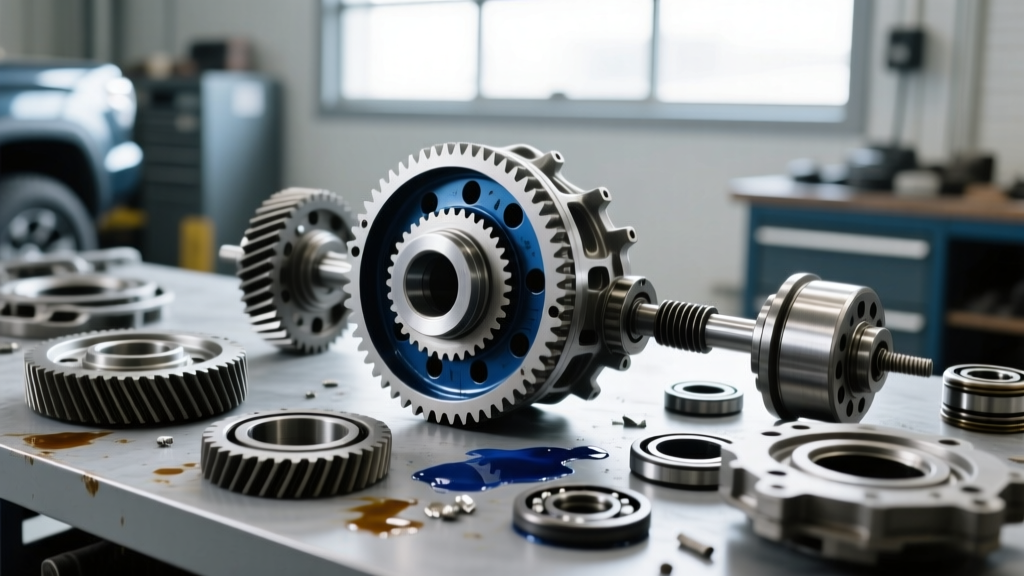
- Copper or Brass Flakes: This indicates the disintegration of the spider gear thrust washers or the backing plates of the limited-slip clutch discs. If you see brass, your Posi unit is eating itself from the inside out.
- Chunky Silver Shards: This is a red flag. It points to catastrophic bearing cage failure, pinion bearing spalling, or ring gear tooth shearing. The differential requires a complete teardown and rebuild.
- Non-Magnetic Black Grit: This is shed friction material from the Posi clutch packs. Over time, rayon or carbon-fiber discs wear down, turning the fluid into an abrasive lapping compound that will score your ring and pinion gears if left unchanged.
The Friction Modifier Factor: Smell and Chatter
Your nose is a highly calibrated diagnostic tool in the transmission and drivetrain world. As mentioned, GL-5 gear oil naturally smells of sulfur. However, if the fluid smells distinctly like burnt toast or acrid smoke, the differential has experienced severe thermal overload.
This happens when the limited-slip friction modifier degrades due to extreme heat (often exceeding 300°F at the clutch interface). When the modifier burns off, the clutch packs lose their slip capability and begin to grab aggressively. This results in the infamous 'Posi chatter'—a violent shuddering sensation during low-speed, tight-radius turns. If you drain the fluid and it smells burnt, simply adding more friction modifier to fresh oil is a temporary band-aid. The clutch packs are likely glazed and will require a mechanical rebuild using a kit like the Eaton Posi Performance Rebuild Kit (available through Summit Racing).
Step-by-Step Preventive Maintenance & Service Specs
If your fluid analysis indicates dark brown or black oil without metallic chunks, a preventive service is required. Here are the exact specifications and procedures for servicing a standard GM 10-bolt (8.5-inch or 8.625-inch) Posi-Traction differential.
Required Materials and Part Numbers
- Gear Oil: ACDelco Dexron 75W-90 Synthetic (P/N 88862624) or Amsoil Severe Gear 75W-90. Capacity: ~2.1 to 2.4 quarts.
- Friction Modifier: GM Limited Slip Axle Lubricant Additive (P/N 88900333) - 4 oz bottle.
- Gasket / Sealant: Fel-Pro RDS55341 PermaMolded Gasket OR Permatex Ultra Black RTV (P/N 81173).
- Brake Cleaner: For degreasing the cover and housing mating surfaces.
Torque Specifications and Procedure
- Drain / Remove Cover: Loosen the 10 cover bolts (typically 10mm or 3/8-inch). Leave the top two bolts snug while prying the bottom to let the fluid drain into a catch pan. Remove all bolts and drop the cover.
- Clean Internals: Wipe the internal magnets clean. Use brake cleaner to flush out black clutch sludge from the carrier and ring gear teeth. Do not use high-pressure water or steam.
- Prep the Surface: Scrape old RTV or gasket material from the axle housing and cover using a plastic gasket scraper to avoid gouging the mating surface.
- Reinstall Cover: If using RTV, apply a continuous 1/4-inch bead. Install the cover and hand-thread all bolts. Torque the cover bolts to 25 lb-ft in a criss-cross pattern to ensure even clamping force and prevent cover warping.
- Fill and Add Modifier: Remove the fill plug (located on the front or side of the housing). Pump in the 4 oz friction modifier first, followed by the 75W-90 gear oil until it reaches the bottom of the fill hole threads. Reinstall the fill plug and torque to 33 lb-ft.
Pro-Tip for 2026: If your vehicle features an aftermarket deep-sump differential cover (such as PPE or Mag-Hytec), be aware that the fill plug location is often raised. You must fill the differential to the level of the factory fill hole height, not the bottom of the aftermarket cover's plug, or you risk overfilling and blowing out the axle seals due to fluid foaming and expansion.
Cost Breakdown: DIY vs. Professional Service
Understanding the financial aspect of drivetrain maintenance helps justify the time spent on DIY fluid analysis. Below is a realistic cost breakdown for a Posi Track differential service in the current market.
- DIY Parts Cost: $45 - $75 (Includes 3 quarts of synthetic 75W-90, one bottle of GM friction modifier, and RTV/gasket).
- Professional Shop Labor: Most dealerships and independent 4x4 shops book this job at 1.0 to 1.5 hours. At an average labor rate of $130 to $170 per hour, expect to pay $130 - $255 in labor.
- Shop Parts Markup: Shops typically charge $80 - $120 for OEM fluids and shop supplies.
- Total Shop Cost: $210 - $375.
By pulling the fill plug yourself every 15,000 miles to check the fluid color and smell, you can easily extend the life of your Eaton Positraction unit past 150,000 miles. Ignoring the warning signs of milky emulsion or burnt friction modifiers, however, will quickly turn a $60 DIY fluid swap into a $2,500 ring-and-pinion and carrier rebuild.