When studying microbiology, a common exam question is why is gram stain considered differential. The answer lies in its ability to separate bacteria into two distinct groups—Gram-positive and Gram-negative—based on their cell wall composition. In the automotive drivetrain bay, master technicians apply this exact same 'differential' philosophy when diagnosing axle leaks, bearing whines, and gear oil degradation. Instead of staining cells, we use spectrographic fluid analysis, magnetic plug readings, and acoustic diagnostics to differentiate between catastrophic gear failure and routine bearing or seal degradation. As we move through 2026, with vehicles enduring higher towing loads and extended service intervals, understanding the precise differential diagnosis of axle components is more critical than ever.
The 'Differential' Diagnostic Method: Fluid and Noise Analysis
Before unbolting a single driveshaft, an expert technician differentiates the root cause of the failure. A leaking differential or a whining axle is merely a symptom. By analyzing the gear oil and the acoustic signature of the drivetrain, we can pinpoint the exact failing component.
Particulate and Fluid Analysis
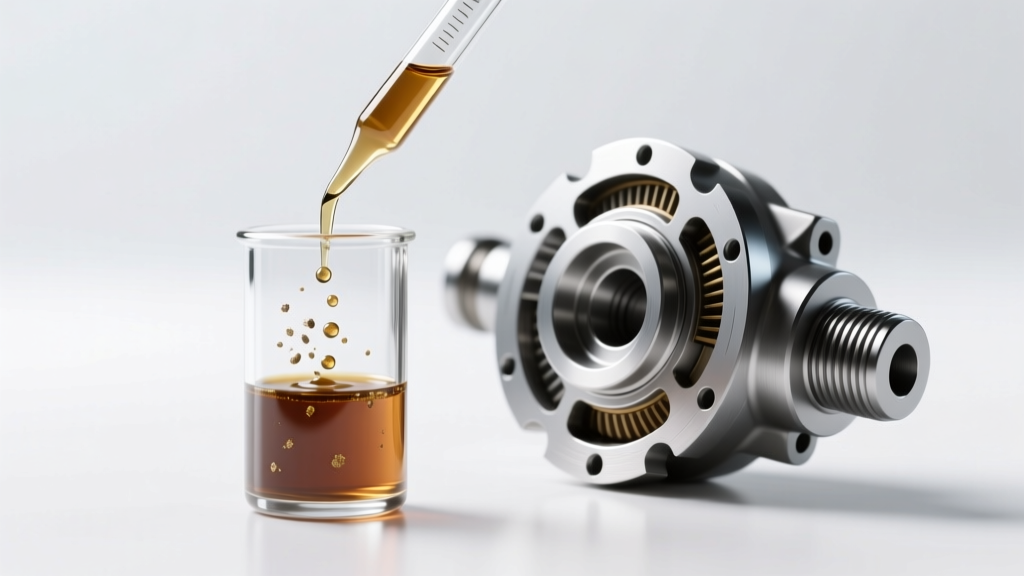
Drain the differential fluid into a clean pan and inspect it under a bright LED light. Ferrous metal particles (which cling to the magnetic drain plug) indicate wear on the ring and pinion gears or the roller bearings. Non-ferrous debris, such as brass or bronze flakes, points to thrust washer or limited-slip clutch pack degradation. If the fluid is milky, water intrusion has occurred, usually due to a submerged axle vent or a compromised pinion seal. According to Timken's latest bearing wear guidelines, even microscopic ferrous shavings in the gear oil act as a lapping compound, accelerating pitting on the bearing races and necessitating immediate replacement.
Acoustic Differentiation
- Pinion Bearing Whine: A high-pitched whine that changes frequency between load (acceleration) and coast (deceleration). This indicates incorrect pinion depth or worn pinion bearings.
- Carrier Bearing Growl: A low-frequency rumble that remains constant regardless of throttle position, scaling directly with vehicle speed.
- Axle Shaft Bearing Noise: A rhythmic clicking or grinding localized to one specific wheel hub, often worsening during lateral load transfers (cornering).
Pinion Seal vs. Axle Shaft Seal: Identifying the Leak Source
Seal failures are the most common reason for differential service. However, simply swapping a seal without addressing the underlying cause guarantees a rapid return of the leak.
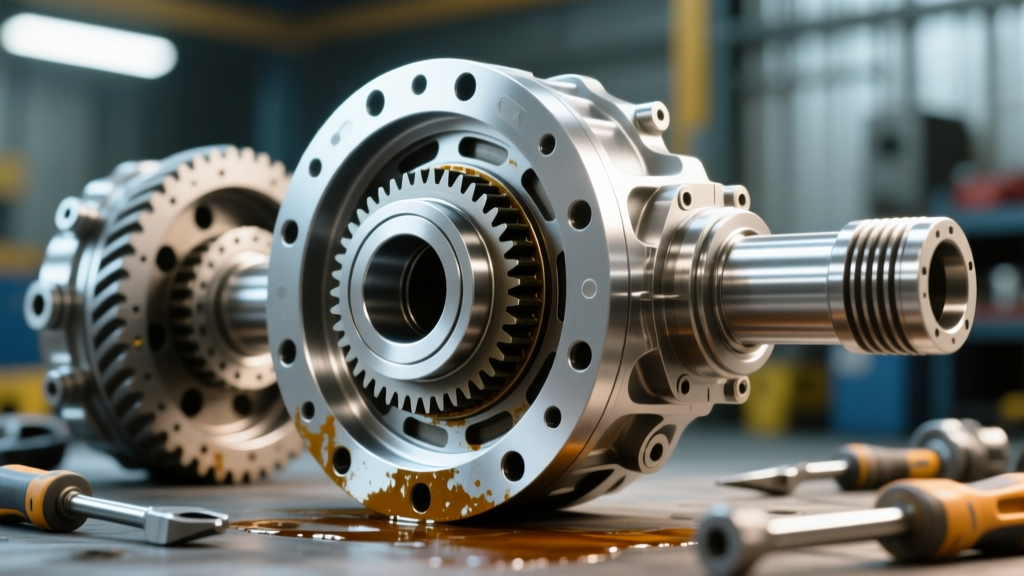
Pinion Seal Leaks: Located where the driveshaft yoke enters the differential housing. Fluid will coat the center section and drip onto the exhaust or crossmember. The primary culprit is rarely just old rubber; it is usually a grooved yoke seal surface or a clogged axle breather vent. When the differential heats up, internal pressure expands. If the vent is blocked, the pressure forces gear oil past the pinion seal lip. Always replace or upgrade to a high-flow remote axle vent before installing a new seal.
Axle Shaft Seal Leaks: Located at the outer ends of the axle tubes. Fluid will migrate inside the wheel barrel or coat the brake backing plate. On semi-floating axles like the GM 8.5-inch 10-bolt or Ford 8.8-inch, the axle shaft bearing acts as the roller surface for the seal. If the axle shaft bearing surface is pitted or grooved, a new seal will leak immediately. In these cases, installing a SKF Speedi-Sleeve over the damaged axle shaft surface is mandatory.
Step-by-Step Pinion Bearing and Seal Replacement
Replacing a pinion seal is often marketed as a simple job, but if the pinion bearing preload is disturbed or set incorrectly, you will destroy the pinion bearings within 500 miles. Here is the professional procedure for a GM 8.5-inch 10-bolt differential, which shares architectural similarities with many Dana Spicer and Ford 8.8-inch units.
- Mark and Measure: Before removing the pinion nut, use a dial-type inch-pound torque wrench to measure the existing rotational preload. Record this number. Mark the pinion nut and yoke with a paint pen to count thread turns during disassembly.
- Yoke Removal: Use a specialized yoke puller. Never hammer the yoke off, as the shock load can shatter the brittle cage of the inner pinion bearing.
- Seal Extraction and Surface Prep: Pry out the old seal. Inspect the yoke seal surface. If a groove is present, install a Speedi-Sleeve (e.g., SKF 99187) to provide a pristine, factory-smooth sealing surface.
- Reassembly and Preload: Install the new seal (lubricate the inner lip with gear oil). Reinstall the yoke and pinion nut. Tighten the nut while frequently checking the rotational torque. Your goal is to match the original recorded preload, plus 3-5 inch-pounds to account for the new seal's friction.
Crush Sleeve vs. Solid Spacer Preload Setup
Factory differentials use a crush sleeve to establish pinion bearing preload. This is a one-time-use, deformable steel tube. If you over-tighten the pinion nut by even a fraction of an inch, you over-crush the sleeve, resulting in excessive bearing preload, extreme heat, and catastrophic bearing seizure. You must then remove the pinion, press off the bearings, and install a new crush sleeve.
Expert mechanics eliminate this risk by using a Solid Spacer Kit (such as the Ratech Manufacturing 4116 kit for the GM 8.5-inch). This kit replaces the crush sleeve with a hardened steel spacer and a set of precision shims. You assemble the pinion, measure the drag with your inch-pound torque wrench, and swap shims until you hit the exact target preload (typically 15-25 in-lbs for used bearings, 25-35 in-lbs for new bearings). This allows for infinite, safe adjustments and is highly recommended for any heavy-duty or towing application in 2026.
Carrier and Axle Bearing Replacement: Pressing and Shimming
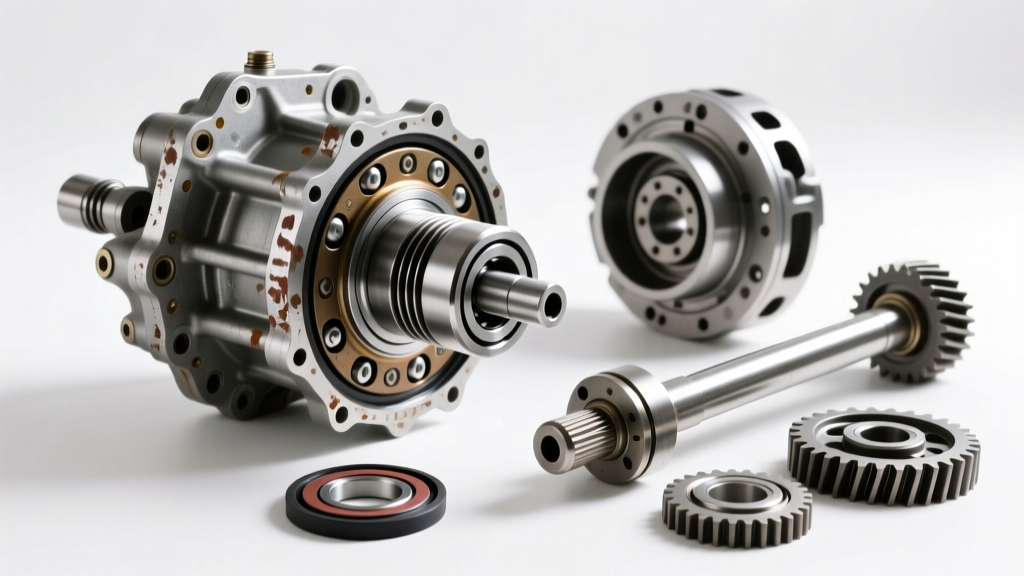
When differential fluid analysis reveals severe roller bearing wear, or when setting up a new ring and pinion, carrier and axle bearings must be replaced. These are interference-fit components that require a hydraulic press and specialized bearing pullers.
Carrier Bearings: The carrier assembly must be shimmed to achieve the correct backlash (the clearance between the ring and pinion gear teeth). For most street-driven passenger and light truck applications, a backlash of 0.006 to 0.010 inches is ideal. Use a dial indicator mounted to the housing to measure backlash at three different points around the ring gear. If the variance exceeds 0.002 inches, the ring gear is warped or improperly seated to the carrier case.
Axle Shaft Bearings: On semi-floating axles, the bearing and seal are pressed onto the axle shaft. When pressing a new Timken bearing onto the shaft, always apply pressure to the inner race. Pressing on the outer race or cage will brinell the bearing rollers, creating a flat-spot noise that will manifest the moment the vehicle is driven.
2026 Part Number, Torque, and Cost Reference Table
Having the correct OEM or premium aftermarket part numbers and specifications at your fingertips separates the amateurs from the drivetrain specialists. Below is a reference chart for the two most common light-truck differentials serviced today.
| Component | GM 8.5' 10-Bolt (Part #) | Ford 8.8' (Part #) | Specification / Torque | Est. DIY Cost |
|---|---|---|---|---|
| Pinion Bearing Kit | Timken SET45 | Timken SET36 | Preload: 15-25 in-lbs (Used) | $65 - $95 |
| Pinion Seal | National 710987 | National 710928 | Yoke Nut: 150-175 ft-lbs* | $18 - $25 |
| Axle Shaft Seal | National 710987 | National 711041 | Press-fit depth flush to tube | $12 - $20 |
| Solid Spacer Kit | Ratech 4116 | Ratech 4128 | Eliminates crush sleeve | $35 - $45 |
| Carrier Bearing Kit | Timken LM501349/10 | Timken LM102949/10 | Backlash: 0.006' - 0.010' | $40 - $60 |
*Note: Pinion nut torque is a secondary measurement. Rotational inch-pound preload is the primary and mandatory specification. Never use an impact wrench to set pinion preload.
Expert Fluid Selection and Break-In Procedures
Once the bearings and seals are replaced, the differential must be filled with the correct lubricant. For 2026, full synthetic 75W-90 GL-5 gear oil is the standard for both the GM 10-bolt and Ford 8.8-inch axles. Synthetics offer vastly superior film strength and thermal stability, which is critical for the microscopic clearances in modern tapered roller bearings.
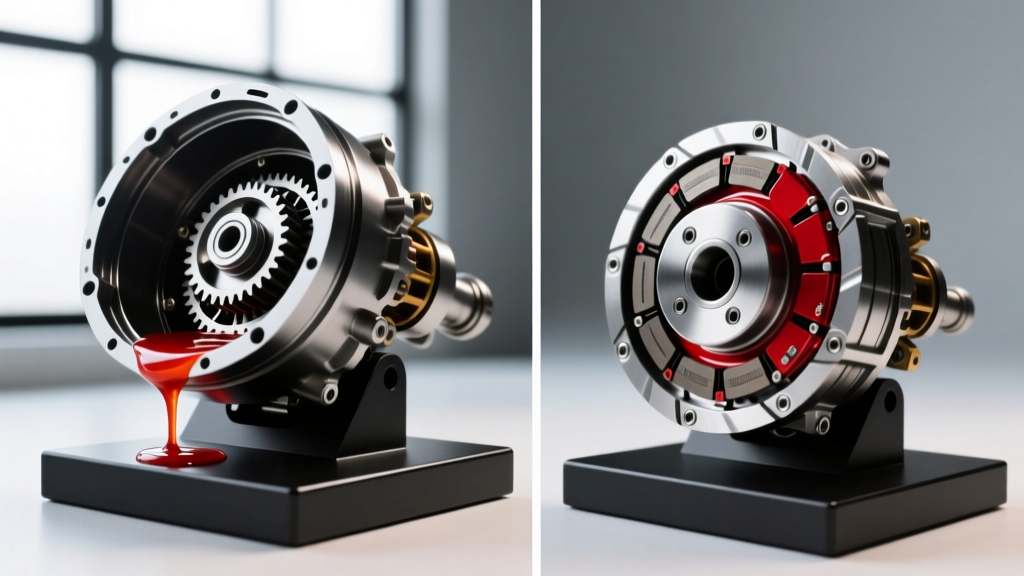
If your differential is equipped with a clutch-type limited-slip differential (such as the Eaton Posi-Traction or Ford Trac-Lok), you must add a friction modifier additive (typically 4 oz per axle) to prevent clutch chatter during tight, low-speed cornering. However, if your axle uses a helical gear-type LSD (like the Torsen or Eaton Detroit Truetrac), no friction modifier is required; standard synthetic GL-5 is sufficient.
Finally, respect the break-in procedure. Newly installed bearings and gear sets generate significant friction and heat. Drive the vehicle conservatively for the first 500 miles, avoiding sustained highway speeds over 65 MPH and heavy towing. After 500 miles, drain the break-in fluid to remove the initial metallic wear particulates, replace the crush sleeve or solid spacer shims if preload has shifted, and refill with fresh synthetic gear oil. This meticulous, differential approach to maintenance ensures your axle assembly will survive hundreds of thousands of miles of punishing service.