The Mechanics of Limited Slip Differential Operation
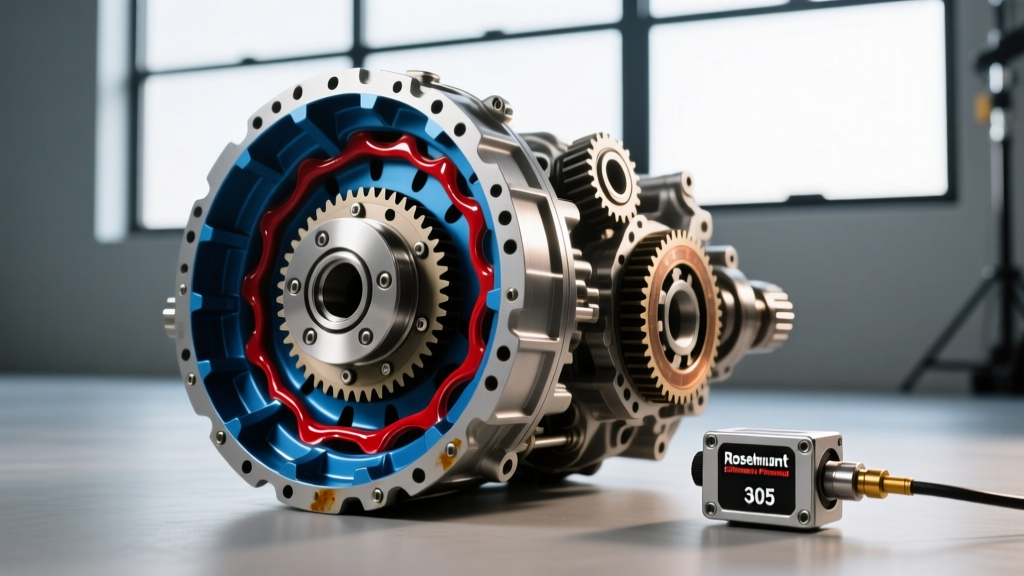
To understand the critical nature of differential maintenance, we must first dissect the internal mechanics of a limited slip differential (LSD). Unlike an open differential, which routes 100% of available torque to the wheel with the least resistance, an LSD utilizes internal clutch packs to bias torque across both axle shafts. In popular axles like the Ford 8.8 and the GM 8.625-inch (10-bolt), this is achieved via S-cam or cone-style clutch packs situated between the side gears and the differential case.
When a vehicle corners, the outer wheel must rotate faster than the inner wheel. The spider gears (pinion gears) rotate on their shafts to accommodate this speed difference. However, when one wheel loses traction, the preload springs and S-cams force the clutch packs to bind against the differential case. The friction material—often a paper-based composite or, in high-performance applications, carbon-fiber—grips the steel separator plates. This mechanical lock transfers torque to the wheel that still has traction, effectively multiplying the axle's tractive effort.
Clutch Pack Wear and Preload Loss
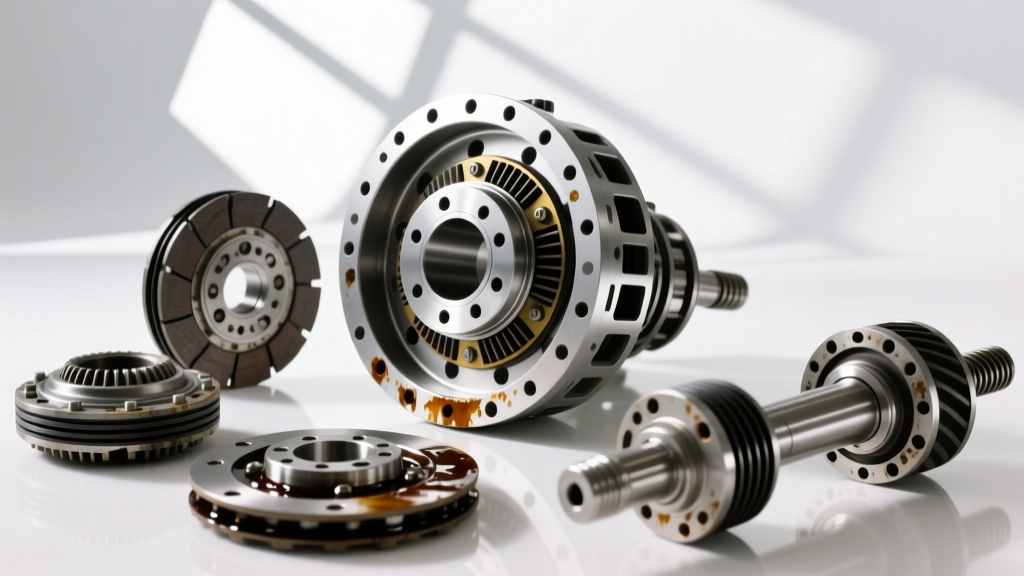
Over time, the friction material on the clutch discs wears down. A standard Ford 8.8 carbon-fiber clutch pack measures roughly 0.060 inches thick per disc when new. As these discs wear, the overall stack height decreases, reducing the clamping force exerted by the S-springs. When the preload drops below the threshold required to overcome the breakaway torque, the LSD begins to behave like an open differential, resulting in one-wheel peels and compromised off-road or track performance.
Thermal Degradation: The Enemy of LSD Clutch Packs
The primary catalyst for premature LSD failure is not mechanical stress, but thermal degradation. During high-slip events—such as drag racing launches, rock crawling, or towing heavy loads up steep grades—the clutch packs slip microscopically to manage torque bias. This slip generates immense localized heat, frequently pushing internal differential fluid temperatures past 250°F (121°C).
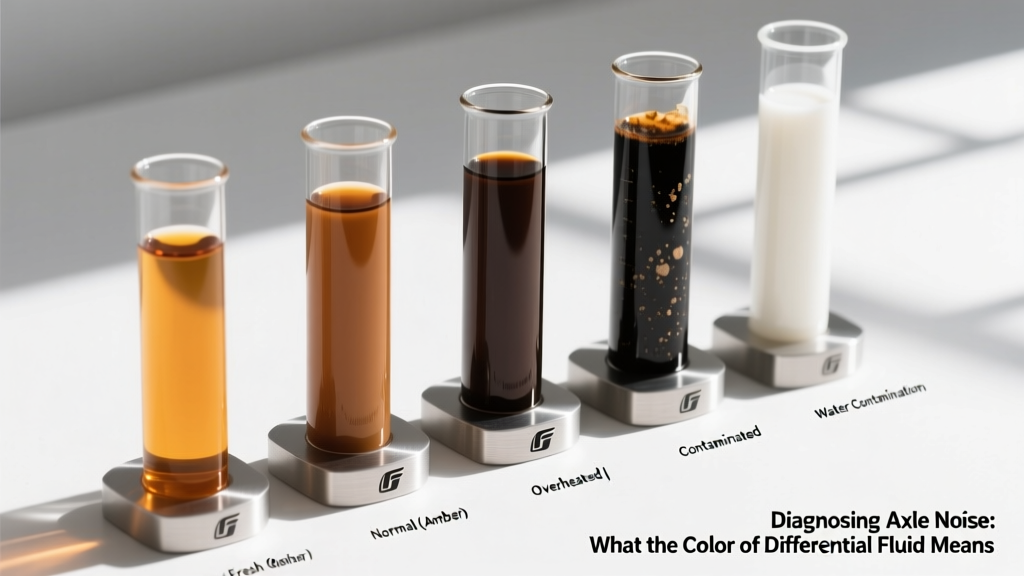
At these elevated temperatures, the long-chain polymers acting as friction modifiers in the gear oil begin to shear and oxidize. Once the friction modifier breaks down, the clutch packs lose their ability to engage smoothly. Instead of a progressive bind, the clutches experience 'stick-slip' friction. This manifests audibly as a rhythmic chattering or groaning noise during low-speed turns, and physically as harsh, jerky engagement that can shatter spider gears or strip side-gear splines.
PML Differential Cover Engineering: Solving the Heat Problem
Mitigating thermal degradation requires increasing the thermal mass and cooling efficiency of the axle assembly. This is where upgrading to a PML differential cover becomes a highly effective, bolt-on engineering solution. Unlike stamped steel OEM covers that trap heat and hold minimal fluid, PML covers are sand-cast from heavy-duty A356 aluminum alloy.
Capacity, Fins, and Magnetic Drain Plugs
Let us look at the specific engineering advantages of a PML differential cover using the ubiquitous Ford 8.8 axle (PML Part #10821) and the GM 10-bolt (PML Part #10631) as benchmarks:
- Increased Fluid Volume: The Ford 8.8 PML cover adds approximately 1.5 to 2.0 pints of additional fluid capacity over the stock stamped cover. More fluid means a higher thermal threshold before the oil begins to break down.
- Directional Cooling Fins: The external finning is strategically angled to catch cross-flowing air while the vehicle is in motion, acting as a passive heat sink that draws heat away from the ring and pinion gear mesh point.
- Magnetic Drain and Fill Plugs: Clutch pack wear generates fine ferrous particulates. PML integrates high-strength neodymium magnets into the drain plug, capturing metallic sludge before it can become embedded in the soft friction material of the clutch discs.
In 2026, the investment for a PML cover typically ranges from $190 to $260 depending on the axle application, a fraction of the cost of a complete LSD rebuild, which can easily exceed $800 in parts and machine shop labor.
Fluid Specifications and Friction Modifier Protocols
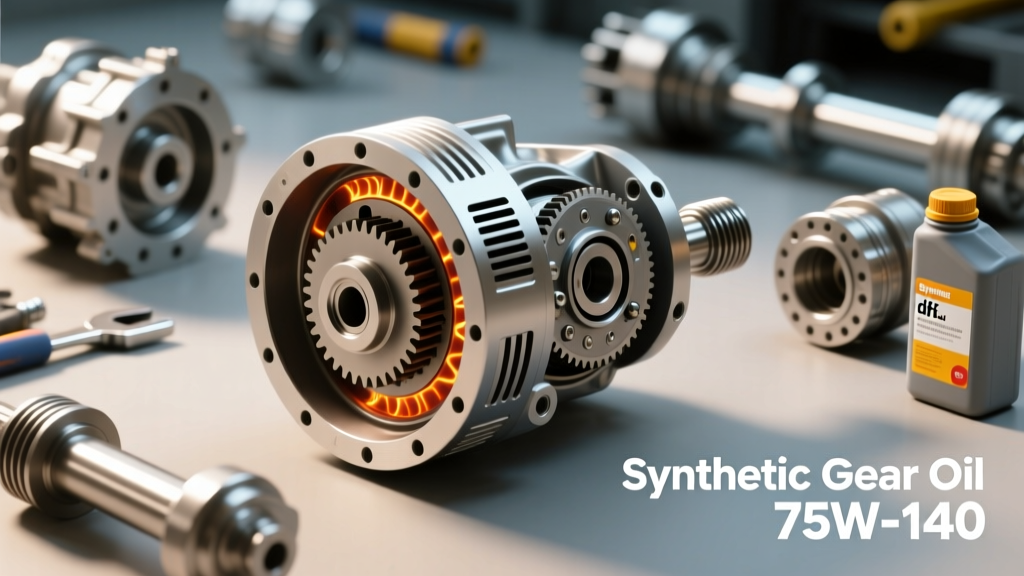
Proper lubrication is the lifeblood of limited slip operation. API GL-5 rated synthetic gear oils are mandatory for modern hypoid ring and pinion gears, but the friction modifier (FM) package is what dictates LSD behavior. According to Amsoil's technical bulletins, synthetic 75W-90 or 75W-140 formulations offer superior shear stability compared to conventional petroleum-based oils, maintaining their viscosity index even under extreme towing loads.
| Axle Application | Recommended Viscosity | OEM Capacity | PML Cover Capacity | Friction Modifier Protocol |
|---|---|---|---|---|
| Ford 8.8 (Super 8.8) | 75W-140 Synthetic | 3.75 Pints | ~5.25 Pints | 4 oz Motorcraft XL-3 |
| GM 8.625" (10-Bolt) | 75W-90 Synthetic | 4.2 Pints | ~5.5 Pints | 4 oz GM ACDelco 88900401 |
| Dana 44 (JK/JL Wrangler) | 75W-140 Synthetic | 4.0 Pints | ~5.5 Pints | Integrated in 'LS' Gear Oil |
Note: Always consult the specific manufacturer's data. For instance, some modern 'LS' (Limited Slip) branded gear oils from brands like Red Line Oil already contain a baseline friction modifier package, requiring less or no additional additive.
Step-by-Step LSD Service with PML Cover Installation
Executing a differential service requires precision. Improper sealing or incorrect torque sequences will lead to leaks and catastrophic fluid loss. Follow this protocol when installing your PML differential cover and servicing the LSD:
- Drain and Inspect: Remove the OEM cover bolts. Allow the fluid to drain completely. Inspect the OEM cover for deep gouges caused by ring gear contact. If the ring gear was kissing the stock cover, the PML cover's deeper internal clearance will solve this interference issue.
- Clean the Mating Surface: Use a plastic gasket scraper and aerosol brake cleaner to remove all old RTV silicone from the axle housing mating surface. Any leftover debris will cause an immediate leak.
- Apply the Sealant: Do not use cheap, high-sensor silicones. Use Permatex 'The Right Stuff' (Part #29208). Apply a continuous 3mm bead around the bolt holes and the outer perimeter. PML covers are designed to use RTV rather than cork gaskets, as RTV provides superior clamping and vibration resistance.
- Torque to Specification: Install the PML cover and thread the bolts hand-tight. Torque the bolts in a crisscross pattern to ensure even clamping.
- Ford 8.8 Cover Bolts: 25 ft-lbs (34 Nm)
- GM 10-Bolt Cover Bolts: 22 ft-lbs (30 Nm)
- Fill and Add Modifier: Install the magnetic fill plug first. Pump the synthetic gear oil into the fill hole until it reaches the bottom of the threads. If required, inject your 4 oz bottle of friction modifier, then top off with gear oil until it weeps out of the fill hole.
Diagnosing Clutch Chatter Post-Service
After reassembly, the friction modifier must be worked into the porous surface of the clutch discs. Drive the vehicle to an empty parking lot and perform 10 to 15 tight, low-speed figure-eight turns. This forces the clutch packs to slip and absorb the additive.
Expert Diagnostic Tip: If chattering persists after the figure-eight test and a 500-mile break-in period, do not immediately add more friction modifier. Over-modifying the fluid will reduce the fluid's coefficient of friction too much, causing the LSD to slip excessively under heavy load and overheat. Instead, verify your clutch pack stack height and S-spring preload with a micrometer during the next teardown. For further technical specifications on axle clearances, reference the engineering data at PML Inc.
Maintaining a limited slip differential is an exercise in thermal and chemical management. By pairing high-shear synthetic lubricants with the increased volume and heat dissipation of a PML differential cover, you effectively future-proof your axle assembly against the rigors of modern towing, off-roading, and high-performance driving.