The Realities of TCC Shudder in Modified Drivetrains
When enthusiasts search for a torque converter shudder fix, they are usually met with generic advice: flush the fluid, add a friction modifier, or replace the torque converter clutch (TCC) solenoid. While this works for a stock daily driver, it completely fails for modified performance applications. In 2026, as factory transmissions like the GM 6L80, Ford 10R80, and ZF 8HP are pushed far beyond their stock torque limits via supercharging, turbocharging, or aggressive camshafts, the factory TCC becomes the weakest link in the drivetrain.
Shudder occurs when the TCC enters a state of 'stick-slip' friction. The clutch rapidly grabs and releases, creating a harmonic resonance that feels like driving over rumble strips. In high-torque applications, the factory single-disc friction material simply cannot handle the shear force, and the stock stamped-steel converter cover flexes under load, ruining the clamping surface. To achieve a permanent torque converter shudder fix in a performance build, you must address hardware limitations, hydraulic pressure stability, and software lockup strategies simultaneously.
Diagnosing Harmonic Resonance vs. True TCC Failure
Before tearing into the bellhousing, performance builders must verify the shudder's origin. Using advanced OBD2 PID logging (via tools like HP Tuners VCM Suite), monitor the TCC Slip RPM versus Commanded TCC Slip during lockup. If the actual slip RPM oscillates wildly (e.g., bouncing between -50 and +80 RPM) while the commanded slip remains steady at 20 RPM, you have a mechanical or hydraulic failure. If the shudder only occurs at very low RPMs under high load, you are experiencing engine lugging and drivetrain harmonic resonance, which requires a software-based torque converter shudder fix.
Hardware Solutions: Billet Covers and Multi-Disc TCCs
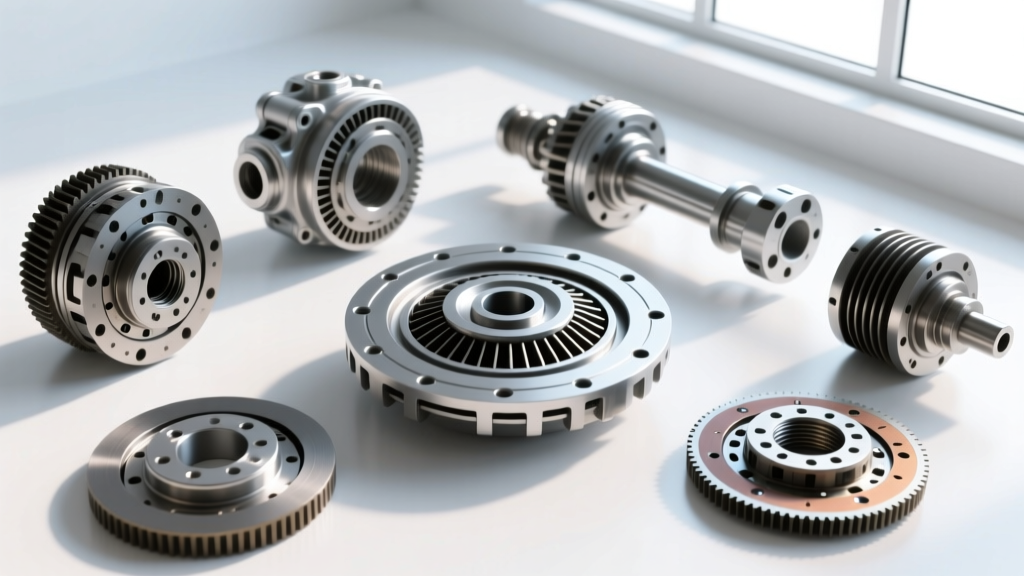
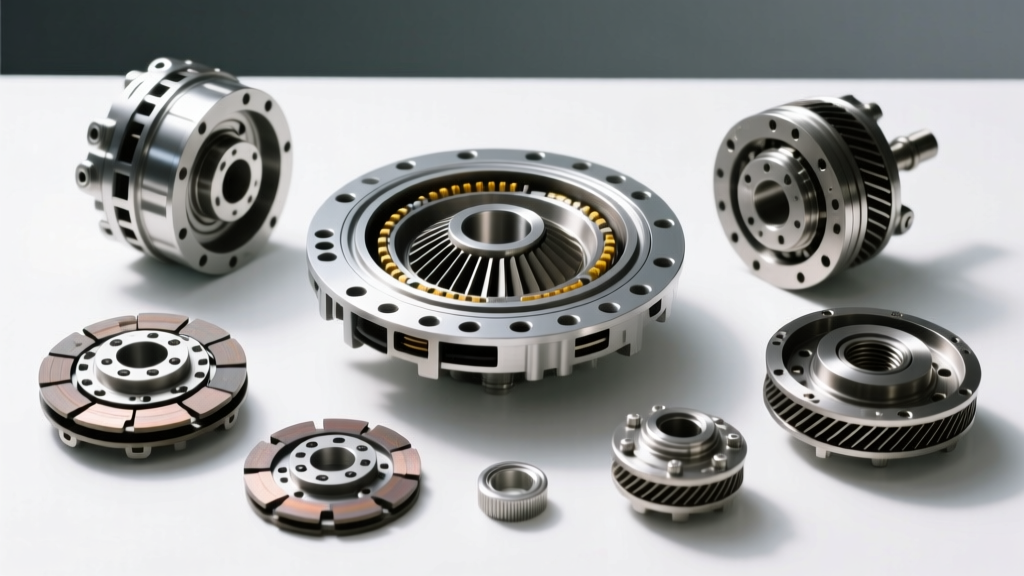
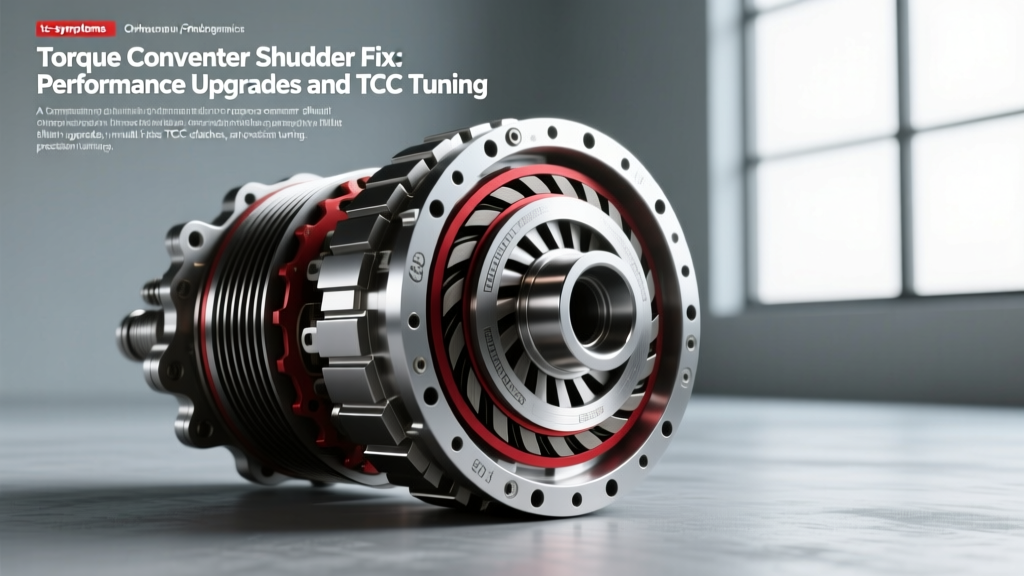
The foundation of any high-horsepower shudder fix is replacing the flexible factory stamped-steel converter cover with a CNC-machined billet steel cover. Billet covers eliminate the micro-deflection that causes uneven clutch application. Furthermore, upgrading from a single-disc TCC to a multi-disc clutch pack doubles or triples the friction surface area, distributing the torque load and virtually eliminating stick-slip shudder.
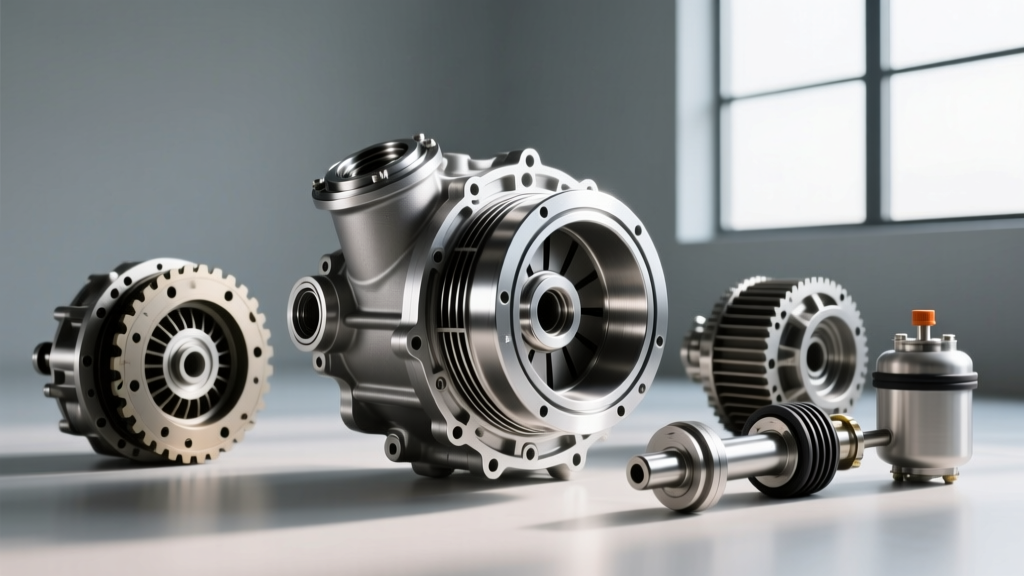
Brands like Circle D Specialties and Precision Industries dominate this space. For a GM 6L80 application making 600-800 wheel horsepower, a billet multi-disc converter with a customized stall speed (e.g., 3200-3600 RPM) is the gold standard. The increased stall speed also moves the lockup point higher into the engine's powerband, naturally avoiding the low-RPM lugging that causes shudder.
Stock vs. Performance Torque Converter Specs (GM 6L80)
| Feature | Factory OEM Converter | Performance Billet Multi-Disc |
|---|---|---|
| Cover Material | Stamped Steel (Prone to flex) | CNC Billet Steel (Zero flex) |
| TCC Friction Type | Single-Disc Woven Carbon | Triple-Disc Sintered Carbon/Kevlar |
| Max Torque Capacity | ~450 lb-ft (at crank) | 850 - 1,000+ lb-ft (at crank) |
| Stall Speed | ~1800 - 2200 RPM | Custom (2800 - 4000+ RPM) |
| Shudder Resistance | Poor under modified torque | Exceptional (Eliminates stick-slip) |
The Software Fix: TCC Lockup Strategy & Tuning
Even the best billet torque converter will shudder if the Transmission Control Module (TCM) commands it to lock up at 1,200 RPM in 6th gear under heavy throttle. The software side of the torque converter shudder fix involves recalibrating the TCC apply tables. Using HP Tuners or EFI Live, tuners must adjust the following parameters:
- Min TPS for TCC Lockup: Increase the throttle position threshold to prevent the TCM from commanding lockup during light-throttle, low-RPM cruising where engine vacuum and torque fluctuations are highest.
- TCC Apply/Release Hysteresis: Widen the gap between lockup and unlock speeds to prevent the transmission from rapidly cycling the clutch on and off when driving on inclines.
- Target Slip RPM: Instead of commanding 0 RPM slip (hard lockup), command a steady 10-20 RPM of slip during heavy acceleration. This micro-slip acts as a fluid damper, absorbing high-frequency engine vibrations before they reach the drivetrain.
Valve Body Upgrades to Stabilize TCC Apply Pressure
In high-mileage performance transmissions, the TCC regulator valve bore in the valve body wears out, causing erratic hydraulic pressure to the converter. This is incredibly common in the GM 4L60E and 4L80E families, as well as early 6L80s. A vital step in the shudder fix protocol is installing a sleeved TCC regulator valve kit. Sonnax Industries offers oversized, hard-coated aluminum valve kits (such as the Sonnax 104740-06K for 4L60-E or specific 6L80 Zip Kits) that restore precise hydraulic control, ensuring the multi-disc clutch receives smooth, linear clamping force rather than pulsating pressure.
Installation Specs, Fluids, and Break-In
Installing a performance torque converter requires strict adherence to torque specifications to prevent runout, which can induce its own form of mechanical shudder. When mating the converter to the flexplate on a GM application, use new OEM-style flexplate bolts. Apply a medium-strength threadlocker (like Loctite 243) and torque the M10 bolts to 45-50 lb-ft in a star pattern. Ensure the converter is fully seated into the transmission oil pump before tightening the bellhousing; you should measure exactly three distinct 'clunks' as the converter slides over the input shaft, stator support, and oil pump drive gear.
Expert Break-In Tip: After installing a multi-disc performance converter, do not immediately subject it to wide-open throttle lockup. Spend the first 300 miles varying your RPM and allowing the TCC to slip under moderate load. This burnishes the sintered carbon friction surfaces into the steel separator plates, ensuring maximum holding power and zero shudder for the life of the build.
For fluid selection, avoid generic 'multi-vehicle' fluids. High-stall, multi-disc converters require fluids with robust shear stability and precise friction modifiers. Red Line D6 or Amsoil Signature Series Fuel-Efficient Synthetic are the top choices for 2026 performance builds, offering superior thermal stability when the TCC is managing high-slip heat during drag strip staging or aggressive street driving.
Cost Breakdown: Is the Performance Upgrade Worth It?
Budgeting for a comprehensive, performance-oriented torque converter shudder fix requires looking at the entire system. While a stock replacement converter might cost $300, it will quickly fail again behind a modified engine.
- Billet Multi-Disc Torque Converter: $850 - $1,400 (depending on stall speed and brand)
- Sonnax Valve Body / TCC Regulator Kit: $60 - $120
- Performance Synthetic Fluid (12-15 Quarts): $150 - $225
- Professional TCM Tuning (TCC Tables): $250 - $450
- Installation Labor (R&R Transmission): $800 - $1,200 (at $150/hr)
Total Estimated Investment: $2,110 - $3,395. While this is a significant investment, it completely eliminates the shudder, safely handles your engine's torque output, and transforms the vehicle's launch and shift characteristics. For any serious performance build, treating the root cause of TCC shudder with hardware and software upgrades is the only reliable path forward.