The Anatomy of TCC Shudder: Beyond the Fluid
Torque converter clutch (TCC) shudder remains one of the most misunderstood drivability complaints in modern automatic transmissions. Typically felt as a rhythmic vibration or "driving over rumble strips" sensation between 35 and 55 mph under light throttle, shudder is fundamentally a friction interface failure. While many technicians immediately blame degraded fluid or a failing solenoid, a comprehensive preventive maintenance approach requires looking deeper into mechanical clearances. Specifically, the precise application of internal and external torque converter spacers plays a hidden but critical role in long-term TCC stability.
When the TCC applies, it creates a direct mechanical lock between the engine and the transmission input shaft. If the friction surface cannot maintain absolute clamping force due to improper piston stroke, hydraulic leaks, or physical misalignment, micro-slippage occurs. This slip-grip-slip cycle translates directly into the harmonic shudder felt in the vehicle cabin. To prevent catastrophic clutch pack failure, we must diagnose the root cause using a systematic, data-driven approach.
Diagnostic Flowchart: Isolating the Shudder Source
Before ordering replacement parts or flushing the system, a proper diagnosis requires verifying the mechanical and hydraulic health of the TCC circuit. According to diagnostic guidelines published by the Automatic Transmission Rebuilders Association (ATRA), isolating shudder requires separating hydraulic control issues from physical clearance faults.
Step 1: The Slip-RPM PID Test
Connect a bi-directional OBD2 scan tool and monitor the TCC Slip RPM PID while driving at a steady 45 mph on a flat surface.
- Normal Operation: Modern slip-controlled converters (like the GM 6L80 or Ford 6R80) are designed to maintain a controlled slip of 20 to 40 RPM to dampen engine vibrations.
- Shudder Condition: If the Slip RPM fluctuates wildly (e.g., jumping between -50 and +150 RPM) or consistently reads above 100 RPM during steady-state cruise, the TCC is failing to maintain hydraulic lock.
Step 2: Flexplate Runout and External Spacing
Physical misalignment is a primary enemy of the TCC friction lining. If the flexplate exhibits excessive runout, the torque converter will wobble on its axis, preventing the TCC piston from applying even pressure against the friction material. Preventive maintenance dictates that anytime a transmission is removed, flexplate runout must be measured with a dial indicator. Maximum allowable runout is typically 0.005 inches. If runout exceeds this, the flexplate must be replaced, or external torque converter spacers (shims) must be evaluated to ensure the converter is not being pulled out of alignment by incorrect bolt lengths or missing flexplate shims.
The Overlooked Culprit: Internal Torque Converter Spacers
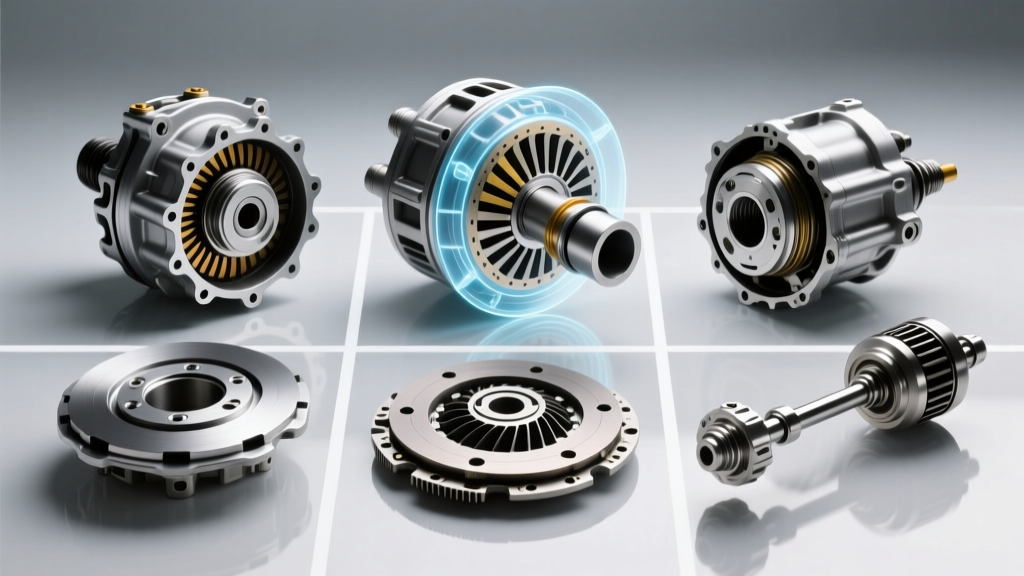
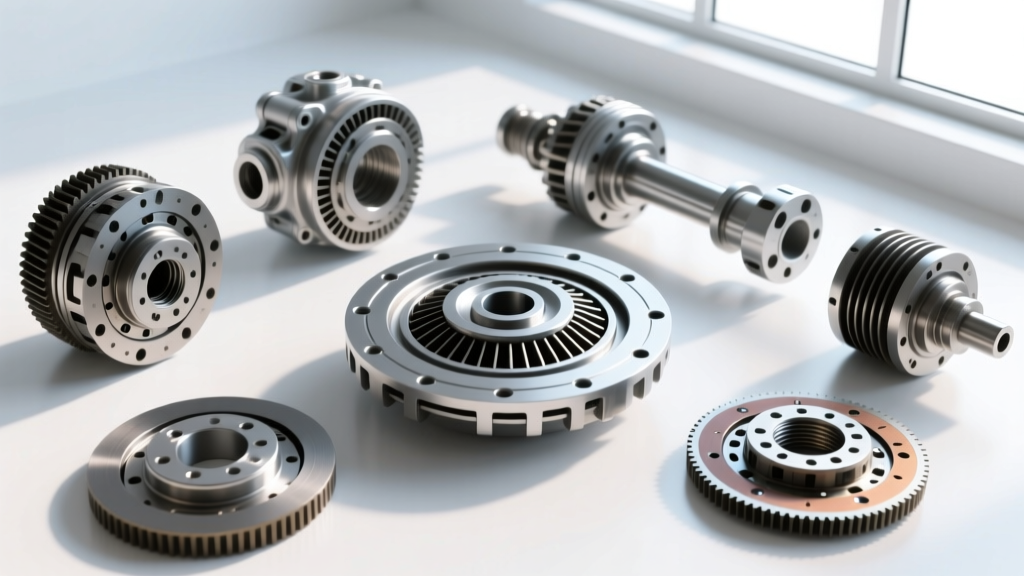
When a torque converter is remanufactured or rebuilt, internal clearances are set using selective snap rings and internal torque converter spacers. These spacers dictate the exact stroke distance of the TCC apply piston. This is where many budget rebuilds fail, leading to premature shudder.
If the rebuilder uses a spacer that leaves the clutch pack clearance too wide, the TCC piston must travel further to engage the friction lining. This extended travel delays apply time and reduces the ultimate clamping force at the end of the stroke, resulting in high-RPM slip and shudder. Conversely, if the spacer is too thick, the piston stroke is too short. The TCC may drag when released, causing severe overheating, fluid degradation, and eventual lockup solenoid failure.
Expert transmission builders utilize precision depth micrometers to measure the piston cavity and select the exact spacer required to achieve a clutch pack clearance between 0.020 and 0.035 inches, depending on the specific converter model. Furthermore, endplay spacers (washers placed between the stator support and the turbine hub) are critical. Incorrect endplay allows the entire converter assembly to shift forward under load, unseating the TCC piston and causing sudden pressure drops that manifest as violent shudder.
Clearance Specifications: Preventive Maintenance Data Table
Maintaining proper clearances is essential for preventing TCC shudder across modern 6, 8, and 10-speed automatic transmissions. The table below outlines critical specifications for common platforms prone to shudder issues.
| Transmission Model | Target TCC Slip (RPM) | TCC Clutch Pack Clearance | Max Flexplate Runout | Common Shudder Cause |
|---|---|---|---|---|
| GM 6L80 / 6L90 | 20 - 40 RPM | 0.025" - 0.040" | 0.005" | Worn slip rings, incorrect internal spacers |
| Ford 6R80 | 0 - 20 RPM | 0.020" - 0.035" | 0.004" | TCC solenoid bore wear, fluid shear |
| ZF 8HP45 / 8HP70 | 0 - 10 RPM | 0.015" - 0.030" | 0.005" | Degraded Lifeguard 8 fluid, valve body wear |
| GM 10L90 | 10 - 30 RPM | 0.020" - 0.035" | 0.005" | Stuck TCC control valve, endplay drift |
Note: Always consult the specific OEM service manual for exact torque specs and clearance tolerances, as revisions occur frequently. For advanced hydraulic repair solutions, Sonnax offers specialized Zip Kits and TCC valve upgrades that address bore wear contributing to shudder.
Fluid Chemistry and Preventive Flush Intervals
No amount of precise spacer selection will save a TCC if the fluid chemistry has failed. Modern Ultra Low Viscosity (ULV) fluids, such as ACDelco Dexron ULV and Motorcraft MERCON ULV, are engineered to reduce parasitic drag and improve fuel economy. However, these fluids are highly susceptible to shear breakdown and friction modifier depletion.
When friction modifiers deplete, the coefficient of friction between the TCC lining and the steel separator plate becomes erratic. Instead of a smooth, controlled slip, the materials grab and release. As a preventive maintenance protocol, severe-duty vehicles (towing, stop-and-go traffic, mountainous terrain) require a complete fluid exchange every 40,000 to 50,000 miles. Using aftermarket "shudder fix" additives is a temporary band-aid that masks the symptom but accelerates the degradation of the specialized ULV friction chemistry. If shudder is caught early, a double-flush with OEM-specified fluid can sometimes restore the friction modifier balance before permanent lining damage occurs.
Cost Analysis: Shudder Fixes vs. Full Replacements
Addressing TCC shudder requires a financial decision framework based on the root cause. Here is a realistic breakdown of repair costs in the current market:
- Preventive Fluid Exchange & Filter: $250 - $400. (Effective only if shudder is caught within the first 5,000 miles of onset and no mechanical damage has occurred).
- Valve Body / Solenoid Replacement: $800 - $1,200. (Required if the TCC PWM solenoid or control valve bore is worn, preventing adequate apply pressure).
- Torque Converter Replacement (R&R): $1,100 - $1,800. (Includes labor to pull the transmission, replace the TC, verify flexplate runout, and flush the cooler lines).
- Full Transmission Rebuild with Upgraded Spacers & Kits: $2,800 - $4,500+. (Necessary if the TCC has shattered, contaminating the transmission with friction material, or if internal clutch packs are compromised).
Ultimately, preventing torque converter shudder relies on a holistic approach. By monitoring TCC slip data, respecting flexplate runout limits, and understanding the vital role that internal and external torque converter spacers play in hydraulic clamping force, technicians and vehicle owners can ensure smooth, shudder-free operation for the life of the drivetrain.