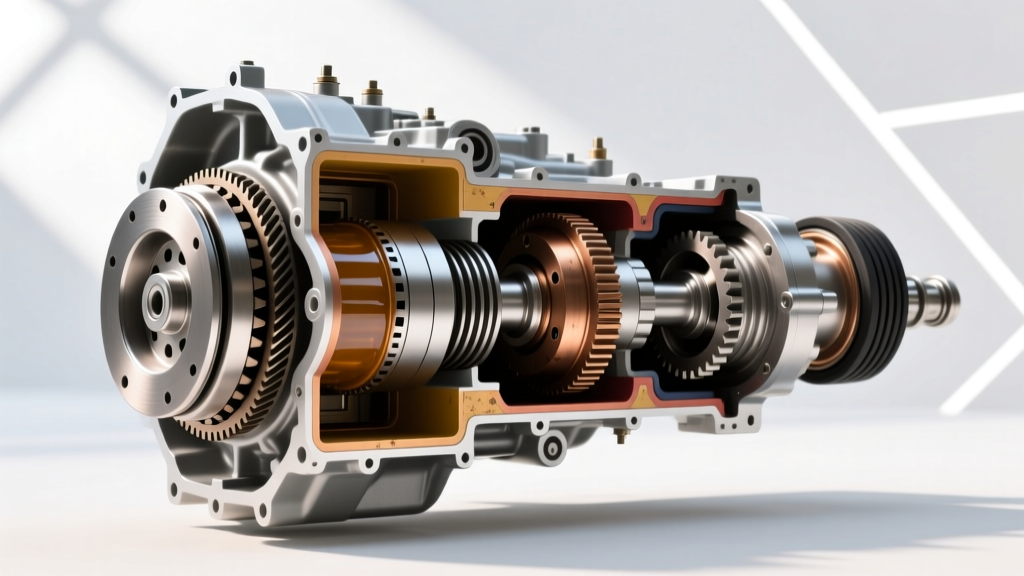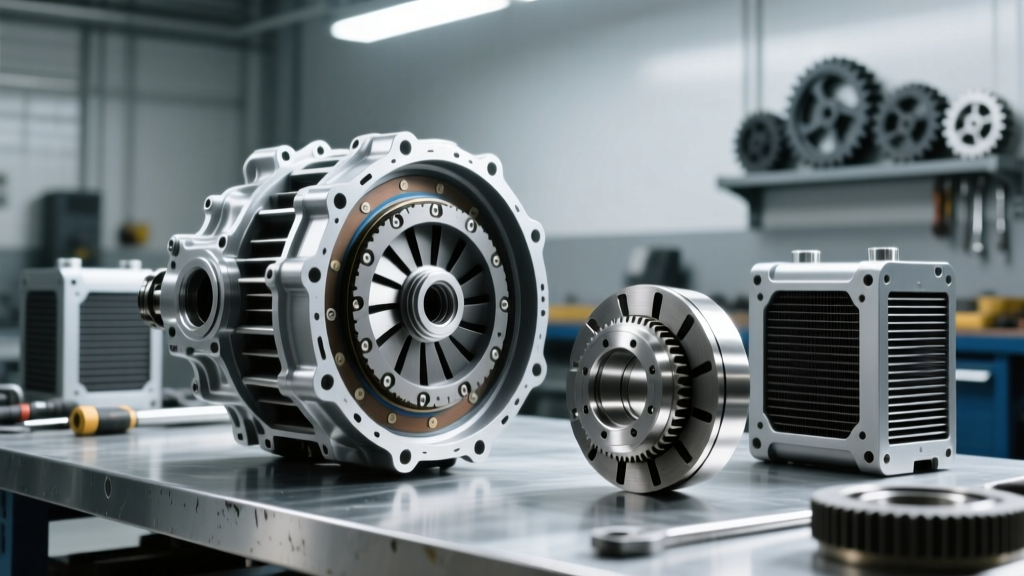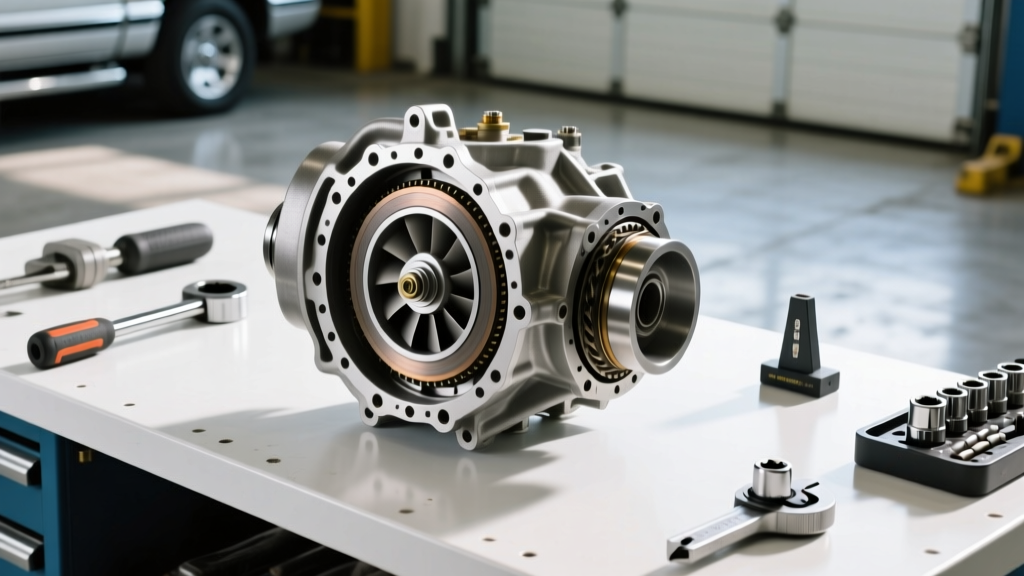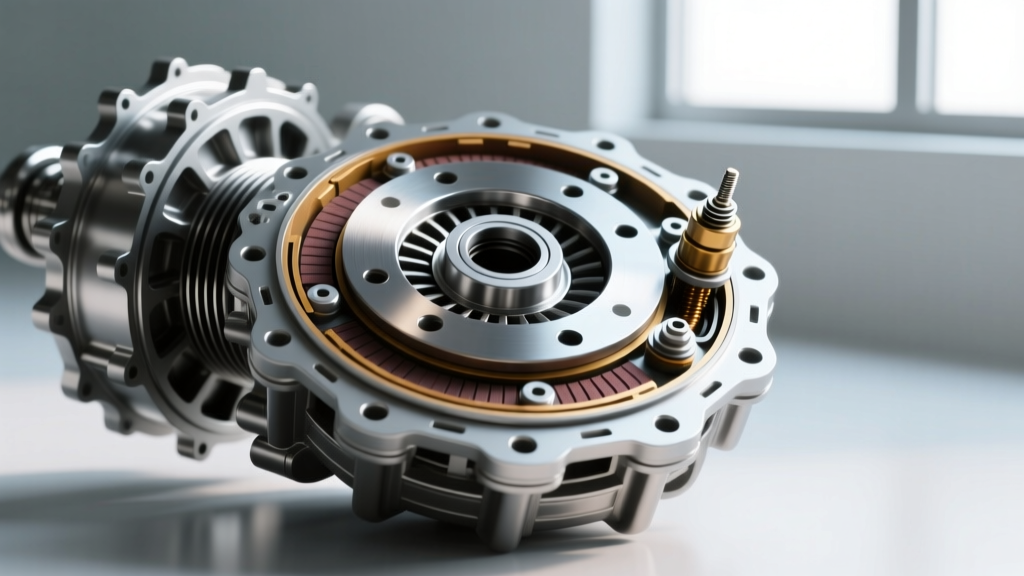
The Architecture of 4L80E Lockup Operation
The GM 4L80E is a legendary longitudinal four-speed automatic, designed to handle the massive torque output of heavy-duty 3/4-ton and 1-ton trucks, the 6.5L Duramax diesel, and the 8.1L Vortec V8. However, when diagnosing a slipping or shuddering torque converter, 4L80E transmission setups present unique hydraulic and electrical challenges. The Torque Converter Clutch (TCC) is critical not just for highway fuel economy, but for managing transmission fluid temperatures. Without a fully locked TCC, the fluid shearing action inside the converter can rapidly push temperatures past 220°F, degrading Dexron VI fluid and destroying clutch packs.
Unlike older, binary on/off lockup solenoids, the 4L80E utilizes a Pulse Width Modulated (PWM) TCC solenoid. This allows the Powertrain Control Module (PCM) to pulse the solenoid at varying duty cycles, creating a smooth, progressive apply of the converter clutch piston. Fluid is routed through the input shaft, applying pressure to the TCC piston, which presses the friction-lined disc against the front cover of the torque converter. When the apply pressure overcomes the release pressure, the engine and transmission input shaft become mechanically coupled.
Early (1991–1996) vs. Late (1997+) PWM Strategies
A common diagnostic trap is ignoring the generational split of the 4L80E. The 1991–1996 'early' models feature a different valve body casting, a non-PWM (on/off) TCC solenoid in some applications, and a different internal fluid routing schematic compared to the 1997–2013 'late' models. Late models rely heavily on the PWM solenoid and a dedicated TCC regulator valve to manage apply pressure. Misidentifying the generation can lead to incorrect ohm readings and misdiagnosed solenoid failures.
4 Critical Symptoms of TCC Failure
Lockup failures in the 4L80E rarely happen without warning. Because the transmission is subjected to extreme gross combined weight ratings (GCWR), the friction material inside the converter takes immense abuse. Look for these primary indicators:
- Highway Shudder (45–65 MPH): Often described as 'driving over rumble strips.' This occurs when the TCC is commanded to a partial apply state (slip mode) but the friction material is glazed, or the TCC regulator valve is oscillating due to bore wear.
- Overheating Under Load: If the TCC cannot achieve full lockup, the continuous fluid slip generates massive heat. You will see fluid temps exceed 230°F on the scan tool, even with an auxiliary cooler.
- Stalling at Idle/Stoplights: If the TCC solenoid is mechanically jammed open, or the apply valve is stuck in the apply position, the converter remains locked. This drags the engine down, causing a stall when coming to a stop, much like forgetting to press the clutch in a manual car.
- Flare on 3-4 Shift: A failing TCC hydraulic circuit can bleed off line pressure, causing a delayed or flaring shift into overdrive (4th gear).
Diagnostic Matrix: Codes, Symptoms, and Root Causes
When scanning the PCM, TCC issues will trigger specific diagnostic trouble codes (DTCs). Use this matrix to narrow down your diagnostic path before dropping the transmission pan.
| OBD-II Code | Symptom Observed | Primary Suspect | Verification Test |
|---|---|---|---|
| P0741 | TCC slip, high RPM on highway, overheating | Worn converter friction material or low line pressure | Monitor TCC slip RPM on scan tool (should be < 20 RPM when locked) |
| P0742 | Engine stalls at stops, harsh engagement | TCC solenoid mechanically stuck on, or valve stuck | Check for 0 ohms (short) or mechanical binding in solenoid |
| P1870 | Harsh 1-2 shift, TCC slip, limp mode | TCC regulator valve bore wear in valve body | Perform air-pressure test on TCC apply circuit at case |
| P0740 | No lockup, open/short circuit detected | Wiring harness chafe, bad pass-through connector | Measure resistance at PCM connector vs. transmission case |
Step-by-Step TCC Solenoid & Circuit Testing
Before condemning the torque converter or the valve body, you must verify the electrical integrity of the TCC PWM solenoid. The 4L80E utilizes an external pass-through connector on the driver's side of the transmission case, which makes testing remarkably straightforward.
- Resistance Check: Set your multimeter to Ohms. Probe the TCC PWM solenoid pins at the external transmission connector. According to Automatic Transmission Service Group (ATSG) specifications, a healthy 4L80E TCC PWM solenoid should read between 10 and 15 ohms at room temperature (68°F). A reading of infinite (open) or near zero (short) dictates a solenoid replacement.
- Wiring Harness Integrity: The wiring harness from the PCM to the transmission pass-through connector is prone to chafing against the firewall or bellhousing. Perform a voltage drop test across the TCC control circuit while the engine is running and the TCC is commanded ON via a bi-directional scan tool.
- Solenoid Screen Inspection: The TCC PWM solenoid features a tiny internal filter screen. If the transmission has experienced clutch pack wear, metallic debris or friction material will clog this screen, starving the TCC circuit of fluid regardless of solenoid health.
The P1870 Nightmare: Valve Body Bore Wear
If your electrical tests pass, but the truck still sets a P1870 (Transmission Component Slipping) or exhibits severe TCC shudder, you are likely facing the most common mechanical failure of the 4L80E: TCC Regulator Valve bore wear.
The aluminum valve body is softer than the steel TCC regulator valve spool. Over hundreds of thousands of miles, the constant oscillation of the valve wears the aluminum bore out of round. This creates a cross-leak where TCC apply fluid bleeds off into the exhaust or return circuits. The PCM commands more duty cycle to compensate, resulting in harsh lockup, shudder, and eventually, a burnt torque converter clutch.
Pro-Tip from the Bench: Do not attempt to 'flush' a 4L80E that is exhibiting TCC shudder. If the friction material inside the torque converter has delaminated, a flush machine will only force that debris backward into the cooler lines and the valve body, guaranteeing a catastrophic failure. Drop the pan, inspect for debris, and proceed with a teardown.
2026 Repair Costs and OEM vs. Aftermarket Parts
As of 2026, the 4L80E remains a staple in heavy-duty restomods, off-road builds, and surviving work trucks. Because of its popularity, the aftermarket support for fixing TCC issues is robust, but choosing the right parts is critical for longevity.
Component Pricing and Part Numbers
- TCC PWM Solenoid: Stick to OEM. The AC Delco 214-1892 (or equivalent OEM part number) is the standard. Expect to pay $55 to $75. Avoid cheap white-box solenoids, as their internal pintles wear rapidly and cause immediate shudder.
- Valve Body Repair Kit: To fix the P1870 bore wear, the Sonnax 77400-01K TCC Regulator Valve Kit or the comprehensive Sonnax Zip Kit (77400-ZIP) is mandatory. These kits include a hardened steel sleeve and an anodized aluminum valve to permanently eliminate bore wear. Sonnax kits range from $45 to $130. You can verify the engineering details via the Sonnax technical bulletin on 4L80-E TCC valve wear.
- Torque Converter Replacement: If the clutch is burnt, the converter must be replaced or professionally remanufactured. Brands like Yank Performance or Circle D Specialty offer billet-cover converters with upgraded carbon-fiber TCC clutches ranging from $450 to $850.
Labor and Rebuild Realities
If you are performing a pan-drop service to replace the TCC solenoid and install a Sonnax Zip Kit, expect a DIY cost of under $250 (including 8 quarts of Dexron VI and a filter). However, if the torque converter is damaged, the transmission must be removed. Professional R&R (Remove and Replace) labor, combined with a full transmission rebuild to address worn clutch packs and bushings, typically ranges from $2,800 to $4,200 at a specialized transmission shop.
When reinstalling the valve body, always adhere strictly to the GM service manual torque specification of 8 lb-ft (97 in-lb) for the valve body-to-case bolts. Overtorquing will distort the valve body casting, causing immediate binding in the newly installed TCC regulator valve. For further diagnostic flowcharts and hydraulic schematics, technicians frequently reference Transmission Digest archives for model-year-specific 4L80E updates.