The Architecture of Part-Time 4WD: Why Fluid Choice Matters
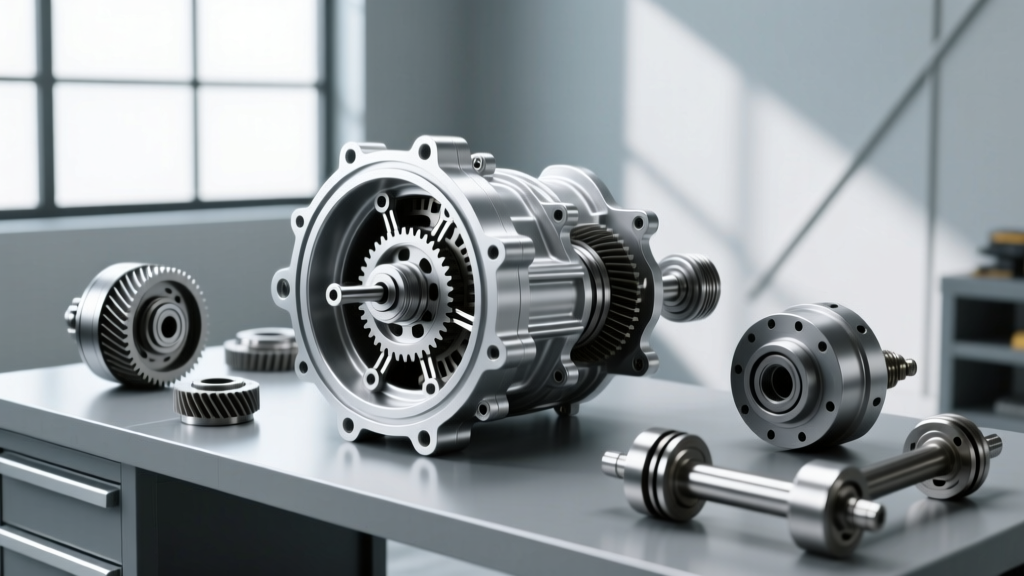
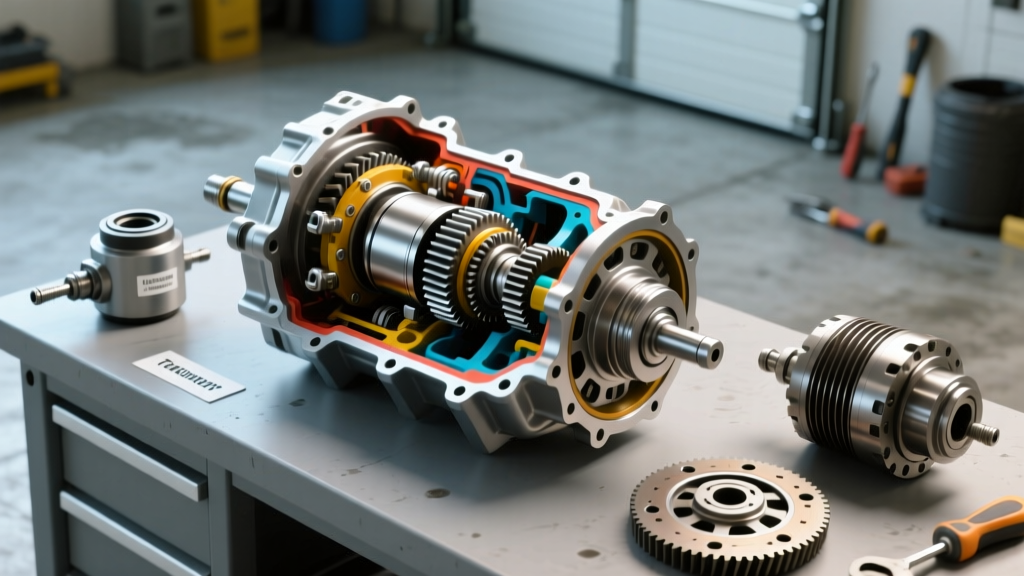
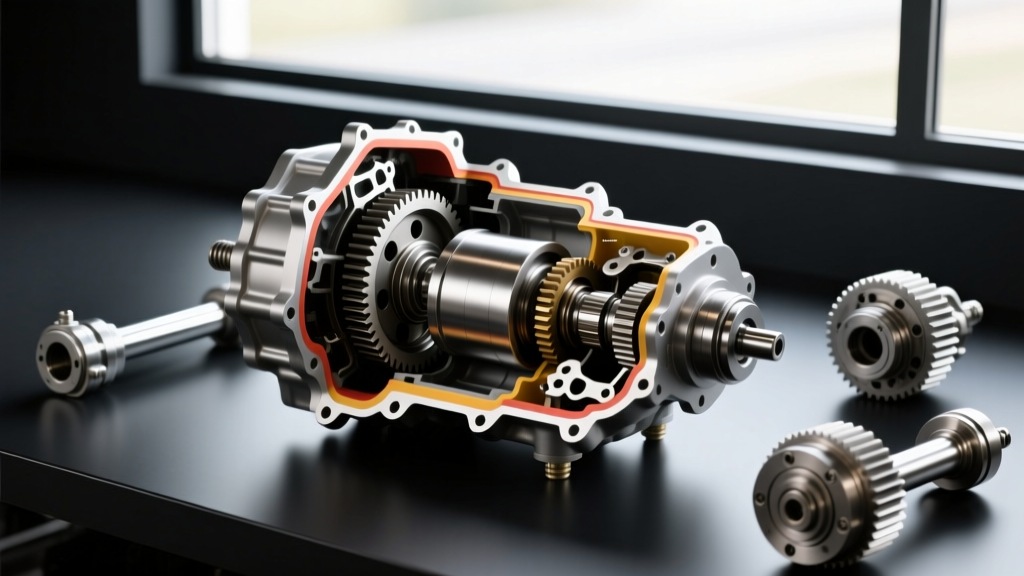
When evaluating off-road drivetrains, understanding the mechanical linkage between your axles is critical for long-term reliability. As any drivetrain engineer will confirm, transfer cases without a center differential are used on part-time 4WD architectures, meaning the front and rear driveshafts are mechanically locked together at the exact same rotational speed. Unlike full-time systems (such as the NP242 or BorgWarner 4462) that utilize a planetary center differential to allow front and rear axles to rotate at different speeds during cornering, part-time cases like the legendary New Process NP231, NP241, and BorgWarner BW4406 rely on a sliding collar or heavy-duty chain-driven clutch pack to engage the front output.
Because there is no center differential to absorb driveline wind-up, operating a part-time system on dry pavement induces massive torsional stress. This stress transfers directly to the transfer case’s internal chain, shift forks, and mainshaft bearings. Consequently, the lubricant inside these units isn't just a coolant; it is the primary defense against catastrophic chain stretch, shift-rail galling, and bearing failure. In 2026, with vehicles accumulating higher mileage and facing more extreme climate variations, selecting the correct transfer case fluid is no longer a guessing game—it is a precise science.
Fluid Chemistry: ATF vs. Dedicated Transfer Case Lubricants
A common and costly mistake made by DIY enthusiasts is assuming that because a transfer case bolts directly to the rear of an automatic transmission, it should share the same fluid. While historically true for older, gear-driven models, modern tribology standards demand precision. According to lubricant experts at Bob Is The Oil Guy (BITOG), the friction modifiers required for transmission clutch packs are vastly different from the extreme pressure (EP) anti-wear additives needed to protect transfer case chains and roller bearings.
Automatic Transmission Fluid (ATF+4 and Dexron VI)
Fluids like Mopar ATF+4 and GM Dexron VI are formulated with high detergency and specific friction modifiers designed for micro-slip in transmission clutches. In a chain-driven transfer case, these low-viscosity fluids (typically 5.5 to 6.5 cSt at 100°C) provide excellent cold-weather shift performance. However, they may lack the high concentrations of ZDDP (Zinc Dialkyldithiophosphate) required to protect heavily loaded spur gears under severe rock-crawling or towing conditions.
Active-On-Demand Fluids (Auto-Trak II and VersaTrak)
GM’s Auto-Trak II contains proprietary friction modifiers designed specifically for the electronically controlled clutch packs found in active-on-demand systems (like the NP246 and NP263). These clutch packs require a very specific coefficient of friction to modulate torque transfer smoothly. Using standard ATF in these units results in severe 'chatter' during tight turns as the clutch packs slip and grab erratically, eventually burning out the friction material and destroying the encoder motor.
2026 Transfer Case Fluid Comparison Matrix
| Fluid Type | OEM Application | Viscosity Profile | Key Additive Package | Avg Price/Qt (2026) |
|---|---|---|---|---|
| Mopar ATF+4 | Jeep NP231 / NP241 | Low-Temp Synthetic | High Detergency, Anti-Foam | $9.50 - $11.00 |
| ACDelco Auto-Trak II | GM NP246 / NP263 | Medium-Temp Synthetic | Proprietary Clutch Friction Modifiers | $12.00 - $14.50 |
| Motorcraft XL-12 | Ford BW4406 / BW1356 | Mercon V Equivalent | High Anti-Wear (ZDDP), Rust Inhibitors | $8.50 - $10.00 |
| Valvoline Transfer Case | Universal Chain-Drive | Multi-Viscosity Synthetic | High EP, Chain Stretch Protection | $10.00 - $12.50 |
Buyer’s Guide: Top Fluids and Service Kits for 2026
When browsing the RockAuto drivetrain catalog or your local parts store, you will encounter a mix of OEM-branded fluids and aftermarket 'universal' alternatives. Here is our expert buyer's guide for the most common part-time and active-on-demand transfer cases on the road today.
1. Best for Jeep Wrangler & Cherokee (NP231 / NP241)
Top Pick: Mopar ATF+4 (Part #68218058AB).
The NP231J is notorious for shift-rail hang-ups in sub-zero temperatures. The synthetic base of ATF+4 ensures the detent springs and shift collars move freely, preventing false neutrals. Avoid thick gear oils (like 75W-90), which will starve the upper chain sprocket during cold starts due to poor splash lubrication.
2. Best for GM Silverado & Tahoe (NP246 / NP263)
Top Pick: ACDelco Auto-Trak II (Part #12378508).
Do not substitute this fluid. The NP263 relies on a gerotor pump and an electromagnetic clutch pack. Auto-Trak II prevents clutch glazing. Pro-Tip: If your NP263 exhibits a grinding noise from the rear output, you likely have 'pump rub' (where the aluminum pump gear wears a hole through the magnesium rear housing). Pair your fluid service with a Merchant Automotive Pump Rub Repair Kit (approx. $160) to save your case.
3. Best for Ford F-150 & Super Duty (BW4406 / BW1356)
Top Pick: Motorcraft XL-12 Transfer Case Fluid (Part #C6TZ-19580-B).
Ford’s BorgWarner units run hotter and handle higher torque loads, especially on diesel Super Duties. XL-12 is formulated to resist shearing under heavy towing loads, maintaining film strength on the mainshaft bearings.
Step-by-Step Fluid Service: Torque Specs and Procedures
Servicing a transfer case is straightforward, but the margin for error is slim. Follow this procedure to ensure a clean, safe service.
Step 1: The 'Fill-Plug First' Golden Rule
Critical Warning: ALWAYS remove the fill plug before removing the drain plug. Transfer case plugs are often seized by galvanic corrosion or over-torquing. If you drain the fluid and then discover the fill plug is stripped, you will be stranded with an immobile vehicle.
Step 2: Draining and Inspection
Place a catch pan rated for at least 3 quarts beneath the case. Remove the drain plug and allow the fluid to flow. Inspect the magnetic tip on the drain plug. A fine, silvery paste is normal wear from the chain and gears. However, if you find large metallic flakes or chunks of brass (indicating shift fork pad wear), a teardown is imminent.
Step 3: Refilling and Torque Specifications
Use a hand-pump or a fluid transfer syringe to fill the case until fluid begins to weep out of the fill hole. Capacities vary, so verify with your specific model:
- NP231J (Jeep): 2.1 Liters (2.2 qts)
- BW4406 (Ford F-150): 1.9 Liters (2.0 qts)
- NP263 (GM HD): 2.0 Liters (2.1 qts)
Once filled, reinstall the plugs. The American Petroleum Institute (API) and OEM service manuals dictate strict torque limits to prevent cracking the aluminum or magnesium housings:
- Aluminum Housings (GM/Ford): 20 Nm (15 lb-ft)
- Steel-Backed Housings (Jeep NP231): 27 Nm (20 lb-ft)
Advanced Troubleshooting: Edge Cases and Failure Modes
Even with fresh fluid, part-time transfer cases can exhibit quirks. Here are two common edge cases encountered in the shop:
4WD Engagement Delay (The 'Roll' Technique)
If your part-time transfer case refuses to engage into 4-High or 4-Low via the dashboard switch or floor shifter, do not force it. The internal sliding collar must align with the dog teeth on the planetary gearset. Put the vehicle in neutral, let it roll forward at 1-2 MPH, and cycle the switch. This rotation aligns the splines, allowing the shift motor to complete its travel without binding.
Transfer Case 'Chatter' on Turns
If you experience a violent hopping or chattering sensation from the driveline when turning in 4WD, remember the core rule of these systems: transfer cases without a center differential are used on part-time setups that bind on high-traction surfaces. However, if this chatter occurs in an 'Auto-4WD' mode (like GM's Autotrac), your clutch pack fluid is degraded, or the encoder motor is failing to modulate the clutch pressure correctly. Flush the fluid immediately with the correct friction-modified lubricant before the clutch pack burns out.
Final Thoughts for 2026
Transfer case fluid is the lifeblood of your 4WD system. By understanding the mechanical differences between part-time, full-time, and active-on-demand systems, and by selecting the precise fluid chemistry required for your specific unit, you can easily extend the life of your drivetrain well past the 200,000-mile mark. Stick to OEM-recommended fluids, respect the torque specs on aluminum housings, and always inspect your magnetic drain plugs for early warning signs of internal wear.