Why Stock Procedures Fail on Upgraded Drivetrains
When you upgrade to a built 4L60E, swap in a ZF 8HP for a modern restomod, or install a high-capacity Mag-Hytec pan on your GM 6L80, the factory owner's manual goes out the window. Knowing how to check automatic transmission oil level in a modified vehicle requires a deep understanding of thermal expansion, aftermarket geometry, and dipstick-less fill procedures. Standard procedures assume stock torque converter volumes and OE pan depths. In the performance world, those variables change drastically, and relying on outdated methods is a fast track to burnt clutch packs and starved lube circuits.
The Physics of Synthetic ATF and Thermal Expansion
Performance builds demand high-shear synthetic fluids like Red Line D4, Amsoil Signature Multi-Vehicle, or Motul ATF VI. According to AMSOIL Synthetic ATF Data, full synthetic polyalphaolefin (PAO) and ester-based fluids exhibit different thermal expansion coefficients compared to conventional Group II/III base oils. As transmission fluid heats from a cold 70°F (21°C) to an operating temperature of 200°F (93°C) under heavy track or towing loads, its volume expands significantly.
If you check the fluid cold using a stock dipstick calibrated for conventional fluid, you will inevitably overfill the system once it reaches operating temperature. This overfill causes the rotating assembly to aerate the fluid, leading to catastrophic clutch pack slippage, delayed shifts, and burnt friction materials. Understanding the exact thermal window of your specific synthetic blend is mandatory for accurate measurement.
Calibrating for Aftermarket Deep Pans and Billet Converters
If your build features an aftermarket deep pan (such as those from PPE or Mag-Hytec) to increase fluid capacity and lower temperatures, your stock dipstick is now functionally obsolete. Furthermore, upgraded billet torque converters from manufacturers like Circle D or Vigilante often feature altered internal volumes, completely changing the total system capacity.
The Recalibration Procedure
To accurately establish the baseline when learning how to check automatic transmission oil level on a newly built rig:
- Calculate the exact dry volume of your new pan, aftermarket cooler lines, and torque converter.
- Fill the transmission with the precise measured volume of ATF minus 1 quart (to allow for the filter and internal cavities).
- Start the engine, cycle the shifter through all gears (pausing 3 seconds per gear to fill the valve body accumulators and clutch packs), and let it reach full operating temperature (180°F - 200°F).
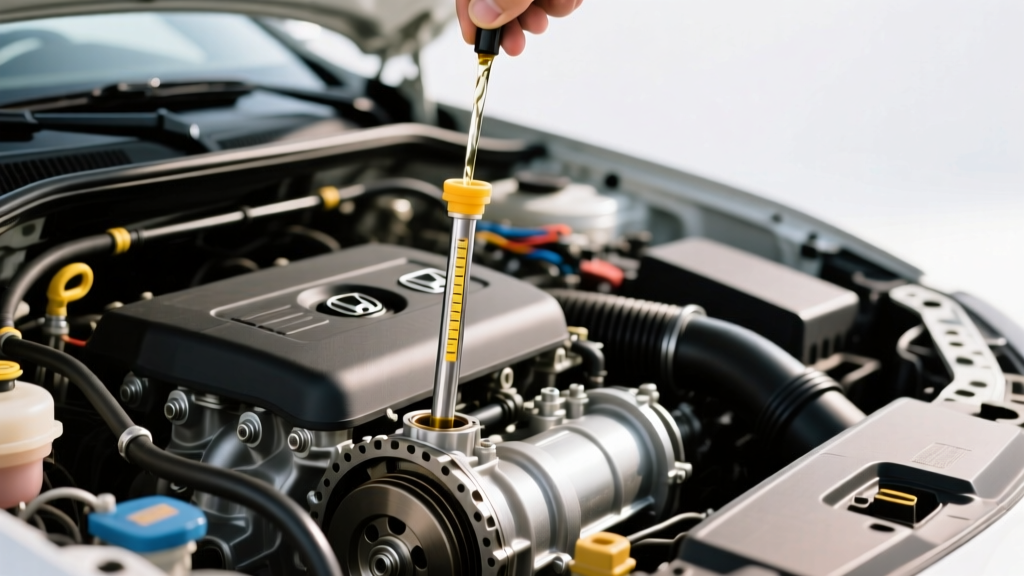
- With the vehicle perfectly level and idling in Park, pull the dipstick. The fluid level will likely be low. Add fluid in 4-ounce increments until it reaches the 'Hot Full' hash mark, then use a scribe or permanent marker to etch a new 'Hot Full' line on the dipstick if the physical length of the tube or pan depth has changed.
The Dipstick-Less Reality: ZF 8HP and Modern Euro Swaps
Many high-end performance swaps and modern Euro builds utilize the ZF 8HP45, 8HP70, or 8HP90 transmissions. These units completely eliminate the dipstick to prevent consumer overfilling and rely on a temperature-dependent overflow plug located on the bottom of the integrated plastic transmission pan (Part No. 24117524913 for early 8HPs).
As detailed in the FCP Euro ZF 8HP Service Guide, checking the fluid level on these units is a precise, data-driven procedure. You cannot rely on 'guessing' the temperature by touching the pan. You must use an OBD2 bi-directional scanner to monitor the Transmission Fluid Temperature (TFT) sensor data PID. If your ZF 8HP is part of a standalone swap where the OEM CANBUS integration is incomplete and your TFT sensor isn't communicating with the OBD2 port, use a FLIR thermal camera to measure the external temperature of the aluminum valve body separator plate or the base of the fill plug. While not as precise as the internal thermistor, it provides a vastly safer baseline than guessing.
Step-by-Step: High-Performance Transmission Fluid Check Procedure
Whether you are running a built Ford 10R80 or a ZF 8HP swap, follow this exact procedure to ensure hydraulic pressure stability and proper clutch engagement.
1. Achieve Perfect Levelness
Lift the vehicle on a symmetric two-post lift or use high-precision jack stands. A mere 2-degree incline can shift fluid away from the pickup tube or overflow plug, resulting in a false low reading and subsequent hydraulic starvation.
2. Cycle the Valve Body
With the engine idling and foot firmly on the brake, shift from Park to Reverse, to Neutral, to Drive, and manually through all lower gears. As noted by Sonnax Technical Resources, this sequence is mandatory to fill the 3-5-R and 4-5-6 clutch pack apply cavities, which can hold up to 200ml of fluid combined. If you skip this, the fluid will drain back into the pan after shutdown, giving a falsely high reading while running.
3. Monitor the TFT Sensor
Connect your scanner. For ZF 8HP units, the target temperature window for checking the level is between 30°C and 50°C (86°F - 122°F), with 40°C (104°F) being the absolute sweet spot. For GM 6L80/6L90 units with dipsticks, the target is 180°F to 200°F.
4. The Overflow Check (Dipstick-Less Units)
Once the TFT hits 40°C, place a drain pan underneath. Crack the 8mm hex fill plug on the bottom of the ZF pan. If a steady stream drips out and slows to a trickle, the level is perfect. If nothing comes out, you must pump fluid up into the fill hole until it overflows.
5. Torque and Seal
Never reuse the fill plug O-ring or aluminum crush washer. Install a new seal and torque the plug to exactly 35 Nm (26 lb-ft). Overtightening will crack the integrated plastic ZF pan, requiring a $400+ replacement.
Critical Hardware and Torque Specifications
| Transmission Model | Pan / Setup Type | Fill Plug / Pan Torque | Target TFT | Recommended Performance Fluid |
|---|---|---|---|---|
| ZF 8HP45 - 8HP90 | OE Integrated Plastic | 35 Nm (26 lb-ft) | 30°C - 50°C (86°F - 122°F) | ZF LifeguardFluid 8 / Shell M-1375.4 |
| GM 6L80 / 6L90 | Mag-Hytec Deep Pan | Pan Bolts: 10 Nm (89 lb-in) | 82°C - 93°C (180°F - 200°F) | Amsoil Signature Fuel-Efficient |
| Ford 10R80 | OE Stamped Steel | Level Plug: 12 Nm (9 lb-ft) | 96°C - 101°C (205°F - 215°F) | Motorcraft MERCON ULV |
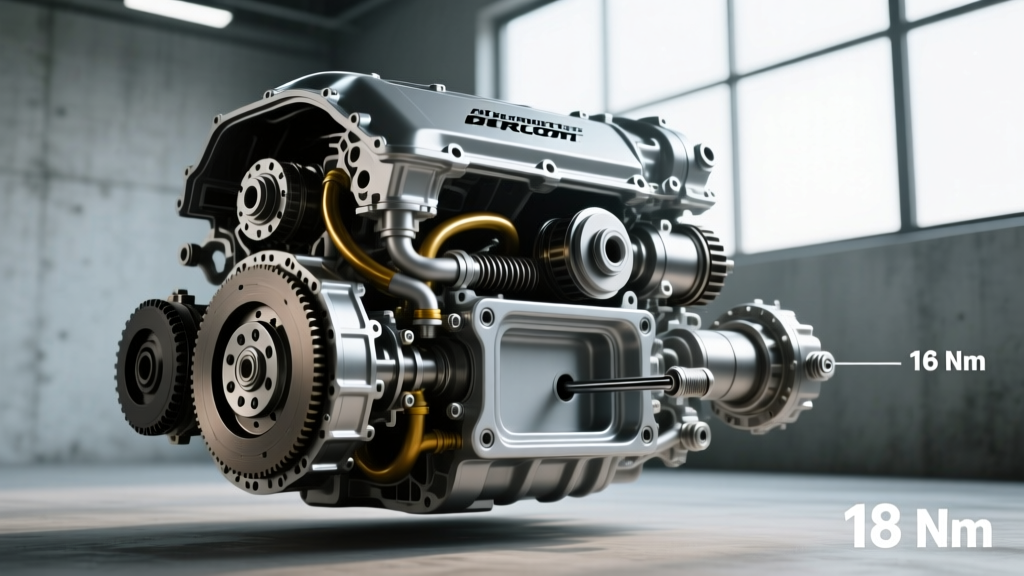
| GM 4L60E (Built) | Aftermarket Billet Pan | Pan Bolts: 16 Nm (12 lb-ft) | 71°C - 93°C (160°F - 200°F) | Red Line D4 Synthetic |
Common Pitfalls in Built Transmissions
- Checking Cold: Fluid contracts when cold. Checking a ZF 8HP at 15°C (59°F) and filling until it drips will result in a massive underfill once the transmission reaches track temperatures, starving the lube circuits and destroying the needle bearings.
- Ignoring Torque Converter Drain-Back: High-stall aftermarket torque converters often lack internal check valves found in OE units. If you check the fluid level after the car has sat overnight, the pan will appear dangerously overfull because the converter has drained back. Always check with the engine running and the valve body pressurized.
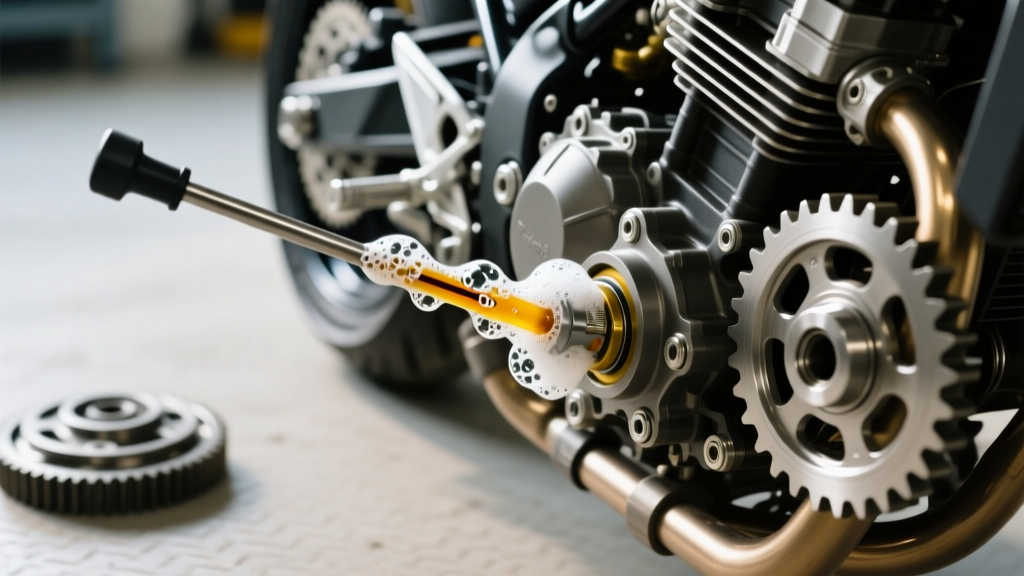
- Aerated Fluid Readings: If you just finished a hard track session or heavy dyno pull, the fluid may be aerated (foamy). Wait 10 minutes with the engine idling to allow the micro-bubbles to dissipate before pulling the dipstick or cracking the fill plug. Aerated fluid expands artificially and will give a false high reading.
- Using Incorrect Fluid Viscosity: The Ford 10R80 requires MERCON ULV, which has a significantly lower viscosity than older MERCON LV. Using LV in a 10R80 will cause severe shift flares and overheating, regardless of how perfectly the fluid level is set.
Final Thoughts on Drivetrain Longevity
Mastering how to check automatic transmission oil level on performance vehicles is less about a quick glance and more about rigorous adherence to thermodynamics and hydraulic principles. By respecting the specific thermal windows, torque specifications, and clutch-pack fill sequences of your upgraded drivetrain, you ensure that your build survives the immense torque it was built to handle. Always invest in a quality bi-directional OBD2 scanner and a digital infrared thermometer before attempting your first fluid service on a modified transmission.