The Hidden Link: Can Too Much Transmission Fluid Cause Problems for the TFT Sensor?
When enthusiasts and technicians ask, "can too much transmission fluid cause problems?" they typically envision blown output shaft seals, aerated shift events, or torque converter shudder. While those are valid concerns, one of the most insidious and frequently misdiagnosed casualties of an overfilled transmission is the Transmission Fluid Temperature (TFT) sensor. As we navigate the complex hydraulic networks of modern 8-speed and 10-speed automatic transmissions in 2026, understanding the delicate relationship between fluid volume, aeration, and thermistor accuracy is critical for preventive maintenance.
An overfilled transmission does not merely "splash" inside the pan; it fundamentally alters the thermal dynamics and hydraulic pressure of the system. This guide explores the exact physics of how excessive fluid volume degrades TFT sensor performance, triggers false diagnostic trouble codes (DTCs), and forces the Transmission Control Module (TCM) into failsafe limp mode.
Understanding the TFT Sensor's Role in Modern Transmissions
The TFT sensor is typically a Negative Temperature Coefficient (NTC) thermistor. It operates on a 5-volt reference circuit provided by the TCM. As transmission fluid temperature increases, the thermistor's internal resistance decreases, signaling the TCM to adjust shift scheduling, line pressure, and Torque Converter Clutch (TCC) lockup parameters.
In modern units like the GM 10L80 or the Ford 10R80, the TCM relies on the TFT sensor to calculate fluid viscosity in real-time. If the sensor reports an implausible temperature due to thermal inconsistencies caused by overfilling, the TCM will artificially raise line pressure to compensate for perceived "cold, thick" fluid, resulting in harsh, banging shifts.
The Physics of Overfilling: Aeration, Foaming, and Thermal Chaos
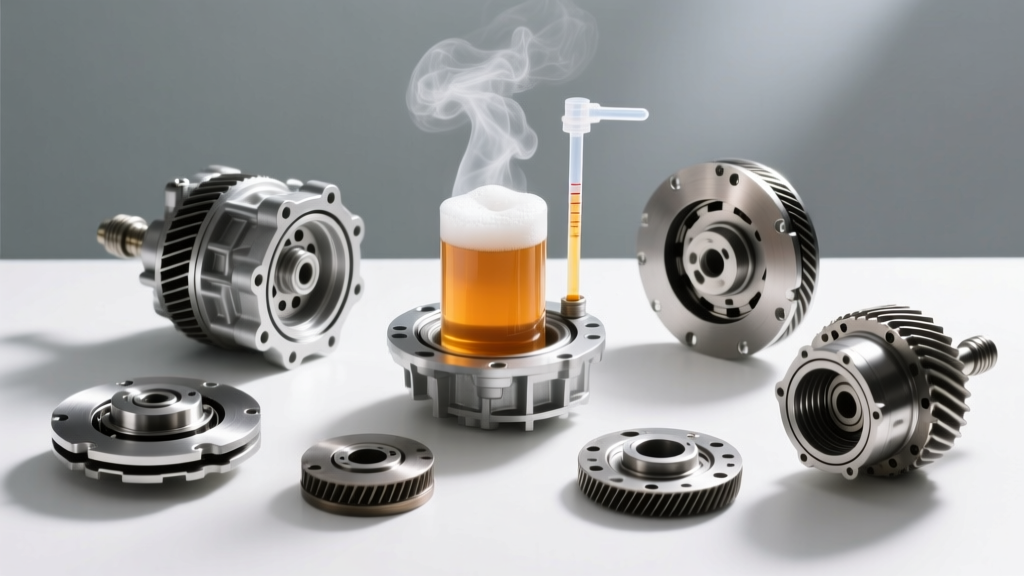
To understand how fluid volume damages sensor readings, we must look at the rotating assembly. The torque converter, clutch drums, and planetary gearsets spin at thousands of RPMs. When the fluid level sits above the designed operating line, these rotating components whip the Automatic Transmission Fluid (ATF) into a thick, aerated foam.
Why Foam Destroys Temperature Accuracy
- Thermal Conductivity Drop: Aerated ATF (foam) has roughly 10% to 15% of the thermal conductivity of liquid ATF. It cannot absorb or transfer heat effectively.
- Localized Hot Spots: Because the foam cannot carry heat away from the friction elements (clutches and bands) to the transmission cooler, localized hot spots develop near the valve body where the TFT sensor is housed.
- Erratic Sensor Readings: The TFT sensor will read rapid, violent spikes in temperature as pockets of superheated liquid and insulating foam pass over the thermistor bead. This triggers codes like P0711 (TFT Sensor Circuit Range/Performance) or P0218 (Transmission Fluid Over Temperature).
Data Table: Normal vs. Overfilled Fluid Effects on TFT Readings
| Fluid State | Aeration Level | Actual Bulk Temp | TFT Sensor Reading | TCM Response |
|---|---|---|---|---|
| Correct Level (Liquid) | < 2% | 185°F (85°C) | 185°F (Stable) | Normal shift scheduling & TCC lockup |
| Overfilled (Foaming) | 15% - 30% | 190°F (87°C) | Fluctuates 140°F to 240°F | Inhibits TCC, raises line pressure, harsh shifts |
| Severely Overfilled | > 40% | 210°F+ (99°C+) | Spikes above 260°F | Triggers P0218, commands Limp Mode (3rd gear only) |
Real-World Failure Modes by Transmission Model
Different transmission architectures handle overfilling differently, but the TFT sensor is always at risk. Here is how excessive fluid impacts two of the most common transmissions on the road today.
GM 6L80 / 6L90 (Internal Wiring Harness Failure)
In the GM 6L80, the TFT sensor is not a standalone component; it is molded directly into the internal wiring harness assembly (Part # 24238939). When the transmission is overfilled, the aerated fluid causes erratic hydraulic pressure in the valve body. This pressure pulsation physically vibrates the harness and the sensor connector. Over time, the microscopic solder joints on the TFT thermistor board crack due to harmonic vibration exacerbated by the foaming fluid. Furthermore, the excessive heat generated by the slipping TCC (which the TCM refuses to lock up due to erratic temp readings) bakes the plastic harness, making it brittle. Replacement of this harness costs between $150 and $220 for the part, with labor requiring a pan drop and valve body lowering (torque spec for valve body bolts: 11 Nm / 97 lb-in).
ZF 8HP (Chrysler / BMW / Audi) - Mechatronic Seal Blowout
The ZF 8HP integrates the TFT sensor directly into the Mechatronic unit (valve body/TCM assembly). The electrical connection to the outside world passes through a round sleeve seal. Overfilling a ZF 8HP increases internal crankcase pressure. According to Sonnax technical resources, excessive pressure can blow out the Mechatronic sleeve seal (Part # ZF 6852636). When this seal fails, aerated, hot ATF is forced directly into the electrical connector pins. The fluid alters the dielectric properties of the connector, causing the 5-volt TFT reference signal to short to ground or drift, resulting in a P0712 (TFT Sensor Circuit Low) code. The preventive fix is strictly adhering to the ZF fill procedure.
Preventive Maintenance: The Correct Way to Check Fluid Levels
To prevent TFT sensor degradation, you must maintain the exact fluid volume. The days of checking the dipstick with the engine off and cold are largely over for modern sealed units. As noted by the Automatic Transmission Rebuilders Association (ATRA), thermal expansion dictates that fluid must be checked at a specific operating temperature.
Expert Preventive Maintenance Tip: ATF expands significantly as it heats up. Checking a ZF 8HP or GM 10L80 fluid level when the pan is at ambient temperature (70°F) will almost guarantee an overfill once the transmission reaches its 185°F operating temperature. Always use a bi-directional scan tool to monitor the TFT sensor temperature before pulling the level check plug.
Step-by-Step ZF 8HP Fluid Level Verification
- Connect an OBD2 scan tool and monitor the TFT sensor PID.
- Start the engine. The fluid temperature must be between 30°C and 50°C (86°F - 122°F) for an accurate check.
- Cycle the gear selector through all positions (P-R-N-D) with your foot on the brake to fill the clutch drums and torque converter.
- With the engine still running and the vehicle on a perfectly level lift, remove the fill/level plug (Torx T40 or T45 depending on the pan).
- If a steady stream of fluid flows out, reduce to a drip. If no fluid comes out, pump in ZF Lifeguard 8 fluid until it drips.
- Reinstall the level plug and torque to exactly 35 Nm (26 lb-ft). Over-torquing can strip the plastic threads in the ZF pan.
Diagnostic Troubleshooting: Is Your TFT Sensor Failing?
If you have verified the fluid level is correct but are still experiencing erratic shift patterns and temperature-related DTCs, the TFT sensor may have suffered permanent thermal or electrical damage from a previous overfill event.
Multimeter Testing the Thermistor
You can test the TFT sensor using a digital multimeter (DMM) set to Ohms. Disconnect the sensor or access the TCM pins and measure resistance across the sensor circuit while comparing it to the ambient or pan temperature. Below is a standard resistance curve for most GM and Chrysler NTC thermistors:
- 32°F (0°C): ~29,000 - 33,000 Ohms
- 68°F (20°C): ~11,000 - 13,000 Ohms
- 104°F (40°C): ~4,500 - 5,500 Ohms
- 176°F (80°C): ~1,200 - 1,500 Ohms
- 212°F (100°C): ~700 - 900 Ohms
If your multimeter reads infinite resistance (open circuit) or zero resistance (short circuit), the thermistor bead has failed, likely due to the extreme thermal shock caused by aerated fluid pockets in an overfilled transmission. For units where the TFT is integrated into the valve body or internal harness, you must replace the entire harness or mechatronic assembly, as the sensor is rarely serviced independently.
Conclusion
So, can too much transmission fluid cause problems for your vehicle's computer and sensors? Absolutely. An overfilled transmission is not just a mechanical hazard; it is a thermal and electrical disruptor. By whipping the ATF into an aerated foam, you strip the fluid of its heat-transfer capabilities, creating localized hot spots that confuse, degrade, and ultimately destroy the highly sensitive TFT sensor. Adhering to strict, temperature-dependent preventive maintenance protocols is the only way to ensure your transmission's thermistors provide the TCM with the accurate data needed for seamless, reliable shifting in 2026 and beyond.