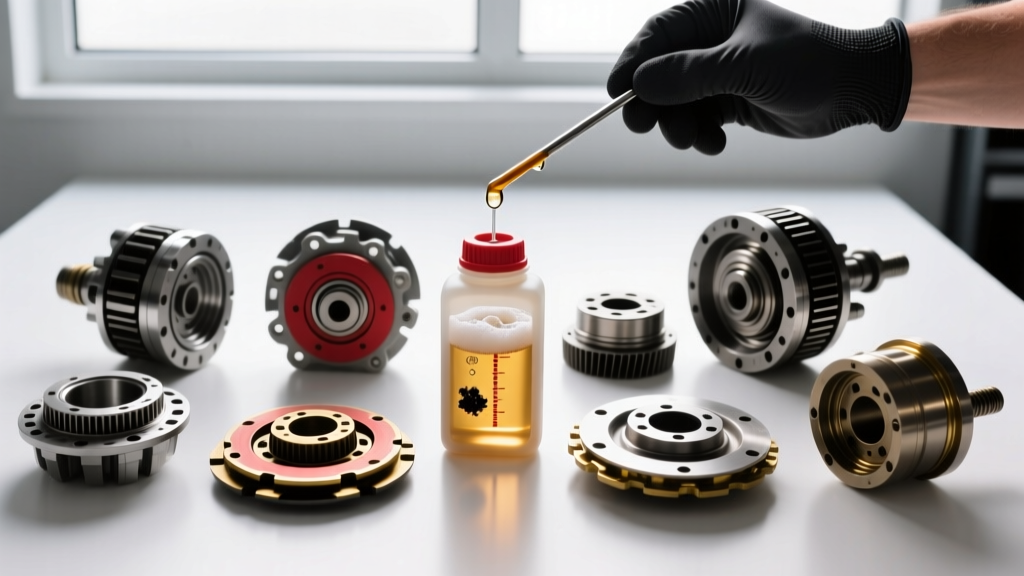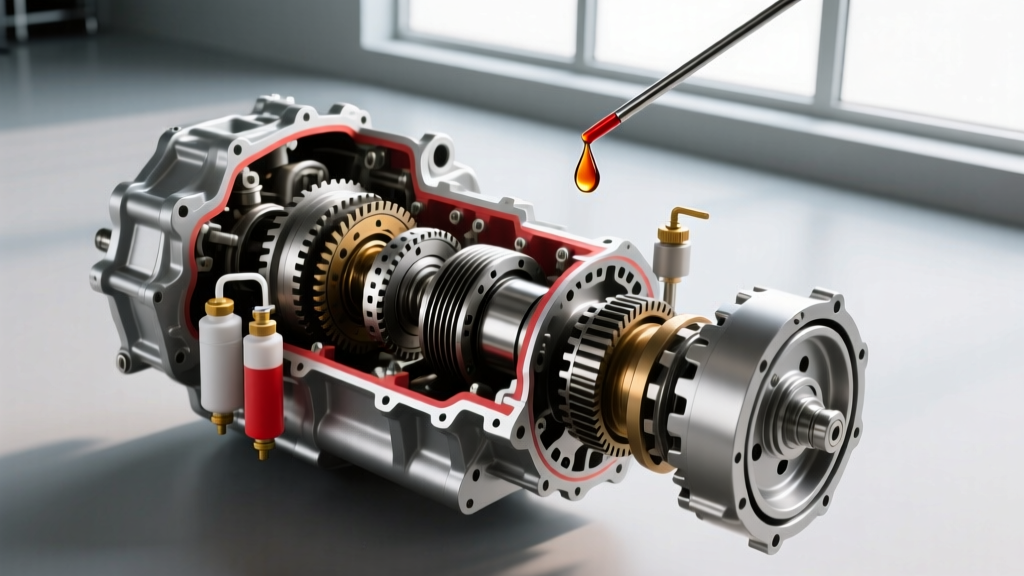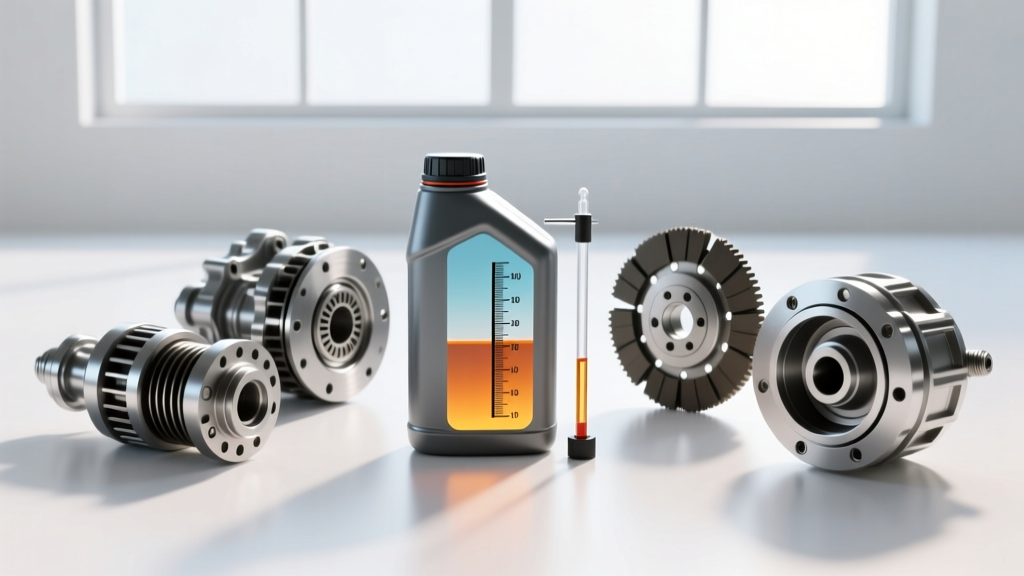
When diagnosing modern drivetrain anomalies, a frequent question from DIY mechanics and fleet technicians alike is: what are the symptoms of too much transmission fluid in an automatic? While a low fluid level is a well-known catalyst for catastrophic failure, an overfilled transmission presents a unique, often misunderstood set of hydraulic and mechanical failures. In 2026, with the proliferation of tightly packaged 8-speed and 10-speed automatic transmissions (such as the ZF 8HP and GM 10L80), the margin for fluid level error has shrunk to mere ounces.
However, accurately diagnosing an overfill condition is impossible without first mastering transmission fluid type identification. Misidentifying the fluid in your pan can lead to incorrect temperature-based level checks, misinterpretation of foaming characteristics, and the installation of incompatible chemistry that perfectly mimics overfill symptoms. This guide bridges the gap between symptom diagnosis and precise fluid identification.
Expert Insight: 'Aeration is the silent killer of modern clutch packs. When fluid is overfilled by just one quart in a ZF 8HP, the rotating assembly whips the fluid into a compressible foam, dropping line pressure and causing micro-slips that glaze the friction materials within 500 miles.' — AutoGearNexus Drivetrain Engineering Team
Core Symptoms of Transmission Fluid Overfill
Before attempting to extract fluid or identify its chemical composition, you must verify that the physical symptoms align with a high fluid level. Overfilling an automatic transmission disrupts the delicate balance of the hydraulic control module and torque converter.
1. Foaming, Aeration, and Delayed Engagement
Automatic transmission fluid (ATF) acts as both a lubricant and a hydraulic medium. When the fluid level sits above the rotating components (such as the planetary gearsets or the torque converter clutch), mechanical agitation whips air into the fluid. Aerated fluid is compressible. When the transmission control module (TCM) commands a gear change, the compressible foam results in a spongy, delayed engagement. You will often hear a distinct high-pitched whining or cavitation noise from the transmission pump as it struggles to move air bubbles through the valve body.
2. Fluid Expulsion via the Breather Vent
ATF expands as it heats up. Standard Dexron VI or ATF+4 expands by approximately 1% for every 20°F increase in temperature. If a transmission is overfilled at ambient temperature, reaching normal operating temperatures (180°F–200°F) will force the expanded fluid out of the case breather vent. This is frequently misdiagnosed as a rear main seal or output shaft seal leak. On the GM 6L80, the breather is located near the top of the bellhousing; on the ZF 8HP, it is integrated into the mechatronic sleeve area.
3. Torque Converter Shudder and Erratic Shifting
Foamy fluid cannot maintain consistent hydraulic pressure against the clutch apply pistons. This results in rapid, erratic on-off cycling of the clutches, felt by the driver as a rhythmic shudder, particularly during the 3-4 or 4-5 upshifts under light throttle.
The Critical Role of Transmission Fluid Type Identification
Here is where troubleshooting intersects with chemistry. If you suspect an overfill, you must positively identify the fluid type currently in the system. Why? Because using the wrong fluid perfectly mimics overfill symptoms.
For example, if a previous owner topped off a Continuously Variable Transmission (CVT) requiring Nissan NS-3 fluid with a generic 'Universal Multi-Vehicle ATF', the friction modifiers will be entirely wrong. The universal ATF will cause the CVT belt to slip and the fluid to rapidly aerate and overheat. A technician might incorrectly diagnose this as an overfill or mechanical pump failure, when the root cause is a fluid identification error.
Furthermore, different fluids have different thermal expansion rates and viscosity profiles. Checking the level of a low-viscosity fluid (like ZF Lifeguard 8) requires a different temperature window than a higher-viscosity fluid (like older Dexron III). Without identifying the fluid, your dipstick or check-plug reading is meaningless.
Fluid Type Identification Matrix
While a laboratory spectrometer is the only way to be 100% certain of an unknown fluid's chemical makeup, experienced technicians use visual, olfactory, and application-based clues to identify the fluid type. Below is a diagnostic matrix for common 2026-era automatic and CVT fluids.
| Fluid Specification | Base Color (New) | Viscosity (cSt @ 100°C) | Identification Clues & Odor | Common Applications |
|---|---|---|---|---|
| Dexron VI / Mercon LV | Bright Red | ~6.2 | Slightly sweet, petroleum base. Thinner than older ATFs. | GM 6L80, 8L90, 10L80; Ford 6R80 |
| ATF+4 | Red (Fades quickly) | ~7.5 | Distinctive strong, sweet/fruity synthetic odor. | Chrysler/Stellantis 8HP, ZF 8-speed (FCA spec) |
| ZF Lifeguard 8 | Yellowish-Green | ~5.8 | Very thin, distinct chemical smell. Turns dark brown rapidly. | BMW, Audi, Jaguar ZF 8HP45/55/70 |
| Nissan NS-3 / Honda HCF-2 | Green / Amber | ~7.0 | Specific CVT friction modifiers. High shear stability. | Nissan Altima CVT, Honda Accord CVT |
| Toyota WS | Dark Red | ~5.5 | Low viscosity, highly shear-stable. Minimal odor. | Toyota Aisin 8-speed (UA80E) |
Diagnostic Protocol: Verifying Overfill vs. Incorrect Fluid
Once you have tentatively identified the fluid type, you must perform a level check using the procedure specific to that transmission's architecture. In 2026, the traditional dipstick is largely extinct on European and heavy-duty platforms, replaced by the overflow check-plug method.
Step 1: Fluid Temperature Verification (OBD2)
You cannot check an automatic transmission fluid level cold. The fluid must be at the manufacturer-specified operating temperature to account for thermal expansion. Connect a bi-directional OBD2 scanner (such as the Foxwell NT510 Elite, approx. $160) and monitor the Transmission Fluid Temperature (TFT) PID.
- ZF 8HP Requirement: 30°C to 50°C (86°F to 122°F).
- GM 10L80 Requirement: 85°C to 95°C (185°F to 203°F).
Step 2: The Check-Plug Procedure (ZF 8HP Example)
The ZF 8-speed requires the vehicle to be perfectly level on a lift. With the engine running and the TFT within the 30°C–50°C window, cycle the gear selector through all positions, then leave it in Park.
- Locate the fill/check plug on the bottom of the transmission pan (an 8mm hex recess).
- Place a catch pan underneath and remove the plug.
- Normal Level: A small trickle of fluid should emerge and stop as the internal fluid level drops to the overflow tube height.
- Overfill Condition: A heavy, continuous stream of fluid pours out, often accompanied by thick, pinkish foam (indicating aeration from the rotating components).
- Reinstallation: The ZF check plug features a captive O-ring that must be replaced if damaged. Torque the plug to exactly 35 Nm (26 lb-ft). Overtightening will crack the plastic transmission pan, requiring a $400+ pan and filter assembly replacement.
Step 3: Dipstick Verification (GM 6L80/10L80)
For GM trucks equipped with a dipstick, the engine must be running and at normal operating temp (180°F+). Wipe the dipstick, reinsert it fully, and read the crosshatch area. If the fluid is above the 'HOT' hash marks and appears highly aerated (bubbles on the stick), an overfill is confirmed. Note: GM pan bolts on the 6L80 require a torque spec of just 9 Nm (80 lb-in); overtightening these during a fluid change will warp the aluminum pan and cause leaks.
Corrective Actions and Tooling
If you have confirmed an overfill condition and verified the fluid type is correct, you must extract the excess fluid without introducing air into the system or dropping the level below the minimum threshold.
Do not rely on the 'drain and refill' method to fix an overfill, as these systems do not drain completely due to torque converter retention. Instead, use a pneumatic or manual fluid evacuator. The Mityvac 7272 Fluid Evacuator (retailing between $70 and $85) allows you to insert a 1/4-inch extraction tube down the dipstick tube or fill hole to siphon off exact increments of fluid (e.g., 200ml at a time).
If your fluid identification matrix revealed that the system was topped off with the wrong fluid type (e.g., universal ATF in a ZF 8HP), extraction is not enough. You must perform a complete machine flush or a triple drain-and-fill procedure using the correct OEM fluid (such as ZF Lifeguard 8, which costs roughly $35–$45 per liter) to restore the proper friction coefficient and eliminate the aeration symptoms.
Summary: Precision is Paramount
Understanding what are the symptoms of too much transmission fluid in automatic vehicles is only half the battle. The modern transmission is a closed-loop hydraulic computer. Symptoms like whining, delayed shifts, and vent leaks must be cross-referenced with accurate transmission fluid type identification and precise, temperature-dependent level checks. By combining chemical awareness with strict adherence to OEM torque specs and temperature windows, you can confidently diagnose and resolve overfill anomalies, protecting your drivetrain for the long haul.
For further technical documentation on fluid specifications and service intervals, consult the ZF Aftermarket Portal, the Automatic Transmission Rebuilders Association (ATRA), or the ACDelco Fluid Catalog.