The Mechanical Divide: Why Your Differential Type Dictates Service Costs
When you pull into a national chain for routine drivetrain maintenance, the service advisor will often quote a flat rate. But if you are researching the Firestone differential fluid change cost for your truck, SUV, or performance car, you must first answer a critical mechanical question: Do you have an open differential or a limited-slip differential (LSD)? In 2026, with synthetic gear oil prices fluctuating and supply chain variables affecting OEM friction modifiers, the price gap between servicing an open axle and a clutch-type LSD has widened significantly.
This buyer's guide and technical comparison will break down the mechanical differences between open and limited-slip axles, the hidden costs of friction modifiers, and exact torque specifications to help you decide between professional service and a DIY driveway job.
Open vs. Limited Slip: How They Transfer Torque
To understand why service costs differ, you must understand the internal hardware. As detailed in the foundational engineering breakdown by HowStuffWorks, the differential's primary job is to allow the outer drive wheel to rotate faster than the inner drive wheel while turning a corner. However, how they manage torque biasing separates the two main categories.
The Open Differential
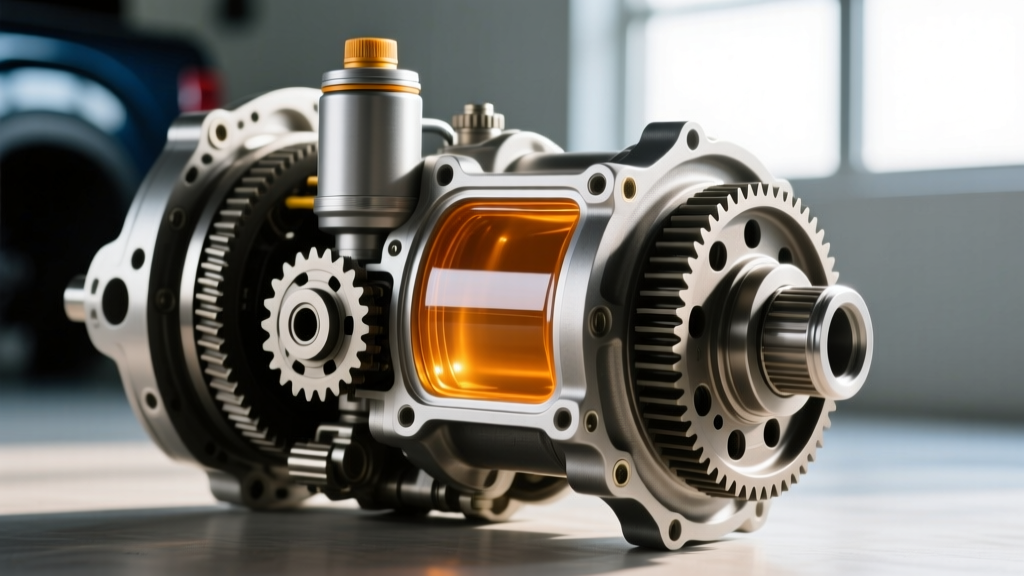
An open differential utilizes a set of spider gears and side gears housed within a carrier. It always sends torque to the wheel with the least amount of resistance. If your left rear wheel is on dry asphalt and your right rear wheel is on ice, the open diff will send 100% of the available torque to the slipping wheel, leaving you stranded. Mechanically, it is simple, robust, and requires only standard hypoid gear oil for lubrication.
The Limited Slip Differential (LSD)
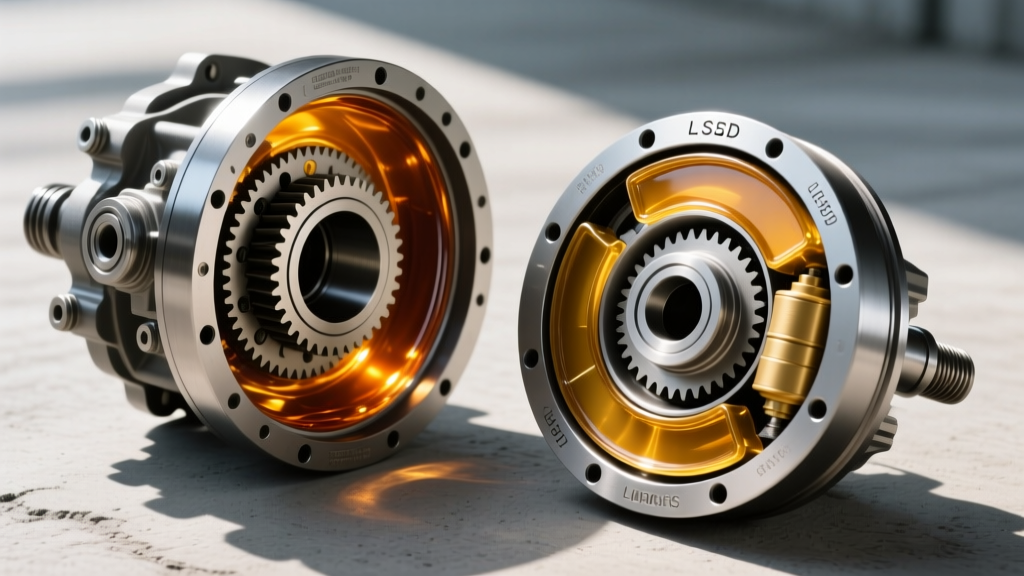
Limited-slip differentials introduce a torque-biasing mechanism to prevent single-wheel slip. According to Car and Driver's technical review, the most common aftermarket and OEM LSDs (like the Ford 8.8 Traction-Lok or Dana 44 Trac-Lok) use clutch packs situated between the side gears and the carrier. When one wheel loses traction, the clutch packs bind, transferring torque to the wheel with grip. Helical (Torsen) differentials use worm gears to achieve this without clutches, but clutch-type LSDs remain the most prevalent in light trucks and muscle cars—and they are the primary reason your fluid change bill increases.
Decoding the Firestone Differential Fluid Change Cost (2026 Pricing)
When evaluating the Firestone differential fluid change cost, it is vital to recognize that national chains typically price by the axle, but the internal hardware dictates the materials used. Below is a comparative breakdown of estimated 2026 pricing across different service avenues for a standard light truck/SUV axle (e.g., Ford F-150 8.8 or Jeep Wrangler Dana 44).
| Service Variable | Open Differential | Clutch-Type LSD |
|---|---|---|
| Firestone National Average | $169.99 - $189.99 | $219.99 - $249.99 |
| Independent Drivetrain Shop | $140.00 - $170.00 | $190.00 - $220.00 |
| DIY Material Cost | $35.00 - $50.00 | $55.00 - $75.00 |
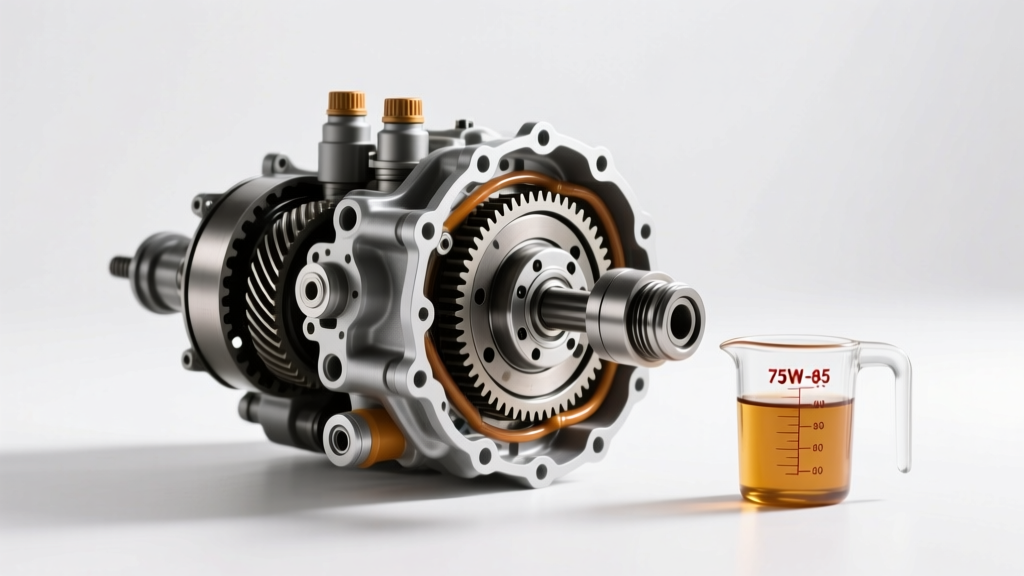
| Fluid Type Required | Standard 75W-90 GL-5 | Synthetic 75W-90 + FM |
| Friction Modifier Needed? | No | Yes (Typically 2-4 oz) |
Note: Prices reflect standard rear axle service. Front axle service on 4x4 vehicles often requires an additional $150-$200, and factory-sealed front differentials (like those on some modern IFS trucks) may require fluid extraction tools, increasing labor time.
Fluid Specifications and the Friction Modifier Variable
The primary reason the Firestone differential fluid change cost is higher for an LSD is the requirement for a Friction Modifier (FM). Clutch-type LSDs rely on a specific coefficient of friction to operate smoothly. If you pour standard GL-5 gear oil into a clutch-pack LSD without an FM, the clutches will bind and release erratically under load, resulting in a violent shuddering or 'chatter' during low-speed turns. Over time, this glazes the clutch discs, requiring a complete differential teardown and rebuild.
OEM Friction Modifier Part Numbers
- Ford/Motorcraft: XL-3 Friction Modifier (Part # C6AZ-19B546-A). Typically costs $9-$12 per 4 oz bottle.
- GM/Chevrolet: EOS (Limited Slip Axle Lubricant) (Part # 12377916 or 88900333). Typically costs $11-$14.
- Chrysler/Mopar: Friction Modifier Additive (Part # 4318060AD).
Pro Tip: Many premium synthetic gear oils, such as Royal Purple Max Gear or Red Line 75W90, claim to have friction modifiers already blended into the formula. While often sufficient for mild street use, heavy-duty towing or off-road applications usually still require a dedicated bottle of OEM FM to prevent chatter under high torque loads.
How to Identify Your Differential Before Visiting the Shop
Never rely solely on a service advisor's assumption. Before authorizing a Firestone differential fluid change cost estimate, verify your axle type using one of these three methods:
1. The RPO or Axle Code Check
For GM vehicles, check the glovebox RPO codes. GU6 indicates a 3.42 ratio, but you must look for G80, which is GM's locking/limited-slip identifier. For Ford trucks, open the driver's door jamb and locate the axle code. A code like 19 indicates a 3.55 Limited Slip, while H9 might indicate an open 3.55 (always cross-reference with the 2026 Ford towing guide or an OEM decoder, as codes shift by model year).
2. The Driveway Spin Test
Jack up the rear of the vehicle safely using jack stands, ensuring the transmission is in Neutral and the parking brake is OFF. Spin one rear wheel by hand. If the opposite wheel spins in the opposite direction, you have an open differential. If the opposite wheel spins in the same direction, you have a limited-slip or locking differential.
DIY vs. Professional Service: Torque Specs and Sealing
If the Firestone differential fluid change cost seems too steep, servicing an axle is a highly approachable DIY task, provided you respect the torque specifications and sealing protocols. Over-torquing differential cover bolts is a common novice mistake that can warp thin stamped-steel pans, distort the bearing caps on integrated designs, or crack cast aluminum covers.
Common Differential Cover Torque Specifications
- Ford 8.8-inch (10-bolt): 20 to 25 lb-ft (28 to 34 Nm). Use a star-pattern tightening sequence.
- GM 8.5-inch / 8.6-inch (10-bolt): 25 lb-ft (34 Nm).
- Dana 44 (10-bolt): 30 to 35 lb-ft (41 to 47 Nm).
- Chrysler 8.25-inch (10-bolt): 30 lb-ft (41 Nm).
Gaskets vs. RTV Silicone
Historically, technicians used High-Temp RTV Silicone to seal differential covers. While effective, RTV requires a 2-hour cure time before filling with fluid, and stray beads of silicone can break off inside the axle, clogging the oil pickup or scoring the pinion bearings. In 2026, the industry standard for DIYers and pros alike is the reusable elastomer gasket, such as those made by Lube Locker or Fel-Pro PermaDry. These gaskets feature steel cores with molded rubber sealing beads, requiring no RTV, no cure time, and allowing for immediate fluid fill and torque-to-spec installation.
Common Failure Modes and Misdiagnoses
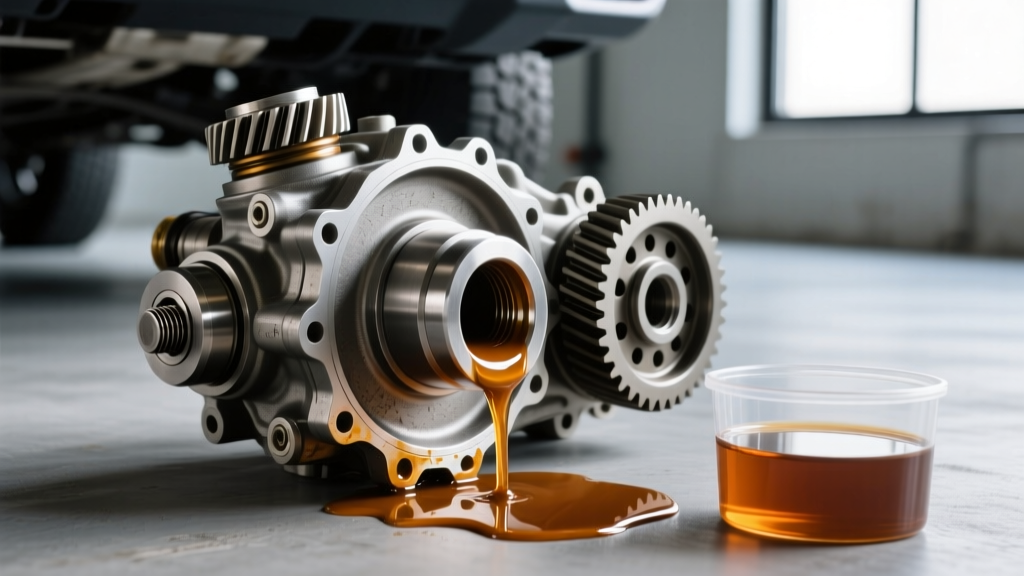
Before paying for a fluid change, ensure your differential actually needs one. A common misdiagnosis at quick-lube and chain stores is confusing a pinion seal leak with a differential cover leak. The pinion seal sits at the front of the axle where the driveshaft yoke enters the housing. If fluid is slung forward onto the underside of the vehicle or the exhaust, replacing the cover fluid will not solve the issue; the pinion seal must be driven out and replaced (a job that requires setting bearing preload and often costs $250-$400 at a specialty shop). Furthermore, if your LSD is chattering even after a fluid and modifier change, the clutch packs are likely glazed or worn out, necessitating a rebuild kit (e.g., Eaton Performance Carbon Clutch Kit, approx. $180-$250 for parts).
Final Verdict: Is the Dealership or Chain Shop Worth It?
The Firestone differential fluid change cost represents a premium for convenience and warranty backing. If you drive a daily commuter with an open differential, the $170-$190 price tag is a fair exchange for keeping your hands clean and maintaining a digital service record. However, if you own a modified truck, a dedicated off-roader, or a classic muscle car with a sensitive clutch-type LSD, taking the DIY route allows you to hand-select your synthetic lubricant, precisely measure your friction modifier, and inspect your ring and pinion gears for abnormal metallic wear on the magnetic drain plug (if equipped) or inside the pan. Understanding the mechanical soul of your axle ensures you never overpay for the wrong fluid again.