Decoding the Drivetrain: What Does Limited Slip Differential Mean?
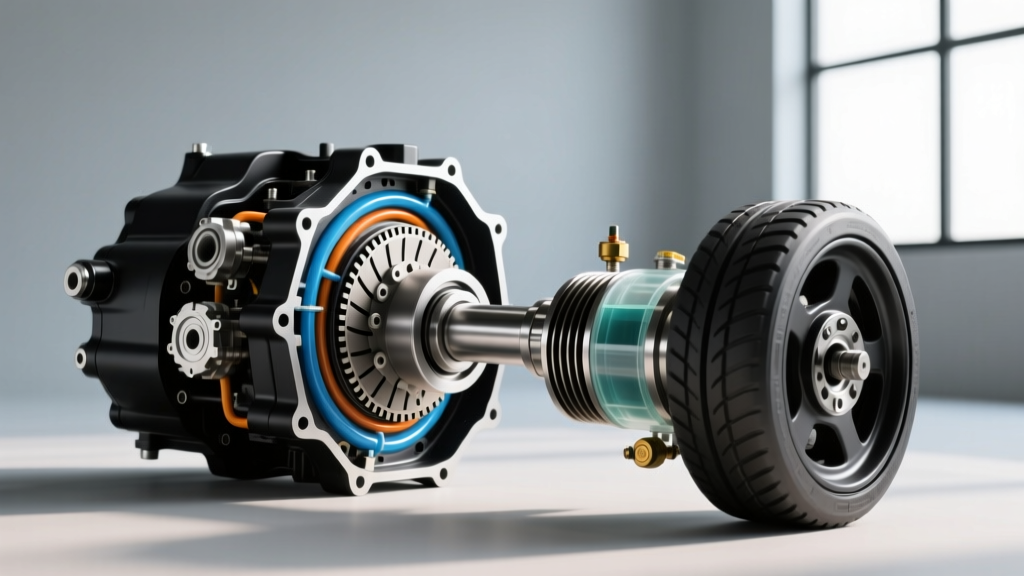
When automotive enthusiasts and daily drivers ask, what does limited slip differential mean for their vehicle's real-world performance, the answer lies in torque biasing and traction management. The differential is the final gear reduction point in your drivetrain, responsible for splitting engine torque between the left and right wheels while allowing them to rotate at different speeds during cornering. However, not all differentials handle torque distribution equally. Choosing between an open differential and a limited slip differential (LSD) fundamentally alters how your car, truck, or SUV puts power to the pavement, dirt, or snow.
In this comprehensive 2026 buyer's guide, we will break down the mechanical differences, fluid maintenance requirements, and real-world applications of open versus limited slip axles. Whether you are rebuilding a classic GM 8.5-inch 10-bolt, upgrading a Jeep Dana 44, or spec'ing a Ford 9-inch for track duty, understanding these systems is critical for maximizing your drivetrain's potential.
The Open Differential: Engineering for Predictability
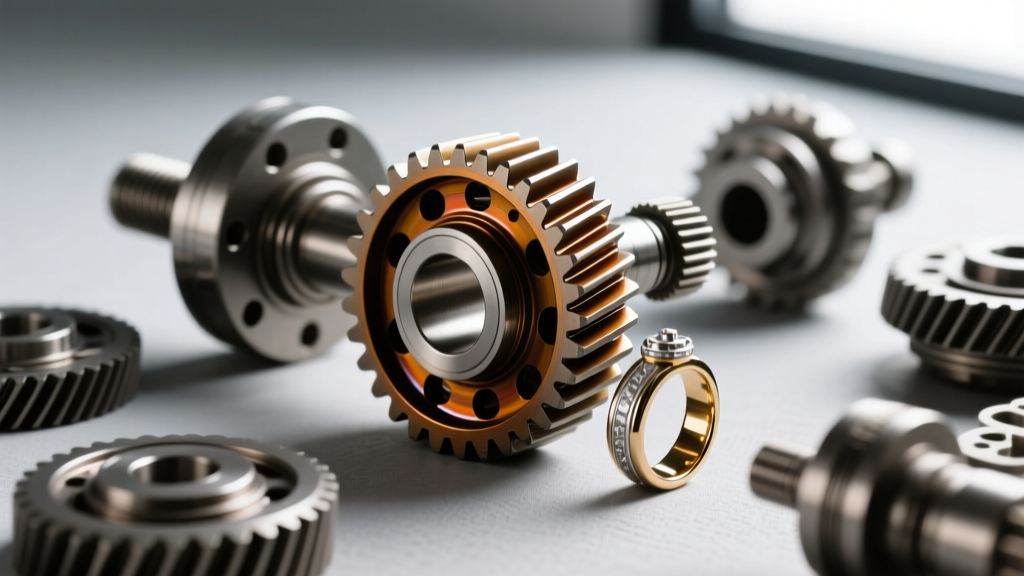
The open differential is the baseline for 90% of factory-equipped passenger vehicles. Its internal architecture relies on a set of spider gears (side gears and pinion gears) housed within the carrier. When driving in a straight line, the carrier and spider gears rotate as a single unit. When cornering, the spider gears spin on their own axes, allowing the outside wheel to rotate faster than the inside wheel, preventing tire scrubbing and drivetrain binding.
The Critical Flaw: An open differential always sends torque to the path of least resistance. If your left wheel is on dry asphalt and your right wheel is on ice, the open diff will send 100% of the available torque to the spinning wheel on the ice, leaving the vehicle completely immobilized. For highway cruising and dry pavement commuting, an open diff is perfectly adequate, cost-effective, and requires zero special fluid additives.
The Limited Slip Differential (LSD): Biasing Torque for Traction
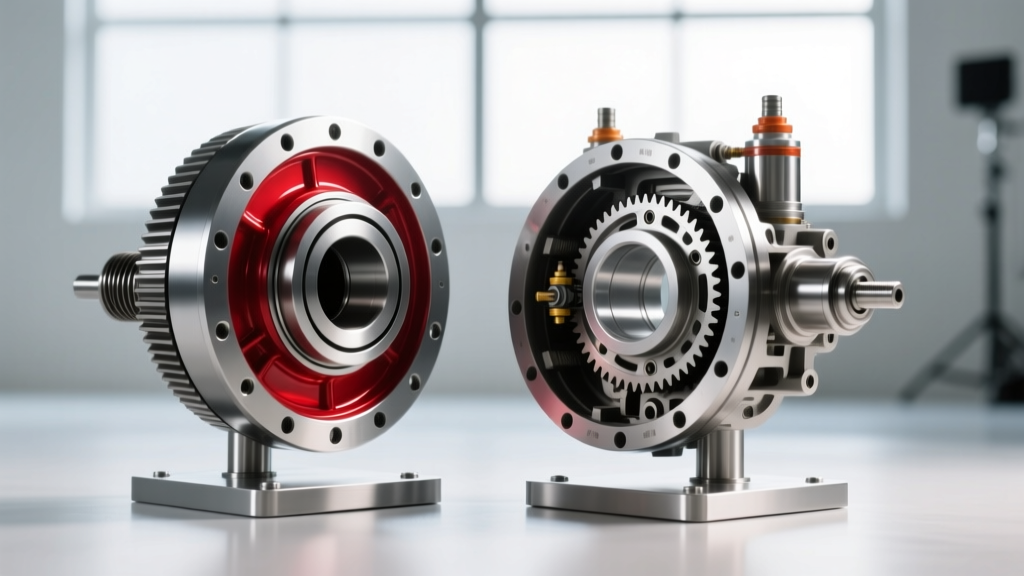
To answer the core question of what does limited slip differential mean in a performance context: it means the differential possesses an internal mechanism to resist the path of least resistance, biasing torque toward the wheel that still has traction. This is achieved through two primary aftermarket and OEM designs: clutch-pack and helical gear.
Clutch-Pack LSDs (Eaton Posi, Auburn, Yukon Zip Locker)
Clutch-type LSDs utilize a series of alternating friction and steel clutch discs positioned between the side gears and the carrier housing. A preload spring pack (often an S-spring or V-spring) forces the side gears outward, engaging the clutch packs. When one wheel loses traction and attempts to spin faster than the other, the friction of the clutch packs resists this speed differential, transferring torque to the wheel with grip. According to Eaton's engineering documentation, modern Positraction units can bias up to 60-70% of torque to the gripping wheel before breaking loose.
Helical Gear LSDs (Torsen, Quaife, Eaton Detroit Truetrac)
Helical gear LSDs operate entirely without clutch packs or friction modifiers. Instead, they use complex worm and spur gear sets. When a torque imbalance occurs, the helical gears bind against the outer casing of the differential, creating a torque bias ratio (TBR) typically ranging from 2.5:1 to 4:1. These units are incredibly smooth, require zero special maintenance, and are the gold standard for high-horsepower street and track applications.
Open vs. Limited Slip: Technical Comparison Matrix
| Feature | Open Differential | Clutch-Pack LSD | Helical Gear LSD (Torsen) |
|---|---|---|---|
| Torque Biasing | None (1:1 Ratio) | Moderate (Up to 4:1) | High (2.5:1 to 5:1) |
| Fluid Requirement | Standard GL-5 Gear Oil | GL-5 + Friction Modifier | Standard GL-5 Gear Oil |
| Maintenance Interval | 50k - 100k Miles | 30k - 50k Miles (Clutch Wear) | 50k - 100k Miles |
| Low-Speed Cornering | Smooth | Prone to Chatter without Modifier | Smooth |
| Ideal Application | Daily Commuting, Towing | Drag Racing, Mild Off-Road | Track, Street Performance, Overland |
| Avg. Upgrade Cost | N/A (Factory Base) | $450 - $750 | $700 - $1,100 |
Fluid Dynamics: Gear Oils, Friction Modifiers, and Chatter
Because this guide focuses heavily on drivetrain health, we must address the lifeblood of the axle: differential fluid. The type of differential you choose dictates your fluid chemistry.
The Chemistry of Friction Modifiers
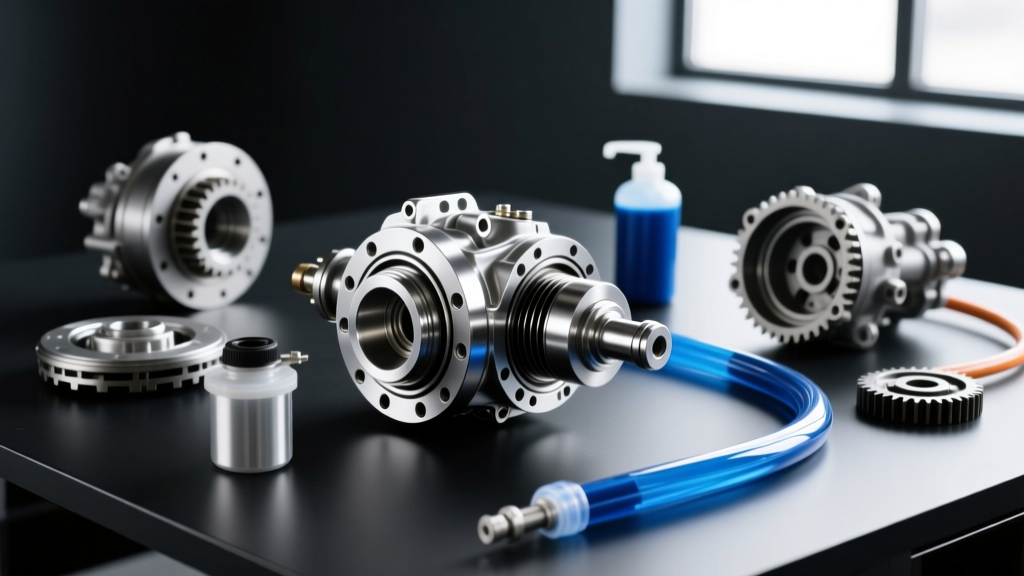
If you install a clutch-type LSD, you must add a friction modifier to your 75W-90 or 80W-90 GL-5 gear oil. Without it, the clutch packs will grab and release rapidly during low-speed, tight-radius turns (like navigating a parking lot), resulting in an aggressive shuddering known as 'axle chatter.' This chatter not only destroys the driving experience but will physically glaze and destroy the clutch discs within a few thousand miles.
- GM EOS (Engine Oil Supplement): Part #1052358. The OEM standard for GM Positraction axles.
- Ford XL-3: Part #C8AZ-19B546-A. Required for Ford 8.8-inch and 9.75-inch clutch LSDs.
- Aftermarket Synthetics: Many modern synthetic oils (like Amsoil Severe Gear or Red Line 75W90) claim to have friction modifiers pre-blended. However, experienced drivetrain builders at Ring & Pinion universally recommend adding a dedicated 4 oz bottle of modifier to guarantee chatter-free operation.
Capacity Note: A standard GM 8.5-inch 10-bolt holds approximately 2.1 quarts. A Dana 44 holds roughly 2.2 quarts. Always fill to the bottom of the fill plug threads with the vehicle on level ground.
2026 Buyer's Guide: Upgrade Costs and Part Selection
If you are converting an open axle to a limited slip, you must purchase the LSD carrier, a master installation kit (carrier bearings, shims, crush sleeve, pinion seal), and potentially new ring and pinion gears if your desired ratio isn't compatible with the new carrier's spline count or series break.
Recommended Part Numbers and Pricing
- Eaton Positraction (GM 8.5-inch 10-bolt, 30-spline, 3.08+ ratio): Part #19596-010. Retail price hovers around $550 - $620. Excellent for street/strip builds up to 450 lb-ft of torque.
- Auburn Gear Pro Series (Ford 8.8-inch, 31-spline): Part #541044. Priced around $680. Features a high-capacity clutch pack for aggressive drag racing launches.
- Eaton Detroit Truetrac (Dana 44, 30-spline): Part #917A589. Priced at $750 - $850. The ultimate bolt-in upgrade for Jeep Wranglers and light off-road trucks. Zero maintenance required.
Sourcing high-quality components from trusted suppliers like Yukon Gear & Axle ensures you receive precision-machined carriers that maintain proper ring gear runout limits (typically under 0.002 inches).
Installation Specs: Torque Requirements and Clearances
Upgrading your differential is not a simple plug-and-play affair. It requires precision measurement and strict adherence to torque specifications. Failure to properly set the gear pattern or preload the bearings will result in catastrophic ring and pinion failure.
- Ring Gear to Case Bolts: Must be torqued to 70-85 lb-ft (check specific manufacturer specs; Yukon recommends 75 lb-ft for standard 3/8-inch bolts). Crucially, these bolts must be secured with a high-strength threadlocker like Loctite 262 (Red) to prevent backing out under heavy torque loads.
- Carrier Bearing Cap Bolts: On a Dana 44, these are typically torqued to 60 lb-ft. On a GM 12-bolt, they require 65 lb-ft. Always reuse the original caps in their exact original locations and orientations; they are line-bored from the factory and are not interchangeable.
- Pinion Bearing Preload: When installing the new crush sleeve, the rotational drag torque of the pinion (measured with an inch-pound torque wrench) should generally fall between 15 and 25 in-lbs for new bearings, or 10-15 in-lbs for reused bearings.
- Backlash: The clearance between the ring gear and pinion gear must be set between 0.006 and 0.010 inches using a dial indicator, adjusted via the carrier side adjusters or shims.
Final Verdict: Which Differential Belongs in Your Axle?
Understanding what does limited slip differential mean ultimately comes down to matching the hardware to your driving environment. If your vehicle is a dedicated highway cruiser, a tow rig, or a budget daily driver, the open differential remains the most cost-effective and maintenance-free choice. However, if you are building a track car, an off-road overlander, or a muscle car that needs to hook up off the line, an LSD is non-negotiable. For high-horsepower street cars where maintenance is a concern, invest the extra capital into a helical gear unit like the Truetrac or Torsen. For budget-conscious drag racers, a clutch-type Eaton Posi with the correct friction modifier will provide the straight-line grip you need to dominate the strip.