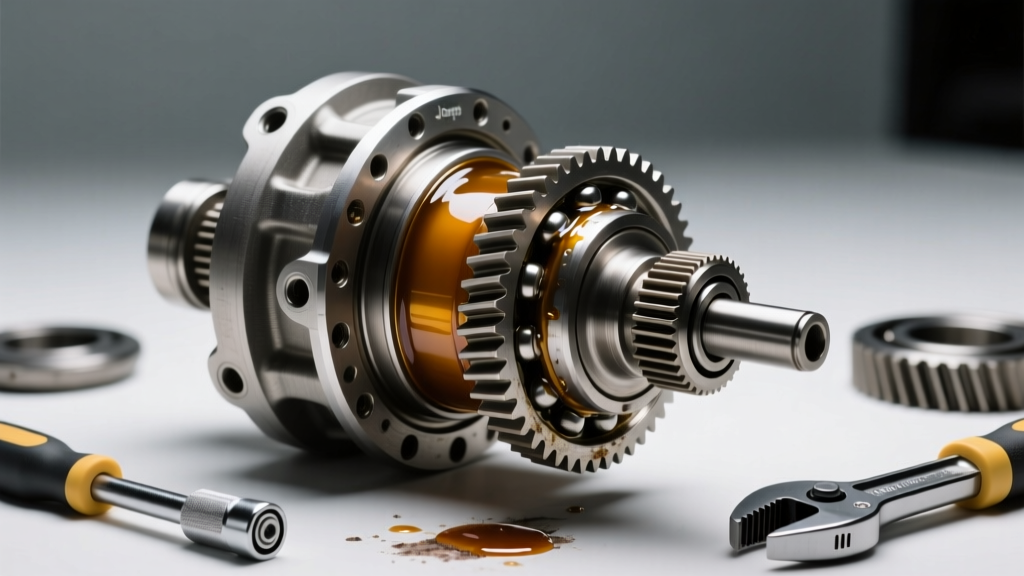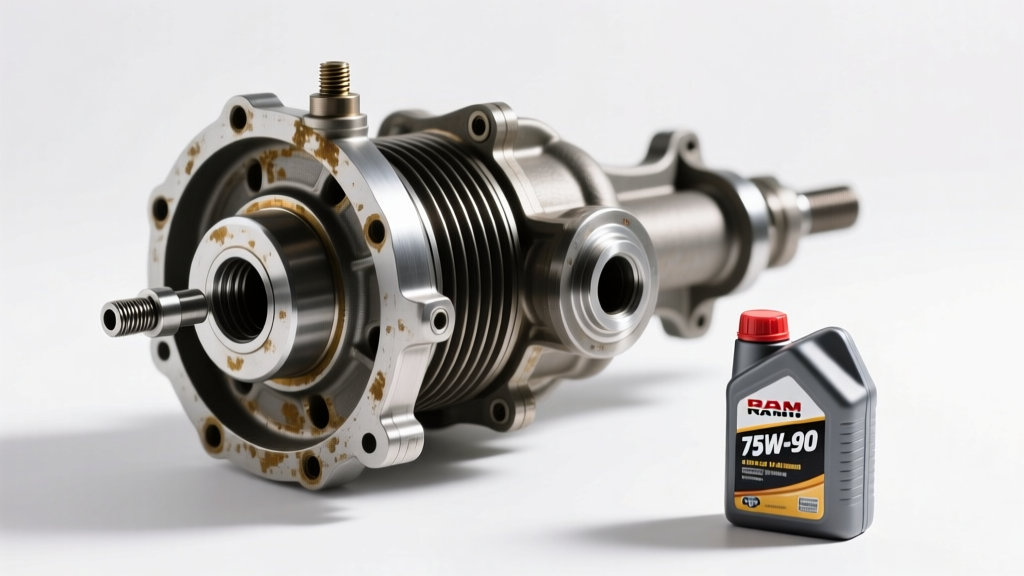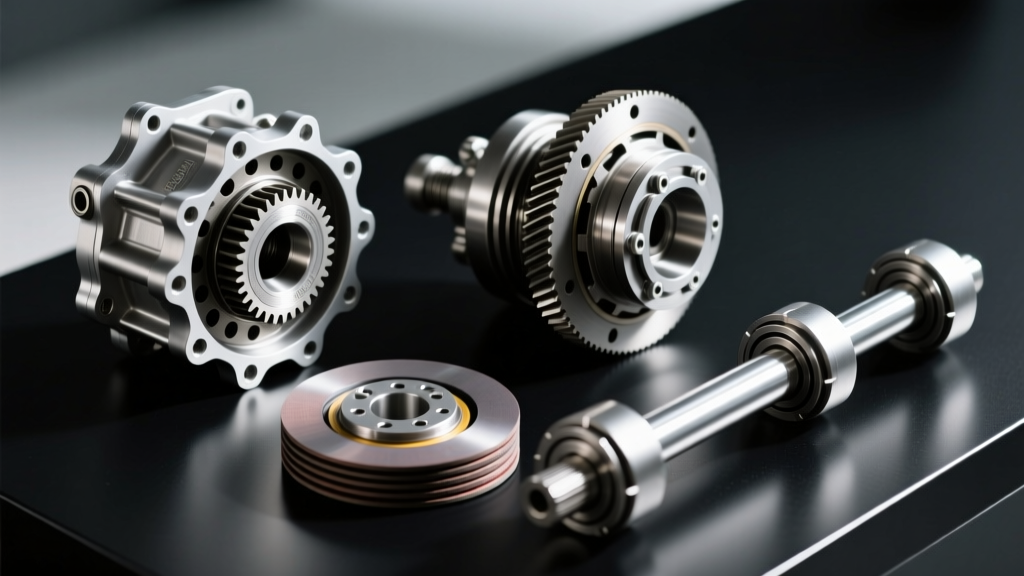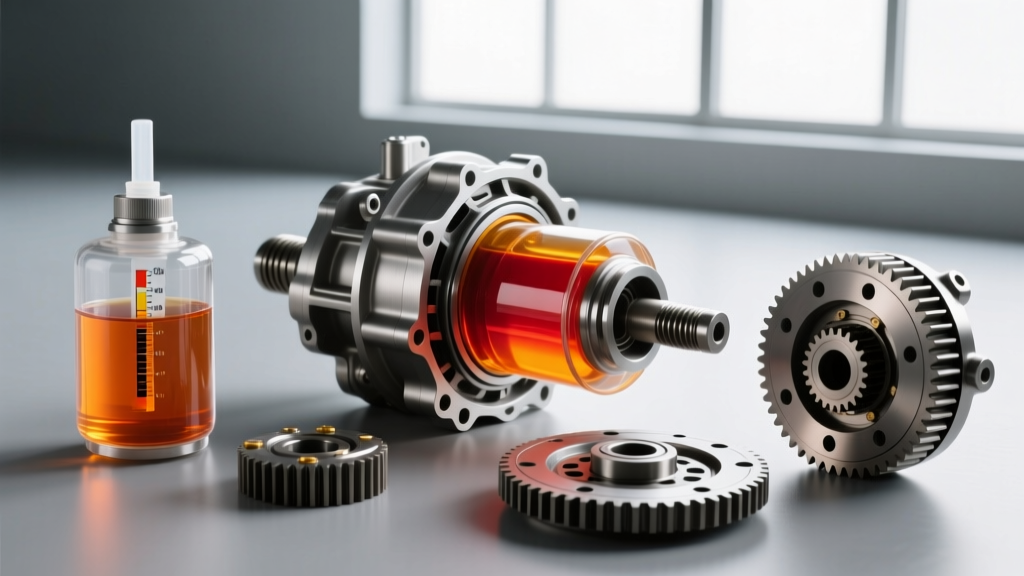
When planning your first major drivetrain service or researching a used vehicle purchase, a common question arises: do all cars have differential fluid? The short answer is no, not in the way most enthusiasts assume. Front-wheel-drive (FWD) vehicles typically utilize a transaxle where the differential shares a common fluid sump with the transmission. However, rear-wheel-drive (RWD), four-wheel-drive (4WD), and most all-wheel-drive (AWD) vehicles feature standalone differential assemblies that require dedicated gear oil. Understanding this distinction is only the beginning. As a buyer or DIY mechanic, the more critical comparison lies in the internal architecture of the differential itself—specifically, open versus limited-slip differentials (LSD)—and how those mechanical differences dictate strict fluid chemistry requirements.
Drivetrain Architecture: Transaxles vs. Standalone Differentials
To answer the keyword question definitively: FWD cars (like the Honda Civic or Toyota Camry) do not have a separate differential fluid reservoir. The differential is integrated into the transmission casing, lubricated by Automatic Transmission Fluid (ATF) or specialized Manual Transmission Fluid (MTF). Conversely, RWD and AWD platforms (such as the Ford Mustang, BMW 3-Series, or Jeep Wrangler) utilize standalone front and rear axles. These housings contain a ring and pinion gear set operating on hypoid geometry, which generates immense sliding friction and requires dedicated, high-pressure API GL-5 gear oil to prevent catastrophic gear wear.
Open vs. Limited-Slip Differentials: A Mechanical Comparison
When evaluating a vehicle's traction capabilities or planning an aftermarket upgrade, you must understand the mechanical divide between open and limited-slip differentials. This choice directly impacts your maintenance routine, fluid purchasing, and long-term reliability.
The Open Differential: Predictable but Limited
The open differential is the baseline standard for most economy cars, base-model trucks, and front axles of 4WD trucks (when not engaged). Internally, it relies on a simple spider gear and side gear arrangement. Torque follows the path of least resistance. If the left wheel is on ice and the right wheel is on dry asphalt, 100% of the rotational force is directed to the slipping wheel.
From a maintenance perspective, open differentials are incredibly forgiving. They do not contain clutch packs or complex biasing gears, meaning they do not require specialized friction modifiers. A standard, high-quality synthetic 75W-90 GL-5 gear oil is all that is required to protect the bearings and hypoid gear mesh.
The Limited-Slip Differential (LSD): Traction and Complexity
Limited-slip differentials are designed to transfer torque to the wheel with the most grip, vastly improving acceleration out of corners and off-road traction. However, they introduce mechanical complexity that directly alters fluid requirements. There are two primary LSD categories you will encounter in the buyer's market:
- Clutch-Type LSDs (e.g., Ford Trac-Lok, Auburn, Eaton Posi): These use internal clutch packs to bind the axles together under load. Over time, the friction material degrades, and the fluid becomes contaminated with clutch particulates.
- Helical / Gear-Type LSDs (e.g., Eaton Truetrac, Torsen): These utilize complex worm and spur gear sets to create torque bias without the use of friction clutches. They are virtually maintenance-free regarding special additives and are highly favored for heavy-duty and high-horsepower applications.
Differential Fluid Chemistry: GL-5, Viscosity, and Friction Modifiers
The most common mistake DIYers make when servicing a clutch-type LSD is omitting the friction modifier. Hypoid ring and pinion gears require the extreme pressure (EP) additives found in GL-5 gear oils (specifically Zinc Dialkyldithiophosphate, or ZDDP). However, clutch packs require a specific coefficient of friction to operate smoothly. Without a friction modifier additive (like Motorcraft XL-3 or Red Line Limited Slip Friction Modifier), the clutch packs will experience 'stick-slip' engagement during low-speed cornering, resulting in a violent, chattering vibration that can permanently score the clutch steels and destroy the differential.
Alternatively, helical LSDs like the Eaton Truetrac do not use clutch packs. According to Eaton's engineering specifications, adding friction modifiers to a Truetrac can actually reduce the torque-biasing efficiency of the helical gears. For these units, standard GL-5 synthetic gear oil is mandated.
Comparison Chart: Differential Types and Fluid Requirements
| Differential Type | Typical Viscosity | Friction Modifier Required? | Common Applications | Avg. Upgrade/Rebuild Cost |
|---|---|---|---|---|
| Open Differential | 75W-85 or 75W-90 GL-5 | No | FWD Transaxles, Base RWD, Front 4WD Axles | $300 - $500 (Rebuild) |
| Clutch-Type LSD | 75W-90 or 75W-140 GL-5 | Yes (Critical) | Muscle Cars, Light Duty Trucks, OEM Performance | $450 - $650 (Unit + Kit) |
| Helical LSD (Truetrac) | 75W-90 GL-5 Synthetic | No (Do Not Use) | Off-Road, Towing, High-HP Street | $650 - $800 (Unit + Kit) |
| Automatic Locker | 75W-90 or 75W-140 GL-5 | No | Heavy Off-Road, Rock Crawling | $250 - $400 (Drop-in) |
Real-World Service Data: Torque Specs, Capacities, and Edge Cases
Proper maintenance goes beyond selecting the right fluid. You must adhere to precise torque specifications and understand platform-specific edge cases to avoid stripping threads or blowing axle seals.
Ford 8.8-Inch Solid Axle (Clutch-Type LSD)
The ubiquitous Ford 8.8 rear end (found in Mustangs, F-150s, and Rangers) typically holds 1.8 to 2.0 quarts of 75W-140 synthetic gear oil. If equipped with a Trac-Lok, you must add 4 oz of friction modifier before topping off.
Torque Specs: The 3/8-inch 16-thread rear cover bolts must be torqued to exactly 28-38 lb-ft in a crisscross pattern. Over-torquing these bolts will warp the bearing caps or crush the cork/RTV seal. The 1/2-inch 14-thread fill plug requires 33 lb-ft.
BMW G-Chassis ZF Rear Assemblies (Open / Helical)
Modern European platforms present unique challenges. The BMW G20 (M340i) utilizes a ZF rear differential that requires a specific SAF-XO 75W-85 fluid. Crucially, this differential has no drain plug. Fluid extraction requires a specialized pneumatic suction pump fed through the fill hole. The fill plug torque spec is strictly 60 Nm (44 lb-ft). Using a thicker 75W-90 fluid in these tight-tolerance ZF units can cause whining noises and overheating due to inadequate flow to the internal bearings.
Dana 44 (Jeep Wrangler / Heavy Duty)
The Dana 44 is a staple in the off-road community. When running 35-inch or larger tires, the gear mesh stress increases exponentially. While a standard open Dana 44 might survive on 75W-90, upgraded Dana 44s with aftermarket lockers or heavy towing loads require 75W-140 to maintain a sufficient hydrodynamic film thickness under extreme shear. Cover bolts (typically 3/8-inch) should be torqued to 30-35 lb-ft.
Buyer's Guide: Upgrading from Open to LSD
If you are purchasing a vehicle with an open differential or planning a build, upgrading to an LSD is one of the most transformative modifications you can make. However, you must budget for the hidden costs of the swap.
Purchasing the LSD unit (such as the Eaton Truetrac Part #910A5895 for a Ford 8.8) costs roughly $650 to $750. But the buyer must also account for a master rebuild kit (carrier bearings, races, pinion seal, shims), which adds $150. Furthermore, setting the ring and pinion backlash (typically 0.006 to 0.010 inches) and gear pattern requires specialized dial indicators and a hydraulic press. If you are not machining the carrier yourself, expect to pay a driveline shop between $400 and $800 for professional setup labor. When factoring in the $60 to $90 required for high-quality synthetic gear oil (like Valvoline or AMSOIL Severe Gear), a proper open-to-LSD upgrade is a $1,300+ investment.
Final Verdict: Choosing the Right Setup and Fluid
So, do all cars have differential fluid? Only those with standalone axle assemblies, and the fluid inside those assemblies is highly dependent on the internal hardware. If you drive a daily-commuter FWD car, your differential is safely bathed in your transaxle fluid. If you operate an RWD or 4WD vehicle, identifying whether your differential is open, clutch-based, or helical is the single most important step before draining the fill plug.
For buyers seeking a zero-maintenance traction upgrade, the helical Eaton Truetrac paired with standard synthetic GL-5 gear oil is the undisputed champion of reliability. For restorers maintaining OEM clutch-type differentials, strict adherence to friction modifier ratios and 3,000-mile fluid break-in intervals is mandatory to prevent costly chatter and premature failure. Always consult your specific axle manufacturer's torque specs, use a calibrated torque wrench, and never substitute GL-4 fluid in a hypoid gear application.