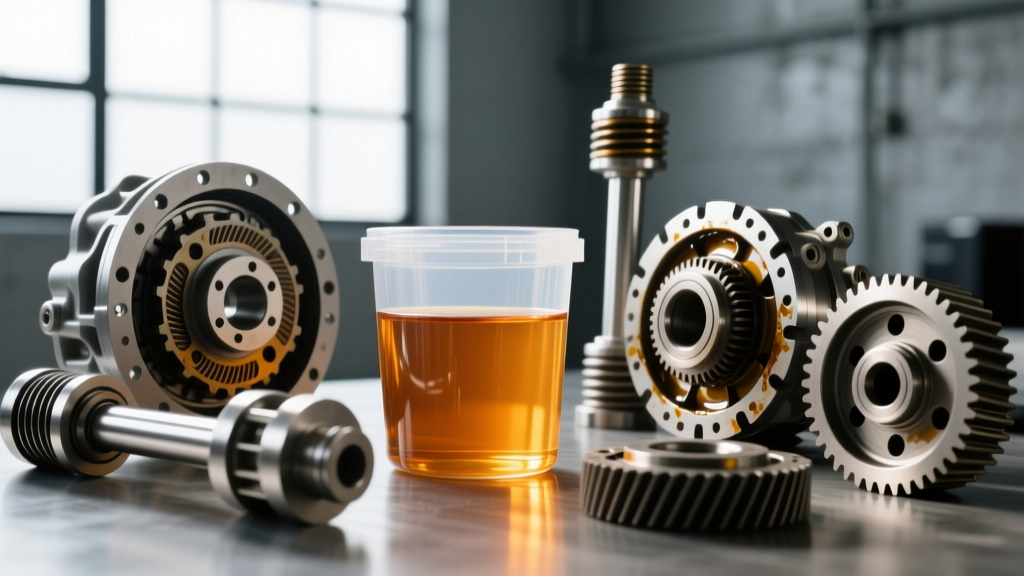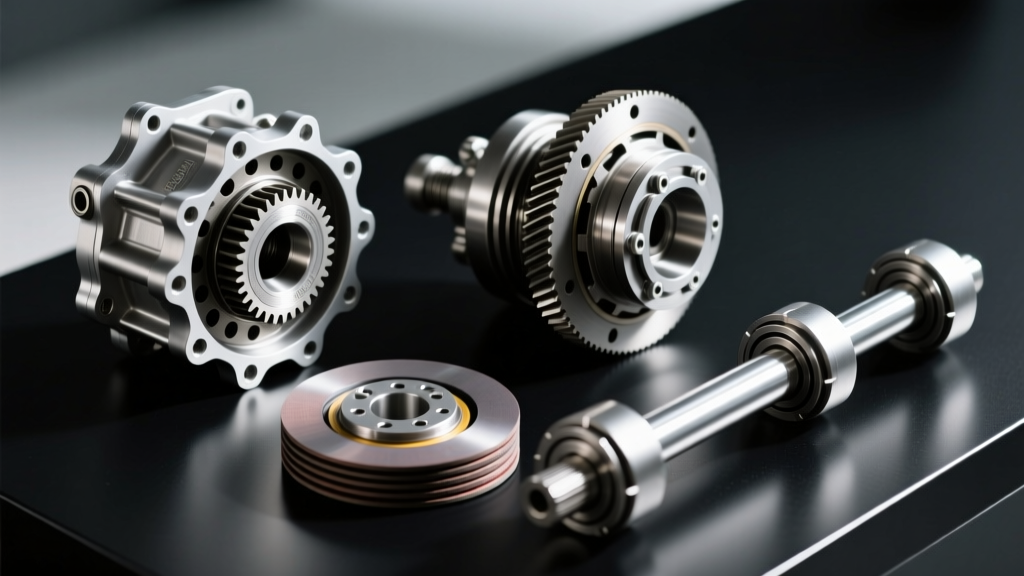
When enthusiasts and off-road builders begin upgrading their drivetrains, the search for the true differential lock meaning usually marks the transition from casual driving to serious performance engineering. At its core, the differential lock meaning refers to the mechanical, pneumatic, or electronic synchronization of the left and right axle shafts, forcing them to rotate at the exact same RPM regardless of available traction. Unlike open differentials that route power to the path of least resistance, or limited-slip differentials (LSDs) that rely on clutch packs or helical gears to bias torque, a fully locked differential guarantees 100% torque delivery to both wheels.
Decoding the Differential Lock Meaning in Performance Applications
In a standard open carrier, spider gears allow the outer wheel to spin faster than the inner wheel during a corner. However, in low-traction environments—such as rock crawling, deep mud, or drag racing with unequal weight distribution—this design flaw results in one wheel spinning uselessly while the other remains stationary. Understanding the differential lock meaning in a performance context means recognizing the elimination of this slip. By locking the axles together, you maximize the contact patch and traction limit of both tires. As of 2026, aftermarket metallurgy and precision CNC machining have made locking differentials more reliable and accessible than ever, with pricing for premium units generally ranging from $700 to $1,200 depending on the actuation method and axle spline count.
Selecting the Right Locker: Actuation Types and Engineering
Choosing the correct locking differential requires matching the actuation mechanism to your specific use case. Below is a breakdown of the primary locking systems available on the market today.
Air-Operated Lockers (e.g., ARB Air Locker)
The ARB Air Locker remains the gold standard for selectable locking differentials. Utilizing an onboard air compressor and a pneumatic seal inside the carrier, the ARB locker engages a locking collar that binds the spider gears to the side gears. For a standard Dana 44 with 30-spline shafts, the RD116 part number is a common application. When disengaged, it operates as a 100% stock open differential, preserving street manners and preventing driveline binding during tight turns. The primary drawback is the requirement for a clean, dry air source and the routing of the air line through the axle housing, which requires drilling the carrier bearing cap.
Cable-Actuated Lockers (e.g., OX Locker)
OX Lockers utilize a mechanical cable routed through the axle tube to shift a locking collar. This eliminates the need for air compressors, solenoids, or electrical wiring. The mechanical shift lever on the dash provides tactile feedback, and the system is largely impervious to water intrusion or electrical gremlins. However, cable stretch and housing flex under extreme articulation can occasionally lead to incomplete engagement if the shift mechanism is not properly adjusted.
Electric Selectable Lockers (e.g., Eaton E-Locker)
The Eaton E-Locker uses an electromagnetic coil to push a locking collar into the side gear. Part number 19902-010 covers many GM 8.5-inch 10-bolt applications. E-Lockers are highly favored for their simple two-wire installation and push-button convenience. The internal ramp-and-pin mechanism is robust, but extreme shock loads (such as dropping off a ledge with the throttle pinned) can occasionally shear the internal pins if the locker is engaged while the wheels are spinning at vastly different speeds.
Automatic Locking Differentials (e.g., Detroit Locker, Spartan)
Automatic lockers replace the spider gears entirely with a ratcheting mechanism. A Detroit Locker (by Eaton) or a Spartan Locker (by Yukon Gear) will lock both axles together under load, but will ratchet and unlock during coasting or cornering to allow for wheel speed differentiation. While they are the most cost-effective option (typically $500 to $750) and require no external switches or wiring, they introduce driveline noise, harsh engagement clunks, and can induce unpredictable handling on wet or icy paved roads.
Comparative Data: Cost, Reliability, and Use-Case Matrix
| Locker Type | Actuation Method | Avg. Cost (2026) | Street Manners | Best Application |
|---|---|---|---|---|
| ARB Air Locker | Pneumatic (Air) | $950 - $1,150 | Excellent (Open when off) | Rock Crawling, Overlanding, Daily/Trail |
| Eaton E-Locker | Electromagnetic | $800 - $1,000 | Excellent (Open when off) | Trail Riding, Mud, Snow, Towing |
| OX Locker | Mechanical Cable | $1,000 - $1,200 | Excellent (Open when off) | Extreme Articulation, Water Crossings |
| Detroit / Spartan | Automatic (Ratcheting) | $550 - $750 | Poor (Clunks, Drift) | Dedicated Off-Road, Drag Racing, Budget |
Installation Realities: Bearing Preload, Backlash, and Torque Specs
Upgrading to a locking differential is not a simple drop-in affair. The carrier must be set up with precise tolerances to prevent catastrophic gear failure under the increased stress of locked-axle torque multiplication. According to Dana Spicer engineering guidelines, improper backlash and bearing preload are the leading causes of ring gear tooth shearing.
Ring Gear Bolt Torque and Threadlocker
When transferring the ring gear to a new selectable locker carrier (or installing a new gear set), the mounting bolts must be torqued to exact specifications using a high-strength threadlocker (such as Loctite 262 or 272). Never use impact guns for final torquing.
- Dana 44 (Standard Rotation): 55 - 65 lb-ft
- Dana 60: 110 - 120 lb-ft
- Ford 8.8-inch: 70 - 85 lb-ft
- GM 14-Bolt (10.5-inch): 120 - 130 lb-ft
Backlash and Bearing Preload Tolerances
Backlash—the rotational play between the ring and pinion teeth—must be strictly controlled. For a locked differential subjected to heavy off-road shock loads, a slightly looser backlash is often preferred to prevent gear binding when the axle tubes flex under articulation.
- Street/Strip Setup: 0.006" - 0.008"
- Heavy Off-Road/Rock Crawling: 0.008" - 0.012"
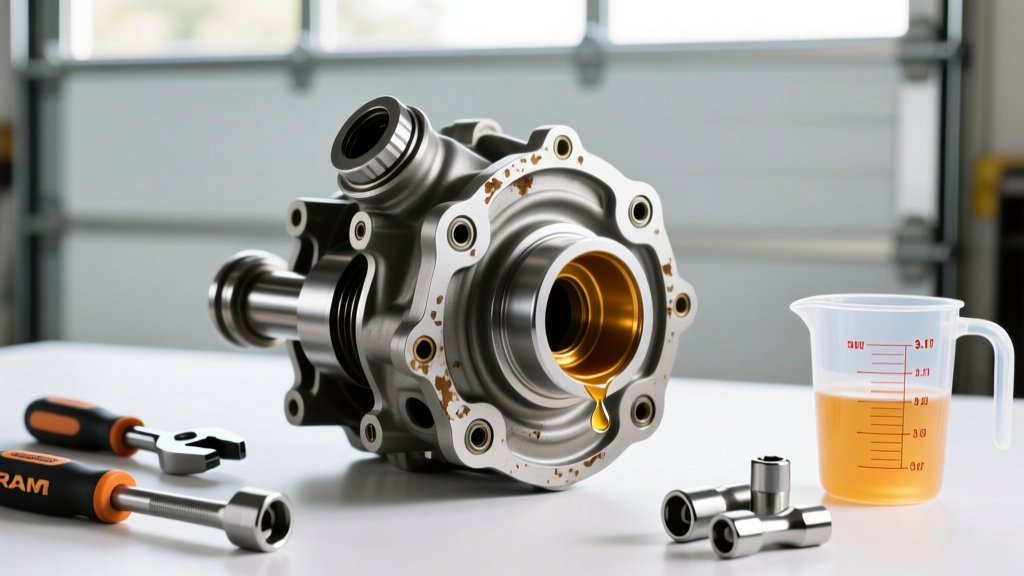
Carrier bearing preload must be set using a dial indicator and a torque wrench to measure the breakaway torque of the carrier. Typically, you want to see 15 to 25 in-lbs of rotational resistance (excluding pinion seal drag) to ensure the bearings will not loosen under thermal expansion and heavy load.
Fluid Selection for Locked Differentials
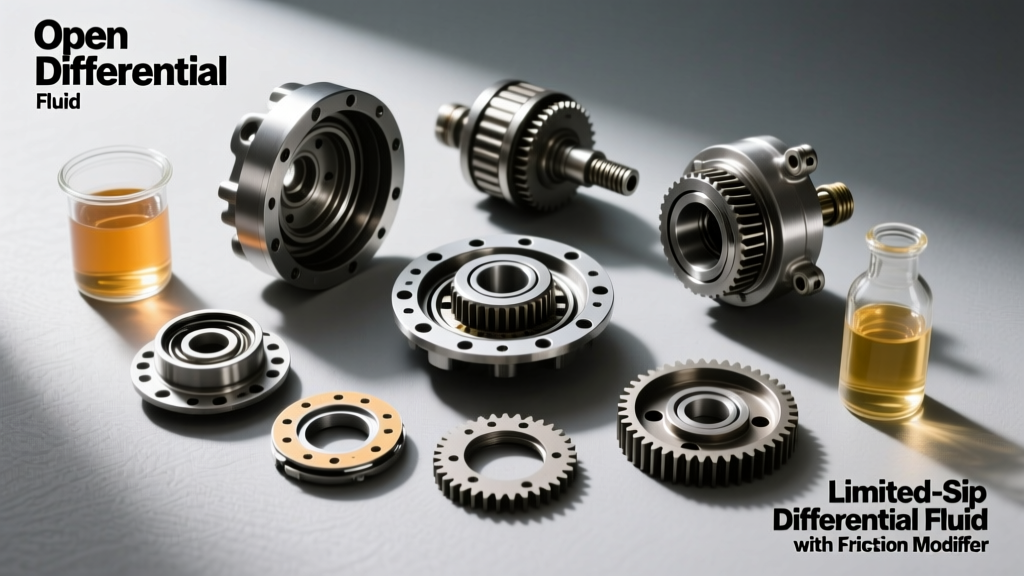
Because this guide falls under the diff-fluid category, it is vital to address the lubrication requirements of locking differentials. A common and costly mistake is using Limited-Slip Differential (LSD) fluid in a full locker. Do not use friction modifiers in a selectable or automatic locker. Friction modifiers (like Ford XL-3 or GM EOS) are designed to allow clutch packs to slip smoothly. In an ARB, Eaton E-Locker, or Detroit Locker, there are no clutch packs; the locking mechanism relies on metal-on-metal engagement. Friction modifiers can actually cause the internal locking collars to slip or fail to engage fully under load.
For heavy-duty applications where the differential lock is frequently engaged, the gear oil must possess extreme shear stability and high film strength to protect the hypoid ring and pinion gears from the massive shock loads transferred through the locked axles.
- Viscosity: 75W-140 Synthetic is highly recommended for locked Dana 60s, 14-bolts, and heavily modified Dana 44s running 35-inch or larger tires. The thicker high-temperature film prevents gear deflection.
- API Rating: GL-5 is mandatory for the extreme pressure (EP) additives required by hypoid gear sets.
- Top Tier Recommendations: Amsoil Severe Gear 75W-140, Red Line 75W140 NS (Non-Slip), or Royal Purple Max Gear 75W-140.
Conclusion
Grasping the differential lock meaning is essential for any drivetrain upgrade. Whether you opt for the pneumatic precision of an ARB, the electromagnetic convenience of an Eaton E-Locker, or the brute-force simplicity of a Detroit Locker, the key to longevity lies in meticulous installation and proper maintenance. By adhering to strict torque specifications, dialing in the correct backlash, and filling the housing with the appropriate non-modifier 75W-140 synthetic gear oil, your locked axle assembly will deliver uncompromising traction and reliability for years to come.