The Drivetrain Dilemma: Open vs. Limited Slip in 2026
When building a performance street car, a dedicated off-road rig, or a heavy-duty tow vehicle, the rear axle assembly dictates your traction, handling, and overall drivability. At the heart of this system lies the differential. For decades, the debate between an open differential and a limited slip differential (LSD) has divided enthusiasts and engineers alike. As we navigate the 2026 automotive landscape, advancements in metallurgy, synthetic lubricants, and helical gear designs have shifted the baseline for what constitutes a 'proper' drivetrain upgrade. Whether you are diagnosing a failing open carrier or prepping for a full LSD swap, understanding the mechanical differences—and knowing how to safely disconnect the driveline—is paramount.
Open Differentials: The Engineering Reality
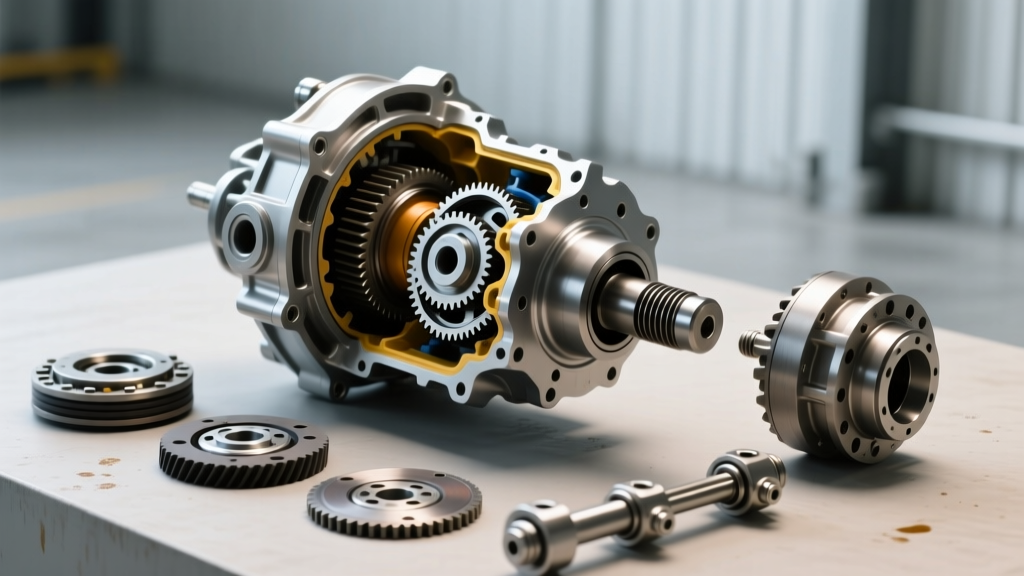
The open differential is the default configuration for 90% of factory passenger vehicles. Its primary engineering goal is to allow the left and right axle shafts to rotate at different speeds during cornering, preventing tire scrubbing and driveline binding. Inside the carrier, a set of spider gears (pinions) mounted on a cross pin meshes with two side gears connected to the axle shafts.
While elegant in its simplicity, the open differential suffers from a critical flaw: torque follows the path of least resistance. If one tire loses traction (on ice, mud, or during hard cornering weight transfer), 100% of the rotational force is redirected to the slipping wheel. This results in the dreaded 'one-tire fire.' Furthermore, under high shock loads—such as aggressive drag racing launches or dropping off a rock ledge—the spider gear cross pin is highly susceptible to shearing, effectively welding the carrier together and causing catastrophic axle failure.
Limited Slip Differentials: Clutch-Type vs. Helical Gear
To combat the shortcomings of the open design, limited slip differentials introduce a torque-biasing mechanism. However, not all LSDs are created equal. The market is currently dominated by two distinct architectures:
1. Clutch-Type LSDs (e.g., Auburn Gear, Eaton Posi)
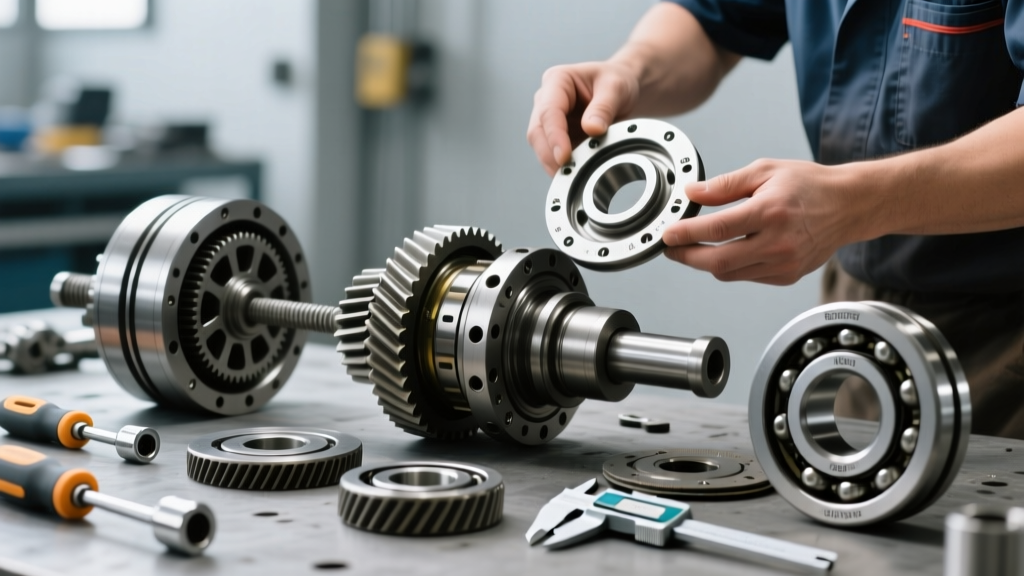
Clutch-type LSDs utilize a series of friction plates and preload springs to resist the relative motion between the side gears and the carrier. When one wheel begins to slip, the internal thrust forces press the clutch packs together, transferring torque to the wheel with grip. While highly effective for straight-line traction and drag racing, clutch-type LSDs require regular maintenance. The friction material degrades over time, necessitating the use of specialized friction modifiers (such as GM EOS 1051437 or Red Line Limited Slip Friction Modifier) to prevent low-speed 'chatter' during tight turns.
2. Helical Gear LSDs (e.g., Eaton Truetrac)
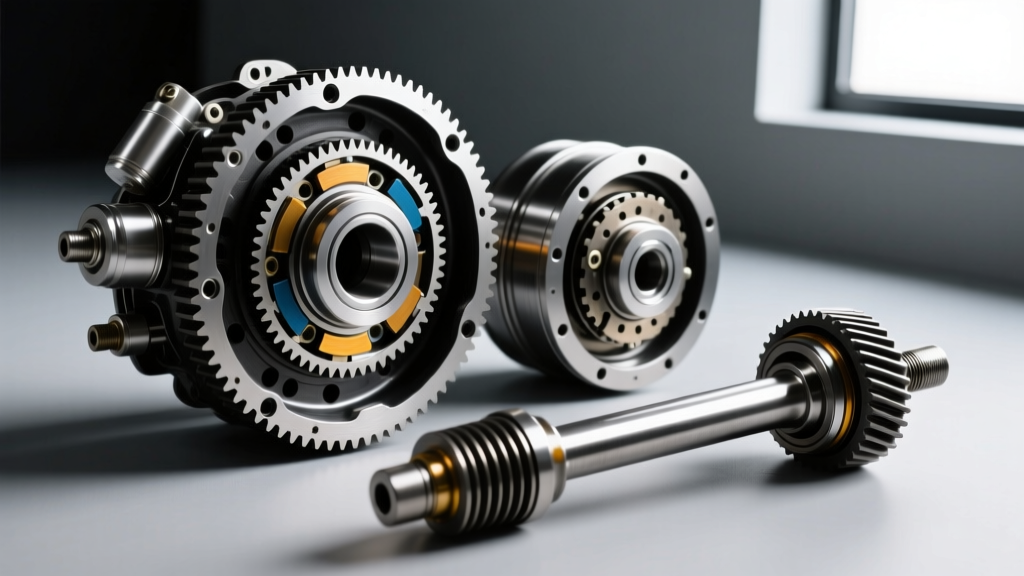
Helical gear LSDs operate on an entirely different principle. Instead of clutch packs, they use a planetary gear set with helical-cut gears. Under normal driving conditions, they act like an open differential. However, when a torque imbalance occurs, the helical gears generate axial thrust against the carrier housing, creating friction that biases torque to the wheel with traction. According to Eaton's official differential lineup, the Truetrac offers a torque bias ratio (TBR) of up to 3.5:1, requires no friction modifiers, and operates completely silently, making it the premier choice for modern daily drivers and off-road builds.
Technical Comparison Chart: Open vs. LSD
| Feature | Open Differential | Clutch-Type LSD (Auburn) | Helical Gear LSD (Truetrac) |
|---|---|---|---|
| Example Part Number | Spicer 30204 | Auburn 542012 | Eaton 910A515 (Dana 44) |
| Torque Bias Ratio (TBR) | 1:1 (No Bias) | 2:1 to 3:1 | 2.5:1 to 3.5:1 |
| Friction Modifier Required? | No | Yes (Mandatory) | No |
| Maintenance Interval | Fluid change only | Fluid + Modifier every 30k miles | Fluid change only |
| Average Cost (Carrier Only) | $150 - $250 | $450 - $600 | $650 - $850 |
| Best Application | Highway cruising, budget builds | Drag racing, burnout boxes | Street/Strip, Off-Road, Towing |
Step-by-Step: How to Remove Drive Shaft from Rear Differential
Before you can pull the rear cover, swap the carrier, or upgrade your ring and pinion, you must disconnect the driveline. Learning how to remove drive shaft from rear differential assemblies is a foundational skill that requires precision to avoid damaging U-joints, pinion flanges, or transmission tail shafts.
Tools Required & Safety Protocols
- Hydraulic floor jack and heavy-duty jack stands
- Wheel chocks
- Yellow paint pen or metallic marker (for indexing)
- 12-point 12mm, 10mm, or 1/2-inch socket (for U-joint straps)
- Torque wrench
- Transmission tail shaft plug or wooden golf tee
Safety First: Place the vehicle on a level surface. Chock the front wheels. If the vehicle is an automatic, place the transmission in 'Park'. If it is a manual, leave it in gear. This locks the driveline, preventing the driveshaft from spinning while you attempt to break the strap bolts loose.
Indexing and Unbolting the Rear U-Joint
Driveshafts are dynamically balanced at the factory as a single unit. Before unbolting anything, use your yellow paint pen to draw a continuous line across the rear U-joint cap and the differential pinion flange. This ensures that upon reinstallation, the driveshaft is clocked in the exact same orientation, preventing severe high-speed driveline vibrations.
Most solid-axle setups (like the Dana 44, Ford 8.8, or GM 10-bolt) utilize a Spicer 1310 or 1350 series U-joint retained by four strap bolts. These are typically 12-point 12mm or 1/2-inch bolts. Using a high-quality 6-point or 12-point socket, break the bolts loose. Pro Tip: These bolts are often secured with threadlocker from the factory. If they refuse to budge, apply localized heat with a butane torch to the strap, being careful to avoid the U-joint needle bearings, as excessive heat will melt the bearing grease and destroy the joint.
For modern Independent Rear Suspension (IRS) vehicles or heavy-duty trucks utilizing a CV flange instead of a U-joint strap, you will need to remove six flange bolts (usually 15mm or 18mm). Support the shaft with a bungee cord to prevent the CV joint from over-extending and tearing the internal boot.
Extraction and Fluid Leak Prevention
Once the rear bolts are removed, gently push the driveshaft forward toward the transmission to unseat the rear U-joint from the pinion flange. Lower the rear of the shaft and secure it to the exhaust or frame with a bungee cord to keep it out of your workspace.
If your vehicle utilizes a slip-yoke driveshaft (common in older trucks and RWD cars), pulling the shaft backward will extract the splined yoke from the transmission tail housing. This will immediately cause transmission fluid (ATF or 30W gear oil) to pour out of the tail shaft seal. Immediately insert a specialized tail shaft plug, or in a pinch, a wooden golf tee wrapped in Teflon tape, into the tail housing to prevent a massive fluid spill and keep dirt out of the transmission.
Reinstallation Torque Specs & Fluid Refill
When reinstalling the driveshaft after your differential service, adhering to exact torque specifications is non-negotiable. Over-torquing U-joint straps will distort the bearing caps, binding the needle bearings and causing premature U-joint failure. Under-torquing will result in the strap walking out under load, destroying the pinion flange.
- Spicer 1310/1350 U-Joint Strap Bolts: 15 to 20 lb-ft (Apply blue Loctite 243).
- CV Flange Bolts (Ford/IRS applications): 65 to 85 lb-ft (Refer to specific OEM service manual, e.g., Ford WSS-M2C922-A).
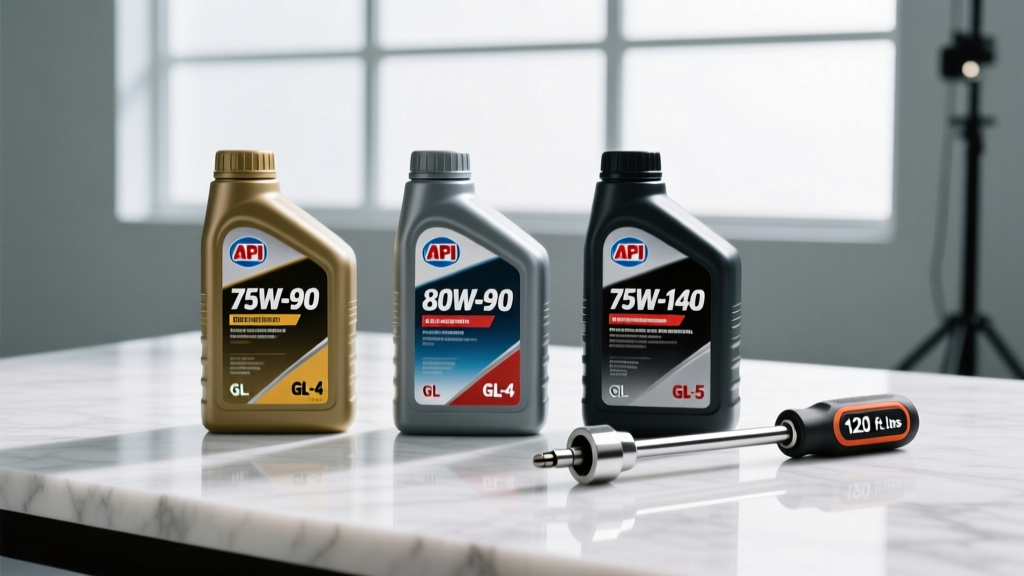
For the differential fluid refill, the 2026 consensus among drivetrain specialists leans heavily toward full-synthetic GL-5 gear oils. For standard street and light-tow applications, a 75W-90 synthetic (such as AMSOIL Severe Gear 75W-90) provides excellent shear stability and cold-weather flow. For severe towing, rock crawling, or vehicles with over 500 wheel-horsepower, step up to a 75W-140 viscosity to maintain film strength under extreme heat.
Critical Note on Friction Modifiers: If you have installed a clutch-type LSD (like an Auburn or Eaton Posi), you must add 4 to 6 ounces of a high-quality friction modifier (e.g., Red Line 70104) before filling the axle with gear oil. Failure to do so will result in aggressive clutch chatter, rapid wear, and permanent damage to the friction discs. Helical gear units like the Eaton Truetrac do not require modifiers and perform optimally on standard synthetic GL-5 fluids.
Expert Verdict: Which Differential Should You Choose?
The choice between an open, clutch-type, or helical gear differential ultimately comes down to your vehicle's primary mission profile. If you are building a dedicated drag car where straight-line bite is the only metric that matters, a clutch-type LSD or a full locking spool is your best bet. However, for 95% of enthusiasts building a weekend cruiser, an overland rig, or a street-driven tow rig, the helical gear Eaton Truetrac remains the undisputed king of the 2026 aftermarket. It offers seamless torque biasing, requires zero specialized maintenance, and integrates flawlessly with modern traction control systems.
By mastering the fundamentals of driveline disconnection—specifically knowing how to safely remove the rear drive shaft and manage transmission fluid seals—you open the door to a world of axle upgrades that will fundamentally transform your vehicle's performance and capability.