The Anatomy of the Nissan Rogue Drivetrain
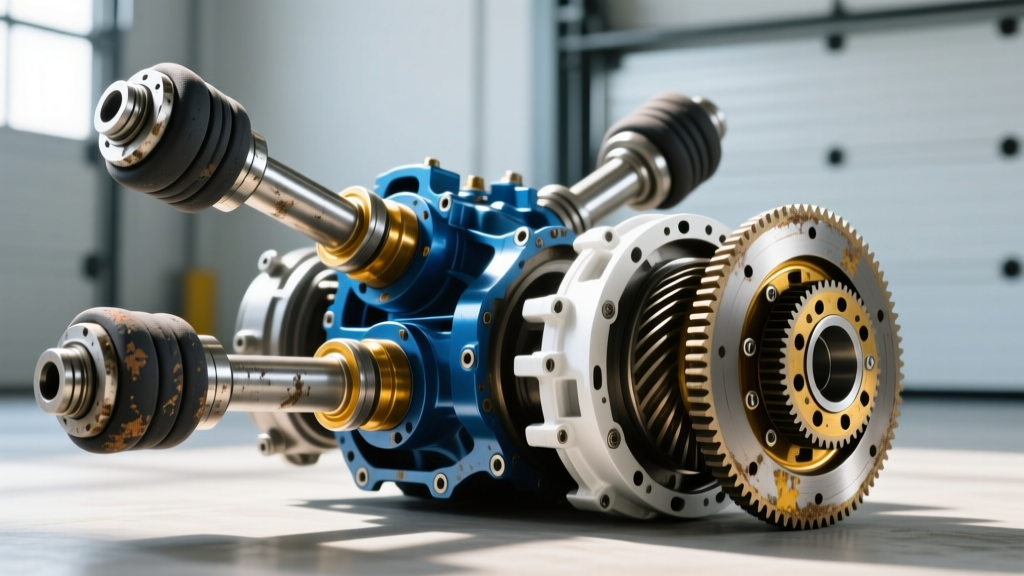
As of 2026, the Nissan Rogue remains one of the most popular compact crossovers on the road. However, its widespread adoption is matched only by the notoriety of its drivetrain components when improperly maintained. Whether equipped with the standard Front-Wheel Drive (FWD) layout or the Intelligent All-Wheel Drive (AWD) system, the Rogue relies heavily on Jatco-sourced Continuously Variable Transmissions (CVTs) and compact Power Transfer Units (PTUs).
Unlike traditional planetary automatic transmissions, the Nissan Rogue drivetrain operates on variable pulley ratios and high-pressure hydraulic fluid. When maintenance is deferred based on outdated 'lifetime fluid' myths, the result is often catastrophic belt slip, pulley scoring, or complete PTU seizure. This expert guide details the precise service intervals, factory fluid specifications, and torque requirements necessary to keep the Rogue's drivetrain operating flawlessly well past the 150,000-mile mark.
CVT Transmission Service: Beyond the 'Lifetime' Myth
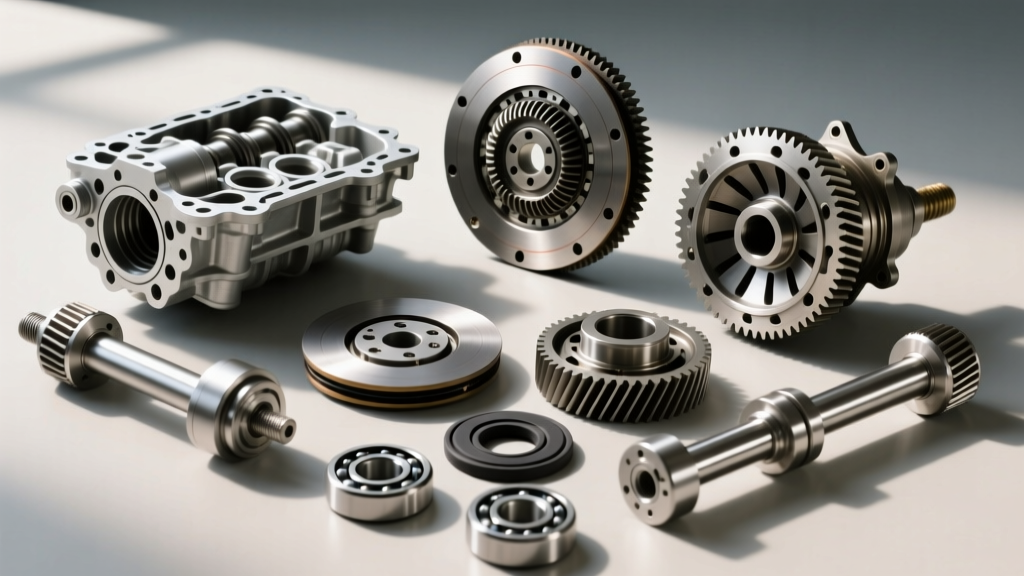
The heart of the Rogue's drivetrain is the Jatco CVT. Older models (2014-2017) typically utilize the JF016E (RE0F10D), while newer and hybrid variants may use updated variants or the JF011E in specific global markets. Nissan's official literature has historically marketed the NS-3 CVT fluid as a 'lifetime' fill for normal driving conditions. From a professional transmission builder's perspective, 'lifetime' simply means 'the lifetime of the warranty.'
Fluid Specifications and Capacity
For the JF016E and newer CVTs, Nissan NS-3 fluid is mandatory. Using older NS-2 fluid or generic universal CVT fluids will alter the friction coefficients on the push-belt and pulleys, leading to immediate shudder and long-term slip.
- OEM Fluid Part Number: 999MP-NS300P (Nissan NS-3)
- Drain and Fill Capacity: Approximately 5.5 to 6.0 quarts (5.2 - 5.7 Liters)
- Dry Fill Capacity: 10.5 quarts (9.9 Liters)
- Drain Plug Torque: 22-29 ft-lbs (30-39 Nm)
The Dual-Filter System: What Quick-Lube Shops Miss
A critical mistake in Rogue CVT maintenance is ignoring the dual-filter setup. The CVT utilizes two distinct filtration points:
- In-Pan Strainer (Coarse): Located inside the transmission pan (Part # 31728-1XF00). This catches large debris and clutch material.
- Cooler Return Filter (Fine): Located in the engine bay on the cooler lines near the battery/airbox area (Part # 31728-1XF0A or 31728-1XF0B depending on the exact model year). This is a fine paper element that protects the hydraulic control valve body.
For a complete service, the pan must be dropped, the magnets cleaned, the strainer replaced, and the inline cooler filter swapped. According to Nissan Factory Service Manuals archived by NicoClub, failing to replace the cooler filter is a primary cause of post-service solenoid failures due to restricted hydraulic flow.
The AWD Achilles Heel: Power Transfer Unit (PTU) Maintenance
For AWD-equipped Rogues, the Power Transfer Unit (PTU) is bolted directly to the transaxle. It uses a spiral bevel gear driven off the differential ring gear to send torque to the rear driveshaft. The PTU is notoriously prone to failure, and the culprit is almost always thermal degradation of the gear oil.
Why PTUs Fail and How to Prevent It
The PTU is positioned in close proximity to the exhaust manifold and catalytic converter. Under heavy loads or in hot climates, the ambient heat soak causes the standard GL-5 gear oil to oxidize and turn into a thick sludge. Because the PTU relies entirely on splash lubrication (it has no internal oil pump), sludge prevents the gear oil from reaching the upper bearings, resulting in bearing seizure and shattered ring gears.
Expert Warning: Never wait for a whining noise from the PTU before servicing it. By the time the spiral bevel gears whine, the bearing cages are already pitting. Service the PTU every 30,000 to 60,000 miles, regardless of the manufacturer's 'lifetime' claim.
PTU Service Specifications
- Fluid Type: API GL-5 75W-90 Synthetic Gear Oil
- Capacity: ~0.45 Liters (0.47 US Quarts) - It holds very little fluid, making thermal breakdown rapid.
- Fill/Drain Plug Torque: 25 ft-lbs (34 Nm)
- Procedure: Remove the fill plug first to ensure you can refill it before draining. Use a syringe with a flexible hose to pump the new fluid until it weeps from the fill hole.
Rear Differential and Driveshaft Care
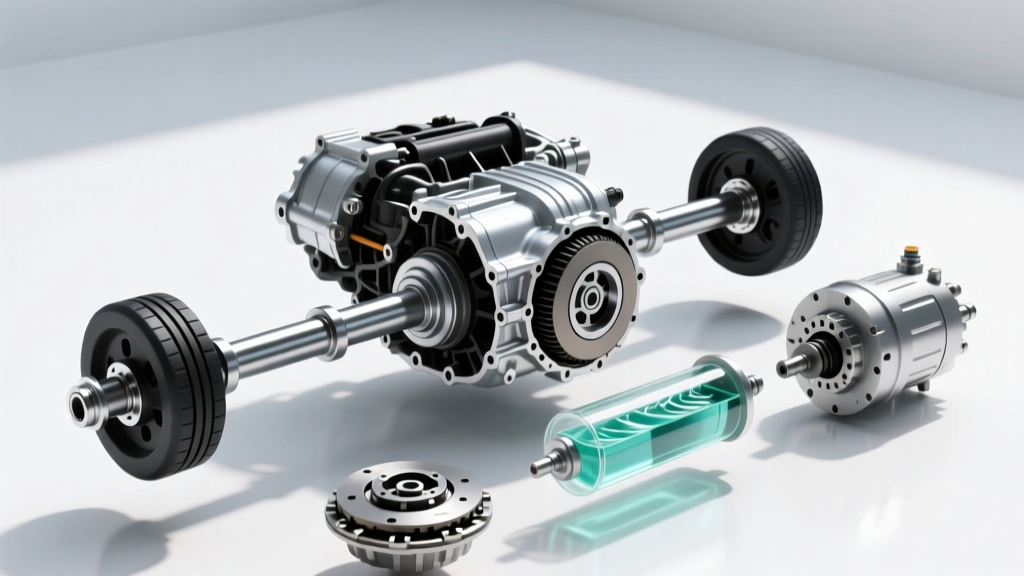
The rear differential on the Intelligent AWD system is an electronically controlled coupling that varies torque distribution. Like the PTU, it relies on splash lubrication and holds a minimal amount of fluid.
- Fluid Type: Nissan Hypoid Gear Oil GL-5 80W-90 (or equivalent synthetic 75W-90)
- Capacity: ~0.75 Liters (0.8 US Quarts)
- Interval: Every 60,000 miles, or immediately if the vehicle has been submerged in water.
While servicing the rear diff, inspect the CV axle boots and the U-joints on the rear half of the two-piece driveshaft. The center support bearing on the driveshaft is a known wear item around 90,000 miles; if you feel a low-frequency vibration through the floorpan at 45-55 mph, the driveshaft center bearing is likely failing.
Drivetrain Fluid Comparison Chart
Use this reference table to ensure the correct fluids and intervals are applied during your Nissan Rogue drivetrain service.
| Component | OEM Fluid Specification | Approx. Capacity | Expert Recommended Interval |
|---|---|---|---|
| CVT (JF016E / RE0F10D) | Nissan NS-3 | 5.5 - 6.0 Qts (Drain/Fill) | Every 30,000 - 60,000 Miles |
| Power Transfer Unit (PTU) | GL-5 75W-90 Synthetic | 0.47 Qts (0.45 L) | Every 30,000 Miles |
| Rear Differential (AWD) | GL-5 80W-90 / 75W-90 | 0.8 Qts (0.75 L) | Every 60,000 Miles |
| Transfer Case (FWD N/A) | N/A | N/A | N/A |
The Critical Final Step: TCM Fluid Deterioration Date Reset
This is the most frequently overlooked step in CVT maintenance. The Rogue's Transmission Control Module (TCM) calculates a 'CVT Fluid Deterioration Date' based on fluid temperature history and mileage. As the calculated degradation value increases, the TCM alters hydraulic line pressure to compensate for the assumed loss of fluid viscosity.
If you perform a drain-and-fill but do not reset the TCM counter, the computer will continue to apply high line pressure designed for degraded fluid. This over-pressurization on fresh, highly viscous NS-3 fluid causes harsh engagements, accelerated clutch wear, and potential blown seals.
How to Reset the Counter
You will need a bidirectional OBD2 scanner capable of accessing Nissan's proprietary Work Support menus (e.g., Nissan Consult III Plus, Autel MaxiSys, or Launch X431).
- Connect the scanner and navigate to Transmission (CVT).
- Select Work Support.
- Choose Fluid Deterioration Date Reset (or 'CVT Fluid Degradation Level Reset').
- Follow the on-screen prompts to clear the data memory.
- Perform the idle learn and throttle position sensor relearn procedures to ensure smooth shift mapping.
Cost Analysis: Dealership vs. Independent vs. DIY
Maintaining the Nissan Rogue drivetrain can vary wildly in cost depending on where you source the service. As of 2026, with many Rogues aging out of their 60,000-mile powertrain warranties, understanding these costs is vital for owners.
- Dealership CVT Service: $250 - $400. (Note: Many dealerships only perform a basic drain-and-fill and skip the cooler filter and TCM reset. Always verify the work order).
- Independent Specialist: $350 - $550. (Usually includes pan drop, magnet cleaning, both filters, and TCM reset. Highly recommended).
- DIY CVT Service: $120 - $160. (Requires purchasing OEM NS-3 fluid, two filters, a new drain plug crush washer, and access to a bidirectional scanner).
- PTU / Rear Diff DIY: $40 - $60. (Highly recommended for DIYers, as the plugs are accessible with basic hand tools and a fluid syringe).
Troubleshooting Common Drivetrain Symptoms
Before tearing into the drivetrain, accurately diagnosing the symptom can save thousands in misdirected repairs:
- Shudder at 20-40 mph: Often misdiagnosed as an engine misfire. In the Rogue, this is typically torque converter clutch (TCC) slip or CVT belt slip due to degraded NS-3 fluid or a failing control valve body.
- High-Pitched Whine under Load: If the noise changes with vehicle speed (not engine RPM), suspect the PTU or rear differential bearings. If it correlates with engine RPM, suspect the CVT input shaft bearing or primary pulley.
- AWD Lock Light Flashing: Usually indicates a steering angle sensor mismatch, a failing rear coupling solenoid, or severely degraded rear differential fluid causing the coupling to overheat.
Final Thoughts on Drivetrain Longevity
The Nissan Rogue drivetrain is highly capable when respected. By abandoning the 'lifetime fluid' marketing rhetoric and adhering to a strict 30,000-mile service interval for the CVT and PTU, owners can easily push these vehicles past 200,000 miles. For further reading on OEM maintenance schedules and technical service bulletins, consult the Nissan Owners Maintenance Portal and review Jatco's official CVT engineering documentation to understand the hydraulic tolerances you are working with.