The Paradigm Shift: From ICE Powertrains to Ultium E-Axles
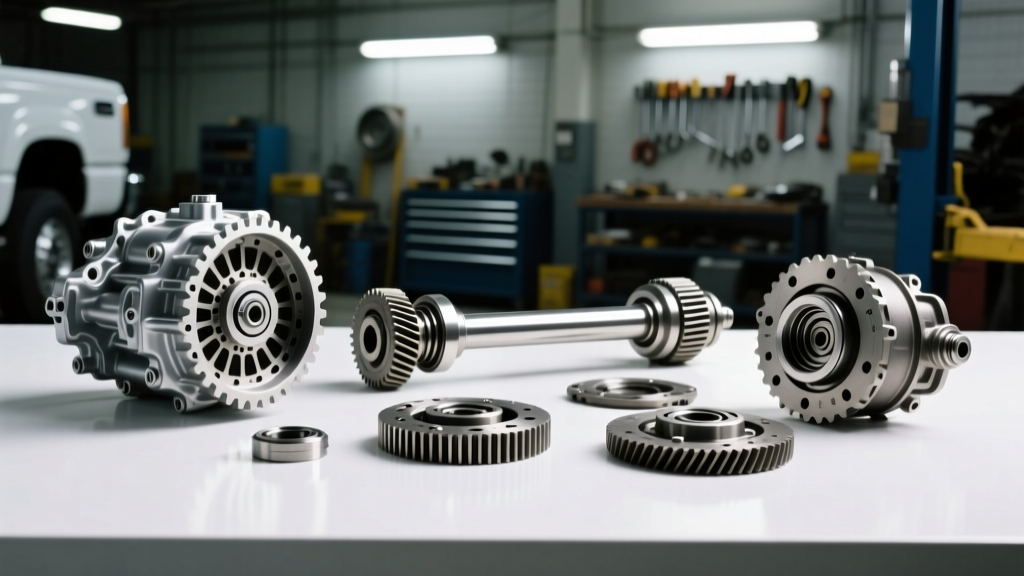
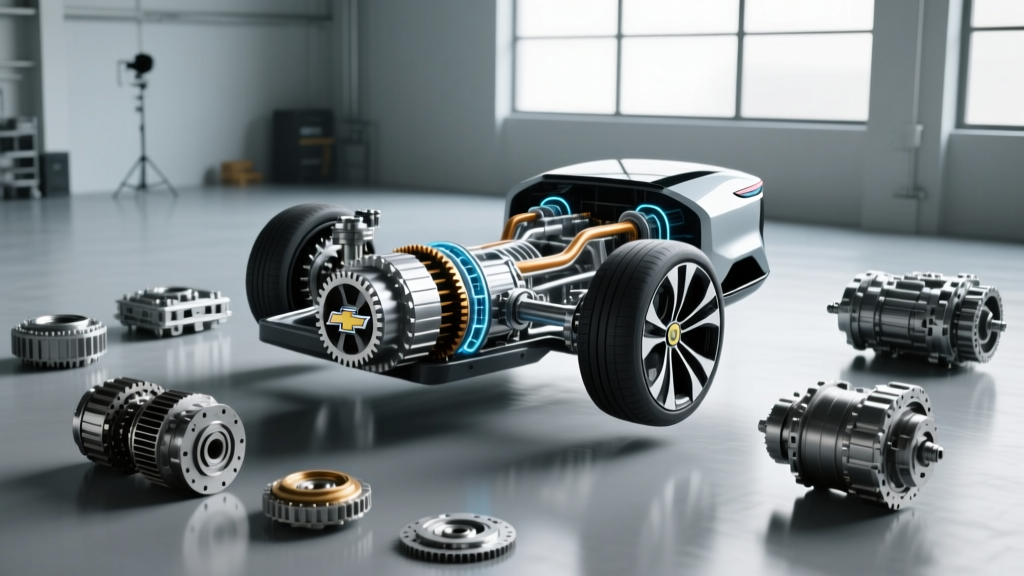
As the automotive industry accelerates through 2026, the architecture of the modern drivetrain has fundamentally transformed. For decades, Chevrolet buyers relied on the robust, albeit complex, powertrain configurations of internal combustion engines (ICE) paired with multi-speed automatics like the 6L80, 8L90, or the 10-speed 10L90. These systems required meticulous attention to transmission fluid, torque converters, and intricate valve bodies. Today, the Chevrolet EV lineup—powered by the modular Ultium platform—utilizes an entirely different drivetrain layout centered around electric drive units (e-axles), reduction gearsets, and power inverters.
For prospective EV buyers, understanding this mechanical shift is only half the battle. The financial protection backing these high-voltage components is equally critical. The Chevy drivetrain warranty for electric vehicles operates under a distinctly different framework than traditional ICE powertrain warranties. In this comprehensive 2026 buyer's guide, we will dissect the anatomy of the Chevy EV drivetrain, decode the propulsion warranty coverage, compare it against rival manufacturers, and provide technical inspection advice for the used EV market.
Decoding the Chevy Drivetrain Warranty for Electric Vehicles
When consumers search for the 'Chevy drivetrain warranty,' they are typically referring to GM's standard 5-year/60,000-mile Powertrain Limited Warranty that covers ICE engines and transmissions. However, when you step into a Chevrolet Silverado EV, Blazer EV, or Equinox EV, the coverage terminology and scope expand significantly to accommodate high-voltage propulsion systems.
Under GM's current warranty structure, EV-specific drivetrain components fall under the Propulsion Component Limited Warranty. This specialized coverage extends to 8 years or 100,000 miles (whichever comes first) and is fully transferable to subsequent owners without a deductible. This is a massive advantage for used EV buyers, as the drivetrain protection remains tethered to the vehicle's VIN rather than the original purchaser.
What Qualifies as a Covered EV Drivetrain Component?
The 8-year/100,000-mile propulsion warranty is exhaustive but specific. Covered drivetrain and propulsion components include:
- Traction Motors: The electric motors (stator, rotor, and housing) responsible for generating rotational force.
- Power Inverters: The modules that convert DC battery power to AC power for the motors.
- Reduction Gearboxes: The single-speed planetary or helical gearsets that multiply torque before sending it to the wheels.
- e-Axle Assemblies: The integrated housing containing the motor, inverter, and gearbox.
- High-Voltage Wiring & Coolant Pumps: The dedicated e-motor cooling loops and power cabling.
Notably, traditional drivetrain components like the half-shafts, CV joints, and wheel hubs are generally covered under the standard 3-year/36,000-mile Bumper-to-Bumper Limited Warranty, or the 5-year/60,000-mile Powertrain warranty, depending on the specific model year and component classification. This distinction is vital for buyers to understand when evaluating potential out-of-pocket repair costs.
2026 EV Drivetrain Warranty Comparison Chart
How does the Chevy drivetrain warranty stack up against the competition in the 2026 landscape? Below is a comparison of battery and electric drivetrain (propulsion) warranties across major mainstream manufacturers.
| Manufacturer | EV Propulsion / Drivetrain Coverage | Battery Capacity Retention Guarantee | Transferable? |
|---|---|---|---|
| Chevrolet (Ultium) | 8 Years / 100,000 Miles | Yes (min 70% retention) | Yes (No fee) |
| Ford (e.g., Mach-E, Lightning) | 8 Years / 100,000 Miles | Yes (min 70% retention) | Yes (No fee) |
| Hyundai / Kia (E-GMP) | 10 Years / 100,000 Miles | Yes (min 70% retention) | No (Drops to 5yr/60k for 2nd owner) |
| Tesla (Model Y / 3) | 8 Years / 100,000 - 120,000 Miles | Yes (min 70% retention) | Yes (No fee) |
| Rivian (R1T / R1S) | 8 Years / 175,000 Miles | Yes (min 70% retention) | Yes (No fee) |
While Hyundai offers a longer 10-year term, the lack of full transferability to second owners makes the Chevy drivetrain warranty vastly superior for long-term resale value and used market confidence. For a complete breakdown of federal EV mandates and battery lifecycle expectations, the U.S. Department of Energy's EV database remains an excellent resource.
Technical Deep Dive: Ultium E-Axle Architecture & Maintenance
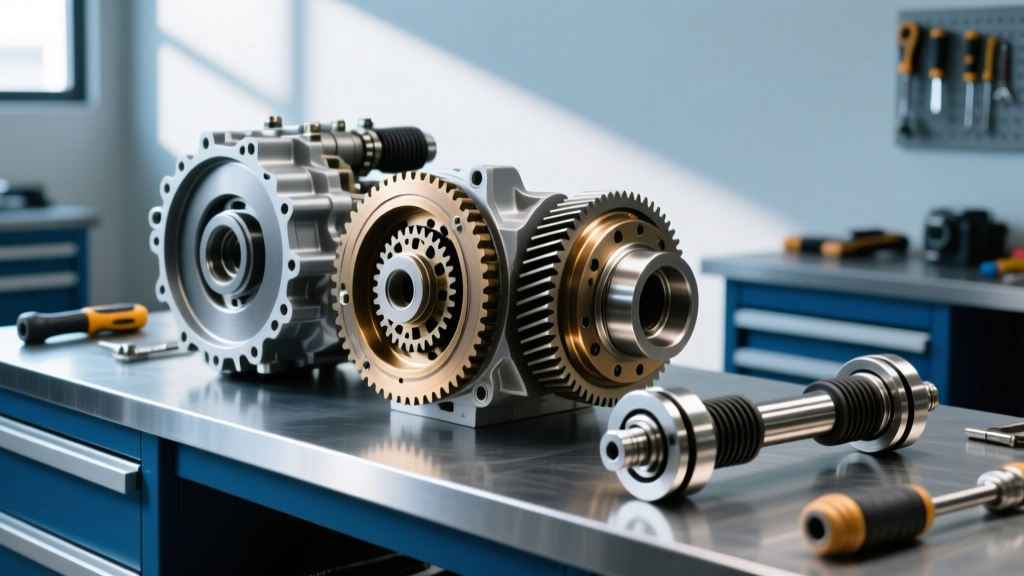
To truly leverage your warranty and maintain the vehicle, you must understand the hardware. The Chevy Ultium platform utilizes a family of five distinct drive units, ranging from a 180 kW front motor to a massive 340 kW rear motor used in high-performance Silverado EV applications. These are not simply motors bolted to a frame; they are highly integrated e-axles featuring a coaxial or parallel-axis reduction gearset with a fixed ratio (typically between 10.5:1 and 13.3:1, depending on the application).
Fluid Specifications and Service Intervals
Unlike an ICE transmission that requires frequent fluid flushes due to clutch pack degradation, the EV reduction gearbox operates in a sealed, low-contamination environment. However, the fluid inside an e-axle serves dual purposes: lubricating the helical gears and cooling the electric motor stator. GM specifies ACDelco Dexron EV Fluid (Part # 19373621 or regional equivalent) for these units. This fluid possesses high dielectric strength to prevent short circuits within the motor housing.
Expert Note: While GM often labels e-axle fluid as 'sealed for life,' severe-duty towing (common with Silverado EV owners) generates immense thermal loads in the reduction gears. Independent drivetrain specialists recommend draining and refilling the e-axle fluid every 60,000 miles to prevent dielectric breakdown and bearing wear. The typical fill capacity is between 1.8 and 2.5 quarts per e-axle, depending on the motor size.
Critical Torque Specifications
For the DIY enthusiast or the independent mechanic inspecting a used Chevy EV, adhering to factory torque specs is non-negotiable due to the instant torque delivery. The instant 6,000+ lb-ft of wheel torque generated by a dual-motor Ultium setup places extraordinary shear stress on mounting hardware.
- E-Axle to Subframe Mounting Bolts (M12x1.75): 90 Nm (66 lb-ft) + 90-degree turn.
- Half-Shaft Axle Nuts: 250 Nm (184 lb-ft). Never reuse a stretched axle nut.
- Motor Inverter Coolant Line Fittings: 15 Nm (11 lb-ft) to prevent stripping the aluminum threads on the inverter housing.
Common EV Drivetrain Failure Modes & Warranty Claims
While EVs have fewer moving parts than a traditional 4WD system with a transfer case and U-joints, they are not immune to failure. Understanding these edge cases will help you identify issues before they escalate and ensure your warranty claim is processed smoothly.
1. Reduction Gear Bearing Whine
A high-pitched whine that changes pitch with vehicle speed (not motor RPM) often indicates premature wear on the e-axle output shaft bearings. This is frequently caused by fluid degradation or microscopic metal shavings circulating in the reduction gear housing. Under the propulsion warranty, GM will replace the entire e-axle assembly, as internal gearbox rebuilding is rarely performed at the dealer level.
2. Inverter Coolant Seepage
The traction motors and inverters are liquid-cooled using a dedicated low-conductivity coolant loop. If the O-rings on the quick-connect coolant lines degrade, coolant can seep onto the high-voltage harnesses. While the coolant itself is dielectric, pooling fluid can trigger high-voltage isolation faults, shutting down the drivetrain to protect the occupants. This is fully covered under the 8-year propulsion warranty.
3. Half-Shaft and CV Joint Fatigue
Because electric motors deliver peak torque at 0 RPM, the CV joints and half-shafts endure brutal launch forces. Owners who frequently use 'Launch Control' or tow heavy loads from a standstill may experience clicking from the outboard CV joints during tight turns. Buyer Beware: Half-shafts are often classified as standard mechanical wear items or standard powertrain components, meaning they may fall under the 5-year/60,000-mile limit rather than the 8-year EV propulsion warranty. Always verify the exact coverage code with a Chevy dealer parts department.
Used EV Buyer's Guide: Inspecting the Drivetrain
If you are shopping for a pre-owned Chevrolet EV in 2026, the transferability of the Chevy drivetrain warranty is your biggest safety net. However, a pre-purchase inspection (PPI) should still include the following drivetrain-specific checks:
- Scan for HV Isolation Codes: Use an OBD2 scanner capable of reading GM's Hybrid/EV Control Module 2 (HPCM2). Look for stored history codes related to 'Isolation Resistance Low' which could indicate internal coolant leaks inside the motor.
- E-Axle Fluid Inspection: Ask the dealer or seller to pull the e-axle fill plug. The fluid should be translucent or slightly amber. If it is dark brown, smells burnt, or contains visible metallic glitter, the reduction gears have suffered thermal abuse, and the e-axle may be nearing failure.
- Coolant Loop Pressure Test: Have a technician pressure test the secondary e-motor cooling loop to 15 PSI to check for micro-leaks at the inverter block and radiator manifolds.
- Verify Warranty Status: Call a Chevrolet dealer with the VIN to confirm the Propulsion Component Warranty status and ensure the vehicle has not been 'branded' or voided due to aftermarket high-voltage tampering or salvage titles.
Final Verdict for 2026 Buyers
The transition from internal combustion to electric drivetrains represents the most significant mechanical shift in Chevrolet's history. The robust nature of the Ultium e-axles, combined with the industry-leading, fully transferable 8-year/100,000-mile propulsion coverage, makes the Chevy drivetrain warranty a massive selling point. Whether you are buying a new Blazer EV or a used Silverado EV, understanding the boundaries of this warranty, the specific maintenance requirements of Dexron EV fluid, and the mechanical realities of instant-torque drivetrains will ensure your ownership experience is both thrilling and financially secure.