Why the 370Z R200 Differential Demands Strict Maintenance
The Nissan 370Z (Z34 chassis) remains a cornerstone of modern sports car culture, celebrated for its naturally aspirated VQ37VHR engine and balanced rear-wheel-drive dynamics. However, as of 2026, the earliest 370Z models are pushing 17 years old, and many have endured years of track days, aggressive canyon carving, and high-heat load cycles. At the heart of this drivetrain is the Nissan R200 rear axle assembly. While the R200 is a robust differential housing capable of handling significant torque, its longevity is entirely dependent on the condition of the gear oil lubricating the ring and pinion gears.
When maintaining the 370z rear differential, precision is everything. The VQ37VHR produces up to 350 horsepower and 276 lb-ft of torque, sending all of that rotational force directly through the rear diff. Under hard acceleration and high-speed cornering, the shear forces inside the differential housing generate immense heat. This thermal load breaks down the zinc and phosphorus (ZDDP) extreme-pressure additives found in standard GL-5 gear oils, leading to accelerated wear on the pinion bearings and ring gear teeth. According to long-term data gathered by ZCar enthusiast communities and professional racing shops, neglecting this fluid is the leading cause of premature R200 failure in modified and tracked Z cars.
Factory Intervals vs. Real-World Track Abuse
Nissan’s official factory service manual for the Z34 chassis lists the rear differential fluid under a "lifetime" or "inspect only" maintenance schedule for normal street driving. In the context of modern automotive engineering, "lifetime" typically means the duration of the powertrain warranty (usually 60,000 miles), not the actual mechanical lifespan of the vehicle.
The Real-World Replacement Schedule
For a vehicle that is driven enthusiastically, used for track days, or equipped with a forced-induction kit or supercharger, the factory interval is woefully inadequate. Here is the recommended interval framework for 370Z owners:
- Street-Driven / Daily Driver: Replace every 60,000 miles.
- Spirited Canyon / Weekend Warrior: Replace every 30,000 miles or every 3 years.
- Track Day / Time Attack Car: Replace every 3 to 5 track events, or at the end of every racing season.
- Post-Break-In (New Ring & Pinion): Replace at 500 miles to remove manufacturing metal shavings.
Required Tools and Fluid Specifications
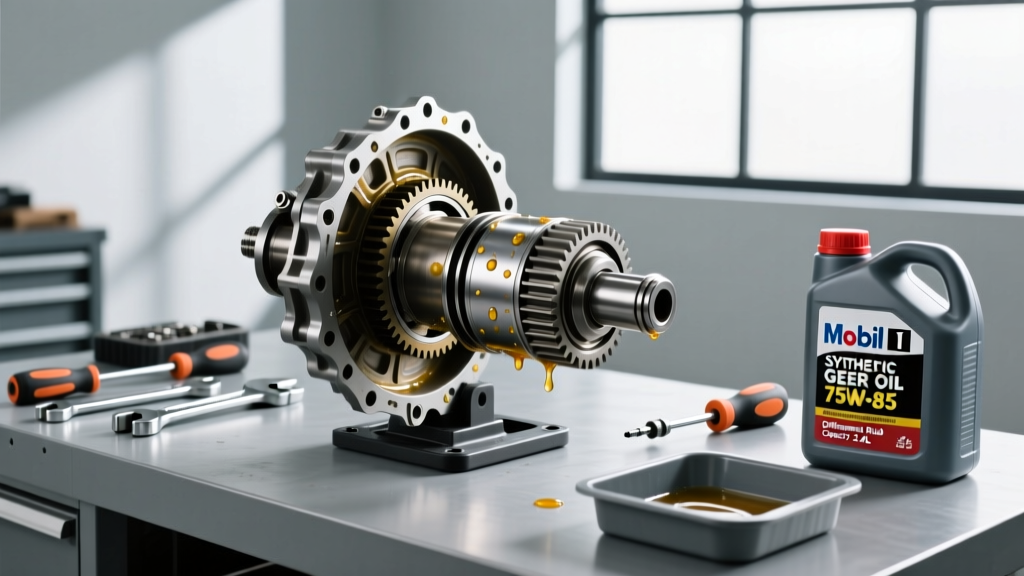
Before sliding under the car, you must gather the correct materials. The 370Z rear differential requires an API GL-5 certified 75W-90 gear oil. While OEM Nissan fluid is acceptable for stock street cars, synthetic aftermarket options offer vastly superior shear stability and thermal resistance for performance applications. Motul Gear 300 75W-90 and Red Line 75W90 are widely considered the gold standards for Z cars due to their ester-based formulations that cling to gear surfaces under high-G cornering.
| Item | Specification / Part Number | Notes |
|---|---|---|
| Gear Oil | API GL-5 75W-90 (e.g., Motul, Red Line, Amsoil) | Capacity: 1.5 Liters (1.58 Quarts) |
| Drain/Fill Socket | 10mm Hex (Allen) or 3/8" Square Drive | Verify plug type on your specific R200 housing |
| Torque Wrench | 1/2" Drive (10-100 ft-lbs range) | Required for precise plug sealing |
| Fluid Transfer Pump | Standard hand-pump or pneumatic syringe | Essential for pumping fluid upward into the fill hole |
| Drain Pan | Minimum 2-quart capacity | Wide-mouth pans catch splashing gear oil |
| Thread Sealant | Teflon tape or liquid thread sealant (Optional) | Only if the plug threads show minor weeping |
Step-by-Step 370Z Rear Differential Fluid Change Procedure
Performing this service in your garage requires basic mechanical aptitude and a strict adherence to safety protocols. Follow these steps meticulously to ensure a clean, accurate, and leak-free fluid exchange.
Phase 1: Safe Lifting and Leveling
The most critical, yet frequently overlooked, aspect of a differential fluid change is the angle of the vehicle. The R200 fill plug is located on the side of the differential housing. If the car is tilted, the fluid will either overflow before the diff is truly full, or it will under-fill, leaving the upper pinion bearing starved of lubrication.
- Drive the vehicle onto a flat, level concrete surface.
- Use a hydraulic floor jack to lift the rear of the car from the designated rear crossmember lifting point.
- Secure the vehicle on four jack stands, ensuring the rear is perfectly level side-to-side and front-to-back. Use a magnetic spirit level on the rear subframe to verify.
Phase 2: The Golden Rule - Remove the Fill Plug First
Never remove the drain plug before verifying that the fill plug can be loosened. If the fill plug is seized or stripped, and you drain the differential, the car is immobilized until the fill plug is extracted or the housing is removed.
- Locate the fill plug on the passenger side or upper-rear quadrant of the R200 aluminum differential cover.
- Insert your 10mm hex bit or 3/8" square drive ratchet into the plug.
- Apply steady, counter-clockwise pressure to break the plug loose. If it is stubborn, apply a penetrating fluid like PB Blaster and wait 15 minutes. Do not use excessive force that could round the internal socket.
- Once loose, remove the fill plug and set it aside on a clean rag.
Phase 3: Draining and Magnetic Inspection
- Place your drain pan directly beneath the lowest point of the differential housing.
- Remove the bottom drain plug using the same tool.
- Allow the gear oil to drain completely for at least 20 minutes. The old fluid will likely smell like sulfur and rotten eggs—this is normal for depleted GL-5 oil.
- Inspect the Magnetic Drain Plug: The factory drain plug features a magnet designed to capture ferrous metals. A fine, dark grey "glitter" paste is normal wear for a differential with 50,000+ miles. However, if you find chunky metal shards, needle bearing fragments, or brass-colored flakes (indicating synchro or thrust washer failure), your R200 requires an immediate teardown and rebuild by a drivetrain specialist.
Phase 4: Re-sealing and Refilling
- Wipe the magnetic drain plug completely clean with a lint-free shop towel and brake cleaner.
- Reinstall the drain plug. Tighten it by hand to avoid cross-threading the aluminum housing.
- Using a calibrated torque wrench, tighten the drain plug to 33 ft-lbs (45 Nm). Do not exceed this spec, as the Z34 differential cover threads can strip easily.
- Insert the hose of your fluid transfer pump into the fill hole.
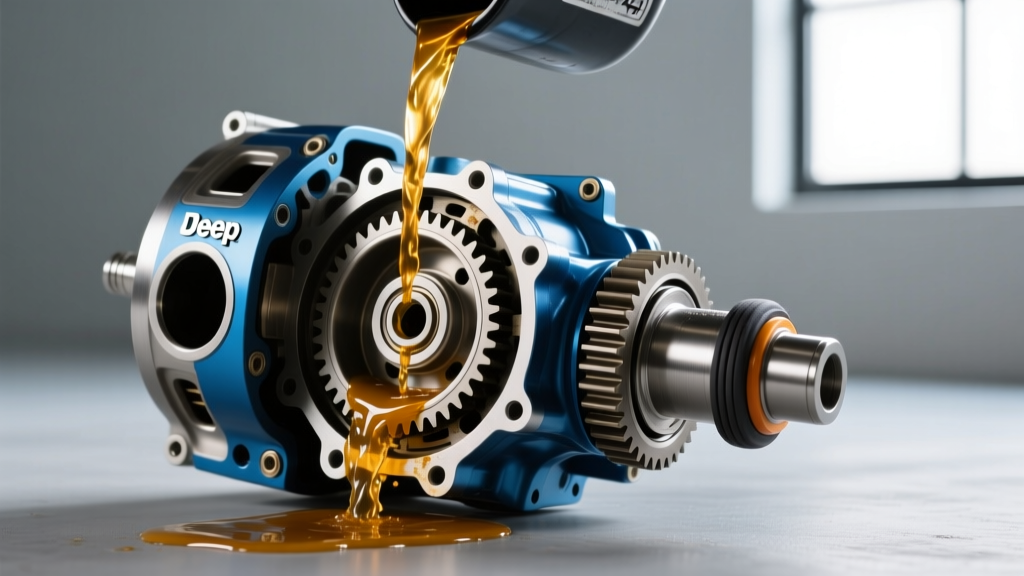
- Begin pumping the 75W-90 GL-5 gear oil into the differential. The exact capacity is 1.5 Liters (1.58 Quarts).
- Continue pumping until the fluid begins to weep out of the bottom edge of the fill hole. When it drips consistently, the differential is perfectly full.
Phase 5: Final Torque and Cleanup
- Wipe away any excess gear oil from the housing using brake cleaner to prevent it from attracting road grime or creating smoke on the exhaust.
- Reinstall the fill plug and torque it to 33 ft-lbs (45 Nm).
- Lower the vehicle off the jack stands and perform a 10-mile test drive at varying speeds to circulate the new fluid and bring it up to operating temperature.
- Park the car over a clean piece of cardboard overnight to check for any slow weeping around the drain or fill plugs.
VLSD, Open, and Aftermarket LSD Nuances
Not all 370Z rear differentials are created equal, and your specific differential type dictates minor variations in fluid selection.
Expert Drivetrain Note: Early 2009-2012 Nissan 370Z models were equipped from the factory with a Viscous Limited Slip Differential (VLSD). Later base models transitioned to an Open Differential, while NISMO and aftermarket builds frequently utilize clutch-type LSDs (such as OS Giken or Cusco). Standard API GL-5 75W-90 is perfectly safe for the factory VLSD and Open diffs. However, if your Z has been retrofitted with an aftermarket clutch-type LSD, you MUST add a dedicated Limited Slip Friction Modifier additive to your gear oil, or the clutch packs will chatter violently during low-speed cornering.
If you are unsure which differential your Z34 has, check the VIN plate or look for the factory VLSD fluid tag on the rear cover. When in doubt, high-end synthetic fluids like Red Line 75W90 already contain a baseline friction modifier that is generally compatible with most clutch-type LSDs without causing chatter.
Post-Service Diagnostics: Listening to the R200
A fresh fluid change is the perfect time to audit the health of your ring and pinion. After your test drive, listen carefully to the rear axle under different load conditions:
- Deceleration Whine (Coast): A whining noise when you lift off the throttle typically indicates wear on the "coast" side of the ring gear teeth or a failing pinion bearing.
- Acceleration Howl (Drive): Noise under heavy throttle points to wear on the "drive" side of the gear teeth or improper gear backlash setup.
- Clunking on Engagement: A harsh clunk when shifting from Reverse to Drive suggests excessive backlash, worn differential side gears, or failing axle CV joints, not necessarily a fluid issue.
By adhering to this step-by-step procedure and respecting the 33 ft-lbs torque specifications, you ensure that the 370z rear differential remains quiet, cool, and capable of transferring every ounce of the VQ37VHR's power to the pavement for years to come.