The Acoustic Signature of a Failing Dana 44
The Jeep Gladiator (JT) occupies a unique space in the automotive world: it is both a comfortable daily driver and a highly capable, solid-axle off-road platform. Because it is frequently subjected to extreme articulation, heavy towing, and water crossings, the drivetrain components endure immense mechanical stress. When owners begin searching for solutions regarding jeep gladiator differential fluid, they are almost always reacting to an audible symptom—a whine, a howl, or a clunk emanating from the front M210 or rear M220 Dana 44 axles. As an automotive drivetrain specialist, I approach differential noise not merely as a nuisance, but as a diagnostic language. Understanding this language is the difference between a $60 fluid service and a $2,000 ring-and-pinion rebuild.
Hypoid gear sets, like those found in the Gladiator's Dana 44 axles, operate under extreme sliding friction. The pinion gear meshes with the ring gear significantly below the centerline, creating a wiping action that relies entirely on the hydrodynamic boundary layer provided by the gear oil. When this boundary layer fails, metal-to-metal contact initiates microscopic pitting, which rapidly escalates into audible harmonic vibrations.
Decoding Whines, Howls, and Chatters
To accurately diagnose axle noise, you must isolate the exact driving condition that triggers the sound. The load applied to the gear teeth changes the contact pattern on the ring gear, which in turn changes the acoustic frequency.
- Coast-Down Whine: A high-pitched whine that appears when you lift off the throttle (deceleration) typically indicates excessive pinion bearing preload loss or wear on the coast side of the gear teeth. If the fluid is low or degraded, the pinion bearings starve for lubrication, leading to premature brinelling.
- Drive Howl: A lower-frequency howl under acceleration points to wear on the drive side of the ring and pinion. This is often accompanied by excessive backlash, which can be measured with a dial indicator.
- Turn Chatter: A rhythmic shuddering or chirping noise during low-speed, tight turns is the hallmark of a failing Trac-Lok limited-slip differential (LSD). This is rarely a hard-part failure; rather, it indicates that the friction modifier in the jeep gladiator differential fluid has oxidized or was omitted during a previous service.
- Engagement Clunk: A sharp metallic clunk when shifting from Reverse to Drive suggests excessive rotational backlash. This can stem from worn side gears, spider gears, or a severely worn ring-and-pinion set.
Is It the Gears or the Fluid?
Before tearing into the differential cover to check gear patterns, you must perform fluid forensics. The condition of the drained oil provides a microscopic timeline of the axle's health. Many JT owners prematurely replace gear sets when the root cause was simply water ingress or fluid shear.
Fluid Forensics: Reading the Drain Plug
When you pull the fill plug or remove the differential cover, evaluate the fluid against these specific failure modes:
- Milky Emulsion: If the fluid resembles a chocolate milkshake, water has breached the axle seals or the vent tube. The Gladiator's stock axle vent tubes are routed relatively low from the factory. During water crossings, the sudden temperature drop of a hot axle submerged in cold water creates a vacuum, sucking water past the axle seals. Emulsified fluid loses 90% of its load-bearing capacity, leading to rapid bearing failure.
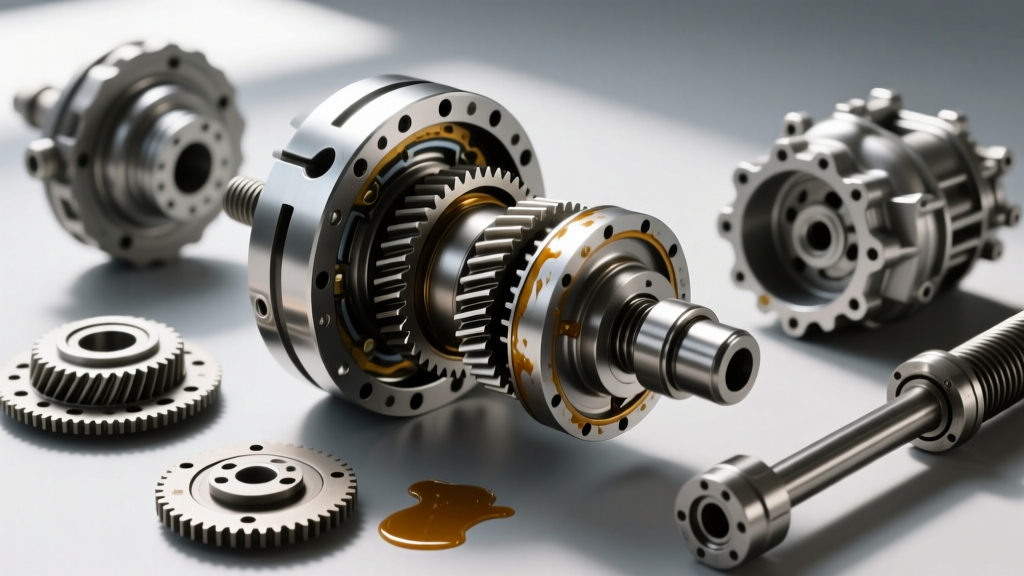
- Gold/Bronze Glitter: A slight metallic sheen on the drain plug magnet is normal for the first 15,000 miles as the gears undergo initial lapping. However, heavy bronze flakes indicate that the pinion or side gear thrust washers are disintegrating.
- Steel Chunks: If you find jagged steel fragments, a bearing cage has likely shattered, or a gear tooth has sheared. No fluid change will fix this; immediate teardown and hard-part replacement are mandatory.
Diagnostic Matrix: Noise vs. Fluid Condition
Use this expert troubleshooting matrix to cross-reference your Gladiator's symptoms with the physical evidence found during the drain procedure.
| Noise Profile | Trigger Condition | Fluid Evidence | Mechanical Verdict & Action |
|---|---|---|---|
| High-Pitch Whine | Deceleration (Coast) | Dark, burnt smell, fine metallic paste | Pinion bearing preload loss. Requires shim adjustment and new bearings. |
| Low-Frequency Howl | Acceleration (Drive) | Low fluid level, heavy pitting on magnet | Ring gear wear or low fluid starvation. Check backlash; replace gear set if >0.012". |
| Shudder / Chatter | Low-speed tight turns | Fluid is clean but lacks friction modifier | LSD clutch pack slip. Drain, refill, and add 4 oz of Mopar Limited Slip Additive. |
| Growling / Hum | Constant speed (45-65 mph) | Milky, emulsified (water contamination) | Bearing race corrosion (spalling). Flush immediately; replace bearings if pitted. |
| Sharp Clunk | Directional shift (Rev to Drive) | Large steel chunks on plug | Catastrophic gear or cross-pin failure. Full differential rebuild required. |
Expert Service Protocol: Restoring the JT Drivetrain
If your diagnosis points to fluid degradation rather than catastrophic hard-part failure, executing a precision fluid service is critical. The Gladiator Forum drivetrain community frequently documents cases where improper fluid viscosity led to persistent whining. The JT requires specific API GL-5 formulations to handle the extreme pressure of the hypoid gear mesh.
Exact Capacities and Torque Specifications
Do not rely on guesswork. The M210 front and M220 rear axles have distinct capacities and torque requirements. Overfilling can cause fluid to aerate and blow past the axle seals, while underfilling starves the pinion bearings.
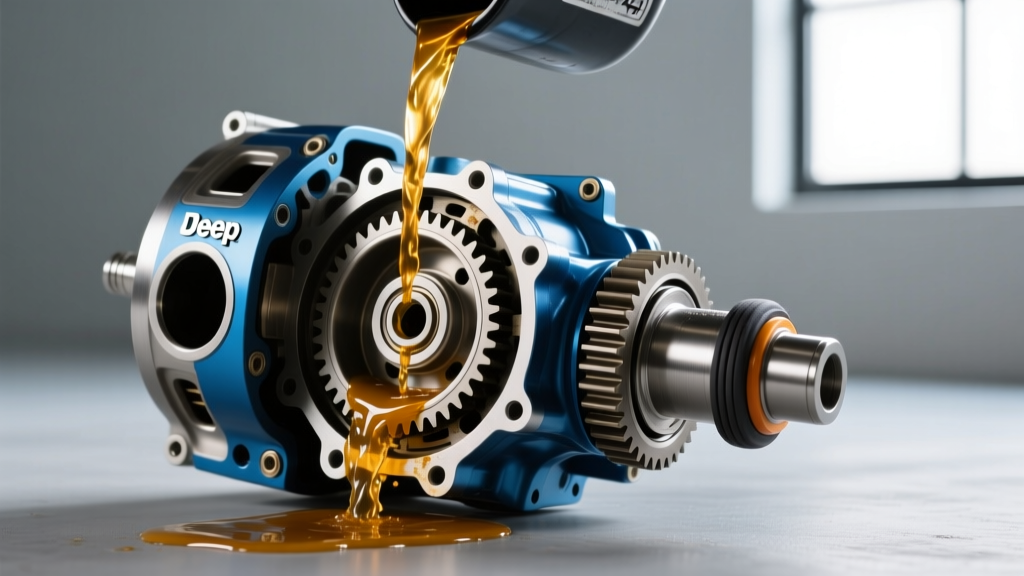
- Rear Axle (M220 Dana 44): Capacity is approximately 1.35 to 1.5 liters (1.4 - 1.6 quarts). Recommended viscosity is 75W-85 API GL-5 for standard duty, or 75W-140 for heavy towing and extreme off-road use. Fill until the fluid is exactly level with the bottom of the fill plug hole.
- Front Axle (M210 Dana 44): Capacity is approximately 1.2 liters. Recommended viscosity is 75W-85 API GL-5.
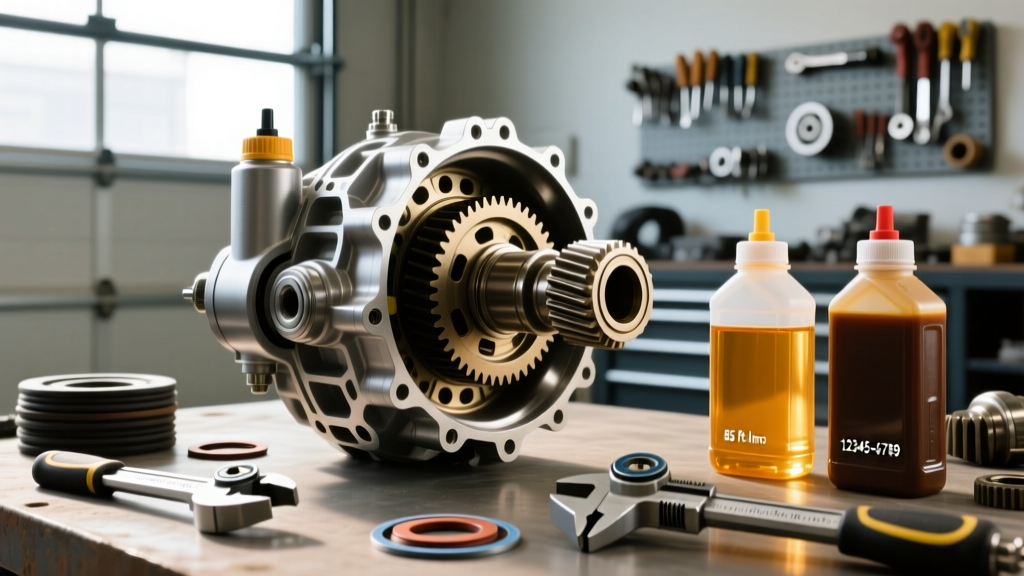
- Fill Plug Torque: 25 lb-ft (34 Nm). Always use a new crush washer if equipped, or apply a high-quality PTFE thread sealant to prevent weeping.
- Cover Bolt Torque (if removed for cleaning): 30 lb-ft (41 Nm) in a crisscross pattern. Use RTV silicone (like Mopar 77016593 or equivalent) if the factory gasket is compromised, but allow 12 hours of cure time before filling.
The Trac-Lok Friction Modifier Imperative
If your Gladiator is equipped with the Trac-Lok anti-spin differential, standard GL-5 gear oil is insufficient on its own. The Trac-Lok utilizes S-shaped spring clutches that require a specific coefficient of friction to lock and unlock smoothly. Standard gear oil is too 'slippery' due to its extreme pressure (EP) sulfur-phosphorus additives, causing the clutches to slip and chatter during cornering. You must add exactly 4 ounces (118 ml) of a dedicated limited-slip friction modifier, such as Mopar Part #68218655AA or an equivalent high-quality additive, to both axles if they are equipped with the LSD. After filling, drive the vehicle in 10 slow, tight figure-eight patterns in an empty lot to force the modifier into the clutch packs.
When Fluid Isn't Enough: Ring and Pinion Realities
If you have replaced the jeep gladiator differential fluid with the correct viscosity and additive, but the howl or whine persists, you are dealing with permanent metallurgical damage. According to engineering guidelines from the Dana 44 axle manufacturer, once the surface hardness of a hypoid gear is compromised by pitting or spalling, the noise will only amplify as the gear heats up and expands.
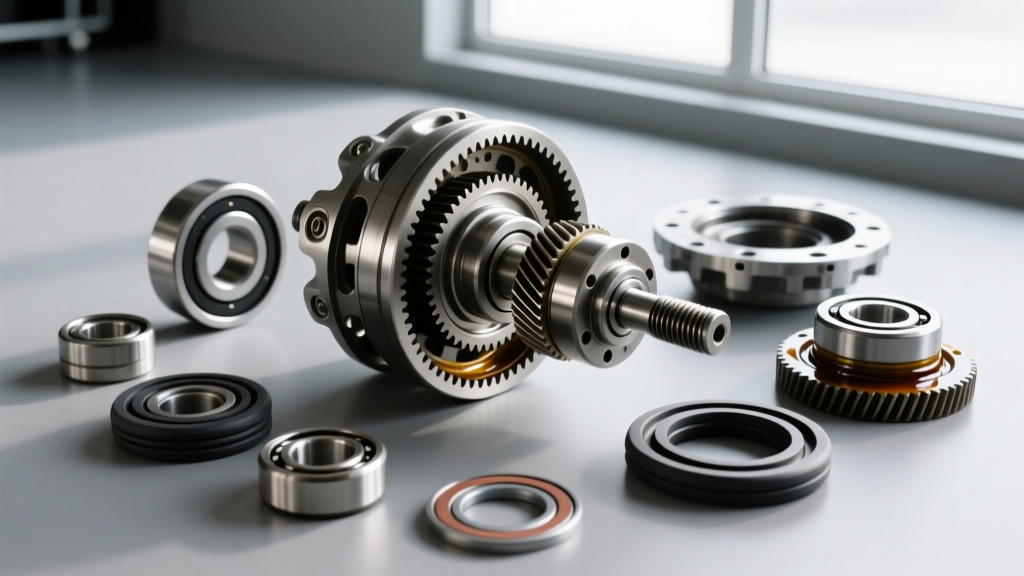
At this stage, a professional setup is required. Replacing a ring and pinion is not a simple bolt-in job; it requires precision measurement. An expert technician will use a dial indicator to measure ring gear backlash, which must fall strictly between 0.006 and 0.010 inches for the Dana 44. Furthermore, pinion bearing preload must be set using a beam-style inch-pound torque wrench, targeting 14 to 19 in-lbs of rotational resistance with the differential carrier removed. Finally, a gear marking compound (like yellow ochre) is applied to verify the contact pattern across the drive and coast flanks of the teeth.
A complete ring and pinion replacement kit (including Timken bearings, shims, and crush sleeves) typically costs between $350 and $500. However, professional labor for a precise setup ranges from $800 to $1,200 per axle. This is why proactive maintenance of your differential fluid—changing it every 30,000 miles, or immediately after deep water crossings—is the most cost-effective strategy for preserving the legendary durability of the Gladiator's Dana 44 axles.