Decoding the RWD Drivetrain Malfunction Warning
If you own a modern rear-wheel-drive (RWD) BMW—whether it is an F30 3-Series, a G20 3-Series, or a G30 5-Series—there are few dashboard warnings more anxiety-inducing than the yellow half-gear icon accompanied by the message: "Drivetrain Malfunction: Maximum power not available. Moderate speed." When this warning triggers, the vehicle's ECU immediately limits engine torque and locks the transmission into a conservative shift map to protect mechanical components. But what does it actually cost to resolve? Understanding how to fix drivetrain malfunction BMW RWD errors requires separating genuine mechanical driveline failures from electronic or engine-management faults that masquerade as drivetrain issues.
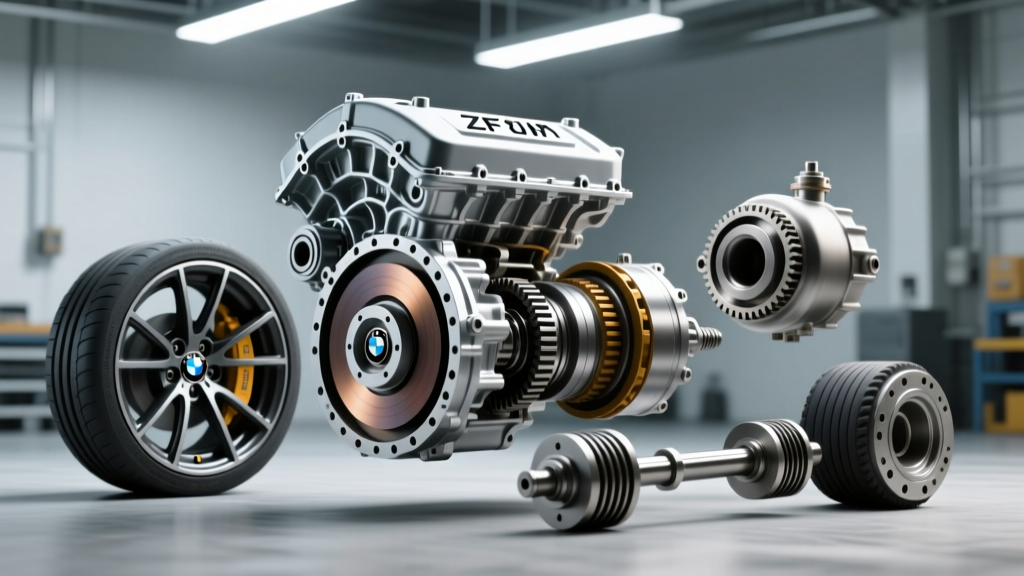
In a classic BMW RWD layout, power routes from the engine into the bell housing of the ZF 8HP 8-speed automatic transmission. From the transmission's output shaft, torque is transferred through a rubber flex disc (commonly known as a Guibo), down a two-piece steel or carbon-fiber driveshaft, supported by a center support bearing, and finally into the rear differential. From the differential, CV half-shafts deliver power to the rear wheels. A failure at any of these physical junctions, or a hydraulic/electronic failure within the ZF 8HP mechatronic unit, will trigger the drivetrain warning.
The 2026 Cost Matrix: Mechanical vs. Electronic Failures
Before tearing into the undercarriage, it is vital to read the fault codes using a BMW-specific scanner like ISTA, BimmerCode, or an advanced Foxwell unit. Generic OBD2 readers often fail to read the specific BMW chassis and drivetrain modules. Below is a comprehensive 2026 cost breakdown for the most common RWD drivetrain malfunction culprits, including OEM part pricing and average independent shop labor rates.
| Component | Common Failure Mode | OEM Part Cost (2026) | Avg. Labor Time | Total Repair Cost |
|---|---|---|---|---|
| Flex Disc (Guibo) | Rubber tearing, vibration under load | $90 - $130 | 1.5 Hours | $280 - $450 |
| Center Support Bearing | Bearing seizure, clunking on shifts | $120 - $180 | 3.0 Hours | $550 - $800 |
| ZF 8HP Mechatronic Sleeve | Leaking adapter seal, low fluid pressure | $35 - $55 | 4.5 Hours | $700 - $950 |
| ZF 8HP Valve Body | Solenoid failure, harsh downshifts | $850 - $1,200 | 5.0 Hours | $1,600 - $2,200 |
| Rear Differential | Whining, fluid starvation, bearing wear | $1,200+ (Used/Rebuilt) | 4.0 Hours | $1,800 - $2,800 |
Deep Dive: Physical Driveline Components
The Flex Disc and Center Support Bearing
The flex disc absorbs the rotational shock between the transmission output shaft and the driveshaft. Over time, the vulcanized rubber degrades, leading to severe driveline shudder during 1st-to-2nd gear shifts or aggressive acceleration. If left unchecked, a shattered flex disc can destroy the transmission output seal and the center support bearing. For the G20/G30 chassis, the OEM flex disc part number is typically 26118646694 (verify via your specific VIN). When replacing the flex disc, the M10 self-locking nuts on the transmission output flange must be torqued to 38 Nm plus an additional 90-degree turn. The center support bearing M8 mounting bolts require a precise 19 Nm torque. According to long-term reliability data shared on Bimmerpost, replacing both the flex disc and center bearing simultaneously is highly recommended if the vehicle has surpassed 80,000 miles, saving you from paying for duplicate driveshaft removal labor.
Rear Differential and Axle Maintenance
While rear differentials are generally robust, fluid starvation or neglected maintenance can lead to bearing whine and eventual gear failure. BMW specifies SAF-XO 75W-90 gear oil for most non-M RWD differentials. The drain and fill plugs are typically M14 and should be torqued to 25 Nm. If the differential has suffered internal bearing failure, the cost to replace the entire unit with a remanufactured or low-mileage used differential ranges from $1,800 to $2,800 installed. Rebuilding a BMW rear differential requires specialized shimming tools and is rarely cost-effective compared to sourcing a tested used unit from a reputable recycler.
Deep Dive: The ZF 8HP Transmission
The ZF 8HP (8HP45, 8HP50, 8HP70, etc.) is a marvel of engineering, but it is not immune to issues that trigger the drivetrain malfunction warning. The most common and cost-effective ZF 8HP failure is the degradation of the mechatronic adapter sleeve (part number 24347588725). The rubber O-rings on this plastic sleeve harden and leak transmission fluid onto the garage floor, leading to low hydraulic pressure, slipping clutches, and ultimately the dreaded limp-mode warning. Replacing the sleeve requires dropping the transmission fluid pan (which is integrated with the filter, part number 24117524922) and carefully extracting the mechatronic unit. The plastic pan bolts are single-use and must be torqued in a specific spiral pattern to exactly 10 Nm. As noted by ZF Aftermarket, while BMW originally labeled the ZF fluid as "lifetime," ZF explicitly recommends a fluid and filter service every 60,000 to 80,000 miles to prevent valve body solenoid clogging and mechatronic failure.
Engine Management vs. True Drivetrain Failures
A critical cost-saving insight for BMW owners is recognizing that the "Drivetrain Malfunction" warning is frequently triggered by engine management faults, not the physical driveline. Faulty ignition coils, worn spark plugs, failing VANOS solenoids, or a malfunctioning boost pressure sensor (on turbocharged N20, B48, and B58 engines) will cause the ECU to detect a misfire or timing deviation. To protect the engine and the ZF 8HP transmission from shock loads, the ECU intentionally triggers the drivetrain warning and limits power. Before spending thousands on transmission or differential repairs, always spend $50-$100 on a proper diagnostic scan. If your fault codes point to the DME (Digital Motor Electronics) rather than the EGS (Electronic Transmission Control), your repair bill might just be a $120 set of spark plugs and a $40 ignition coil.
Labor Rates: Dealership vs. Independent Specialist vs. DIY
Where you choose to perform the repair drastically impacts your final bill. In 2026, the national average labor rates are as follows:
- BMW Dealership: $220 - $295 per hour. Dealerships will almost always recommend replacing entire assemblies (e.g., a complete new driveshaft instead of just the center bearing) and will strictly use OEM BMW-branded parts sourced via FCP Euro or local dealer networks.
- Independent BMW Specialist: $140 - $185 per hour. A reputable indie shop will use high-quality OEM-equivalent parts (Febi Bilstein, Corteco, Lemförder) and is more likely to perform surgical repairs, such as pressing in a new center support bearing rather than selling you a $1,400 complete driveshaft assembly.
- DIY Enthusiast: $0 labor, but requires a heavy-duty transmission jack, torque wrenches capable of both low (10 Nm) and high (210 Nm for rear axle nuts) settings, and a bi-directional scanner to perform transmission adaptation resets after fluid changes or mechatronic work.
Final Thoughts on Drivetrain Repair Economics
Learning how to fix drivetrain malfunction BMW RWD errors is ultimately an exercise in precise diagnostics. Do not throw parts at the yellow gear icon. Read the codes, inspect the flex disc for rubber separation, check the ZF 8HP pan for fluid weeping, and verify your engine's ignition health. By understanding the exact torque specifications, part numbers, and realistic 2026 labor matrices outlined above, you can negotiate confidently with your service advisor or tackle the repair in your own garage with absolute precision.