The Short Answer: Do NASCAR Cars Have Clutches?
When gearheads, sim-racers, and newcomers alike ask, do nascar cars have clutches, the answer is a definitive yes—though their application and architecture are vastly different from your daily driver. As of the 2026 NASCAR Cup Series season, the Next Gen platform relies on a highly specialized clutch system to manage the immense torque of the 670-horsepower V8 engines. Unlike the traditional H-pattern manual transmissions of the past, today’s stock cars utilize a 5-speed sequential transaxle. The clutch is primarily engaged only for initial pit stops, rolling starts, and low-speed maneuvering; once the car is in motion, the sequential dog-ring gearbox allows for clutchless upshifts and downshifts via automated ignition cuts.
However, whether you are a race engineer maintaining an Xtrac P1330 transaxle for a Cup team, or a track-day enthusiast inspecting a Tilton carbon multi-plate clutch in a Tremec T-56 Magnum-equipped track car, the diagnostic and inspection protocols are incredibly rigorous. Carbon-on-carbon and sintered iron racing clutches do not forgive improper clearances. Below is our comprehensive, expert-level clutch system inspection checklist tailored for high-performance and motorsport applications.
NASCAR Next Gen Clutch Architecture: Xtrac & Carbon
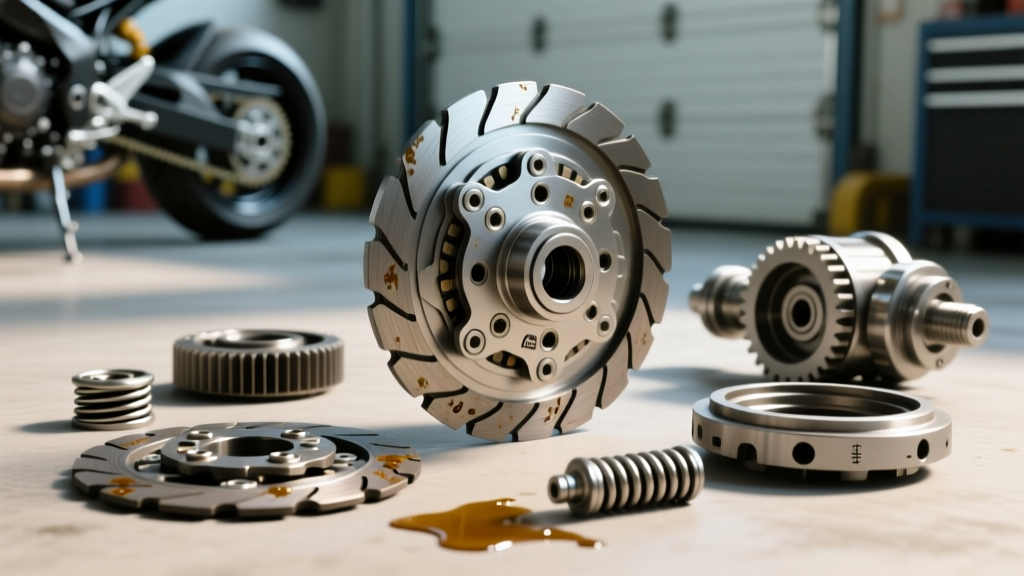
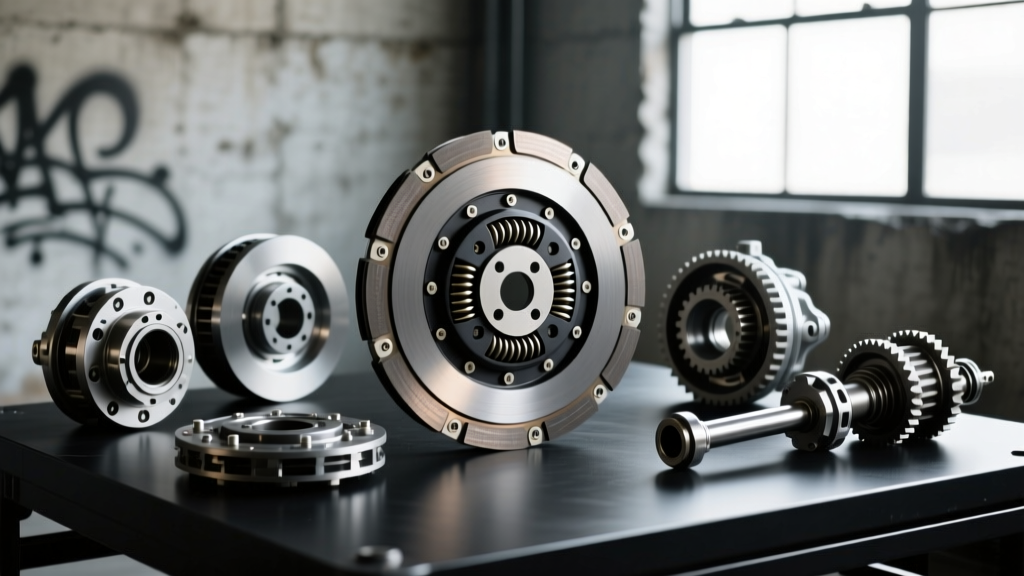
To understand the inspection requirements, we must first understand the hardware. The NASCAR Next Gen car utilizes an Xtrac P1330 5-speed sequential transaxle. Mated to this is a compact, multi-plate carbon clutch (typically a 5.5-inch or 7.25-inch OD unit from manufacturers like Tilton or AP Racing). Carbon clutches operate on a completely different friction coefficient curve than organic street clutches. They require immense heat to generate adequate friction, meaning they are prone to severe slipping and glazing if dragged at low temperatures, yet they can withstand operating temperatures exceeding 1,000°F (538°C) without fading.
Technical Deep-Dive: Carbon Multi-Plate Clutch Inspection Checklist
Inspecting a racing clutch requires precision measurement tools, including a dial indicator, digital micrometer, and feeler gauges. Guesswork leads to catastrophic spline failure or mid-race DNFs.
1. Stack Height and Wear Measurement
The most critical metric in any multi-plate clutch inspection is the stack height. As the carbon friction discs and steel separator plates wear, the overall height of the clutch pack decreases. This alters the geometry of the pressure plate diaphragm spring, reducing clamp load and causing slip under high torque.
- Measurement Protocol: Remove the clutch pack and measure the total thickness of all friction discs and separator plates stacked together using a digital micrometer.
- Wear Limits: For a typical Tilton 7.25-inch 3-plate carbon clutch, a new stack height is generally around 1.350 inches. The absolute minimum wear limit is usually a reduction of 0.080 inches (2.03mm). If the stack has lost more than 0.080 inches, the entire pack must be replaced or rebuilt with new friction discs and thicker spacer shims.
- Visual Inspection: Check carbon faces for uneven wear, heat checking, or structural delamination. Sintered iron plates should be inspected for bluing (overheating) and warping using a machinist's straight edge.
2. Flywheel Step, Runout, and Fastener Torque
Racing flywheels (often chromoly steel or aluminum with a steel friction surface) must be perfectly flat. Runout causes uneven clutch engagement, chatter, and premature release bearing failure.
- Runout Tolerance: Mount a dial indicator to the engine block and rotate the flywheel. Total Indicated Runout (TIR) must not exceed 0.002 inches (0.05mm).
- Step Height: Measure the step between the flywheel friction surface and the pressure plate mounting surface. Deviations from the OEM specification (often exactly 0.000 inches for flat multi-plate setups) will alter the clutch's air gap.
- Torque Specifications: When reinstalling, flywheel-to-crank bolts (e.g., ARP 7/16-inch) must be torqued to 75-85 lb-ft using a high-quality molybdenum-based lubricant like ARP Ultra-Torque. Pressure plate bolts (typically 5/16-inch) should be torqued to 22-25 lb-ft in a strict star pattern to prevent housing distortion.
3. Release Bearing Air Gap and Hydraulics
Unlike street cars with self-adjusting cable clutches, racing hydraulics require manual air gap setting. The air gap is the distance between the release bearing face and the diaphragm spring fingers when the clutch is fully engaged.
- Target Clearance: The ideal air gap for most carbon multi-plate clutches is between 0.180 inches and 0.220 inches. If the gap is too wide, the pedal will feel stiff and the clutch won't fully disengage. If the gap is too narrow (or zero), the release bearing will constantly ride on the fingers, generating massive heat and leading to bearing seizure.
- Hydraulic Fluid: High-performance clutch master cylinders must be bled with high-temperature racing fluid. We recommend Castrol SRF Racing Brake Fluid, which boasts a dry boiling point of 590°F (310°C), preventing vapor lock during grueling endurance races or heavy pit-stop traffic.
Racing Clutch Inspection Metrics: Carbon vs. Sintered Iron
| Metric | Carbon-on-Carbon (NASCAR/GT3) | Sintered Iron (Drag/Time Attack) | Organic/Kevlar (Street/Track) |
|---|---|---|---|
| Optimal Operating Temp | 400°F - 1,000°F+ | 200°F - 600°F | Ambient - 350°F |
| Stack Wear Limit (3-Plate) | 0.080" total loss | 0.040" total loss | N/A (Single disc replace) |
| Rebuild Cost (Approx. 2026) | $1,500 - $3,500 | $800 - $1,400 | $300 - $600 |
| Primary Failure Mode | Cold glazing / Delamination | Warping / Spline galling | Facing burn / Hub spring failure |
Step-by-Step Teardown & Diagnostic Protocol
When pulling a transaxle for a scheduled clutch inspection, follow this exact sequence to preserve diagnostic evidence:
- Pre-Teardown Pedal Test: Before draining fluids, measure pedal free-play and hydraulic pressure. A spongy pedal indicates master cylinder bypass or air ingress; a hard pedal with poor disengagement points to a collapsed air gap or warped pressure plate.
- Input Shaft Spline Check: Once the transaxle is removed, inspect the input shaft splines. Carbon clutches generate immense localized stress. Look for 'step wear' or galling on the splines. Apply a light coating of high-moly assembly grease (never standard wheel bearing grease, which can contaminate the friction surfaces) during reassembly.
- Ring Gear & Starter Alignment: Inspect the flywheel ring gear for missing teeth or abnormal wear patterns, which indicate starter misalignment or improper bellhousing indexing.
- Bellhousing Indexing: Use a dial indicator to check bellhousing runout relative to the crankshaft centerline. Tolerance must be within 0.005 inches. Excessive runout will destroy the transaxle input shaft bearing and cause severe clutch chatter.
Common Failure Modes in High-Heat Environments
Even with rigorous adherence to the Tilton Engineering technical guidelines, racing clutches face extreme abuse. The most common failure mode in NASCAR-style applications is cold glazing. Because carbon requires heat to generate friction, a driver who slips the clutch excessively at low RPMs during a slow pit exit will polish the carbon faces, rendering them glass-smooth. Once glazed, the clutch will slip violently under high-load acceleration, requiring a complete teardown and media blasting of the friction surfaces to restore porosity.
Another critical failure point is hydraulic fade. If standard DOT 4 fluid is used instead of racing-grade SRF, the fluid boils under the radiant heat of the exhaust headers. This introduces compressible gas into the hydraulic line, resulting in a pedal that drops to the floor and a clutch that refuses to disengage, leading to missed shifts and over-revved engine damage.
Conclusion
So, do NASCAR cars have clutches? Absolutely. They feature some of the most advanced, heat-resistant, and precisely engineered carbon multi-plate clutches in the motorsport world. Whether you are maintaining a Next Gen stock car or a weekend track weapon, treating the clutch system inspection checklist with the same reverence as your engine's valvetrain is non-negotiable. Precision measurement, strict torque specs, and high-temperature fluids are the difference between a podium finish and a DNF.