The Core Question: Does a Manual Car Have a Transmission?
When automotive enthusiasts and novice drivers alike ask, "does a manual car have a transmission?" they are usually grappling with a semantic misunderstanding. In colloquial terms, many people reserve the word "transmission" exclusively for automatic gearboxes, while referring to manual setups as a "gearbox" or "stick shift." However, from an engineering and diagnostic standpoint, the answer is an unequivocal yes. A manual car absolutely has a transmission. Its primary function—transmitting and multiplying engine torque to the drivetrain while providing varying gear ratios—is identical to that of an automatic.
As of 2026, the automotive landscape has shifted heavily toward electrification and complex automatics, pushing manual transmissions into the specialized realms of performance, off-road, and classic vehicles. Consequently, understanding the distinct symptom profiles and troubleshooting methodologies for manual versus automatic transmissions is more critical than ever for independent mechanics and DIYers. This guide breaks down the architectural differences, specific failure modes, and exact diagnostic procedures for both systems.
Architectural Divergence: Friction vs. Hydraulics
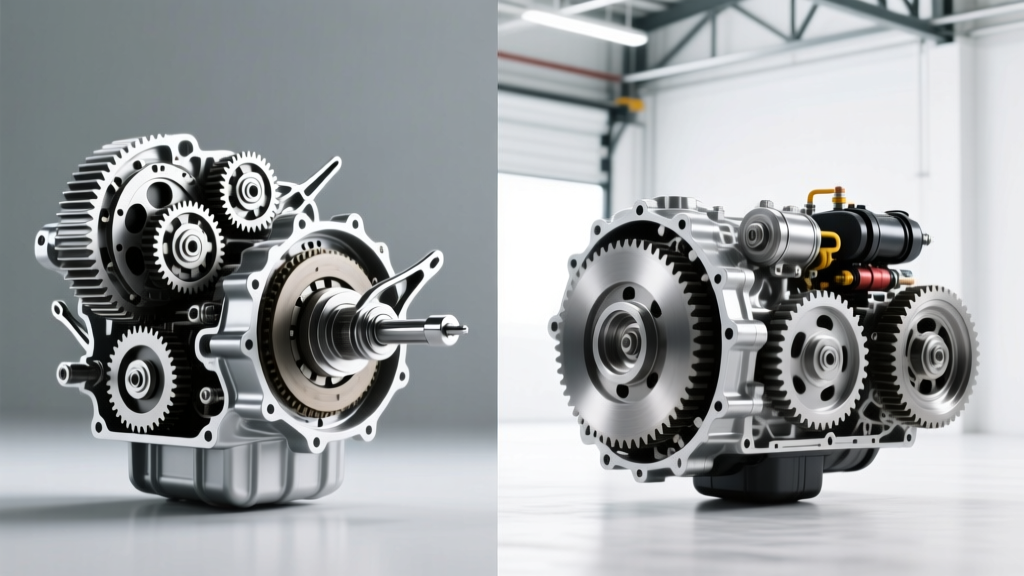
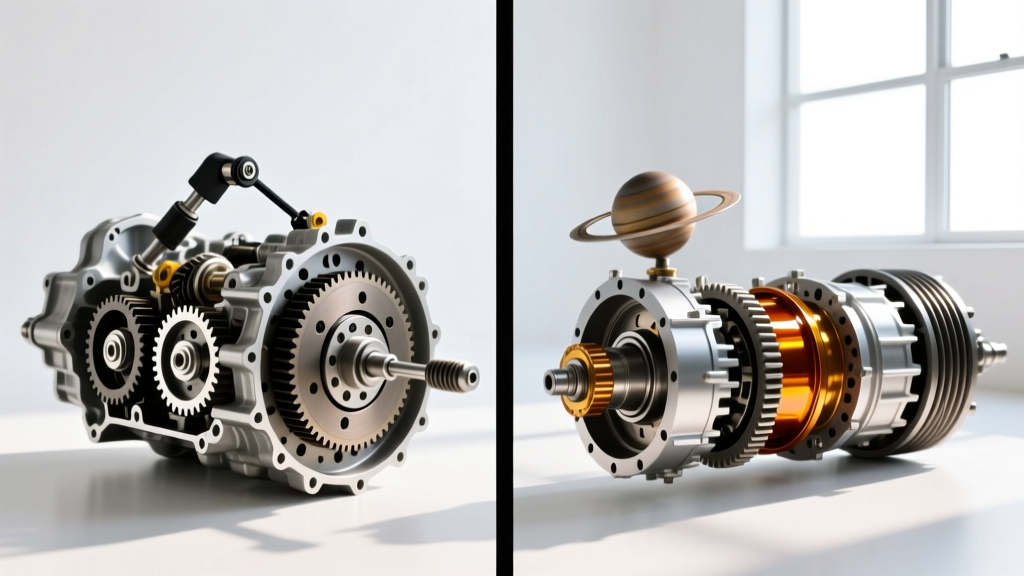
Before diagnosing symptoms, you must understand the hardware. The troubleshooting matrix for a manual transmission relies heavily on mechanical linkages, friction materials, and driver input. Conversely, automatic transmission diagnosis requires an understanding of hydrodynamics, electronic solenoid control, and planetary gearsets.
Manual Transmission Hardware
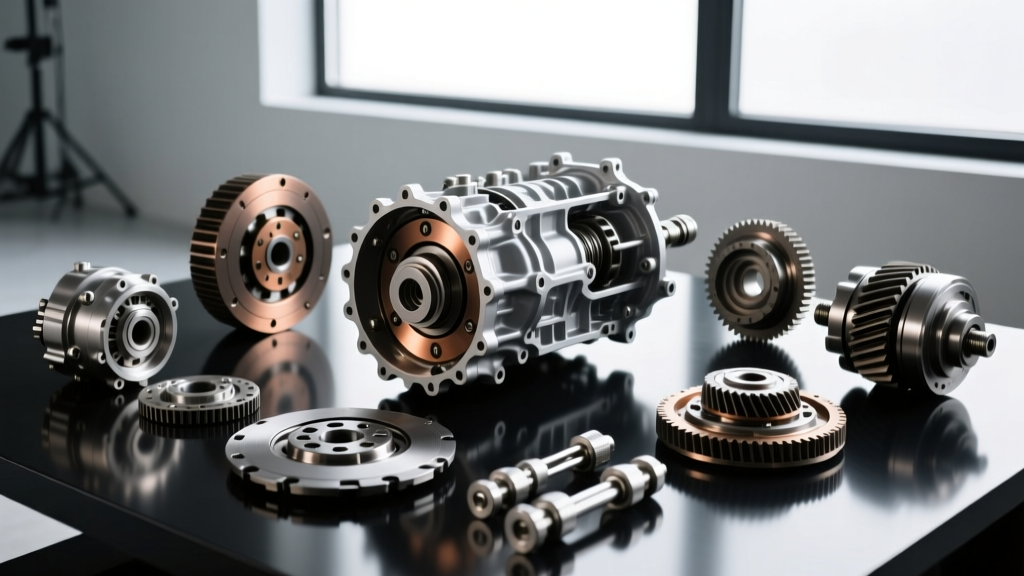
A traditional manual transmission (such as the ubiquitous Tremec T56 Magnum 6-speed) utilizes a dry friction clutch, an input shaft, a countershaft, a mainshaft, and synchronizer rings (synchros). The synchros—often made of sintered brass or carbon fiber—match the rotational speed of the gears to the shaft before engagement. Failures here are almost always mechanical or friction-based.
Automatic Transmission Hardware
Modern automatics, like the ZF 8HP70 or the GM 6L80, replace the dry clutch with a hydrodynamic torque converter and utilize complex planetary gearsets controlled by a hydraulic valve body and a Transmission Control Module (TCM). Failures here manifest as hydraulic leaks, electronic solenoid degradation, or clutch pack burnout inside the transmission casing.
Symptom Diagnosis: Manual Transmission Red Flags
When a manual transmission begins to fail, the symptoms are visceral and directly transmitted through the shift lever and clutch pedal. Here is how to diagnose the most common manual gearbox ailments.
1. Gear Clash and Grinding (Synchro Wear)
If you hear a distinct "crunch" when shifting into 2nd or 3rd gear, especially during rapid shifts, you are experiencing synchro failure. The brass blocking rings are worn down and can no longer equalize shaft speeds.
- Diagnostic Step: Perform a rev-match test. If double-clutching or manually rev-matching eliminates the grinding, the synchros are definitively worn. If grinding persists even with the engine off (shifting while parked), the issue is likely a bent shift fork or damaged shift rail detents.
- Fluid Check: Verify the fluid. The Tremec T56 Magnum requires exactly 3.9 quarts of Tremec MTL (Manual Transmission Lubricant). Using standard GL-5 gear oil will strip the friction modifiers required for the carbon synchros to grip, mimicking mechanical failure.
- Torque Spec: When checking for leaks at the drain/fill plugs, ensure they are torqued to 22 lb-ft to prevent casing distortion.
2. Popping Out of Gear
If the shifter physically pops back into neutral under load or deceleration, the issue is rarely internal gear damage. It is usually a drivetrain alignment or linkage problem.
- Diagnostic Step: Inspect the engine and transmission mounts. A collapsed polyurethane or rubber mount allows the engine to twist under torque, physically pulling the shift linkage out of engagement. Next, check the shift linkage bushings for deflection.
3. Clutch Drag (Inability to Enter Gear)
If the car creeps forward with the clutch fully depressed, or you cannot engage 1st or Reverse without grinding, the clutch is dragging. The friction disc is not fully disengaging from the flywheel.
- Diagnostic Step: Check the hydraulic system. Using a Motive pressure bleeder set to 15 PSI, bleed the clutch slave cylinder. Measure the master cylinder pushrod travel; it should typically be between 1.1 and 1.3 inches. If travel is insufficient, the clutch fork pivot ball may be worn, or the throwout bearing may be collapsed.
Symptom Diagnosis: Automatic Transmission Red Flags
Automatic transmission failures are often insidious, hiding behind electronic "limp modes" and masked by adaptive shift learning algorithms. Diagnosing them requires a blend of mechanical inspection and OBD2 telemetry.
1. Torque Converter Shudder
A rhythmic vibration felt through the floorboards at highway speeds (usually between 40-60 mph under light throttle) indicates torque converter lockup clutch failure. The friction material inside the converter is glazing or breaking apart.
- Diagnostic Step: Monitor the TCC (Torque Converter Clutch) slip RPM via a bi-directional OBD2 scanner. Slip should drop to 0-20 RPM when locked. If it fluctuates wildly (e.g., 50 to 150 RPM), the converter is failing. In GM 6L80 units, this debris often clogs the valve body, requiring a full flush with Dexron VI (capacity: ~11.2 quarts dry fill).
2. Harsh 2-3 or 3-4 Shifts (Solenoid and Valve Body Issues)
Erratic, neck-snapping shifts are rarely caused by "too much power." They are usually hydraulic cross-leaks or failing PWM (Pulse Width Modulation) solenoids.
- Diagnostic Step: For a ZF 8HP transmission, drop the integrated plastic transmission pan (which houses the mechatronic unit). Inspect the mechatronic sleeve (the electrical pass-through connector on the casing). These O-rings degrade and leak fluid onto the exterior. Use a digital multimeter to test the shift solenoids; PWM solenoids typically read between 1.5 and 5.0 ohms. An open circuit (OL) mandates a mechatronic replacement.
Troubleshooting Comparison Matrix
The following table serves as a quick-reference diagnostic framework for comparing overlapping symptoms across both transmission types.
| Symptom | Manual Transmission Culprit | Automatic Transmission Culprit | Primary Diagnostic Tool |
|---|---|---|---|
| Loss of Forward Movement | Shattered input shaft or stripped clutch hub | Torque converter failure or snapped sun gear | Visual inspection (Manual) / Stall Test (Auto) |
| Whining Noise in Neutral | Worn input shaft bearing or countershaft bearing | Torque converter turbine bearing or fluid pump cavitation | Chassis Ear / Mechanic's Stethoscope |
| Fluid Leak (Red/Brown) | Rear main seal or output shaft seal (Gear oil smell) | Pan gasket, mechatronic sleeve, or axle seal (Sweet ATF smell) | UV Dye and Blacklight |
| Check Engine / Dash Light | P0851 (Neutral Safety Switch alignment) | P0700 (TCM Request) or P073X (Gear Ratio Errors) | Bi-Directional OBD2 Scanner |
Real-World Economics: 2026 Repair Costs
Understanding the financial implications of these symptoms is vital for accurate vehicle appraisal and repair planning. The labor intensity and part costs vary wildly between the two architectures.
Manual Transmission Repair Costs
Manuals are generally cheaper to service but require more frequent friction maintenance. A complete clutch replacement (including a high-quality LuK or Sachs RepSet, flywheel resurfacing, and throwout bearing) typically costs between $250 and $450 in parts. Labor for dropping a manual transmission and swapping a clutch ranges from $600 to $900, depending on the vehicle's subframe complexity. Full manual transmission rebuilds (replacing synchros, bearings, and seals) usually run between $1,200 and $2,200.
Automatic Transmission Repair Costs
Automatics require less frequent maintenance but are vastly more expensive when they fail. A simple mechatronic sleeve or solenoid pack replacement on a ZF 8HP might cost $800 to $1,200. However, if internal clutch packs burn out or planetary gears shatter, a full remanufactured replacement (from suppliers like Jasper) installed at a dealership or specialized shop will easily range from $3,500 to $5,500+ in 2026.
Expert Diagnostic Tip: Never diagnose an automatic transmission shift complaint without first checking the battery and alternator output. Modern TCMs require a stable 12.5V+ reference signal. A failing alternator causing voltage drops to 11.2V will cause transmission solenoids to open lazily, resulting in harsh shifts and false "slipping" codes that mimic catastrophic internal failure.
Conclusion
So, does a manual car have a transmission? Yes, and it is a masterpiece of mechanical synchronization that demands entirely different diagnostic protocols than its automatic counterpart. Whether you are chasing a brass synchro crunch in a Tremec T56 or diagnosing a PWM solenoid failure in a ZF 8HP, accurate symptom interpretation is the key to avoiding unnecessary teardowns and misdiagnosed parts. Always rely on exact torque specifications, OEM-approved fluids, and precise electrical testing to keep your drivetrain on the road.
For further technical specifications and OEM fluid requirements, consult the engineering resources at Tremec Corporation and the ZF Group Aftermarket Portal. For ongoing diagnostic trends and repair economics, refer to industry analyses from MotorTrend.