The 2026 Manual Landscape and the Core Mechanical Advantage
As we navigate the automotive landscape of 2026, the manual transmission has largely been relegated to niche sports cars, hardcore off-roaders, and enthusiast-focused hatchbacks like the Honda Civic Type R or the Porsche 911 GT3. While automatics and dual-clutch transmissions (DCTs) dominate the market for sheer shift speed, the manual transmission advantages become starkly apparent when we examine vehicle dynamics, specifically retardation and weight transfer. Understanding how to stop a manual transmission car properly is not just about pressing a clutch pedal; it is about leveraging direct mechanical coupling to manage kinetic energy, preserve friction brakes, and maintain chassis balance.
Many modern drivers rely entirely on hydraulic or regenerative braking systems. However, a manual gearbox offers a physical, locked connection between the engine's rotational mass and the drive wheels. This technical deep-dive explores the physics, component preservation, and exact driving techniques required to maximize these advantages, ensuring your drivetrain and braking systems operate within their optimal thermal windows.
Direct Driveline Coupling vs. Fluid Dynamics
To understand manual transmission advantages in braking scenarios, we must contrast the manual clutch assembly with an automatic's torque converter. In a traditional automatic transmission, engine braking is often muted by the fluid coupling of the torque converter. Even when the lock-up clutch engages, the retardation force is limited by the calibration of the transmission control module (TCM) and the slip tolerance of the internal clutch packs.
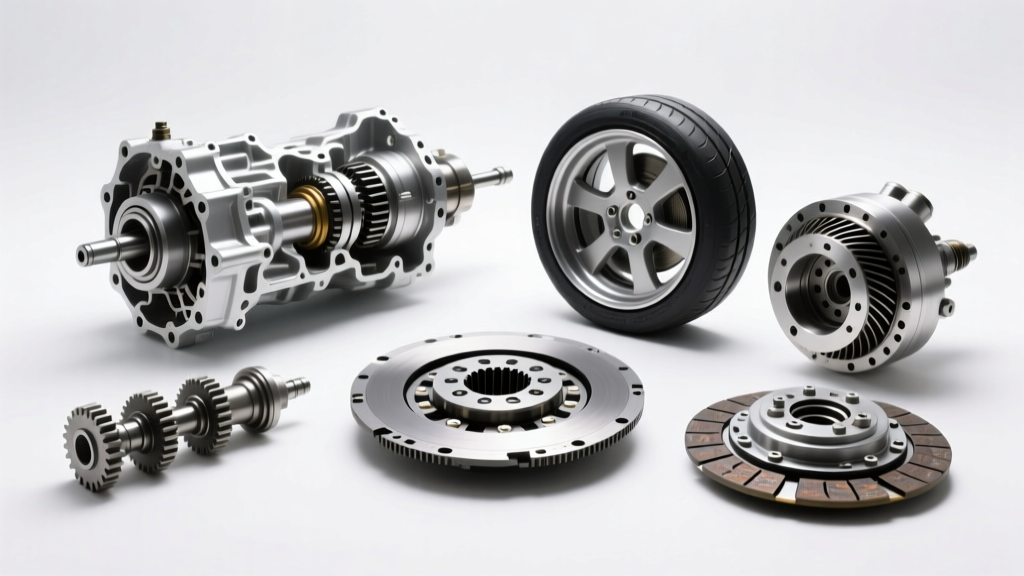
Conversely, a manual transmission utilizes a solid mechanical link via the clutch friction disc (often a ceramic or organic puck design from manufacturers like Sachs or BorgWarner). When the clutch is fully engaged and your foot is off the pedal, the engine's compression stroke acts as a massive air compressor. The kinetic energy of the vehicle is transferred directly through the input shaft, the gearset, and the clutch to the crankshaft, forcing the engine to pump air against a closed throttle body. This creates immense negative torque at the drive wheels, a phenomenon entirely dependent on the gear ratio and the engine's internal friction.
How to Stop a Manual Transmission Car: The Technical Sequence
When enthusiasts and track-day drivers ask how to stop a manual transmission car efficiently under heavy load, the answer lies in a sequenced integration of friction braking and engine braking. Coasting in neutral or depressing the clutch pedal too early eliminates the manual transmission advantages and shifts 100% of the thermal burden onto the brake rotors. Here is the technically correct sequence for high-load deceleration:
Phase 1: Brake Bias and Initial Weight Transfer
Apply the friction brakes progressively to initiate forward weight transfer. This loads the front tires, increasing their contact patch and allowing the front brake calipers (often multi-piston setups from Brembo) to do the majority of the work without locking the rear wheels. Keep the clutch fully engaged during this initial phase to allow engine compression to assist in stabilizing the chassis.
Phase 2: Rev-Matching and Downshifting
As engine RPMs drop toward the lower threshold of the torque band (typically around 2,500 RPM in a high-performance engine), it is time to downshift. This is where manual transmission advantages shine, provided you execute a proper rev-match. Depress the clutch, blip the throttle to raise the engine RPM to match the exact rotational speed required for the lower gear, and release the clutch. This seamless transition prevents driveline shock and instantly multiplies the engine braking torque.
Phase 3: Final Clutch Engagement
Only when the vehicle speed drops below 15-20 mph, or when the engine RPM approaches idle in first or second gear, should you depress the clutch pedal fully to prevent stalling. This ensures the engine remains coupled to the driveline for the maximum possible duration during the stopping event.
Thermal Management and Brake Fade Prevention
The primary reason driving instructors emphasize how to stop a manual transmission car using the gearbox is thermal management. Standard semi-metallic brake pads operate optimally between 150°C and 350°C. Once rotor temperatures exceed 450°C, the pad resin begins to outgas, creating a boundary layer that results in severe brake fade. By utilizing engine braking, you drastically reduce the thermal load on the friction components.
| Braking Method | Thermal Load on Rotors | Component Wear Rate | Chassis Balance Impact |
|---|---|---|---|
| Friction Brakes Only (Neutral Coast) | Extreme (500°C+) | High (Pad glazing, rotor warping) | Poor (Rear axle unloads, risk of lockup) |
| Engine Braking (Proper Downshift) | Moderate (250°C - 350°C) | Low (Preserves pad life by 30-40%) | Excellent (Stabilizes rear axle via driveline) |
| Aggressive Rev-Match Braking | Low (Under 200°C) | Negligible (Uses fuel and air compression) | Optimal (Predictable weight transfer) |
According to data published by the Society of Automotive Engineers (SAE), integrating engine braking in manual vehicles can extend the service life of standard cast-iron rotors and organic brake pads by up to 40% in mountainous or track environments, saving owners roughly $300 to $600 per axle in replacement costs over the vehicle's lifespan.
Synchro Preservation: The Cost of Poor Rev-Matching
While the manual transmission advantages regarding brake preservation are clear, improper execution of the stopping sequence can be financially catastrophic for the gearbox. If you fail to rev-match when downshifting to slow the car, the synchronizer rings must absorb the entire RPM differential between the engine and the transmission input shaft.
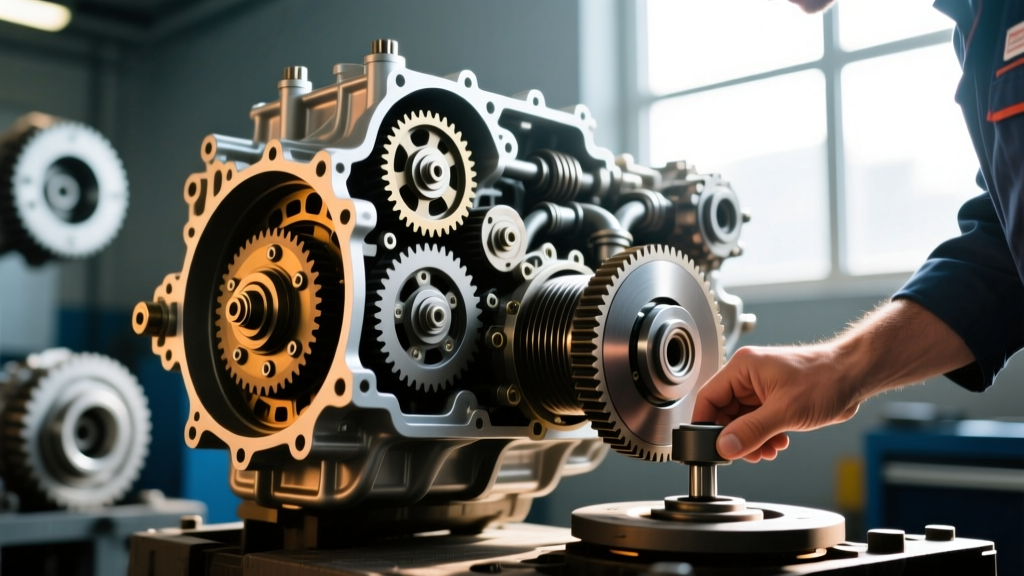
Take the legendary Tremec T56 Magnum, a staple in high-performance manual applications. The T56 utilizes carbon-fiber synchro rings designed for high-heat tolerance and rapid engagement. However, carbon synchros are highly susceptible to abrasive wear if forced to synchronize massive RPM gaps without throttle assistance. A premature synchro failure resulting from lazy downshifting will require a complete transmission teardown. A professional rebuild of a T56 Magnum, including new carbon synchro assemblies, bearings, and 3.9 quarts of specialized fluid (like Pennzoil Synchromesh or Dexron VI, depending on the exact OEM spec), typically costs between $1,800 and $2,500. Learning how to stop a manual transmission car with precise throttle blips is essentially an insurance policy for your gearbox.
The Automatic Contrast: ZF 8HP Limitations in Retardation
To fully appreciate the manual transmission advantages, we must compare it to the benchmark of modern automatics: the ZF 8HP 8-speed automatic. The ZF 8HP is an engineering marvel, utilizing a Lepelletier gearset and four planetary gearsets to achieve rapid shifts. However, when it comes to engine braking, it relies on the TCM to command clutch pack engagement and torque converter lockup.
In a steep descent, an automatic transmission will often hunt for gears or refuse to downshift into a lower ratio if the TCM calculates that the resulting engine RPM will exceed the manufacturer's redline safety parameter (often set conservatively around 6,500 RPM). A manual driver, possessing situational awareness and a mechanical clutch, can safely execute a rev-match into a lower gear, allowing the engine to briefly touch the rev limiter to provide maximum retardation, a level of control the ZF 8HP's programming simply will not permit. Furthermore, the ZF 8HP's internal clutch packs can overheat during prolonged engine braking on steep grades, triggering a 'limp-home' transmission protection mode—a failure state entirely absent in a properly operated manual gearbox.
Conclusion: Mastering the Mechanical Link
The decision to drive a manual in 2026 is a commitment to mechanical engagement. The manual transmission advantages extend far beyond the romanticized notion of 'feeling connected to the road.' They manifest in tangible, measurable benefits regarding thermal management, component longevity, and dynamic chassis control. By mastering the technical sequence of how to stop a manual transmission car—utilizing progressive friction braking, precise rev-matching, and strategic downshifting—drivers can preserve expensive braking hardware, protect delicate carbon synchros, and extract the absolute maximum performance from their drivetrain. For further technical specifications on manual gearbox tolerances and maintenance intervals, enthusiasts should consult the engineering documentation available directly from Tremec.