The Mechanics of Clutchless Shifting and Drivetrain Stress
Modern sportbikes and naked motorcycles are increasingly designed around the concept of the no clutch shifting motorcycle. Whether utilizing factory-installed electronic quickshifters, aftermarket auto-clutch systems like the Rekluse Core EXP, or traditional rider-initiated clutchless upshifts via throttle manipulation, the mechanical realities of a sequential dog-ring gearbox remain unchanged. When you remove the clutch lever from the shifting equation, the transmission relies entirely on momentary load-unloading to allow the shift dogs to disengage and re-engage. If the clutch assembly fails to release cleanly, or if internal friction components are binding, clutchless shifts become violent, resulting in distinct auditory warnings: grinding, squealing, and chirping.
As of 2026, electronic ignition-cut quickshifters are standard on nearly all 600cc and 1000cc supersport platforms. However, electronic aids cannot mask mechanical wear. Diagnosing drivetrain noise requires isolating the exact phase of the shift cycle where the anomaly occurs. Below is an expert-level diagnostic framework for identifying and resolving clutch and transmission noises specifically exacerbated by clutchless riding techniques.
Diagnostic Matrix: Decoding Motorcycle Clutch Noises
Before tearing down the engine cases, use this diagnostic matrix to correlate the auditory symptom with the mechanical failure point. Understanding the trigger condition is critical for accurate diagnosis.
| Sound Profile | Trigger Condition | Primary Culprit | Estimated Repair Cost |
|---|---|---|---|
| Harsh Grinding / Crunching | During no-clutch upshifts or downshifts under load | Clutch basket tang notching / Shift fork wear | $400 - $850 |
| High-Pitched Squealing | When pulling the clutch lever or during high-RPM auto-clutch engagement | Clutch release bearing failure / Dry boss bushing | $150 - $320 |
| Rapid Chirping / Chatter | During the initial friction zone take-up or slow-speed maneuvers | Glazed friction plates / Sagging clutch springs | $120 - $250 |
| Clicking / Ratcheting | False neutrals between 2nd and 3rd gear during clutchless shifts | Shift drum detent spring fatigue / Dog rounding | $250 - $600 |
Deep Dive: Grinding During No-Clutch Upshifts
Grinding during a clutchless upshift is rarely a transmission gear issue; it is almost always a clutch disengagement failure. For a no clutch shifting motorcycle to upshift cleanly, the rider must roll off the throttle (or the ECU must cut ignition for 60-90 milliseconds) to unload the transmission. Simultaneously, the clutch plates must separate slightly to break the oil film tension. If the clutch plates hang up, the gearbox remains loaded, and the shift dogs will clash violently.
Clutch Basket Tang Notching
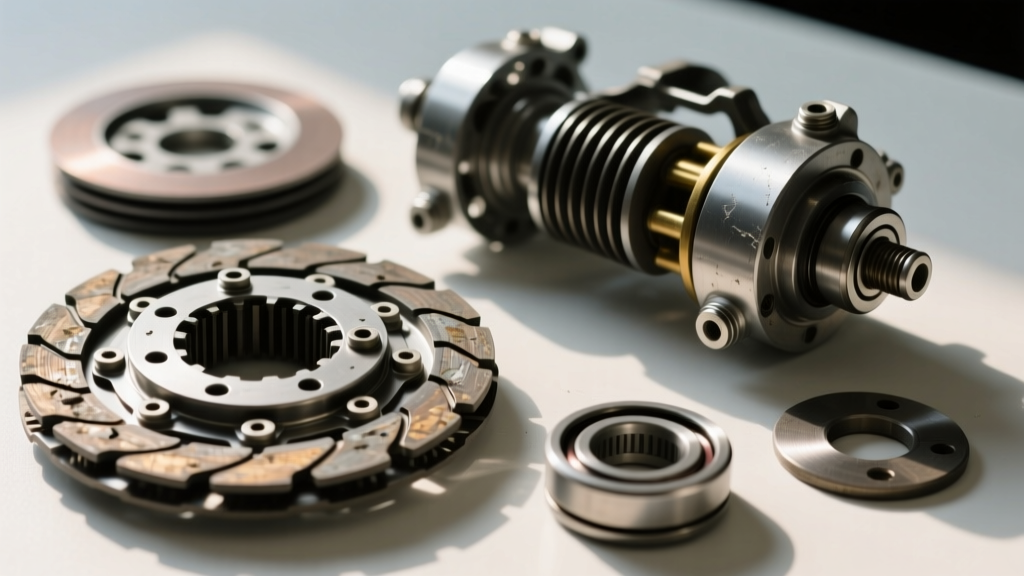
The most common cause of plate hang-up is notching on the aluminum clutch basket (outer hub) and inner boss. Over thousands of miles, the steel tabs of the friction and drive plates hammer into the softer aluminum tangs, creating deep grooves. When clutchless shifting, the plates must slide laterally with zero resistance. Notches act as physical roadblocks, keeping the plates interlocked even when the lever is pulled or the ignition cuts.
- Inspection Protocol: Remove the clutch pack and run your fingernail across the basket tangs. If your nail catches in a groove deeper than 0.2mm, the basket is condemned.
- OEM vs. Aftermarket: An OEM Yamaha YZF-R1 clutch basket (Part #B04-E6110-00) costs roughly $280 but will eventually notch again. Upgrading to a billet aluminum Rekluse TorqueDrive basket ($450) utilizes hardened steel inserts at the tang contact points, effectively eliminating notching and ensuring buttery-smooth clutchless upshifts for the life of the motorcycle.
Squealing and Chirping: Bearing and Spring Failures
While grinding indicates a load-unloading failure, squealing and chirping point directly to friction surface degradation and bearing starvation. These noises are particularly prevalent on motorcycles equipped with auto-clutches or riders who habitually 'ride' the clutch lever during clutchless downshifts to match RPMs.
The Clutch Release Bearing and Pushrod
Motorcycles like the Kawasaki ZX-10R and Honda CBR1000RR utilize a clutch release bearing (throw-out bearing) actuated by a central pushrod. When executing clutchless downshifts, riders often pre-load the shift lever and drag the clutch lever to the friction zone. This generates immense heat at the release bearing. A failing bearing will emit a metallic squeal that correlates directly with lever actuation or high-RPM slip.
Expert Tip: Never reuse the clutch pushrod if it shows any scoring. A scored pushrod will destroy a new release bearing in under 500 miles. Always apply a thin coat of high-temp molybdenum disulfide grease (like Honda Moly 60) to the pushrod and the contact point on the pressure plate during reassembly.
Chirping from Spring Sag and Glazed Plates
A rhythmic chirping sound when taking off from a stop or engaging the friction zone slowly is the sound of the clutch grabbing and releasing at a micro-level. This is caused by uneven clamping pressure. Over time, clutch springs lose their tension due to heat cycling. For example, the factory service manual for the Suzuki GSX-R750 specifies a clutch spring free length standard of 49.2mm, with a strict service limit of 45.5mm. If even one spring sags past the limit, the pressure plate distorts microscopically, causing the friction plates to chatter against the steel separators.
Quickshifter Tuning: Mitigating Electronic Drivetrain Shock
If your motorcycle is equipped with an electronic quickshifter (e.g., Dynojet QSX or HealTech iQSE), improper tuning will accelerate clutch and transmission wear, leading to the grinding noises mentioned above. The quickshifter works by cutting ignition or fuel for a precise duration to unload the dogs. If the 'kill time' is too short, the dogs remain loaded and will grind when forced. If the kill time is too long, the engine RPMs drop too far, causing a harsh re-engagement shock that rounds off the dog teeth.
- 600cc Supersport (e.g., CBR600RR, ZX-6R): Optimal kill time is typically 55ms to 65ms. The lighter rotating mass requires less time to unload.
- 1000cc+ Literbikes (e.g., BMW S1000RR, Ducati Panigale V4): Optimal kill time ranges from 70ms to 85ms. The heavier crankshaft inertia requires a slightly longer ignition cut to break dog tension.
For in-depth tuning parameters and electronic diagnostics, referencing technical archives like RevZilla's Common Tread provides excellent baseline maps for aftermarket quickshifter modules.
Torque Specs and Assembly Best Practices
When rebuilding the clutch to resolve noise issues, precision assembly is non-negotiable. A warped pressure plate or improperly torqued hub nut will instantly reintroduce chirping and chatter. Always consult your specific factory service manual, but adhere to these universal best practices:
- Clutch Hub Nut Torque: Most Japanese inline-fours require between 65 Nm and 95 Nm (e.g., Honda CBR600RR is 69 Nm / 51 lb-ft). The nut is often staked or requires a specific thread locker (Yamabond or Honda Bond). Always use a dedicated clutch holding tool (Motion Pro or OEM) to prevent transferring torque through the transmission gears, which can damage the shift forks.
- Friction Plate Soaking: OEM cellulose and Kevlar friction plates must be soaked in the exact engine oil used in the crankcase for a minimum of 2 hours before installation. Installing dry plates will result in immediate glazing, severe chirping, and premature failure upon the first clutchless launch.
- Steel Plate Flatness: Check steel separator plates on a glass surface with a feeler gauge. The warpage limit is typically 0.1mm to 0.3mm. If they are blued from heat (common with aggressive quickshifter use), replace them with high-carbon steel plates like the EBC SRK series ($60-$90) to resist future warping.
Conclusion: Preserving the Drivetrain
Operating a no clutch shifting motorcycle places a premium on the mechanical integrity of the clutch basket, release bearings, and shift drum assembly. Grinding is a warning of basket notching and dog overload; squealing indicates bearing starvation; chirping reveals spring fatigue. By adhering to strict measurement limits, upgrading to billet components where necessary, and properly tuning quickshifter kill-times, you can preserve the seamless performance of your motorcycle's drivetrain for thousands of miles. For further reading on sequential gearbox physics and metallurgical wear, CycleWorld's Ask Kevin remains an invaluable resource for understanding the engineering behind motorcycle transmissions.