The Anatomy of DCT Chatter: Hydraulics vs. Friction
Clutch chatter in Ford's dual-clutch transmissions (DCTs) is a notorious drivetrain killer. Whether you are wrestling with the dry 6DCT250 (DPS6) found in the Focus and Fiesta ST, or the wet Tremec TR-9077 in the Shelby GT500, high-frequency shudder during 1-2 upshifts or takeoff usually points to hydraulic instability or friction surface glazing. As we navigate the performance landscape in 2026, the aftermarket diagnostic tools for Ford's DCTs have matured significantly, allowing enthusiasts and technicians to pinpoint vibration issues before they result in catastrophic clutch pack failure.
Chatter is fundamentally a 'stick-slip' phenomenon. When the clutch engages, the friction coefficient must transition smoothly from dynamic to static. If the hydraulic pressure applying the clutch fluctuates—even by a fraction of a bar—the clutch will rapidly grab and release. This manifests as a violent 15-30 Hz vibration through the chassis, often misdiagnosed as a bad engine mount or warped flywheel. In this performance and upgrade guide, we break down how to diagnose DCT vibration and why a strategic service using motorcraft dual clutch fluid (specifically part number XT-11-QDC) is your critical first line of defense.
Dry DCT (DPS6) Actuator Lag
In the dry DPS6 transmission, the clutches themselves operate without fluid bathing the friction material. However, the electro-hydraulic actuator and the gearset rely entirely on specialized fluid. If the fluid shears or loses its viscosity index due to thermal cycling, the actuator solenoids experience micro-lag. A 15-millisecond delay in hydraulic pressure build-up during the torque phase of a shift is enough to induce severe clutch chatter on takeoff.
Wet DCT (TR-9077) Clutch Pack Shear
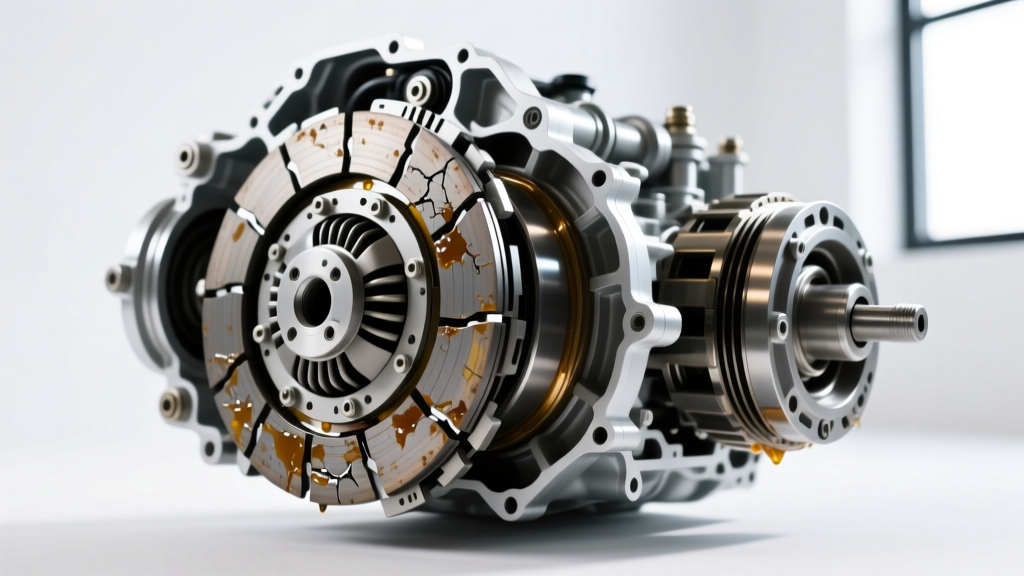
Conversely, the wet dual-clutch systems like the Tremec TR-9077 utilize fluid directly over the clutch packs for cooling and friction modulation. Here, chatter is often caused by the depletion of friction modifiers in the fluid, leading to glazing on the paper-based friction linings, or by clutch dust contaminating the fluid and altering its dielectric and hydraulic properties.
Fluid Specifications and Degradation Thresholds
Using generic 'multi-vehicle' DCT fluids is a common mistake that leads to immediate chatter in Ford applications. Ford's friction modifiers are highly proprietary. Below is a comparison of the fluid dynamics between Ford's primary DCT platforms.
| Specification | DPS6 (6DCT250 Dry) | TR-9077 (Wet GT500) |
|---|---|---|
| Fluid Type | Motorcraft XT-11-QDC | Motorcraft XT-12-QDC / Tremec Spec |
| Capacity | 1.9L (2.0 qts) | 7.5L (7.9 qts) |
| Primary Function | Gearset Lubrication & Actuator Hydraulics | Clutch Cooling & Friction Modulation |
| Thermal Breakdown | ~140°C (284°F) | ~165°C (329°F) |
| Service Interval | 60,000 miles / Severe Duty 30k | Track Use: Every 3-5 events |
Step-by-Step Chatter Diagnosis & Fluid Upgrade
Before tearing into the bell housing, you must isolate whether the chatter is a hydraulic control issue or a mechanical wear issue. Follow this diagnostic protocol:
- Scan for TCM Adaptation Codes: Use an advanced OBD2 scanner to check for codes like P073E (Gear 1 Incorrect Ratio) or P287A (Clutch Position Sensor Circuit). These indicate the Transmission Control Module (TCM) is struggling to map the clutch touch-points.
- PID Logging for Clutch Slip: Using FORScan Official Documentation as a reference, log the PIDs
CLTCH_A_SLIPandCLTCH_B_SLIP. During steady-state cruising in gear, slip should be 0 RPM. If you observe slip greater than 15-20 RPM under light load, the friction material is compromised. If slip spikes only during the shift phase alongside pressure drops, suspect hydraulic fluid shear. - Perform a Fluid Exchange: Drain the old fluid. For the DPS6, the drain plug torque spec is exactly 35 Nm (26 lb-ft). Refill with fresh motorcraft dual clutch fluid (XT-11-QDC), which typically costs between $28 and $34 per quart. Ensure the fluid level is perfectly set at the leveling plug with the transmission at the manufacturer-specified temperature (usually 40°C / 104°F).
- Inspect for Actuator Leaks: On the DPS6, check the seam between the electro-hydraulic actuator and the transmission casing. Micro-leaks here introduce air into the hydraulic circuit, causing a spongy clutch engagement that feels exactly like chatter.
TCM Relearn and Touch-Point Calibration
Replacing the fluid is only half the battle. The TCM adapts to degraded fluid by altering solenoid duty cycles. If you install fresh fluid without resetting the adaptations, the TCM will over-pressurize the clutches, resulting in harsh, banging shifts instead of smooth engagement.
Expert Tuner Tip: After a fluid service, you must perform a 'Clutch Touch-Point Relearn' and a 'Shift Drum Adaptation'. Using FORScan or Ford IDS, navigate to the TCM service functions and initiate the relearn. The vehicle will cycle through the gears while stationary and then require a specific drive cycle (usually 10-15 miles of varied stop-and-go driving) to map the new hydraulic baseline. Skipping this step is the number one reason DIYers report that a fluid change 'didn't fix' their chatter.
When Fluid Isn't Enough: Mechanical Upgrades
If fresh fluid and a TCM relearn fail to eliminate the vibration, the mechanical hardware has likely suffered collateral damage from prolonged slipping. At this stage, performance upgrades become necessary to handle the torque and restore drivability.
Billet Clutch Forks and Throwout Bearings
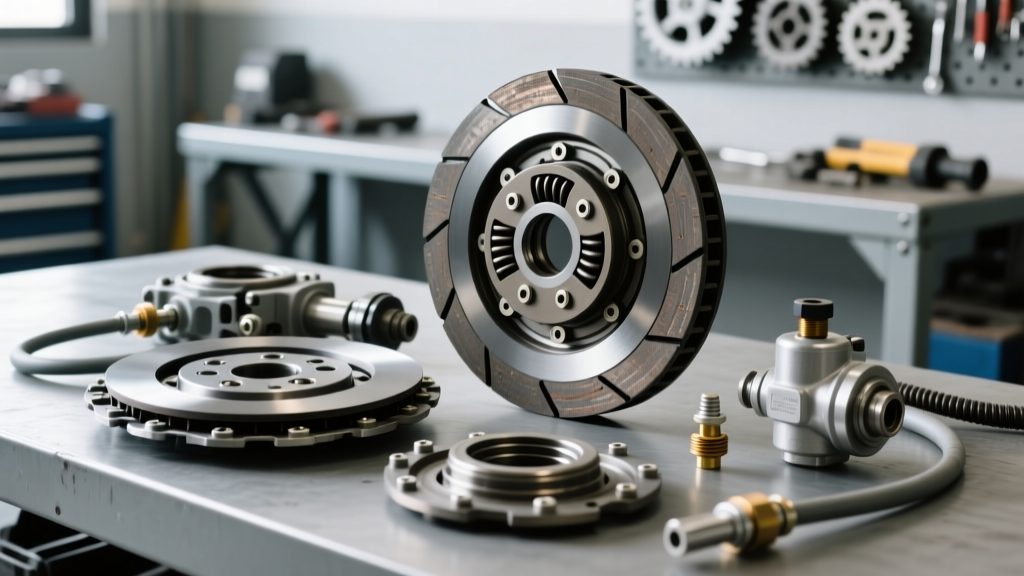
In the dry DPS6, the plastic composite clutch forks are notorious for flexing under high hydraulic pressure, leading to uneven clutch clamping and subsequent chatter. Upgrading to an aftermarket billet aluminum clutch fork (pricing ranges from $150 to $220) eliminates this flex. Pair this with a heavy-duty sealed throwout bearing to ensure concentric pressure plate actuation.
Upgraded Friction Materials for Wet DCTs
For wet DCTs like the GT500's TR-9077, track use generates immense clutch dust that clogs the mechatronic valve body filters. If chatter persists after a flush, the clutch packs must be pulled. Upgrading to high-energy Kevlar or carbon-fiber composite friction discs (such as those offered by Dodson or SSP) increases the thermal threshold and provides a more linear friction coefficient, virtually eliminating stick-slip chatter even under extreme 800+ HP loads. When reassembling the TR-9077, ensure the mechatronic pan bolts are torqued to precisely 10 Nm (89 lb-in) to avoid warping the valve body casting, a mistake that will instantly reintroduce hydraulic cross-leaks and shift shudder.
Ultimately, diagnosing clutch chatter requires looking past the symptom and analyzing the hydraulic medium that controls the engagement. By prioritizing OEM-specified fluids, leveraging advanced PID logging, and executing precise TCM calibrations, you can restore factory-smooth shifts and protect your drivetrain investment for the long haul.