The Shift to Electric: Redefining the Drivetrain in 2026
As the automotive landscape pivots aggressively toward electrification, the traditional drivetrain—once defined by longitudinal crankshafts, multi-speed automatic transmissions, and heavy steel driveshafts—has been radically condensed. For buyers navigating the 2026 market, understanding how electric vehicle (EV) and plug-in hybrid (PHEV) drivetrains are warrantied is no longer optional; it is a critical financial safeguard. The Mitsubishi drivetrain warranty has long served as a benchmark in the industry, particularly for its robust PHEV offerings like the Outlander. But how does it stack up against pure battery electric vehicles (BEVs) from Tesla, Hyundai, and Ford?
This buyer’s guide dissects the anatomy of electric drivetrains, analyzes the fine print of the Mitsubishi drivetrain warranty, and compares it against the broader 2026 EV market to help you make an informed, technically sound purchasing decision.
Inside the EV e-Axle: What Are You Actually Warranting?
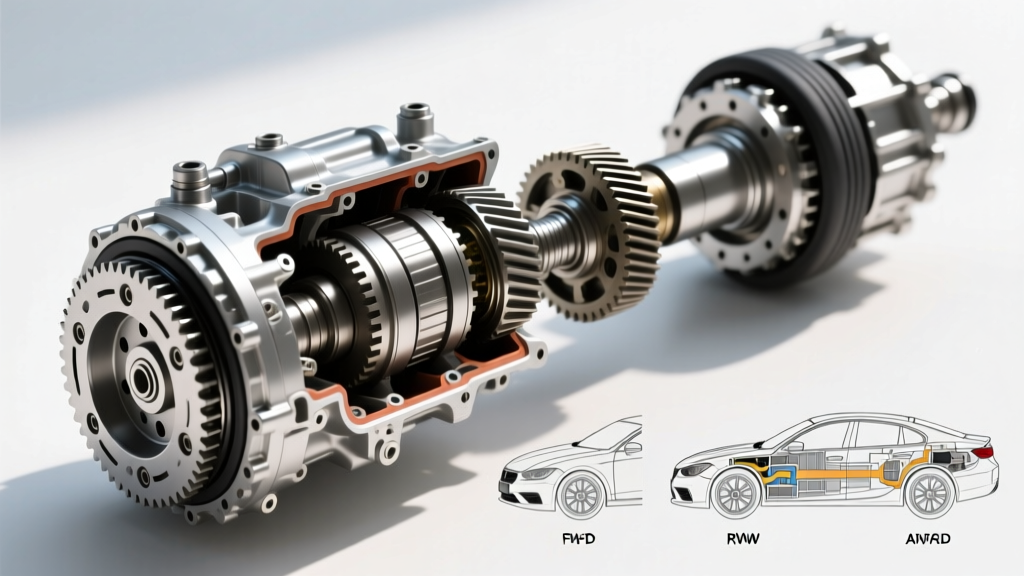
To evaluate any warranty, you must first understand the hardware it protects. Unlike internal combustion engine (ICE) vehicles that utilize a separate transmission and differential, most modern EVs and PHEVs rely on an e-axle (electric axle). This highly integrated module combines three primary components:
- The Electric Motor (Traction Motor): Typically a permanent magnet synchronous motor (PMSM) or induction motor, operating at voltages between 400V and 800V.
- The Inverter: Converts DC current from the high-voltage battery into AC current for the motor, while managing regenerative braking.
- The Reduction Gearbox: A single-speed transmission (usually with a gear ratio between 8:1 and 10:1) that multiplies torque and transfers it to the differential and half-shafts.
According to the U.S. Department of Energy, this integration reduces moving parts by over 90% compared to an ICE drivetrain. However, the financial risk shifts from mechanical wear (like clutch packs or torque converters) to high-voltage electronics and high-RPM bearing failures. When a manufacturer offers a drivetrain warranty, it is these specific, highly expensive components that must be covered.
The Mitsubishi Drivetrain Warranty: A 2026 Benchmark
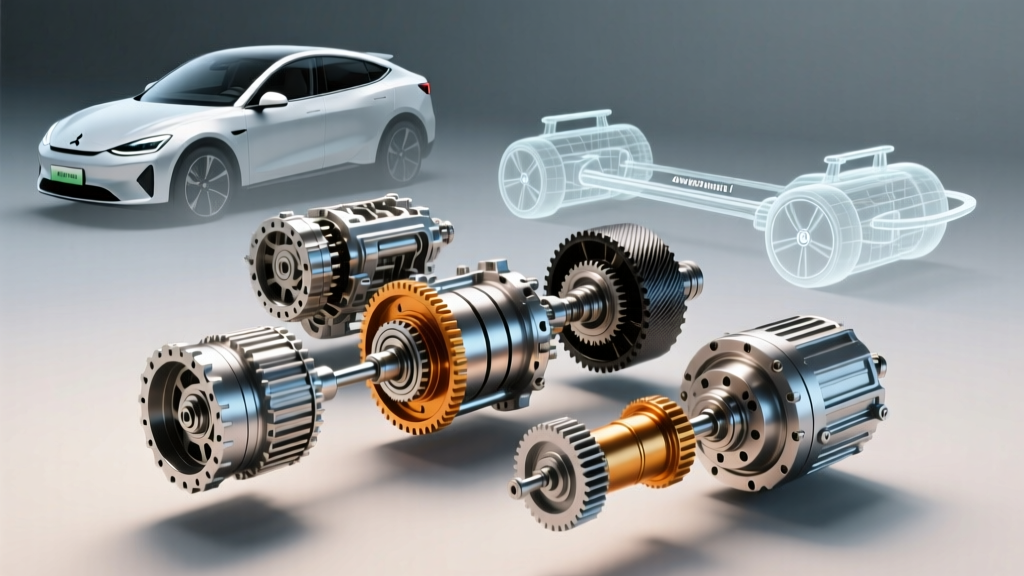
Mitsubishi Motors has built a formidable reputation in the electrified space, largely anchored by its Super All-Wheel Control (S-AWC) twin-motor PHEV architecture. The Mitsubishi drivetrain warranty in the United States provides coverage for 10 years or 100,000 miles (whichever comes first) for the original owner, and 5 years/60,000 miles for subsequent owners.
What is Explicitly Covered?
For Mitsubishi’s electrified lineup, the drivetrain warranty extends far beyond traditional axles. It explicitly covers:
- Front and Rear Electric Drive Motors: Including the stator, rotor, and resolver sensors.
- The S-AWC Control Module & Inverters: The brain and power-conversion units managing torque vectoring.
- Reduction Gears and Differentials: The internal gearing that transfers power to the wheels.
- Power Transfer Unit (PTU): In PHEV applications where the ICE and e-motors interact.
Expert Caveat: While the Mitsubishi drivetrain warranty is exceptionally comprehensive regarding internal e-axle components, it explicitly excludes wear-and-tear items such as CV joint boots, half-shaft seals, and reduction gear fluid unless a factory defect caused the leak. Always verify your specific regional warranty booklet, as terms in Australia and the EU differ slightly from North America.
2026 EV & PHEV Drivetrain Warranty Comparison
How does the Mitsubishi drivetrain warranty compare to pure EV competitors in 2026? Below is a technical comparison of drivetrain and e-axle coverage across leading manufacturers.
| Manufacturer (Model) | Drivetrain / E-Axle Warranty | Coverage Scope | Reduction Gear Fluid Interval | Deductible |
|---|---|---|---|---|
| Mitsubishi (Outlander PHEV) | 10 Yr / 100,000 mi | S-AWC Motors, Inverters, Reduction Gears | 60k mi (Severe) / 120k mi (Normal) | $0 (First 36mo) |
| Tesla (Model Y AWD) | 8 Yr / 120,000 mi | Drive Units, Inverters, HV Battery | Sealed (No factory interval) | $0 |
| Hyundai (Ioniq 5) | 10 Yr / 100,000 mi | E-Motor, PE System, Reduction Gear | 90,000 mi (Inspection/Change) | $0 |
| Ford (Mustang Mach-E) | 8 Yr / 100,000 mi (BEV Components) | eDrive, Inverter, HV Battery | 150,000 mi | $100 |
As noted by Consumer Reports EV Reliability Data, Hyundai and Mitsubishi lead the pack in sheer duration (10 years), while Tesla offers the highest mileage cap (120,000 miles) for its AWD configurations. However, Mitsubishi’s inclusion of complex mechanical linkages (like the PHEV generator and PTU) under the same umbrella provides unique peace of mind for buyers who want both electric torque and gas-powered range.
Common EV Drivetrain Failure Modes & Out-of-Pocket Costs
Even with the best warranty, understanding potential failure points is crucial for used EV buyers or those whose warranties have expired. Electric drivetrains fail differently than ICE transmissions.
1. Reduction Gear Bearing Failure
EV motors spin at incredibly high RPMs—often exceeding 16,000 RPM. The bearings inside the reduction gearbox (typically 6208-2RS or similar deep-groove ball bearings) endure immense thermal and rotational stress. If the dielectric reduction fluid degrades or becomes contaminated with metallic shavings, these bearings will whine and eventually seize. Out-of-pocket replacement cost: $1,800 - $3,500.
2. Inverter Capacitor Blowouts
The inverter relies on DC-link capacitors to smooth voltage spikes. In early-generation EVs, thermal cycling caused these capacitors to vent or short out, destroying the IGBT (Insulated-Gate Bipolar Transistor) switching modules. Modern 2026 architectures use Silicon Carbide (SiC) inverters with advanced liquid cooling, drastically reducing this risk. Out-of-pocket replacement cost: $2,500 - $5,000.
3. Half-Shaft and CV Joint Wear
Electric motors deliver instant, maximum torque at 0 RPM. This aggressive torque delivery puts immense strain on CV joints and half-shafts. While the Mitsubishi drivetrain warranty covers the internal differential, a torn CV boot or snapped half-shaft due to aggressive launching is often classified as wear-and-tear or driver abuse. Out-of-pocket replacement cost: $400 - $900 per axle.
The Buyer’s Checklist: Securing Your Electric Drivetrain
Whether you are leaning toward a Mitsubishi PHEV for its legendary S-AWC system or a pure BEV from a rival brand, follow this technical checklist to ensure your drivetrain remains protected and operational:
- Verify the Fluid Spec: EV reduction gears require specialized dielectric fluids that do not conduct electricity, protecting the motor windings if internal seals weep. For Mitsubishi applications, ensure the shop uses OEM-equivalent fluid (such as DiaQueen ATF-MA1 or specific EV Multi-Gear Oil). Using standard 75W-90 gear oil can cause catastrophic inverter shorts.
- Check the Cooling Loop: E-axles and inverters are liquid-cooled. Inspect the secondary cooling loop reservoir. Low coolant levels can lead to inverter thermal throttling and premature degradation of power electronics.
- Torque Spec Adherence: If you are having tires rotated or suspension work done, ensure the shop uses a torque wrench on the axle nuts. EV half-shaft axle nuts typically require between 250 Nm and 300 Nm (approx. 185-220 lb-ft). Under-torquing leads to spline wear; over-torquing stretches the bolt and risks snapping.
- Read the 'Severe Duty' Clause: If you frequently tow, drive in extreme cold, or use rapid DC fast-charging daily, your vehicle may fall under 'severe duty' maintenance schedules. This often halves the required interval for reduction gear fluid changes.
Final Verdict for the 2026 Buyer
The Mitsubishi drivetrain warranty remains one of the most consumer-friendly policies on the market, particularly for buyers who demand the versatility of a PHEV without sacrificing long-term component protection. Its 10-year/100,000-mile coverage on the complex S-AWC twin-motor system provides a safety net that rivals or exceeds pure EV competitors. However, as EV technology matures in 2026, buyers must look beyond the badge and scrutinize the maintenance requirements of the e-axle. By adhering to strict dielectric fluid intervals and understanding the mechanical realities of high-RPM reduction gears, you can ensure your electric drivetrain delivers silent, instantaneous torque for hundreds of thousands of miles.
For more technical deep-dives into EV architectures and transmission layouts, consult the official Mitsubishi Motors warranty portal or your local certified EV drivetrain specialist.