When hauling heavy loads, the Ford F-150 is a workhorse, but its automatic transmission is highly susceptible to thermal degradation. Whether you are running the older 6R80 or the newer 10-speed 10R80, towing near the truck's maximum capacity (often exceeding 10,000 lbs with the Max Trailer Tow Package) generates immense friction and heat. In 2026, as trailer weights and ambient summer temperatures continue to challenge drivetrain limits, upgrading your cooling system is no longer optional for serious haulers. This guide dives deep into symptom diagnosis, thermal management, and evaluates whether the Mishimoto F150 transmission cooler is truly the best transmission cooler for towing.
The 10R80 and 6R80 Heat Problem When Towing
The Ford 6R80 (2011-2017) and 10R80 (2018-present) transmissions rely heavily on the torque converter clutch (TCC) to manage efficiency. However, during low-speed towing, steep inclines, or stop-and-go traffic, the TCC frequently unlocks to prevent engine stalling. This slippage generates massive amounts of heat directly in the transmission fluid. Normal operating temperatures for these units sit between 180°F and 200°F. Once the Transmission Fluid Temperature (TFT) PID on your OBD2 scanner crosses 225°F, the fluid's shear stability begins to break down. At 250°F, the Mercon LV or Mercon ULV fluid oxidizes rapidly, leading to varnish buildup on the valve body, harsh 2-3 shifts, and eventual clutch pack failure.
Symptoms of an overwhelmed OEM cooler include:
- Delayed Shift Engagement: Particularly when shifting from Park to Drive or Reverse, caused by fluid thinning and internal pressure leaks.
- TCC Slip Codes: P0741 or P0744 triggered when the PCM detects excessive RPM slip across the torque converter due to degraded fluid viscosity.
- Limp Mode Activation: The PCM will lock the transmission in a single gear to protect the clutches if TFT exceeds 260°F.
Evaluating the Mishimoto F150 Transmission Cooler for Heavy Towing
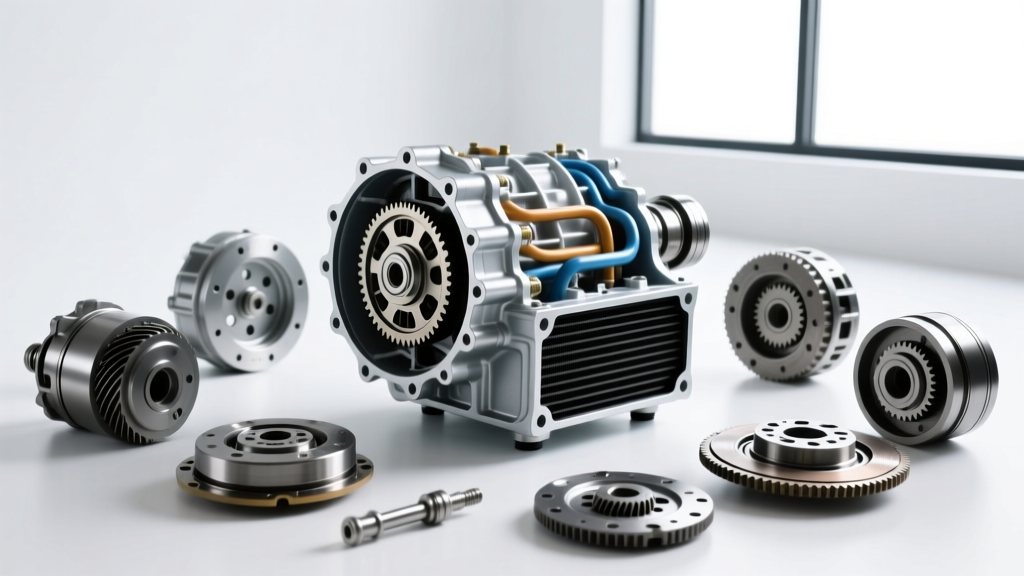
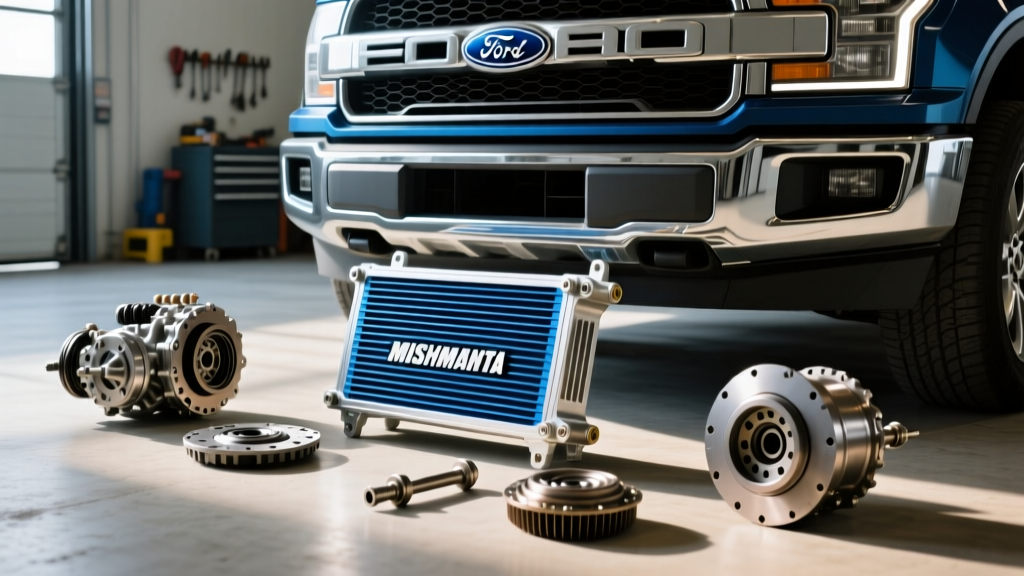
When searching for the best transmission cooler for towing, F-150 owners typically cross paths with the Mishimoto stacked-plate kits, such as the MMTC-F2D-18 (for 2018-2020 models) or the MMTC-F150-15 (for 2011-2017 models). Unlike the OEM tube-and-fin or basic plate-and-fin designs, Mishimoto utilizes a high-density stacked-plate core. Stacked-plate coolers offer the highest BTU dissipation per square inch and maintain a lower pressure drop, ensuring your transmission oil pump isn't overworked.
Below is a technical comparison of the OEM auxiliary cooler against top aftermarket stacked-plate options for the F-150 platform:
| Specification | OEM Ford Auxiliary Cooler | Mishimoto MMTC-F2D-18 | Derale Hyper-Cool 10009 |
|---|---|---|---|
| Core Design | Tube-and-Fin / Basic Plate | Stacked-Plate | Stacked-Plate |
| Estimated Core Volume | 0.35 Quarts | 0.65 Quarts | 0.55 Quarts |
| BTU Dissipation (est.) | 12,000 BTU/hr | 22,000 BTU/hr | 19,500 BTU/hr |
| Pressure Drop @ 2 GPM | 4.5 PSI | 2.1 PSI | 2.8 PSI |
| Avg. Retail Price (2026) | $220 - $280 | $380 - $430 | $310 - $350 |
While the Mishimoto kit commands a premium price, its superior core volume and lower pressure drop make it a top-tier candidate for the 'best transmission cooler for towing' title, specifically for owners pushing 8,000+ lbs up mountain grades.
Symptom Diagnosis: Post-Upgrade Overheating & Shifting Issues
Installing an upgraded cooler should immediately drop your TFT by 20°F to 30°F under load. However, if you install the Mishimoto F150 transmission cooler and still experience overheating or erratic shifting, you must troubleshoot the installation and the transmission's internal thermal management systems.
Symptom 1: Transmission Won't Reach Operating Temperature
Diagnosis: If your OBD2 scanner shows the TFT stuck below 150°F even after 30 minutes of highway driving, the transmission is running in 'cold mode.' This causes harsh shifts and prevents the TCC from locking, which ironically generates more heat in the long run.
Troubleshooting: The 10R80 features an Internal Thermal Management Valve (ITMV) located on the side of the transmission case or integrated into the radiator bypass loop. If this valve is stuck open, fluid bypasses the new Mishimoto cooler entirely, or worse, it routes fluid through the radiator's engine coolant loop constantly, overcooling the transmission. Verify that all OEM bypass deletion plugs (if included in your specific kit) are installed correctly, and ensure the quick-connect fittings are fully seated. A partially seated quick-connect can trigger an internal bypass leak.
Symptom 2: Shift Flares and Air in the System
Diagnosis: RPM flares during the 3-4 or 5-6 upshifts immediately after cooler installation.
Troubleshooting: Stacked-plate coolers hold significantly more fluid than OEM tube-and-fin units. The Mishimoto MMTC-F2D-18 holds roughly an extra 0.3 to 0.5 quarts. If you did not compensate for this volume during the fill procedure, the transmission pan is low, causing the pickup tube to suck air during high-G maneuvers or steep towing inclines. Furthermore, failing to cycle the shifter through all gears with the engine running at operating temperature prevents the clutch apply bores from filling, trapping air in the valve body.
Symptom 3: Fluid Leaks at the Quick-Connect Fittings
Diagnosis: Red or brown fluid dripping from the radiator or transmission case connections.
Troubleshooting: Ford uses specific plastic and metal quick-connect retainers for the 6R80 and 10R80 cooler lines. When removing the old OEM cooler, the internal O-rings or Teflon seals on the line ends often tear or flatten. Mishimoto kits usually include new O-rings, but reusing the old ones is a common DIY error. Always replace the quick-connect seals, lubricate them with fresh Motorcraft Mercon ULV (or LV for 6R80), and push the fitting until you hear a distinct mechanical 'click.' Always perform a pull-test to verify retention before starting the engine.
Proper 10R80 Fluid Bleed and Leveling Procedure
To ensure your new cooler operates correctly and to prevent cavitation damage to the transmission oil pump, you must follow the exact fluid leveling procedure. The 10R80 does not have a traditional dipstick; it uses a leveling plug on the transmission pan.
- Fluid Selection: You MUST use Motorcraft MERCON ULV (XT-12-QULV) for the 10R80. Using the older MERCON LV will cause severe clutch chatter and void your drivetrain warranty.
- Initial Fill: Add the calculated volume of fluid lost during the cooler swap (typically 2.5 to 3.5 quarts when dropping the pan and swapping the cooler).
- Thermal Cycling: Start the engine, hold the brake, and slowly cycle the shifter through P-R-N-D-L, pausing for 3 seconds in each gear. This fills the new Mishimoto cooler and the torque converter.
- Temperature Target: Monitor the TFT PID via an OBD2 scanner. The fluid must be between 185°F and 200°F (85°C - 93°C) for an accurate level check. The 10R80 pan features a thermal expansion element that changes the fluid height based on temperature.
- Leveling: With the truck perfectly level and the engine idling, remove the 8mm Allen leveling plug on the bottom of the pan. Fluid should drip out in a steady stream. When it slows to a slow drip, reinstall the plug.
- Torque Spec: Torque the leveling plug to exactly 8 Nm (71 lb-in). Over-torquing can crack the aluminum pan or strip the threads, leading to a catastrophic fluid loss while towing.
Final Verdict: Best Transmission Cooler for Towing?
When diagnosing chronic F-150 towing overheating, addressing the root cause of thermal buildup is critical. The Mishimoto F150 transmission cooler stands out as an exceptional upgrade due to its robust stacked-plate architecture, massive BTU dissipation, and low pressure drop. While it requires a higher upfront investment compared to generic tube-and-fin replacements, the protection it offers to the complex 10R80 and 6R80 valve bodies is invaluable. By pairing this cooler with strict adherence to the Mercon ULV fluid leveling procedures and properly diagnosing thermal bypass valve symptoms, you can confidently tow maximum loads through extreme heat without triggering limp mode or destroying your clutch packs.