The Financial Stakes of Transmission Cooler Leaks
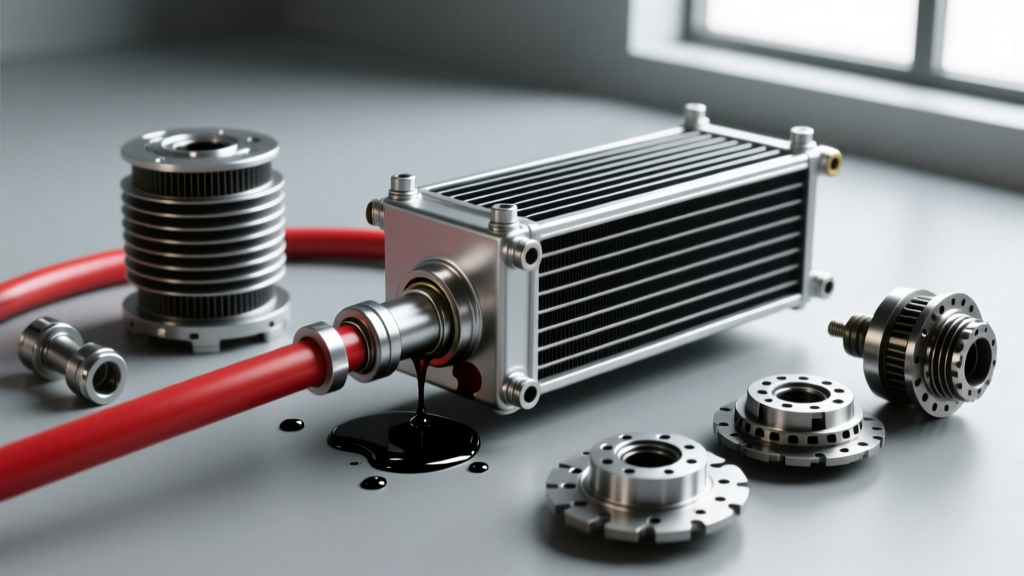
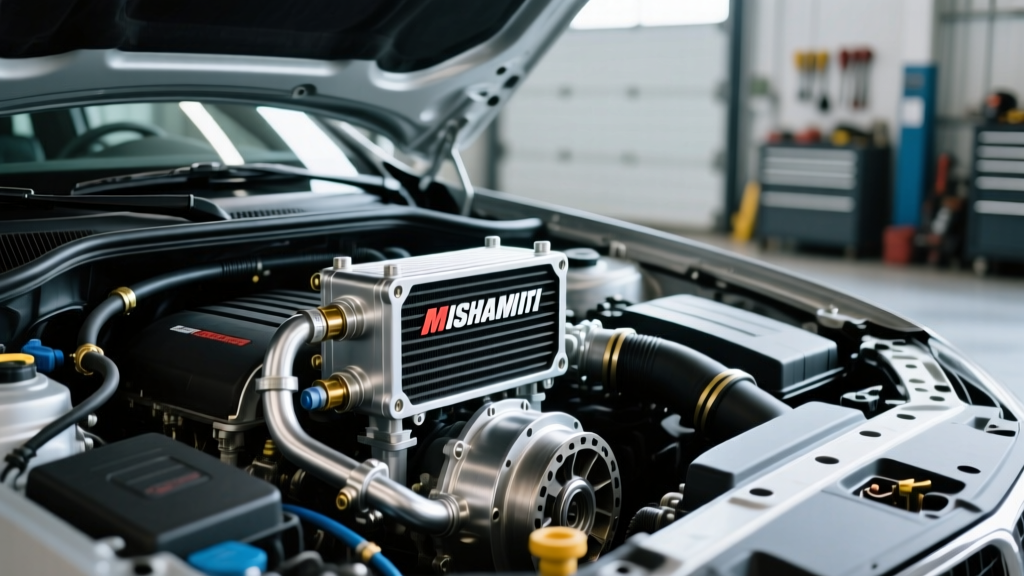
Upgrading your drivetrain cooling with a mishimoto universal transmission cooler kit is one of the most effective ways to protect your clutches and torque converter from thermal degradation. However, an improper installation or a failing adapter fitting can turn a $150 upgrade into a $3,000 transmission rebuild. When a cooler line fails, the transmission pump can expel 2 to 4 quarts of fluid in under sixty seconds, leading to immediate clutch pack burnout and severe internal scoring.
From a 2026 cost-analysis perspective, diagnosing a leak early is paramount. Synthetic automatic transmission fluids (ATF) like Dexron VI, Mercon LV, and ZF 8-speed specific fluids now average $9.00 to $14.00 per quart. A complete dry-fill on a modern GM 6L80 or Ford 10R80 requires 11 to 13 quarts. Losing half your fluid volume before the low-pressure switch triggers a limp-mode fault code (such as P0868 or P0734) means you are not just buying replacement fluid; you are risking the financial ruin of the entire drivetrain.
Diagnostic Protocol: Isolating the Mishimoto Core and Fittings
When diagnosing a leak in an aftermarket setup, you must systematically isolate the three primary failure zones: the cooler core, the adapter fittings, and the OEM-to-aftermarket line integration.
The ORB vs. NPT Catastrophe: A $1,200 Mistake
The most common and financially devastating diagnostic failure involves misidentifying the thread type on the cooler ports. The Mishimoto universal stacked-plate and tube-and-fin coolers utilize AN6 O-Ring Boss (ORB) ports. Many DIY installers mistakenly wrap PTFE (Teflon) tape around the threads of the included fittings, assuming they are National Pipe Taper (NPT).
ORB fittings seal via a Buna-N or Viton O-ring compressed against a machined chamfer, not via thread interference. If PTFE tape is used on an ORB fitting, the tape shreds upon tightening. Those microscopic plastic shards travel directly through the return line into the transmission pan, bypassing the filter and lodging inside the valve body. According to repair data cited by Transmission Digest, clearing a clogged torque converter clutch (TCC) apply valve or replacing a shredded solenoid pack resulting from PTFE contamination costs between $850 and $1,200 in labor and parts. If you suspect a leak at the cooler port, remove the fitting immediately. If you see white tape residue, drop the pan and flush the valve body before starting the engine.
Pressure Testing the Auxiliary Circuit
Visual inspection is often insufficient for pinhole leaks, especially when aerated ATF is misting over the entire undercarriage. To accurately diagnose the leak source without running the engine:
- Vacuum Decay Test: Use a Mityvac MV8500 to pull 15 in-Hg of vacuum on the isolated cooler circuit. A drop of more than 2 in-Hg over 5 minutes indicates a failing O-ring or a cracked solder joint on the cooler end-tanks.
- Low-Pressure Air Test: Cap the return line and pressurize the feed line to 30 PSI using compressed air and a regulator. Spray the AN6 hose ends and quick-disconnect adapters with a soapy water solution. This safely reveals micro-leaks without the risk of blowing out a hose clamp under 150 PSI of operating pump pressure.
Transmission-Specific Adapter Leaks and Costs
Integrating a universal kit requires adapting the OEM transmission output to the cooler's AN6 or 5/16-inch barb fittings. This transition point is where 80% of all aftermarket cooler leaks originate.
GM 6L80 and 8L90 Quick-Connect Failures
General Motors transmissions utilize 1/2-inch and 5/8-inch quick-connect fittings at the transmission case. To adapt these to the Mishimoto kit, you must use quick-connect-to-AN6 adapters (such as Russell 644113 or Earl's equivalent). These adapters rely on an internal PTFE backup ring and an EPDM O-ring. If the transmission's OEM quick-connect collar is not fully seated, or if the adapter is cross-threaded into the aluminum case, a high-pressure leak will occur.
Diagnostic Tip: The GM 6L80 cooler feed pressure can spike to 125 PSI during heavy towing. Standard worm-gear clamps on the rubber transition hoses will extrude the rubber and leak under these spikes. You must use constant-tension T-bolt clamps or EFI-style fuel injection clamps torqued to 35 in-lbs.
ZF 8HP and Ford 10R80 High-Pressure Bypass Leaks
The ZF 8HP (found in Ram, BMW, and Chrysler applications) and the Ford 10R80 feature integrated thermal bypass valves that manage cooler flow based on fluid temperature. When bypassed, line pressures can fluctuate violently. Leaks here are often misdiagnosed as transmission case porosity when they are actually failing adapter O-rings. Sonnax manufactures reinforced quick-connect repair kits (like the Sonnax 95111-01K) that replace the fragile OEM plastic collars with billet aluminum, eliminating the $180 dealership line replacement cost with a $45 DIY fix.
2026 Repair Cost Matrix and Parts Pricing
Understanding the exact financial breakdown of diagnosing and repairing a cooler leak helps you decide whether to tackle the repair in your driveway or hand it over to a specialist. Below is a current market cost analysis for parts and professional services.
| Diagnostic / Repair Item | Part Number / Tool | Estimated Cost (USD) | Difficulty / Risk |
|---|---|---|---|
| UV Dye & Blacklight Kit | Interdynamics 325CS | $18.50 | Low (Add to dipstick/fill plug) |
| AN6 ORB O-Ring Replacement | Mishimoto MMFIT-AN6-ORB | $4.00 (per O-ring) | Low (Must lubricate with ATF) |
| Quick-Connect to AN6 Adapter | Russell 644113 (1/2") | $24.99 (each) | Medium (Risk of cross-threading) |
| Billet Quick-Connect Repair Kit | Sonnax 95111-01K | $42.00 | Medium (Requires line removal) |
| Professional Pressure Diagnostic | Shop Labor (1.5 hrs) | $165.00 - $225.00 | N/A (Dealer or Specialist) |
| Valve Body Flush (PTFE Debris) | Shop Labor + Solvents | $450.00 - $850.00 | High (Requires pan drop & cleaning) |
Preventative Torque Specs and Assembly Best Practices
To ensure your Mishimoto universal transmission cooler kit remains leak-free, strict adherence to torque specifications and material compatibility is non-negotiable. The cost of a $15 torque wrench calibration saves thousands in fluid and rebuild costs.
- AN6 Fitting Torque: Torque all AN6 aluminum fittings to exactly 12 to 15 ft-lbs. Over-torquing will gall the aluminum threads and crack the cooler end-tank.
- O-Ring Lubrication: Never install an ORB O-ring dry, and never use petroleum jelly (Vaseline). Petroleum distillates cause EPDM and Buna-N O-rings to swell and extrude under pressure. Always lubricate the O-ring with the exact ATF your transmission requires (e.g., Mercon LV or Dexron VI) before threading the fitting.
- Hose Clamp Placement: When using the Mishimoto 5/16-inch barb adapters, position the T-bolt clamp 1/8-inch behind the barb ridge. Torque to 25-30 in-lbs. Check the torque again after the first 500-mile heat cycle, as the rubber hose compresses and settles under thermal expansion.
- Galvanic Corrosion Prevention: If you are mounting the aluminum Mishimoto cooler directly to a steel OEM radiator bracket or steel chassis mount, apply a layer of dielectric grease or use nylon isolation washers. Galvanic corrosion between dissimilar metals can eat through the cooler's mounting tabs and end-tanks within 18 months in salt-belt climates, leading to catastrophic structural fluid loss.
By treating the mishimoto universal transmission cooler kit installation with the same precision as internal engine assembly, you secure your drivetrain's longevity. Proper diagnosis relies on understanding the exact pressures, materials, and thread standards at play. When a leak does occur, isolating the fault via vacuum testing and addressing the root cause—rather than simply tightening a clamp—ensures your cooling system performs flawlessly under the most demanding towing and track conditions.