The True Cost of Clutch Cable Diagnostics in South Florida
When your manual transmission vehicle begins exhibiting stiff pedal feel, erratic engagement points, or gear-grinding during shifts, the immediate fear is a catastrophic pressure plate or friction disc failure. However, before you authorize a $1,500+ teardown, it is critical to evaluate the simplest link in the mechanical chain: the clutch cable. When searching for a specialized Miami clutch transmission expert, you will find that South Florida's extreme heat and high humidity uniquely accelerate the degradation of Bowden cable Teflon liners and rubber firewall grommets. This environmental stress often mimics internal transmission failure, leading to unnecessary misdiagnoses and inflated repair bills.
This 2026 cost analysis and diagnostic breakdown will walk you through the exact pricing, OEM part numbers, labor matrices, and mechanical adjustment procedures required to properly service a clutch cable system. Whether you are driving a classic Honda Civic, a Foxbody Ford Mustang, or an early VW Golf, understanding the financial and mechanical realities of clutch cable maintenance will save you hundreds of dollars at the dealership.
Symptom Breakdown: Is It the Cable or the Clutch Disc?
Clutch cables are subjected to immense tensile loads, often exceeding 300 lbs of pull force during heavy stop-and-go traffic on I-95. Differentiating between a stretched/fraying cable and a worn clutch disc requires a systematic diagnostic approach.
The Pedal Drop and Free-Play Test
Before replacing any components, a certified technician will perform a free-play measurement. According to standard RockAuto service manual specifications, most manual transmissions require between 0.78 inches and 1.18 inches (20mm to 30mm) of free play at the clutch pedal pad before the throwout bearing engages the pressure plate fingers.
- Symptom 1: Clutch Slipping Under Load. If the cable is overtightened (zero free play), the throwout bearing constantly rides on the pressure plate. This prevents full clamping force, causing the friction disc to slip, overheat, and glaze. The cable is the root cause, not the disc.
- Symptom 2: Incomplete Disengagement (Grinding into Reverse). If the cable has stretched beyond its adjustment limit, or the inner steel wire is fraying inside the sheath, the pedal will not pull the release fork far enough. This is often misdiagnosed as a warped clutch disc or bent fork.
- Symptom 3: Sticking Pedal Return. Miami's intense UV exposure and ambient engine bay temperatures cause the outer sheath's internal plastic liner to delaminate and melt. The inner wire binds, causing the pedal to stick to the floor. This requires full cable replacement, not just adjustment.
2026 Miami Labor Rates vs. Dealership Pricing Matrix
South Florida's automotive labor market has shifted significantly heading into 2026. Based on regional data aggregated by RepairPal, the average independent shop rate in Miami-Dade County now sits between $145 and $165 per hour, while local dealerships charge between $185 and $225 per hour. Because clutch cable replacement rarely requires dropping the transmission bellhousing, it is a highly cost-effective repair if caught early.
| Vehicle Application | OEM Part Number | Aftermarket (Dorman/Beck) | Avg Part Cost | Miami Labor Time | Total 2026 Cost (Independent) |
|---|---|---|---|---|---|
| 1992-2000 Honda Civic (D/B/H Series) | 54310-S04-000 | Dorman 555-112 | $45 - $72 | 0.8 Hours | $161 - $204 |
| 1987-2004 Ford Mustang V8 (T-5/T-45) | F1ZZ-7553-A | Dorman 555-104 | $35 - $65 | 0.5 Hours | $107 - $147 |
| 1993-1999 VW Golf/GTI (02A/02J) | 1H1-721-335-F | Febi Bilstein 18334 | $65 - $95 | 1.2 Hours | $239 - $293 |
The Hidden Cost of "Self-Adjusting" Cable Failures
Many modern manual vehicles, and specific legacy platforms like the SN95 Mustang, utilize self-adjusting clutch cable quadrants or automatic tensioners. When these plastic ratcheting mechanisms fail, they cannot be simply adjusted. The entire quadrant assembly or tensioner block must be replaced. In Miami's heat, the nylon teeth on these adjusters become brittle and strip, leading to sudden pedal disengagement. Budget an additional $40 to $85 for a billet aluminum firewall adjuster or replacement quadrant when servicing these specific platforms.
Step-by-Step Adjustment Procedure & Torque Specifications
For vehicles with manual threaded adjusters (such as the Honda Civic and early VW applications), proper adjustment is a precise science. Over-tightening will destroy a $150 throwout bearing in under 500 miles; under-tightening will burn the synchronizers in your transmission.
- Locate the Adjustment Point: Trace the cable from the clutch fork on the transmission bellhousing to the threaded adjustment nut, usually located near the firewall or directly on the release lever.
- Loosen the Locknut: Use a 12mm or 14mm wrench to break the locknut free. Never adjust the cable without loosening the locknut first, as this will twist and snap the inner steel wire.
- Set the Free Play: Turn the adjustment nut until you achieve exactly 1 inch (25mm) of free play measured at the outer edge of the rubber pedal pad. Use a steel ruler and have an assistant depress the pedal by hand to feel for the exact point of hydraulic/mechanical resistance.
- Torque the Locknut: Secure the adjustment nut and torque the locknut to factory specifications. For most Honda applications, this is 7 lb-ft (10 Nm). For VW applications, the bulkhead locknut requires 15 lb-ft (20 Nm).
- Cycle the Pedal: Depress the clutch pedal 10 times to seat the cable liner, then re-measure the free play. Cables will often stretch up to 3mm after initial bedding.
Expert Diagnostic Warning: If you find that your clutch cable requires adjustment every 2,000 miles, you do not have a "stretching cable" problem. You have a failing firewall bulkhead. The thin sheet metal of the firewall cracks under the repeated 300-lb pull of the clutch pedal, causing the entire cable sheath to push backward into the cabin. Inspect the firewall grommet with a flashlight; if you see rust flakes or tearing rubber, the firewall must be reinforced with a steel backing plate before a new cable is installed.
Environmental Degradation: The Miami Factor
Why do clutch cables fail so frequently in South Florida compared to the Pacific Northwest? The answer lies in the combination of salt air, UV radiation, and underhood thermal cycling. The outer sheath of a clutch cable is typically made of extruded PVC or polyurethane, coated with a rubberized weather seal. In Miami, ambient engine bay temperatures on a 92°F summer day can easily exceed 210°F near the exhaust manifold. This causes the internal Teflon lining to warp and melt, creating immense friction against the inner steel wire.
Furthermore, the rubber grommets that seal the cable through the firewall dry-rot within 5 to 7 years in high-UV environments. When these grommets fail, water from afternoon thunderstorms wicks directly into the cable sheath, causing the inner wire to rust and eventually snap at the Z-bend where it attaches to the clutch pedal. When sourcing replacement parts, always opt for OEM or premium aftermarket cables that feature marine-grade stainless steel inner wires and high-temp silicone sheath liners to combat the local climate.
When to Replace the Entire Clutch Assembly Instead
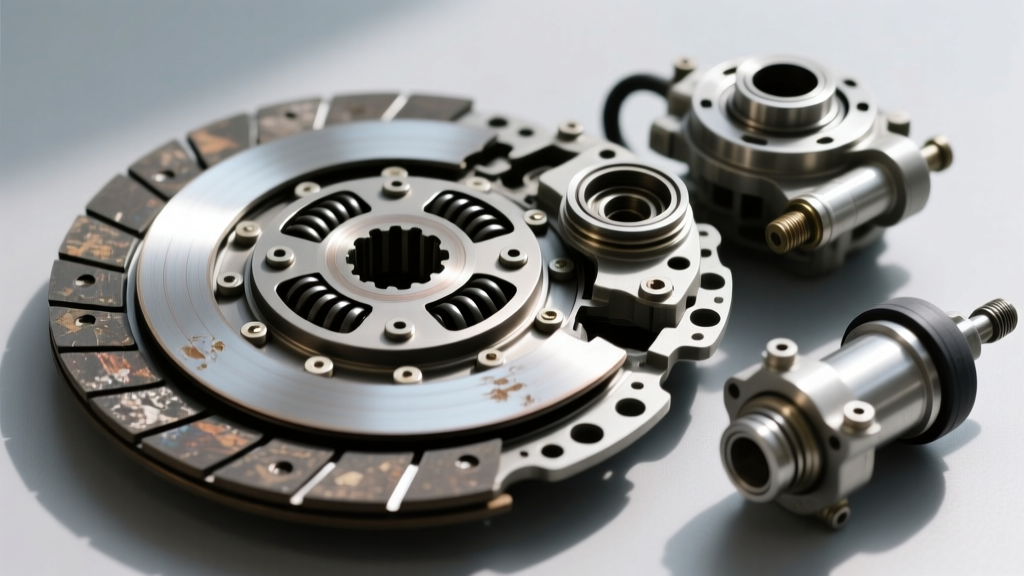
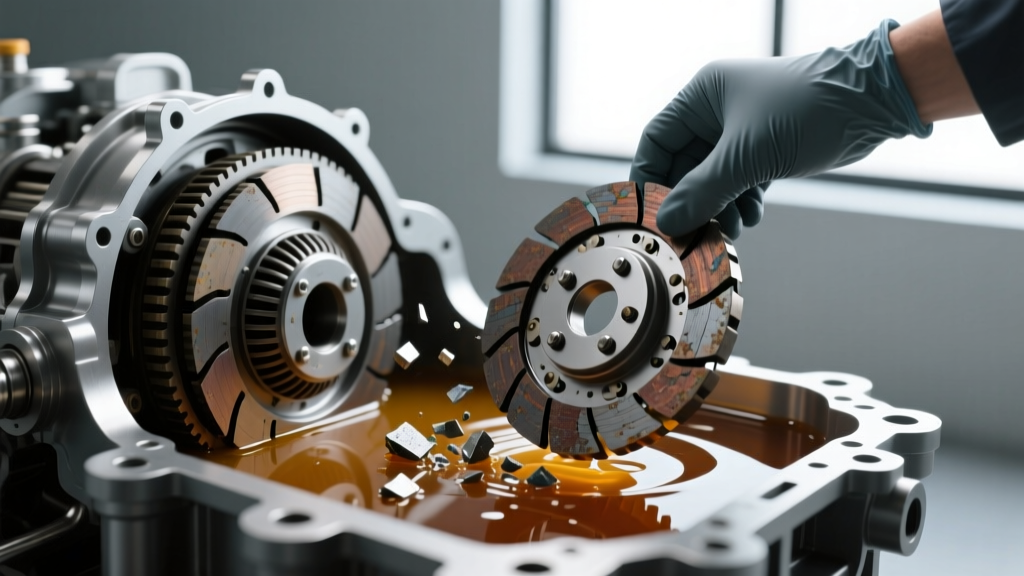
While a clutch cable adjustment or replacement is a budget-friendly fix, there are scenarios where the cable is merely a secondary symptom of internal transmission failure. If your cable is perfectly adjusted (1 inch of free play), the sheath is intact, and the pedal feels smooth, but the vehicle still slips in 3rd and 4th gear under heavy acceleration, your friction disc is worn down to the rivets.
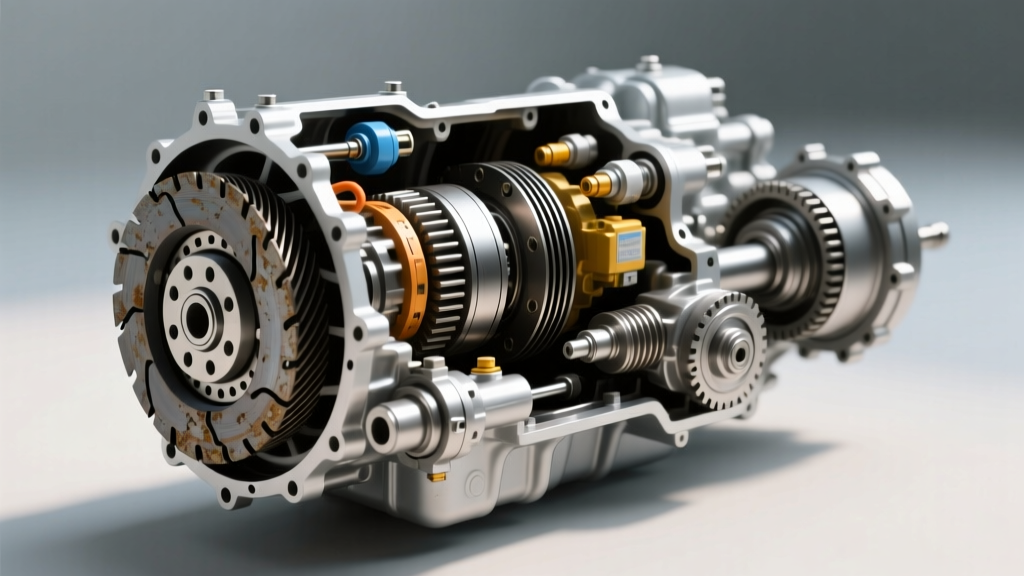
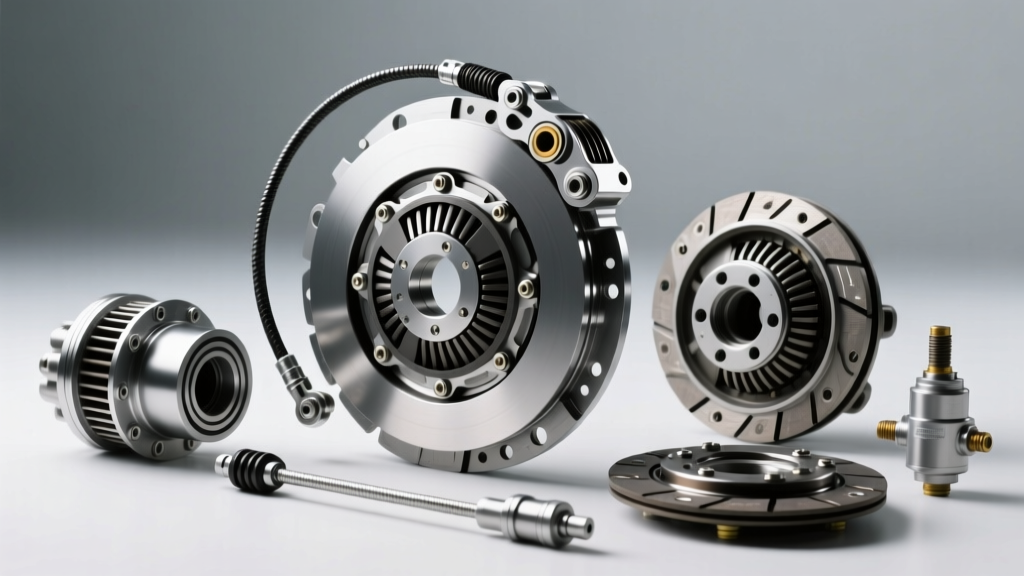
Similarly, if you hear a distinct metallic "chirping" or "squealing" noise that only occurs when the clutch pedal is lightly depressed (taking up the free play), your throwout bearing is failing. A clutch cable cannot fix a bad throwout bearing. In these cases, the transmission must be removed, the flywheel resurfaced, and a complete clutch kit (Pressure Plate, Disc, Throwout Bearing, and Pilot Bearing) installed. Expect a full clutch replacement in Miami to range from $1,100 to $1,850 in 2026, depending on whether your vehicle requires a dual-mass flywheel replacement or standard single-mass resurfacing. Always demand a full mechanical diagnostic before approving major drivetrain work.