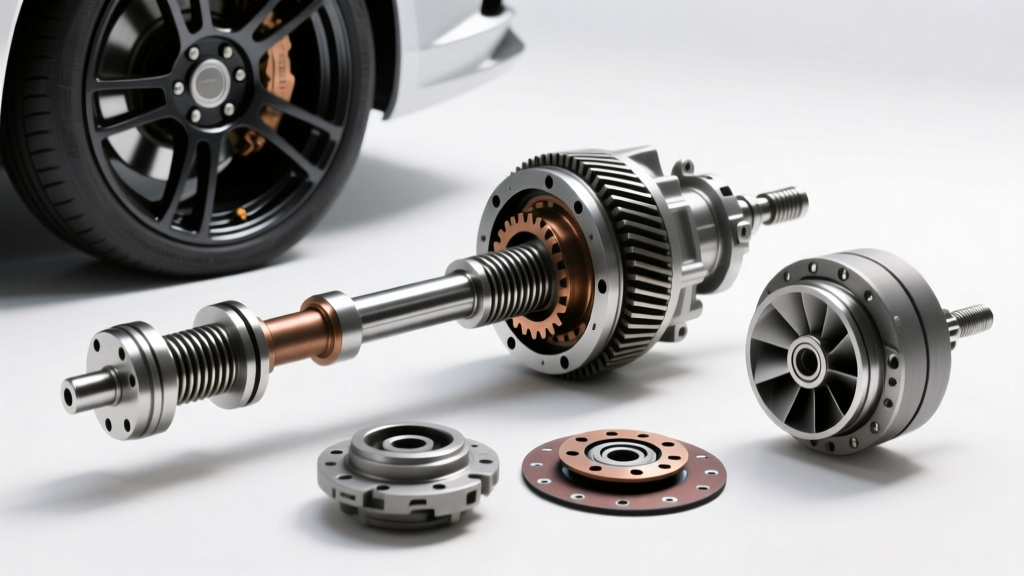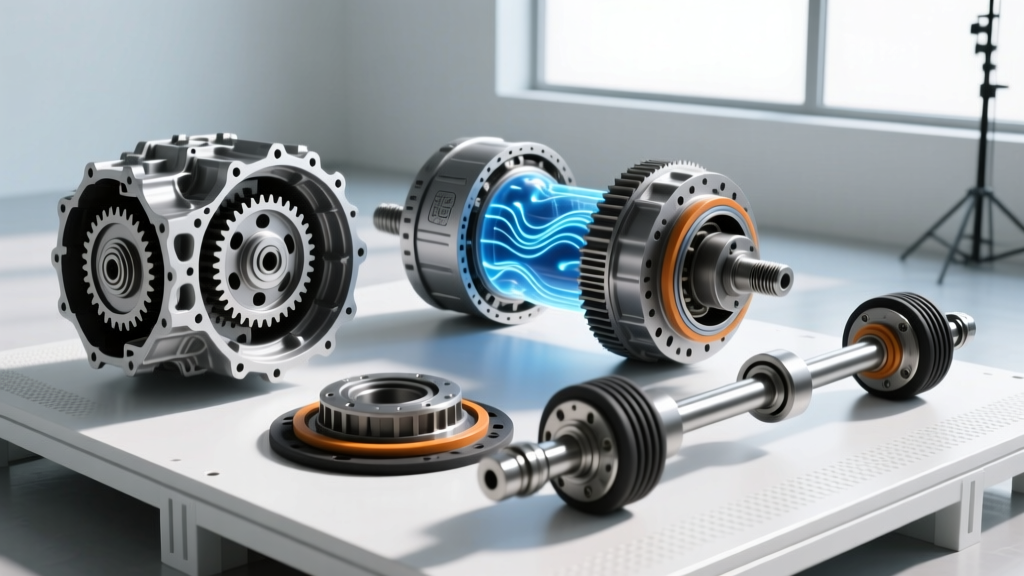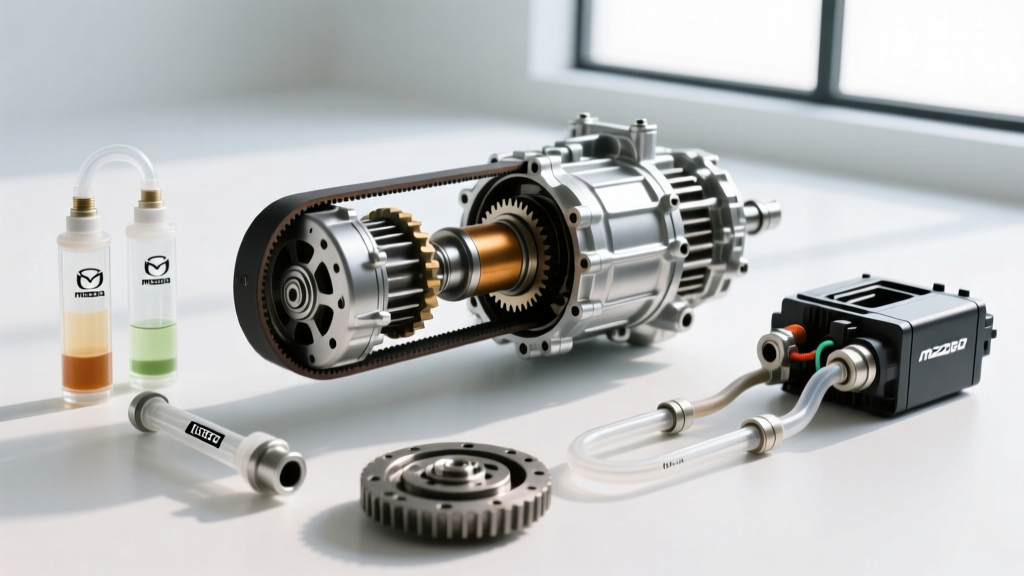
The Evolution of the Mazda 3 Hybrid Drivetrain
As we navigate the 2026 automotive landscape, the electrification of compact platforms has fundamentally altered maintenance paradigms. Maintaining the Mazda 3 drivetrain in its hybrid configurations—specifically the 24V M-Hybrid Boost (Mild Hybrid) and the e-Skyactiv full hybrid (e-CVT) variants—requires a strict departure from traditional internal combustion service schedules. Unlike conventional setups where the transmission and engine operate with relative mechanical isolation, hybrid drivetrains integrate electric motor-generators directly into the powerflow path. This integration means that thermal management, low-viscosity fluid dynamics, and high-voltage cooling loops are now intrinsic to the mechanical longevity of the driveline.
Whether you are servicing the Belt-Driven Integrated Starter Generator (ISG) on the M-Hybrid models or the planetary gearset on the full e-CVT variants, preventive maintenance is the only safeguard against catastrophic inverter or gearset failure. This guide provides exact specifications, torque values, and diagnostic frameworks required to keep these complex systems operating at peak efficiency.
Architecture Breakdown: M-Hybrid vs. e-CVT
Before turning a wrench, it is critical to identify which hybrid architecture your vehicle utilizes, as the drivetrain service points differ vastly:
- M-Hybrid Boost (24V Mild Hybrid): Utilizes a belt-driven ISG mounted to the front of the Skyactiv-G engine. It replaces the traditional alternator and starter, providing torque assist and regenerative braking. The conventional 6-speed automatic (Skyactiv-Drive) remains, but the front-end accessory drive (FEAD) is heavily modified.
- e-Skyactiv (Full Hybrid e-CVT): Employs a planetary gearset combining a 2.0L engine with two motor-generators (MG1 for starting/generating, MG2 for primary drive). There are no traditional friction clutches or bands; power is split seamlessly via electrical load manipulation.
Critical Fluid Services: Low-Viscosity e-CVT and ATF FZ
Hybrid drivetrains demand ultra-low viscosity fluids to minimize parasitic drag on the motor-generators. For the M-Hybrid and Skyactiv-Drive models, Mazda specifies Mazda Original Oil Ultra ATF FZ. This fluid operates at a remarkably low kinematic viscosity of roughly 6.0 cSt at 100°C. For the e-CVT full hybrid models, Toyota ATF WS (World Standard) is the OEM equivalent due to the shared planetary architecture.
The Temperature-Dependent Level Check Procedure
You cannot accurately check the fluid level on a modern Mazda hybrid drivetrain with a traditional dipstick. The expansion rate of ATF FZ requires a precise temperature reading via an OBD2 scanner.
- Connect a bi-directional OBD2 scanner and access the Transmission Control Module (TCM) live data PIDs.
- Locate the Transmission Fluid Temperature (TFT) PID.
- Cycle the vehicle through Park, Reverse, Neutral, and Drive, holding each for 3 seconds to circulate fluid through the cooler and torque converter.
- With the vehicle on a level hoist and the TFT reading between 40°C and 50°C (104°F - 122°F), remove the 10mm hex overflow plug on the side of the transmission case.
- Fluid should trickle out. If it pours, let it drain until it trickles. If no fluid emerges, pump ATF FZ into the fill port until the trickle begins.
Never reuse the aluminum crush washer on the drain or overflow plugs. The OEM part number for the standard 18mm drain plug gasket is 9956-41-018. Reusing it risks micro-leaks that will eventually starve the hybrid oil pump.
Drivetrain Fluid & Fastener Specifications
| Component | Specification / Part Number | Capacity / Torque |
|---|---|---|
| M-Hybrid / Skyactiv-Drive ATF | Mazda ATF FZ (0000-77-120E-01) | 3.5L (Drain & Fill) |
| e-CVT Planetary Gearset | ATF WS (or equivalent OEM) | 3.8L (Drain & Fill) |
| Transmission Drain Plug (10mm Hex) | Crush Washer: 9956-41-018 | 35 Nm (26 ft-lbs) |
| Inverter Coolant Bleeder Valve | FL-200 Premixed (0000-77-FL200) | 10 Nm (7.4 ft-lbs) |
| ISG Tensioner Mounting Bolt | OEM M10 Flange Bolt | 48 Nm (35 ft-lbs) |
Thermal Management: Inverter and IGBT Cooling Loops
The inverter is the brain of the hybrid drivetrain, converting DC power from the battery to AC power for the drive motors. The Insulated-Gate Bipolar Transistors (IGBTs) inside generate immense heat. Mazda utilizes a dedicated low-temperature cooling loop for the inverter, separate from the high-temperature engine block loop.
The required fluid is Mazda FL-200, a specialized phosphate-free, low-conductivity hybrid coolant. Using standard green or orange ethylene glycol can lead to electrical tracking and catastrophic inverter short-circuits. According to the Mazda Global Technology Library, the hybrid cooling system must be vacuum-filled. Air pockets trapped in the inverter's micro-channels will cause localized hot spots, triggering the P0A0F (Engine Failed to Start) or P0A78 (Inverter Cooling System Performance) diagnostic trouble codes.
The 24V ISG Belt: A Single Point of Failure
On M-Hybrid Boost models, the traditional alternator and starter motor are deleted. The ISG handles engine cranking, regenerative braking, and torque assist via a specialized high-rib serpentine belt. Because the ISG routinely applies over 150 Nm of instant torque to the crankshaft to restart the engine during auto-stop events, the belt experiences severe cyclic shock loads.
Inspect the ISG belt for glazing, micro-cracking on the ribbed side, and cord separation every 30,000 miles. Unlike standard accessory belts, a failed ISG belt on a Mazda 3 M-Hybrid will leave the vehicle completely immobilized, as there is no backup 12V starter motor. When replacing the belt, the hydraulic/mechanical tensioner must be compressed using a 14mm wrench and locked with a pin. Ensure the tensioner pulley spins freely without bearing rumble; a seized tensioner will snap the new belt within 500 miles.
Driveshaft and CV Joint Care in Electrified Axles
Hybrid drivetrains deliver instantaneous low-end torque, which drastically accelerates wear on the outboard Constant Velocity (CV) joints. The transition from regenerative braking (motor acting as a generator) to friction braking or positive acceleration causes rapid driveline backlash. This micro-reversal of torque pulverizes CV joint grease over time.
During tire rotations, inspect the CV boots for weeping. If a boot is torn, do not simply repack with generic chassis grease. The outboard joints require a specialized NLGI #2 Molybdenum Disulfide (Moly) grease designed for high shear and shock loading. Pack exactly 90-100 grams of grease into the joint housing, and ensure the large boot clamp is crimped to OEM tension to prevent grease expulsion during high-speed cornering.
Preventive Maintenance Cost Breakdown (2026 Estimates)
Hybrid drivetrain maintenance carries a premium due to the specialized fluids and diagnostic time required. Below is a comparative cost analysis for a 60,000-mile major drivetrain service.
| Service Item | Dealership Cost | Independent Hybrid Specialist | DIY Cost (Parts/Fluids) |
|---|---|---|---|
| ATF FZ / WS Drain & Fill (w/ Temp Check) | $280 - $350 | $180 - $220 | $65 - $85 |
| Inverter Coolant Vacuum Fill (FL-200) | $220 - $275 | $150 - $180 | $45 (Requires Vacuum Tool) |
| ISG Belt & Tensioner Replacement | $450 - $600 | $300 - $400 | $140 - $180 |
| CV Joint Boot & Moly Grease Repack | $350 per axle | $200 per axle | $35 per axle |
Diagnostic Warning Signs of Drivetrain Degradation
Hybrid systems are designed to mask mechanical degradation through software compensation. However, physical limits eventually manifest. Be vigilant for the following symptoms:
- Regenerative Shudder: A pulsing sensation in the brake pedal or chassis during light deceleration often indicates degraded CV joints or a failing inverter capacitor struggling to manage the AC-to-DC conversion load.
- ISG Whine: A high-frequency whine from the passenger side of the engine bay under acceleration points to ISG bearing wear or belt misalignment.
- Delayed Auto-Stop Restart: If the engine cranks sluggishly after a red-light auto-stop, the 24V Lithium-Ion battery may be suffering from cell imbalance, or the ISG belt is slipping on the crank pulley.
For comprehensive hybrid system schematics and OEM part cross-references, technicians and owners should consult the Mazda USA Parts & Service portal or reference the Department of Energy's Hybrid Technology database for broader efficiency and drivetrain layout data. Proper adherence to these preventive protocols ensures the Mazda 3 hybrid drivetrain will reliably deliver its rated efficiency and performance well past the 150,000-mile mark.