The Core Question: Does a Manual Transmission Have a Torque Converter?
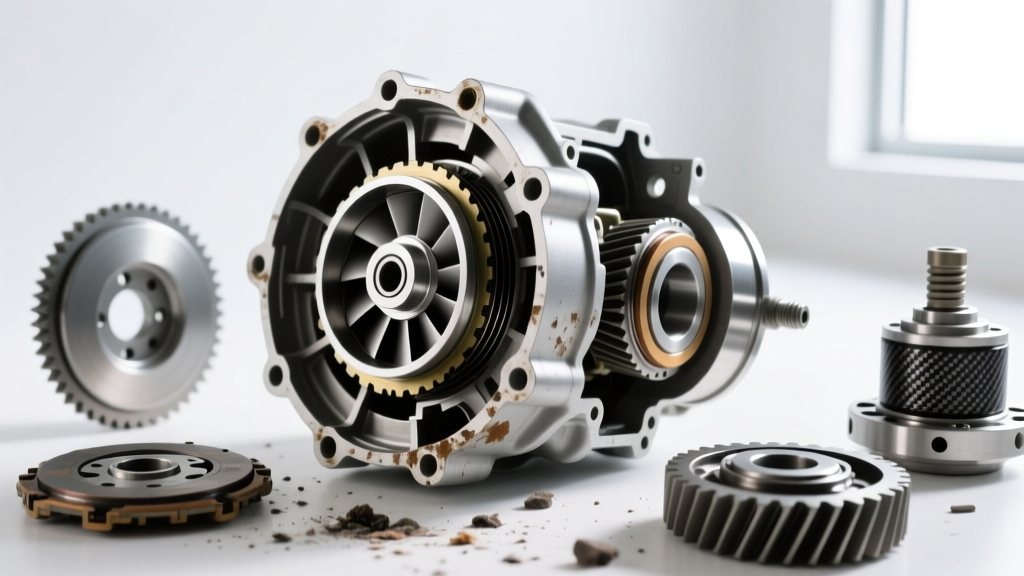
When automotive enthusiasts, DIY mechanics, or first-time buyers ask, "does a manual transmission have a torque converter," the definitive mechanical answer is no. A manual transmission relies on a dry friction clutch assembly—comprising a clutch disc, pressure plate, release bearing, and a solid or dual-mass flywheel—to physically couple and decouple the engine's crankshaft from the transmission input shaft. The driver's left foot directly commands this mechanical linkage via hydraulics or a cable.
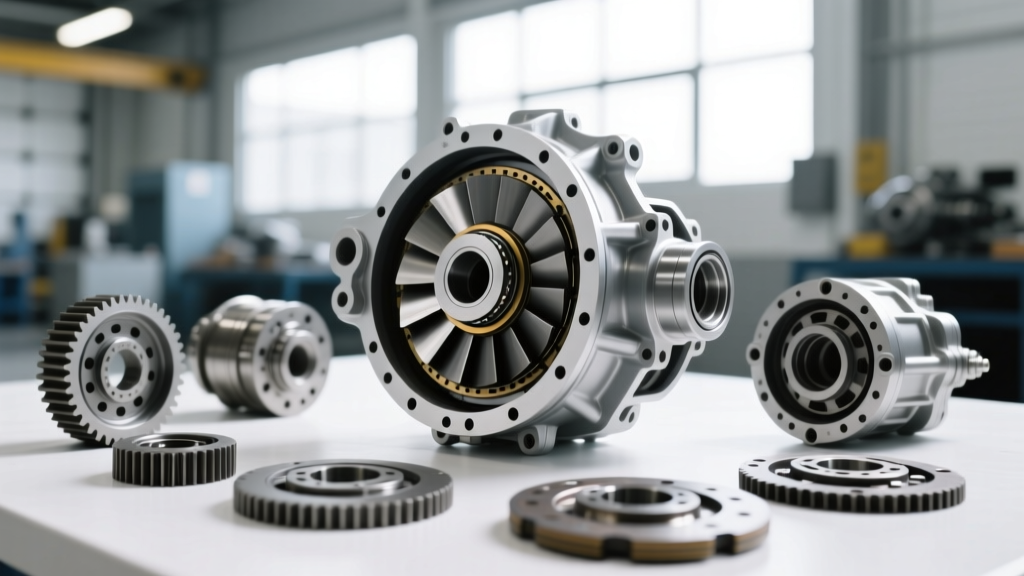
In contrast, an automatic transmission utilizes a torque converter. This fluid-coupling device replaces the mechanical clutch, using transmission fluid (ATF) to multiply torque via a stator and smoothly transfer power through an impeller and turbine. Modern automatics also feature a Torque Converter Clutch (TCC) that mechanically locks the converter at cruising speeds to eliminate parasitic slip and improve fuel economy.
Because manual transmissions lack a torque converter, the concept of a "torque converter flush" is entirely irrelevant to them. However, this fundamental difference creates a massive divergence in maintenance schedules, fluid requirements, and service costs. As a buyer's guide for 2026, we will compare the actual maintenance needs of manual drivetrains against the critical, often misunderstood world of automatic torque converter flushing and fluid maintenance.
Manual Drivetrain Maintenance: What You Actually Need
Since there is no torque converter to flush, manual transmission maintenance is remarkably straightforward but physically demanding when wear occurs. The maintenance paradigm revolves around gear oil and friction materials.
- Fluid Service: Manual gearboxes require gear oil (typically 75W-90 GL-4 or GL-5, though some modern Honda or Mazda manuals specify standard ATF like MTF). A drain and fill usually requires only 2 to 3 quarts and costs between $40 and $80. There is no pressurized hydraulic circuit to flush.
- Clutch Replacement: The friction disc is a wear item. Replacement requires dropping the transmission, resurfacing or replacing the flywheel, and installing a new clutch kit. In 2026, average shop rates push a standard clutch replacement to $1,200 - $1,800, depending on whether the vehicle requires a dual-mass flywheel (DMF) replacement, which can add $600+ to the parts cost alone.
Automatic Torque Converter Maintenance: The Buyer’s Guide
For automatic vehicles, the torque converter holds a significant volume of the transmission's total fluid capacity. For example, a GM 6L80 transmission holds roughly 11.5 quarts total, but dropping the pan only yields about 5 to 6 quarts. The remaining 5+ quarts are trapped inside the torque converter and the cooler lines. This is where the debate between a "Power Flush" and a "Drain & Fill" becomes critical for buyers and owners.
Expert Insight: According to Sonnax transmission technical resources, the accumulation of clutch pack wear material and degraded friction modifiers inside the torque converter is the leading cause of TCC shudder and solenoid bore wear. How you extract this fluid determines the survival of your transmission.
Service Comparison Chart: Flush vs. Drain & Fill vs. Dilution
| Service Method | Mechanism of Action | Avg. Cost (2026) | Fluid Exchanged | Risk Profile |
|---|---|---|---|---|
| Machine Power Flush | Uses an external pump to push 12-14 qts of new fluid through the cooler lines under pressure. | $180 - $280 | ~100% | High on neglected units (can dislodge varnish or blow old seals). |
| Gravity Drain & Fill | Drops the pan, replaces the filter, and refills. TC fluid remains untouched unless a drain plug is present. | $90 - $150 | 40% - 50% | Very Low. Safest for high-mileage vehicles with unknown history. |
| The Dilution Method | Performs a gravity drain & fill, then drives the vehicle to cycle the TCC, repeating 3 times over a week. | $250 - $400 (Total) | 90%+ | Lowest. The gold standard for safe, complete fluid exchange without harsh pressure. |
Deep Dive: Fluid Specs, Capacities, and Torque Values
When maintaining an automatic transmission's torque converter, using the exact OEM fluid specification is non-negotiable. Modern 8-speed and 10-speed transmissions utilize highly specialized friction modifiers designed to prevent TCC shudder during the lockup phase. Below is a buyer's reference guide for three of the most common automatic transmissions on the road today.
1. GM 6L80 / 6L90 (6-Speed)
- Required Fluid: ACDelco Dexron VI (Part # 10-9395 or 88865618).
- Total Capacity: ~11.5 Quarts (Pan drop yields ~6.0 Quarts).
- Torque Converter Drain Plug: Early models featured a TC drain plug (Torque spec: 25 Nm / 18 lb-ft), but later revisions eliminated it, making the Dilution Method mandatory for a full fluid exchange.
- Pan Bolt Torque Spec: 10 Nm (89 lb-in). Warning: These are small M6 bolts and snap easily if over-torqued.
2. ZF 8HP45 / 8HP70 / 8HP90 (8-Speed)
Found in everything from BMWs to Dodge Chargers and Ford F-150s, the ZF 8HP series uses a specialized torque converter with a centrifugal pendulum absorber (CPA) to dampen engine vibrations at low RPMs. According to ZF official lubricant specifications, using incorrect fluid will rapidly destroy the CPA mechanism and cause severe lockup shudder.
- Required Fluid: ZF LifeguardFluid 8 (Part # S671 090 312).
- Total Capacity: ~9.5 to 10.5 Quarts (Pan drop yields ~5.5 Quarts).
- Pan/Filter Design: The filter is integrated into the plastic transmission pan. You must buy the entire pan assembly (approx. $250-$350) which includes the new filter and integrated sealing sleeve.
- Pan Bolt Torque Spec: 10 Nm (89 lb-in), tightened in a specific spiral pattern from the center out.
3. Ford 10R80 (10-Speed)
- Required Fluid: Motorcraft MERCON ULV (Ultra Low Viscosity). Do not use standard MERCON LV; the ULV spec is required for the 10R80's specialized clutch packs and TCC modulation.
- Total Capacity: ~13.1 Quarts.
- Thermostat Bypass: The 10R80 features a thermal bypass valve. To properly flush or dilute the fluid, the transmission must reach operating temperature (approx. 185°F) to open the bypass and allow fluid to cycle through the cooler lines and the torque converter.
Diagnosing the Need: Torque Converter Shudder and TCC Slip
How do you know if your torque converter requires maintenance before catastrophic failure? The most common symptom of degraded ATF and depleted friction modifiers is TCC Shudder. This feels like driving over a series of rumble strips at highway speeds (typically between 45-65 MPH) when the transmission commands the torque converter clutch to apply.
When the fluid loses its shear stability, the TCC cannot maintain a firm lock, resulting in rapid micro-slippage. If caught early, performing three consecutive Drain & Fills (The Dilution Method) using a fluid with robust friction modifiers—such as Valvoline MaxLife Multi-Vehicle ATF or the strict OEM equivalent—can often cure the shudder. However, if the shudder has been ignored for 20,000+ miles, the friction lining inside the torque converter is likely physically worn away, necessitating a $900+ torque converter replacement and a complete transmission teardown.
The Final Verdict: Choosing Your Maintenance Path
To summarize the mechanical divide: if you are driving a manual, you do not have a torque converter, and your financial focus should be on saving for an eventual clutch and flywheel replacement, alongside routine 75W-90 gear oil changes.
If you are operating an automatic, the torque converter is the hidden reservoir of your transmission's lifeblood. As a buyer of automotive services, avoid high-pressure machine flushes, especially on vehicles with over 80,000 miles. Instead, advocate for the Gravity Drain & Fill or the Dilution Method. By understanding exact fluid capacities, respecting precise torque specs on fragile aluminum pans, and adhering to strict OEM fluid part numbers, you can easily extend the life of your torque converter and automatic transmission well past the 200,000-mile mark.