Defining the Challenge: What Is a Manual Transmission Car on an Incline?
When enthusiasts and daily commuters alike search for what is a manual transmission car, the results often focus on the romanticized notion of rowing your own gears, precise downshifts, or marginal fuel economy benefits. However, from a buyer’s perspective and a mechanical standpoint, the true litmus test of a manual drivetrain is the hill start. Unlike an automatic transmission, which utilizes a fluid-coupled torque converter to provide natural forward “creep” against gravity, a manual transmission requires the driver to manually synchronize engine torque, clutch friction, and brake release.
If you are evaluating a manual vehicle for a hilly commute, understanding the physics of the friction zone, the thermal limits of organic clutch materials, and the presence of modern Hill Start Assist (HSA) systems is critical. This guide breaks down the mechanics of manual hill starts, compares clutch wear across popular platforms, and provides actionable techniques to preserve your drivetrain.
The Physics of the Incline: Gravity, Clutch Friction, and Torque
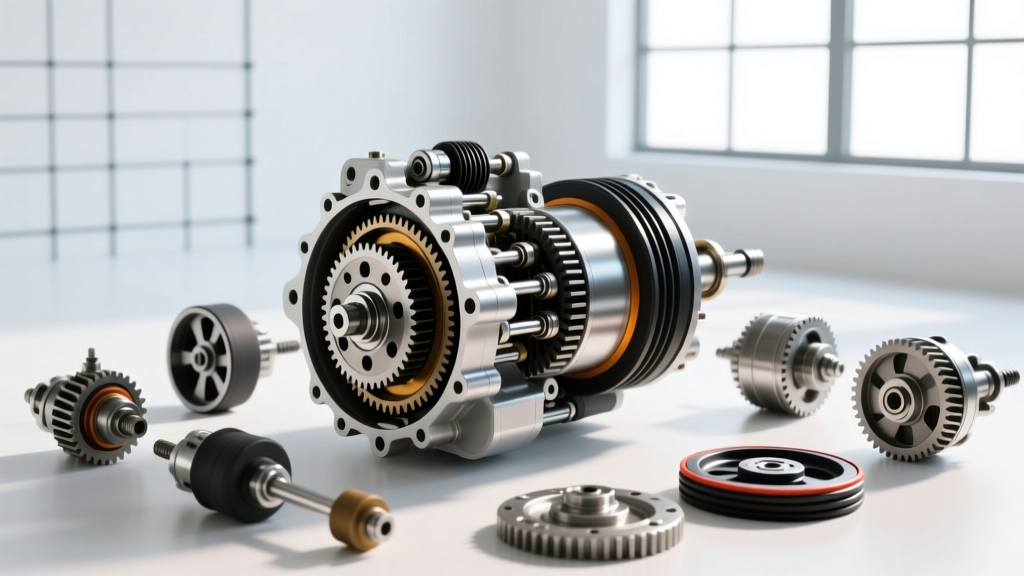
To master the hill start, you must understand the mechanical linkage between the flywheel and the transmission input shaft. The clutch disc is sandwiched between the engine’s flywheel and the pressure plate. When you press the clutch pedal, the diaphragm spring retracts, releasing the friction disc and disconnecting engine power from the gearbox.
On a flat surface, engaging the clutch requires minimal throttle. On a 10% to 15% incline, gravity exerts a rearward force that must be overcome before the vehicle can move forward. This requires slipping the clutch—holding the engine RPMs higher while partially engaging the friction disc to generate enough forward thrust to counteract gravity.
The Friction Zone and Thermal Limits
The “bite point” or friction zone typically spans 15mm to 25mm of pedal travel. During a hill start, the kinetic energy of the slipping clutch is converted into thermal energy. Standard organic clutch facings (often made from Kevlar, fiberglass, and phenolic resins) operate optimally between 150°F and 250°F. A prolonged hill start without adequate throttle can spike localized disc temperatures past 400°F. This causes the resin binders to melt and rise to the surface, resulting in a “glazed” clutch that will slip under heavy acceleration.
Traditional Hill Starts vs. Modern Hill Start Assist (HSA)
When comparing modern manual cars to older models or aftermarket setups, the integration of Hill Start Assist (also known as Hill Hold Control or HHC) is a massive buyer consideration. According to Bosch Mobility Solutions, modern ESP (Electronic Stability Program) modules can detect longitudinal inclination via the vehicle’s accelerometer. When the driver releases the brake pedal on an incline, the ABS module maintains hydraulic brake line pressure for 1.5 to 2.5 seconds, preventing rollback while the driver transitions their right foot from the brake to the throttle.
This technology drastically reduces clutch slip time, preserving the friction material and the throwout bearing (release bearing). For buyers looking at platforms like the Honda Civic Type R (FL5) or the Mazda MX-5 Miata (ND2), HSA is standard, making manual hill starts nearly as effortless as driving an automatic.
Market Comparison: Clutch Wear & HSA Integration
| Vehicle Platform | Transmission | Hill Hold Assist (HSA) | Avg. Clutch Job Cost | Flywheel Torque Spec |
|---|---|---|---|---|
| Mazda MX-5 Miata (ND2) | Skyactiv-MT 6-Speed | Yes (i-Activsense) | $900 - $1,200 | 76 ft-lbs |
| Honda Civic Type R (FL5) | 6-Speed (K20C1) | Yes (Bosch HHC) | $1,100 - $1,400 | 76 ft-lbs |
| Porsche 718 Cayman (982) | 6-Speed Manual | Yes (Porsche HSA) | $2,500 - $3,500 | 66 ft-lbs + 90° |
| VW Golf GTI (Mk7) | 6-Speed (MQ350) | Yes (Auto Hold) | $1,800 - $2,400 (DMF) | 44 ft-lbs + 90° |
| Classic Foxbody Mustang | Tremec T-5 | No | $600 - $850 | 65 ft-lbs |
Step-by-Step Execution: Mastering the Incline
Whether your vehicle is equipped with HSA or you are driving a vintage car with a heavy mechanical clutch linkage, mastering the hill start is mandatory. As noted in Car and Driver’s transmission research, manual engagement requires a tactile understanding of your specific vehicle's pedal geometry.
The Handbrake Method (Best for Beginners & Steep Grades)
- Step 1: Engage the mechanical parking brake fully (typically 4-6 clicks on a ratcheting lever, or a firm pull on an electronic switch if the car allows manual override).
- Step 2: Depress the clutch fully and select 1st gear. Apply throttle to roughly 1,500 - 2,000 RPM.
- Step 3: Slowly release the clutch pedal until you reach the friction zone. You will hear the engine tone deepen and feel the rear of the car squat slightly as the drivetrain loads against the parking brake.
- Step 4: While maintaining steady throttle and clutch position, release the handbrake. The vehicle will roll forward smoothly without rollback.
The Foot-Brake Pivot Method (For HSA-Equipped or Advanced Drivers)
This method relies on quick footwork or the vehicle's HSA system. You hold the vehicle on the brake with your right foot. As you release the brake, you immediately pivot to the throttle while simultaneously easing the clutch into the bite point. If your car has HSA, the brakes will hold for ~2 seconds, giving you a generous window to find the bite point without rolling backward into the car behind you.
Expert Warning: Never hold a manual car on an incline by slipping the clutch without using the brakes or throttle. This “clutch riding” technique generates immense parasitic heat, rapidly destroying the friction matrix and potentially warping the flywheel.
Automatic Transmission “Creep” vs. Manual Hill Holds: A Buyer’s Perspective
When deciding between a manual and an automatic for hilly terrain, consider the mechanical differences in how they hold position. An automatic transmission uses a torque converter filled with transmission fluid (e.g., Dexron VI or ATF WS). The impeller spins against the turbine, generating heat that is managed by the transmission’s fluid cooler. While automatics don’t suffer from clutch glazing on hills, holding an automatic on a steep incline via the throttle (rather than the brake) can overheat the transmission fluid, leading to premature degradation of the planetary gear sets.
However, for pure ease of use in stop-and-go hill traffic, the automatic’s natural creep and standard integration of Auto-Hold features make it the superior choice for fatigued commuters. The manual transmission demands physical engagement but offers superior mechanical feedback and long-term serviceability, provided the clutch is respected.
Common Failure Points: Burnt Clutches and Throwout Bearings
Repeated improper hill starts lead to specific, costly failure modes. Understanding these can help you diagnose issues when shopping for used manual cars.
1. Glazed Organic Friction Discs
As mentioned, excessive heat melts the resins in organic discs. A glazed clutch will exhibit a shuddering engagement in 1st gear and will slip under high-boost conditions (common in turbocharged cars like the Subaru WRX or Ford Mustang EcoBoost). The fix requires dropping the transmission, resurfacing or replacing the flywheel, and installing a new clutch kit.
2. Dual-Mass Flywheel (DMF) Degradation
Many modern European and diesel manuals use Dual-Mass Flywheels to dampen torsional vibrations. DMFs contain internal grease and arc springs. The extreme heat generated by botched hill starts can melt this grease and warp the springs, leading to a metallic rattling sound at idle and severe drivetrain shudder. Replacing a DMF is significantly more expensive than a standard Single-Mass Flywheel (SMF), often adding $800 to $1,200 to the parts cost alone.
3. Throwout Bearing (TOB) Wear
The throwout bearing presses against the diaphragm spring fingers of the pressure plate to disengage the clutch. If you rest your foot on the clutch pedal while waiting on a hill (a habit known as “riding the clutch”), the TOB spins continuously under load. This leads to a high-pitched whining or grinding noise that changes pitch when the clutch pedal is depressed. Replacing the TOB requires the same labor-intensive transmission removal as replacing the clutch itself.
Final Verdict: Should You Buy a Manual for Hilly Commutes?
If you are researching what is a manual transmission car and whether it fits your mountainous or hilly commute, the answer depends on your tolerance for engagement versus convenience. If you purchase a modern manual equipped with Hill Start Assist (like the Mazda MX-5, Honda Civic Si, or Porsche 718), the anxiety of rollback is virtually eliminated, and clutch wear is kept to standard levels. However, if you are driving an older, unassisted manual, you must commit to mastering the handbrake method to avoid thousands of dollars in premature drivetrain repairs. For those who prioritize zero-effort stop-and-go traffic management, an automatic with a robust torque converter and transmission cooler remains the pragmatic choice.