The Short Answer: Do Manual Cars Have a Transmission?
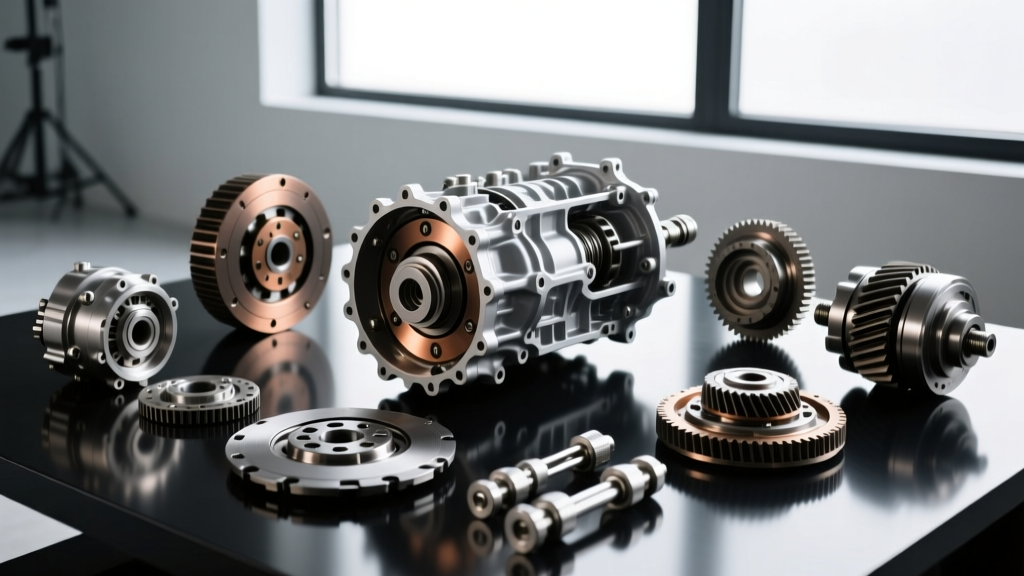
When beginners enter the automotive world, a surprisingly common question arises: do manual cars have a transmission? The answer is an unequivocal yes. A manual gearbox is a transmission in the purest mechanical sense. Unlike modern automatics that rely on complex planetary gearsets, torque converters, and hydraulic valve bodies, a manual transmission utilizes a straightforward layout of an input shaft, a layshaft (countershaft), and an output shaft, synchronized by brass or carbon-fiber synchronizer rings to match gear speeds before engagement.
While the fundamental purpose—multiplying engine torque and providing a reverse gear—is identical across both platforms, the financial implications of owning, maintaining, and repairing these two distinct drivetrain architectures are vastly different. As we navigate the 2026 automotive landscape, the cost gap between rowing your own gears and letting a computer handle the shifts has evolved dramatically.
The 2026 Market Shift: Purchase Price Parity vs. The "Manual Tax"
Historically, manual transmissions were the budget option. A base-model economy car with a 5-speed manual was almost always cheaper than its 4-speed automatic counterpart due to lower manufacturing costs and the absence of expensive hydraulic control modules. However, in 2026, that paradigm has inverted for enthusiast and performance vehicles.
Because manual take-rates have plummeted below 2% in the broader market, automakers now treat manual gearboxes as low-volume specialty equipment. According to market data analyzed by Car and Driver, performance models like the Porsche 911 GT3, the Subaru WRX, and the Toyota GR Corolla often carry a "manual tax" or maintain strict price parity with their automatic siblings, despite the manual hardware being inherently cheaper to produce. Conversely, in the commercial and heavy-duty truck segments, automatics (like the Allison 10-speed) command a massive premium of $2,500 to $4,000 over manual equivalents due to their advanced towing algorithms and durability.
Routine Maintenance: Gear Oil vs. Automatic Transmission Fluid (ATF)
The most frequent ongoing cost for any transmission is fluid maintenance. Here, the manual transmission holds a distinct financial advantage, both in fluid volume and fluid cost.
Fluid Cost & Capacity Matrix
| Transmission Model | Type | Fluid Specification | Service Capacity | Est. Fluid Cost (2026) |
|---|---|---|---|---|
| Tremec T56 Magnum-F (TUET11029) | 6-Speed Manual | Red Line MT-90 / Tremec MTL | 3.9 Quarts | $75 - $95 |
| GM 6L80E | 6-Speed Auto | ACDelco Dexron ULV | 6.0 Quarts (Pan Drop) | $60 - $85 |
| ZF 8HP70 | 8-Speed Auto | ZF LifeguardFluid 8 | 9.0 Quarts (Pan Drop) | $220 - $280 |
Manual gearboxes typically require standard GL-4 or GL-5 gear oil, or specialized synchromesh fluids. A drain-and-fill on a Mazda MX-5 Miata or a Ford Mustang takes less than 4 quarts of relatively inexpensive fluid. Automatic transmissions, particularly the ZF 8HP series found in everything from BMWs to Dodge Chargers, require highly engineered, low-viscosity ATF to manage clutch pack friction and mechatronic solenoid operation. Furthermore, ZF mandates that the transmission pan (which houses the plastic filter) be replaced as a single unit during a fluid service, pushing a simple "fluid change" into $400+ territory at a dealership.
Major Wear Items: Clutch Assemblies vs. Torque Converters
The most significant divergence in long-term ownership costs lies in consumable wear items. A manual transmission requires a friction clutch to disconnect the engine from the gearbox, while an automatic uses a fluid-coupled torque converter.
The Cost of a Clutch Job
Clutches are wearable friction materials. Depending on driving habits, a stock organic clutch will last between 60,000 and 100,000 miles. When it slips, replacement is mandatory.
- Parts: A high-quality OEM replacement kit (e.g., Exedy or Sachs) including the disc, pressure plate, throwout bearing, and pilot bushing costs between $300 and $700.
- Labor: Because the transmission must be physically separated from the engine block, labor ranges from $600 to $1,200.
- Expert Tip: Always replace the rear main seal and resurface or replace the flywheel during this service. If installing a new flywheel on a GM LS-based engine, the flywheel-to-crank torque spec is critical: 74 lb-ft plus an additional 90 degrees of rotation using new TTY (Torque-To-Yield) bolts. The pressure plate should be torqued to the flywheel in a star pattern at 25 to 35 lb-ft, depending on the specific manufacturer's spec.
Automatic Torque Converters and Mechatronics
Automatic torque converters rarely wear out in the traditional friction sense; however, their internal lock-up clutches can fail, or the stator bearings can collapse. More commonly, the financial pain of an automatic comes from the electronic and hydraulic control systems.
For example, the GM 6L80E is notorious for TEHCM (Transmission Electronic Hydraulic Control Module) failures. The TEHCM houses the transmission control module (TCM) and the solenoid pack. When the internal solder joints crack due to heat cycling, the vehicle will enter "limp mode." A replacement TEHCM costs between $800 and $1,200, plus programming time. Similarly, the ZF 8HP suffers from mechatronic sleeve leaks and solenoid degradation, with a complete mechatronic unit replacement costing upwards of $2,500 to $3,800 in parts and labor.
Catastrophic Failure & Rebuild Economics
When a transmission suffers a catastrophic mechanical failure—whether from missed shifts, inadequate lubrication, or extreme horsepower—the rebuild costs heavily favor the manual transmission.
Manual Rebuilds: Bearings and Synchros
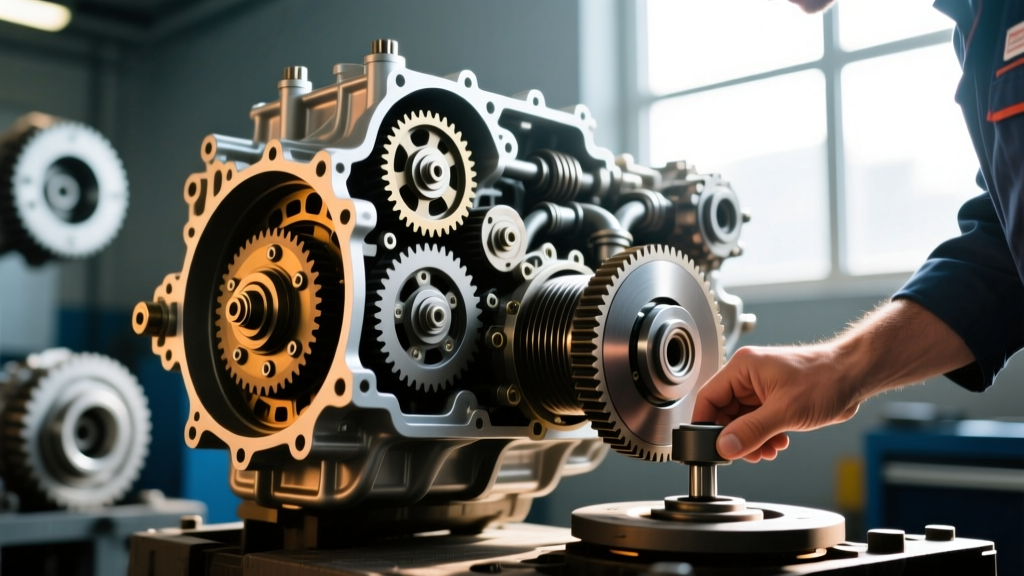
If a manual transmission like the Tremec T56 Magnum suffers a shattered input shaft or worn synchronizers from aggressive rev-matching, a master rebuild kit (bearings, synchro rings, seals, and struts) costs roughly $400 to $800. While specialized knowledge is required to set the gear lash and end-play using dial indicators and selective shims, the raw parts cost is remarkably low. A professional manual rebuild usually totals between $1,500 and $2,500.
Automatic Rebuilds: Planetary Gears and Clutch Packs
Automatic rebuilds are exponentially more expensive. If a GM 6L80E experiences the infamous 3-5-R wave plate failure, the resulting metal shavings will destroy the clutch packs, the valve body, and the torque converter. A master rebuild kit with upgraded friction materials, a new torque converter, and a refurbished valve body will easily push parts costs past $1,500. Because automatic rebuilds require ultra-clean environments and precise air-pressure testing of individual clutch drums, labor costs are steep. Expect to pay between $3,500 and $5,500 for a professionally rebuilt modern 6-to-10-speed automatic transmission.
Expert Verdict: Total Cost of Ownership (TCO)
So, do manual cars have a transmission that will save you money? From a purely mechanical and maintenance standpoint, yes. The manual gearbox is a triumph of serviceability and low-cost consumables. You will spend slightly more on clutch replacements over a 150,000-mile lifecycle than an automatic owner spends on ATF fluid swaps, but you are completely insulated from the catastrophic $4,000+ mechatronic and torque converter failures that plague modern automatics.
However, the 2026 reality is that manual cars are now enthusiast commodities. You will likely pay a premium on the initial purchase price, and you may face higher insurance rates on sports cars due to the demographic that drives them. If your priority is absolute lowest cost of ownership in a daily commuter, a modern CVT or 8-speed automatic in an economy car remains the financial winner. But if you value mechanical transparency, predictable maintenance costs, and the ability to perform driveway repairs with a torque wrench and a floor jack, the manual transmission remains the undisputed champion of long-term drivetrain economics.