If you drive a manual transmission vehicle, the connection between your engine and your wheels relies on a finely tuned orchestra of mechanical and hydraulic components. When everything works perfectly, shifting is seamless. But when automotive clutch parts begin to wear or fail, you will immediately notice issues with clutch engagement and disengagement. For beginners, diagnosing these issues can feel overwhelming, but understanding the symptoms and the specific parts involved is the first step toward a proper repair.
In this comprehensive guide, we will break down the exact mechanics of clutch engagement (grabbing) and disengagement (releasing), identify the specific automotive clutch parts responsible for common failures, and provide actionable diagnostic steps with real-world specifications and 2026 repair costs.
The Core Automotive Clutch Parts Involved in Shifting
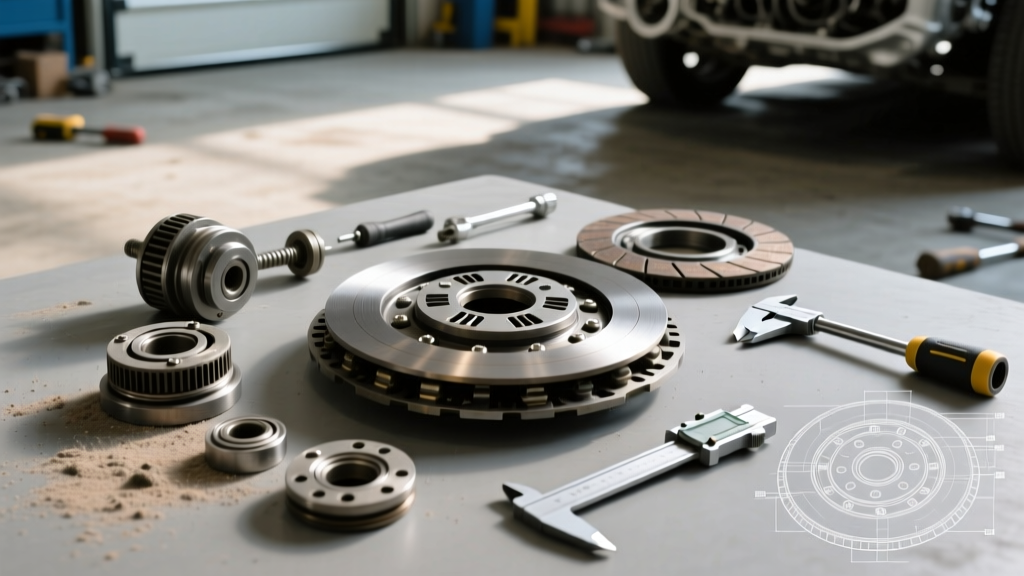
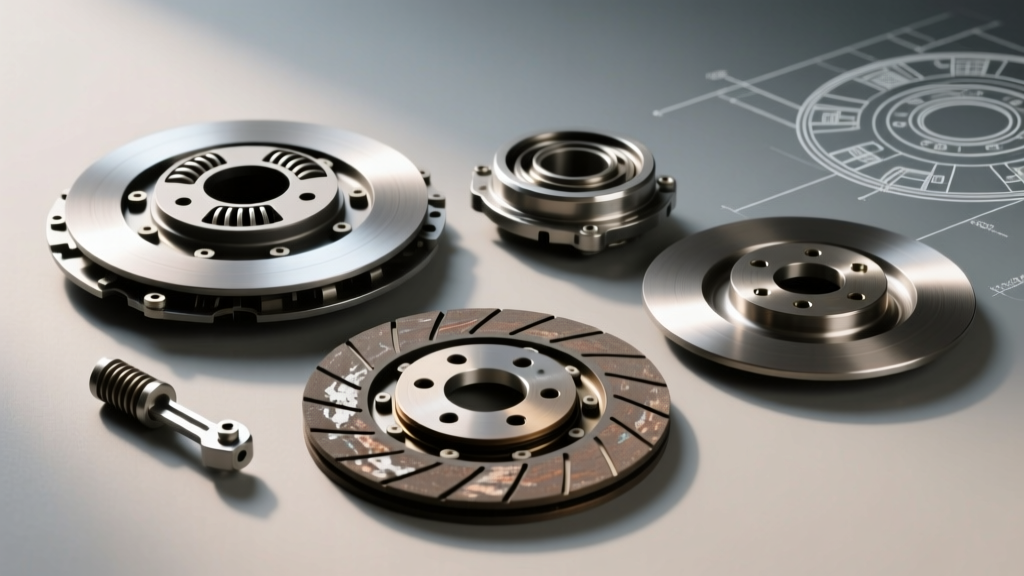
Before diagnosing a problem, you need to know what is happening inside the bellhousing. The clutch assembly is sandwiched between the engine and the transmission. Here are the primary players:
- Flywheel (or Flexplate): Bolted to the engine crankshaft, it provides the friction surface and rotational mass.
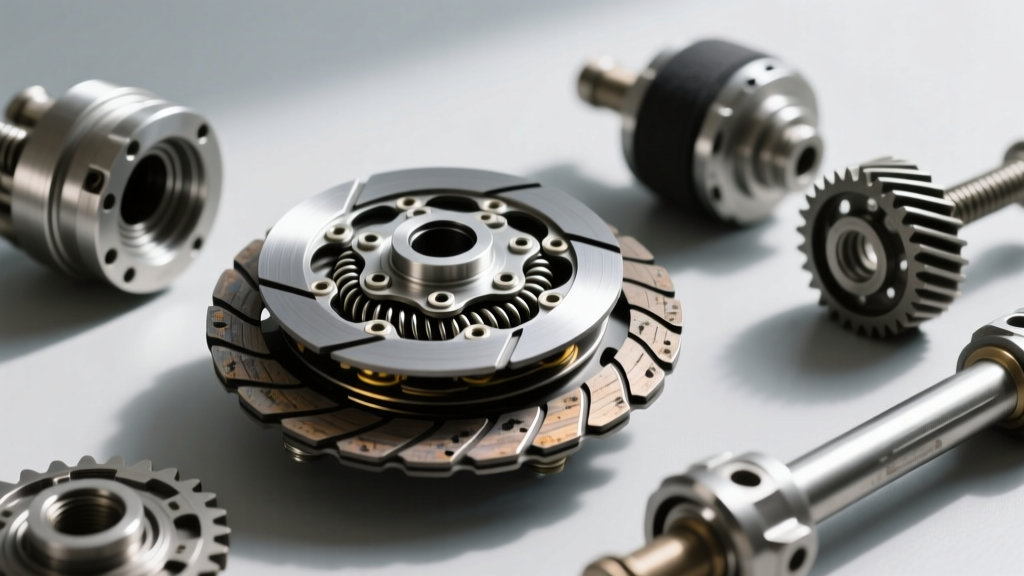
- Clutch Disc (Friction Plate): The splined disc lined with friction material that grips the flywheel.
- Pressure Plate: The spring-loaded mechanism that clamps the clutch disc against the flywheel to engage the system.
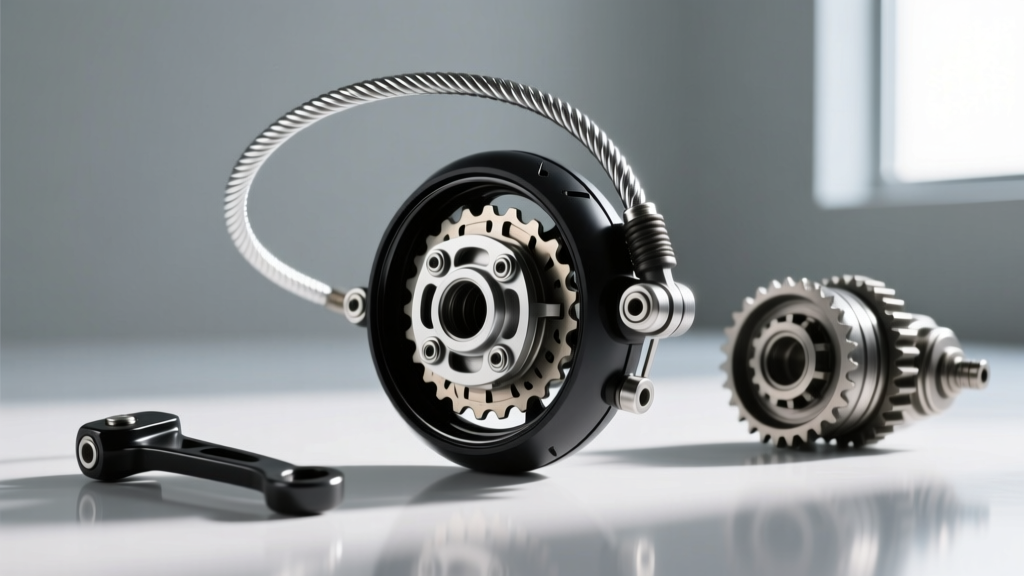
- Release (Throw-Out) Bearing: The bearing that presses against the pressure plate diaphragm fingers to disengage the clutch.
- Hydraulic Circuit (Master & Slave Cylinders): Translates your foot's pedal pressure into mechanical movement at the release bearing.
Symptoms of Clutch Disengagement Failure (Dragging)
Disengagement occurs when you press the pedal to the floor. The goal is to completely separate the clutch disc from the flywheel so the transmission input shaft stops spinning, allowing you to change gears. When automotive clutch parts fail to fully separate, you experience "clutch drag."
What Clutch Drag Feels Like
The most obvious symptom of a disengagement issue is grinding when shifting into first or reverse from a dead stop. You might also notice the vehicle "creeping" forward even with the clutch pedal fully depressed and the car in gear. In severe cases, the engine will stall when coming to a stop because the clutch refuses to disconnect from the transmission.
Common Culprits for Disengagement Issues
- Hydraulic Failure: A leaking slave cylinder or a bypassing master cylinder will fail to push the release bearing far enough. Internal slave cylinders (like those found in the TREMEC T56 Magnum) are notorious for developing internal seal leaks over time.
- Warped Clutch Disc or Flywheel: If the friction disc is warped, it will continue to make contact with the flywheel even when the pressure plate retracts.
- Worn Pivot Ball or Release Fork: In mechanical or externally-slaved setups, a worn pivot ball can alter the geometry, preventing full bearing travel.
Symptoms of Clutch Engagement Failure (Slipping)
Engagement is the exact opposite: it is the process of the pressure plate clamping the disc to the flywheel to transfer power. When automotive clutch parts fail to maintain this grip, the clutch "slips."
What Clutch Slipping Feels Like
You will typically notice slipping under heavy load, such as accelerating hard in higher gears (3rd, 4th, or 5th) or climbing a steep hill. The engine RPMs will flare up dramatically, but your vehicle speed will not increase proportionally. You may also smell a distinct, acrid odor resembling burning brakes—this is the friction material overheating and glazing.
Common Culprits for Engagement Issues
- Worn Friction Material: The clutch disc is a wear item. Once the rivets are exposed or the material is depleted, it cannot grip.
- Oil Contamination: A leaking rear main seal or transmission input shaft seal will coat the friction surfaces in oil, destroying engagement.
- Weak Pressure Plate Springs: High mileage or excessive heat can fatigue the diaphragm springs, reducing clamping force.
- Improper Pedal Freeplay: If the hydraulic system lacks freeplay, the release bearing may constantly ride against the pressure plate fingers, preventing full engagement.
Diagnostic Matrix: Engagement vs. Disengagement Faults
Use the table below to cross-reference your symptoms with the likely failing automotive clutch parts and estimated 2026 market repair costs.
| Symptom | Failing Component | Diagnostic Test | Est. Repair Cost (Parts + Labor) |
|---|---|---|---|
| Grinding into 1st/Reverse | Slave Cylinder / Master Cylinder | Check fluid level; measure slave travel (Target: 0.450" - 0.500") | $250 - $450 |
| RPM Flare under load | Clutch Disc / Pressure Plate | Start in 2nd gear, apply parking brake, slowly release pedal (Engine should stall) | $800 - $1,500 (Full Kit) |
| Car creeps at stoplight | Warped Disc / Air in Hydraulics | Bleed system; inspect flywheel runout with dial indicator (Max 0.004") | $150 (Bleed) / $1,200 (Resurface) |
| Pedal stuck to floor | Blown Master Cylinder Seal | Inspect firewall for fluid; check pedal return spring tension | $180 - $300 |
Step-by-Step Beginner Diagnosis: The Hydraulic Circuit
Before you drop the transmission to inspect internal automotive clutch parts, always rule out the hydraulic system. Most modern manual vehicles use a hydraulic clutch setup similar to disc brakes.
Pro Tip: According to Haynes Manuals, over 60% of perceived "clutch failure" complaints in high-mileage vehicles are actually traced back to degraded hydraulic fluid or failing slave cylinders, not the friction disc itself.
1. Check Fluid and Inspect for Leaks
Locate the clutch master cylinder reservoir (usually sharing the brake fluid reservoir or mounted adjacent to it on the firewall). Ensure the fluid is at the MAX line using DOT 3 or DOT 4 brake fluid. Look down at the bellhousing inspection cover or the external slave cylinder pushrod for signs of wetness. If fluid is present, your slave cylinder is compromised.
2. Measure Slave Cylinder Travel
For transmissions with external slave cylinders (like many Honda K-Series or older Ford T5 setups), have an assistant fully depress the clutch pedal while you measure the pushrod travel with calipers. Most factory service manuals specify between 0.400" and 0.550" of total travel. If travel is less than 0.350", you have air in the lines or a failing master cylinder bypass valve.
3. Perform a Gravity or Pressure Bleed
If travel is low but no leaks are visible, the system likely has air trapped in the hydraulic line. Attach a clear tube to the slave cylinder bleeder nipple, submerge the other end in a catch bottle, and open the valve. Pump the pedal slowly until the fluid runs completely clear and free of micro-bubbles.
When to Replace: Torque Specs and Installation Best Practices
If your diagnosis points to internal wear, you will need to replace the automotive clutch parts as a complete assembly. Reputable manufacturers like LuK (Schaeffler Group), Sachs, and Exedy strongly recommend replacing the clutch disc, pressure plate, release bearing, and pilot bearing simultaneously. A popular kit like the LuK 05-065 RepSet (common for GM LS applications) costs around $180 to $250 for the parts alone.
Critical Torque Specifications (GM LS / TREMEC T56 Example)
Improper torque is a leading cause of post-repair vibration and engagement chatter. Always use a calibrated torque wrench and follow the factory sequence.
- Flywheel to Crankshaft: Typically 74 lb-ft (using medium-strength threadlocker like Loctite 243). Torque in a crisscross pattern.
- Pressure Plate to Flywheel: Typically 35 lb-ft. Use an alignment tool to center the disc, and tighten the pressure plate bolts gradually in a star pattern to avoid warping the diaphragm springs.
- Bellhousing to Engine Block: Usually 35 to 40 lb-ft. Ensure the alignment dowels are perfectly seated; a misaligned bellhousing will destroy the transmission input shaft bearing within 1,000 miles.
For deeper insights into transmission mating procedures and bellhousing alignment, referencing the engineering guidelines provided by TREMEC can save you from catastrophic drivetrain misalignment.
Final Thoughts for the DIY Mechanic
Understanding how automotive clutch parts interact is the key to accurate diagnostics. Remember: engagement issues (slipping) almost always require a physical teardown and replacement of the friction assembly. Disengagement issues (dragging or grinding), however, can frequently be solved in your driveway with a $90 master/slave cylinder kit and a proper hydraulic bleed. Take your time, measure your clearances, and always respect the torque specifications to ensure your manual transmission shifts smoothly for the next 100,000 miles.