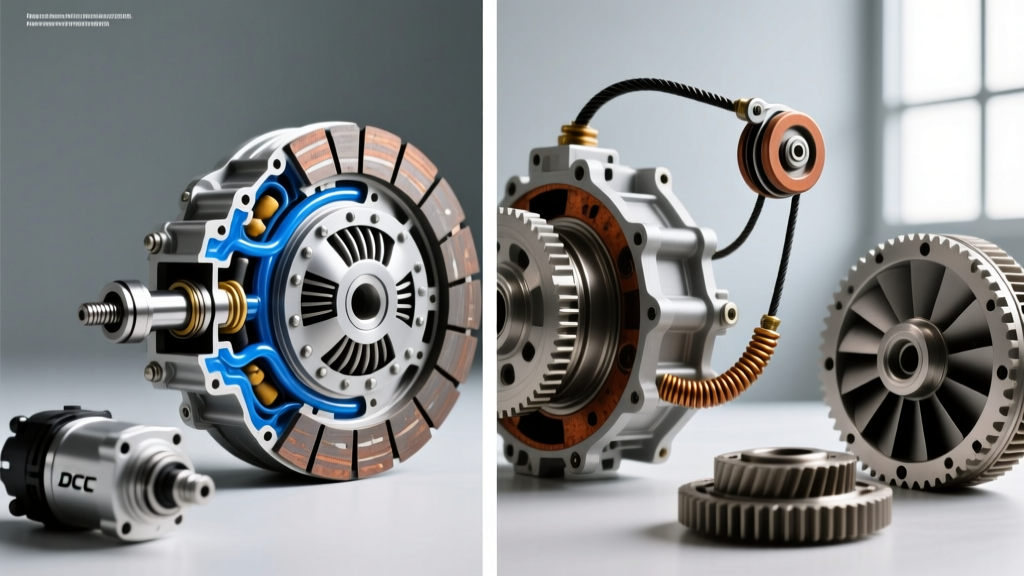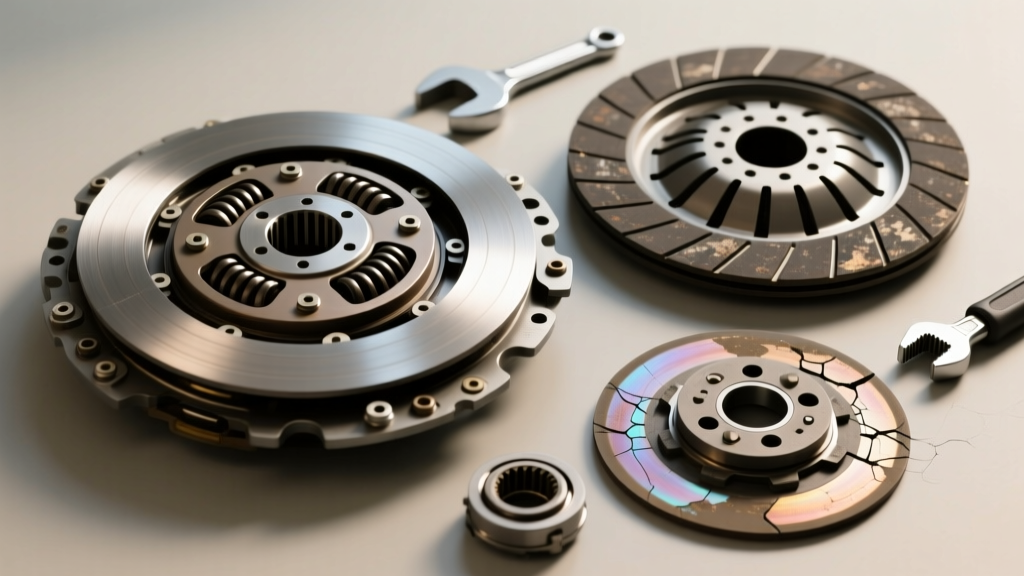
The Diagnostic Divide: Motorcycle Cable vs. Automotive Fork
When enthusiasts search for ways to adjust clutch Harley models, they are typically dealing with cable free-play adjustments or bleeding a hydraulic master cylinder that pushes a release bearing directly against a diaphragm spring. Motorcycle clutch actuation is remarkably direct. However, when transitioning to the automotive world—specifically rear-wheel-drive V8 muscle cars, heavy-duty trucks, and track-prepped vehicles—the mechanical reality shifts dramatically. Automotive manual transmissions rely on a complex lever system: the clutch fork and pivot ball.
While a Harley rider might solve engagement issues with a simple barrel adjuster on the clutch cable, automotive technicians must diagnose physical wear, harmonic vibration failures, and geometric misalignments within the bellhousing. In this 2026 expert diagnostic guide, we bypass the basics and dive deep into the failure modes, measurement specifications, and repair protocols for clutch fork and pivot ball assemblies found in modern manual transmissions like the Tremec T-56 Magnum and the Ford MT-82.
Anatomy of a Failing Clutch Fork and Pivot Assembly
To accurately diagnose clutch system symptoms, you must understand the kinematics of the release mechanism. The assembly consists of three primary wear points:
- The Clutch Fork (Throwout Arm): A stamped steel, cast aluminum, or forged lever that translates the linear motion of the slave cylinder or mechanical linkage into rotational pressure against the release bearing.
- The Pivot Ball (Fulcrum Stud): A hardened steel ball mounted on a threaded stud, screwed directly into the bellhousing. It serves as the fulcrum point for the fork.
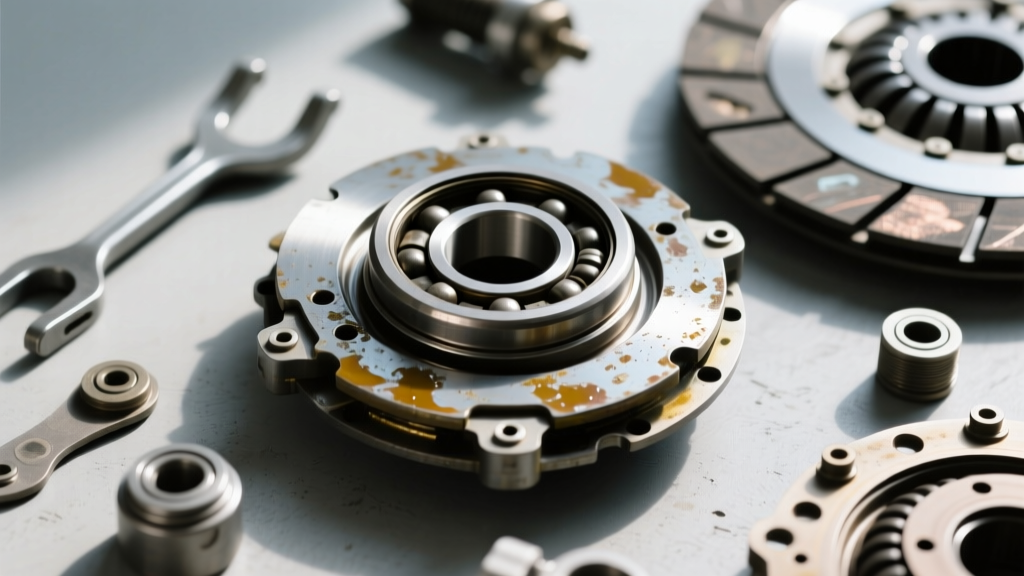
- The Release Bearing Collar: The sleeve that rides on the transmission input shaft retainer, featuring hardened steel pads where the clutch fork fingers make contact.
When any of these components experience excessive wear, galling, or misalignment, the result is clutch chatter, inconsistent pedal engagement, squeaking during pedal depression, or catastrophic loss of disengagement.
Notorious Failure Modes: MT-82 and T-56 Magnum
The Ford MT-82 Pivot Stud Back-Out
The Getrag MT-82 transmission, found in 2011-2023 Ford Mustangs, is notorious for a specific and catastrophic pivot failure. Due to high-frequency harmonic vibrations from the 5.0L Coyote V8, the factory pivot ball stud can literally unscrew itself from the aluminum bellhousing. When this happens, the clutch fork drops out of position, resulting in an immediate loss of clutch disengagement and severe grinding when attempting to shift. The factory fix involves applying a high-strength threadlocker (like Loctite 272) to an upgraded, hardened pivot stud during reassembly.
Tremec T-56 Magnum Fork Pad Wear
In high-horsepower applications utilizing the Tremec T-56 Magnum, the stamped steel clutch fork fingers that contact the release bearing collar are prone to gouging. If the release bearing binds on the input shaft retainer due to a lack of proper lubrication or a bent fork, the fork pads will wear through the hardened steel collar, leading to a metallic grinding noise and eventual fork snap under heavy pedal pressure.
Step-by-Step Diagnostic Protocol for Pivot Wear
Diagnosing clutch fork and pivot issues requires a systematic approach, moving from non-invasive chassis checks to precise bellhousing measurements.
Phase 1: Auditory and Tactile Chassis Diagnostics
Before dropping the transmission, evaluate the symptoms from the driver's seat and the inspection cover:
- The 'Squeak-Click' Test: With the engine off, depress the clutch pedal slowly. A rhythmic squeaking indicates a dry pivot ball. A metallic 'click' at the top or bottom of the pedal travel indicates the fork is bottoming out on the bellhousing webbing or the release bearing is over-traveling.
- Pedal Oscillation: If the clutch pedal pulses or vibrates laterally during engagement, the pivot ball is likely galled (flat-spotted), or the fork is bent, causing the release bearing to apply uneven pressure to the diaphragm spring fingers.
Phase 2: Bellhousing Teardown and Measurement
Once the transmission is removed, the real diagnostic work begins. According to AA1Car's drivetrain diagnostic guidelines, visual inspection is not enough; you must measure wear limits.
Expert Insight: Never reuse a worn clutch fork with a new release bearing. The mismatched wear patterns will cause the new bearing to cock at an angle on the input shaft retainer, destroying the bearing within 500 miles and potentially scoring the aluminum retainer sleeve.
Critical Measurements and Torque Specifications
Precision is mandatory when setting up a clutch fork and pivot assembly, especially when converting to or servicing a Hydraulic Throwout Bearing (HTOB). Use the following data table as your benchmark for 2026 drivetrain rebuilds.
| Component / Parameter | Specification / Target | Maximum Wear Limit | Torque / Action Required |
|---|---|---|---|
| Pivot Ball Stud (Standard 3/8"-16) | Flush to 0.050" above bellhousing boss | Any thread stripping or backing out | 35 lb-ft with Loctite 272 (Red) |
| Fork Finger Pad Thickness | 0.180" - 0.200" (OEM dependent) | 0.030" groove depth or visible gouging | Replace fork if grooved; do not resurface |
| Release Bearing Collar Surface | Mirror finish, no rotational grooves | 0.010" lateral groove depth | Replace bearing; inspect input shaft retainer |
| Pivot Ball to HTOB Air Gap | 0.100" - 0.150" (Adjustable setups) | N/A (Must be set via shims or stud depth) | Measure with calipers before mating trans to block |
| Bellhousing to Engine Block | Concentricity within 0.005" TIR | 0.010" TIR (requires offset dowel pins) | 35-50 lb-ft (sequence dependent on block) |
Expert Repair Practices and Upgrades
Lubrication: The Molybdenum Rule
One of the most common mistakes made by junior technicians is over-lubricating the clutch fork assembly. The pivot ball requires a high-temperature, molybdenum-disulfide (moly) based grease. Never use standard lithium chassis grease, as it melts under bellhousing temperatures and slings onto the clutch friction disc, causing irreversible clutch slip. Furthermore, apply only a micro-thin film of synthetic gear oil to the input shaft retainer sleeve; excessive grease here will migrate to the clutch pack.
Upgrading to a Roller Pivot
For track vehicles or high-clamp-load aftermarket setups (e.g., twin-disc clutches exceeding 3,200 lbs of clamp force), the friction between the steel fork and the steel pivot ball generates immense heat and wear. Upgrading to a roller-tip pivot ball or a rollerized clutch fork reduces friction coefficients by up to 60%, resulting in a noticeably lighter pedal feel and exponentially longer component life.
Setting Adjustable Pivot Studs for HTOB Conversions
When converting a classic vehicle from a mechanical linkage to a hydraulic throwout bearing, the fixed pivot ball is removed. However, if you are retaining a fork-actuated external slave cylinder but need to adjust the geometry due to a thicker aftermarket flywheel, an adjustable pivot ball stud is mandatory. You must measure the distance from the bellhousing mating surface to the tip of the diaphragm spring fingers, then adjust the pivot ball height to ensure the fork sits perfectly parallel to the engine block when the bearing is lightly preloaded against the spring.
Cost Breakdown: Dealership vs. Independent Drivetrain Shop
Addressing clutch fork and pivot issues requires dropping the transmission, meaning labor is the primary cost driver. Here is what you can expect to pay in the current 2026 market:
- Parts (OEM/Upgraded): $60 - $180 (Includes upgraded hardened pivot stud, heavy-duty stamped fork, and high-temp moly grease).
- Independent Drivetrain Specialist: $900 - $1,400 (Labor typically ranges from 6 to 8 hours at $150-$175/hr, plus alignment and fluid refill).
- Franchise Dealership: $1,600 - $2,400 (Dealerships often refuse to replace just the fork and pivot, mandating a full clutch kit and flywheel replacement as a 'preventative assembly' protocol).
While the search volume for motorcycle maintenance like adjusting a Harley clutch remains high due to the accessibility of the components, automotive manual transmission diagnostics demand a much higher level of precision. By understanding the specific failure modes of the clutch fork and pivot ball, and adhering to strict torque and measurement specifications, you can eliminate drivetrain vibrations and ensure bulletproof clutch engagement for thousands of miles.