The Short Answer: Does a Manual Car Have Transmission Fluid?
When enthusiasts and new drivers alike ask, 'does a manual car have transmission fluid', the answer is an emphatic yes—but it is fundamentally different from the Automatic Transmission Fluid (ATF) found in conventional automatics. Manual transmissions rely on Manual Transmission Fluid (MTF) or specific gear oils to lubricate synchronizers, bearings, and gear teeth. However, the method of checking this fluid is where the confusion lies. If you are searching under the hood for a transmission fluid dipstick reading on a manual vehicle, you will likely come up empty-handed.
Unlike automatic transmissions, which utilize deep pans and pressurized hydraulic circuits requiring constant level monitoring via a dipstick, modern manual transmissions are sealed, compact units designed for splash lubrication. In this comprehensive diagnostic guide, we will explore why manuals lack dipsticks, how to properly read fluid levels using the check plug method, and how to troubleshoot common drivetrain symptoms based on fluid condition and capacity.
The Dipstick Myth: Why Manuals Use Check Plugs
To understand why a transmission fluid dipstick reading is irrelevant for a manual car, we must look at the engineering. Automatic transmissions (like the GM 6L80 or ZF 8HP) use ATF as a hydraulic medium to actuate clutch packs and operate the valve body. This requires a reservoir (the pan) and a pickup tube, making a dipstick a logical measurement tool.
Manual transmissions, such as the legendary Tremec T56 Magnum or the Porsche G50, rely entirely on mechanical linkages and hydraulic clutches (which are separate from the gearbox). The fluid inside a manual gearbox serves strictly as a lubricant and coolant. As the input and output shafts spin, the gears dip into the fluid bath at the bottom of the casing and splash the oil upward to coat the synchronizers and main shaft bearings. Because the casing is sealed and the fluid level only needs to reach the centerline of the fill/check plug, a dipstick is mechanically unnecessary and would introduce an unwanted leak path.
Step-by-Step: Reading the Manual Transmission Check Plug
Since you cannot pull a dipstick, diagnosing your manual transmission fluid level requires getting under the vehicle. The 'dipstick reading' equivalent for a manual car is the weep hole check method.
Required Tools & Safety Protocols
- Jack Stands & Level Surface: The vehicle must be perfectly level. An inclined driveway will result in a false reading, leading to underfilling or overfilling.
- Socket Set & Hex Keys: Most European manuals use metric hex or Torx bits, while American V8s often use a 3/8-inch square drive.
- Torque Wrench: Critical for reinstalling plugs without cracking the aluminum casing.
- Fluid Transfer Pump: Essential for filling the transmission to the exact weep point.
The Diagnostic Procedure
- Locate the Plugs: Find both the fill plug (higher up) and the drain plug (at the lowest point). Always remove the fill plug first. If you drain the fluid and the fill plug is seized, your car is immobilized.
- Remove the Fill/Check Plug: Clean the area with brake cleaner to prevent debris from entering the casing.
- Perform the 'Finger Test': Insert your pinky finger into the fill hole. The correct fluid level is exactly at the bottom of the hole threads. If fluid immediately weeps out, your level is perfect. If you cannot touch the fluid, the system is underfilled and requires a top-off via a transfer pump until it overflows.
- Reinstall and Torque: Clean the plug threads, apply a thread sealant if specified by the manufacturer (many use tapered NPT threads), and torque to spec.
Diagnostic Table: Automatic Dipstick vs. Manual Plug Readings
The following table contrasts the diagnostic approach between automatic dipstick readings and manual check plug inspections, highlighting the unique failure modes of each.
| Diagnostic Metric | Automatic (Dipstick Reading) | Manual (Check Plug Method) |
|---|---|---|
| Measurement Tool | Steel dipstick with 'Hot/Cold' zones | Finger test or bent zip-tie at fill hole |
| Engine State | Usually running, shifted through gears | Engine OFF, vehicle perfectly level |
| Overfill Symptoms | Fluid aeration, foaming, slipping clutches | Fluid pushed out of breather vent, windage losses |
| Underfill Symptoms | Delayed engagement, pump cavitation whine | 5th/6th gear bearing failure, notchy shifting |
| Common Plug Torque | Pan bolts: 8-12 Nm (do not overtighten) | Fill/Drain: 25-45 Nm (varies by casing) |
Symptom Diagnosis: What Your Fluid Condition Tells You
Because manual transmissions lack a dipstick to check fluid color and smell easily, the condition of the fluid is only assessed during a drain-and-fill service. When you pull the drain plug, the fluid and the plug itself offer vital diagnostic clues about the internal health of the gearbox.
Magnetic Plug Analysis
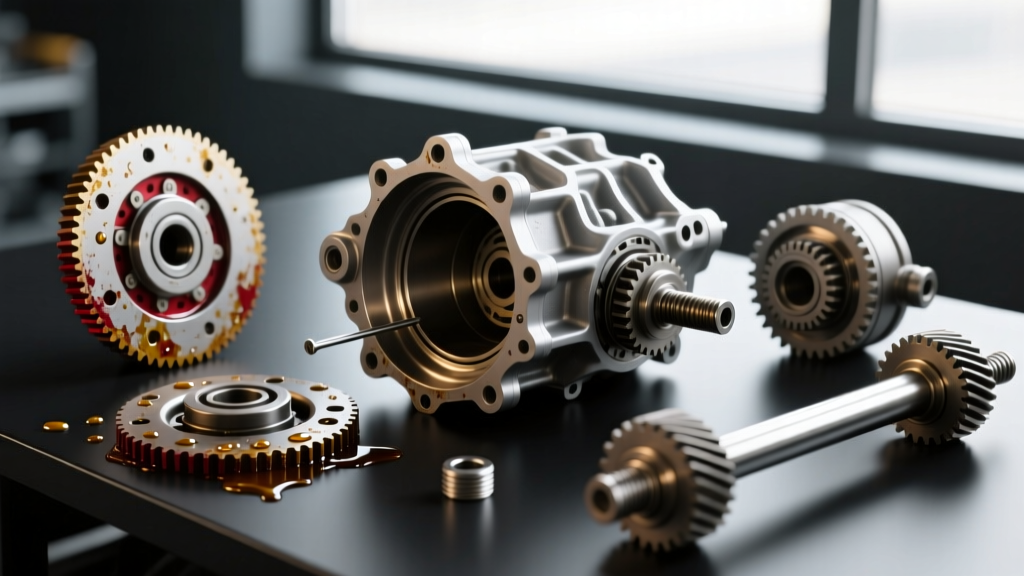
Most manual transmission drain plugs are magnetic. Analyzing the debris collected on the magnet is a cornerstone of manual drivetrain troubleshooting:
- Fine, Paste-Like Fuzz: This is normal. It represents the expected wear of the steel synchronizer rings and gears over thousands of miles. Wipe it clean with a lint-free rag.
- Chunky Metal Shavings or Needles: Critical Failure Imminent. This indicates catastrophic bearing failure, chipped gear teeth, or a shattered synchro hub. A teardown is required immediately.
- Brass/Gold Flakes: Synchronizer rings are typically made of brass or bronze. A moderate amount of brass glitter is normal during the break-in period of a new transmission (e.g., the first 5,000 miles on a Honda Civic Type R FL5). Excessive brass indicates aggressive shifting or failing synchros.
Fluid Color and Odor Diagnostics
Milky or Cloudy Fluid: This indicates water intrusion. If your vehicle is driven in heavy rain or tracked in wet conditions, water may have bypassed a degraded input shaft seal or breather vent. Water destroys the friction modifiers required for synchro engagement, leading to gear grinding.
Burnt Smell & Dark Brown Color: MTF should be translucent (often amber, red, or green depending on the brand). A burnt smell indicates the fluid has been subjected to extreme thermal breakdown, often caused by riding the clutch, which dumps excessive heat into the bell housing and transfer the heat to the transmission casing.
Real-World Case Study: Tremec T56 Magnum Overfill
A common mistake DIYers make when attempting a manual transmission fluid service is overfilling, assuming 'more is better.' Let us look at the Tremec T56 Magnum, a ubiquitous 6-speed found in modern muscle cars. The factory fill capacity is approximately 3.9 quarts (3.7 liters).
If a technician ignores the weep-hole method and forces 5 quarts into the casing, the main shaft spins through the fluid bath too deeply. This creates windage—a churning effect that aerates the oil and generates immense parasitic drag and heat. The aerated fluid is then pushed up through the transmission breather vent, coating the underside of the car in oil and eventually leading to a low-fluid condition and subsequent 5th and 6th gear bearing starvation. Always trust the check plug over a predetermined volume if the vehicle is modified or on an incline.
2026 Fluid Specifications & Market Pricing
Using the correct fluid is paramount. Never use thick GL-5 gear oil in a manual transmission unless explicitly specified; the high sulfur content in GL-5 additives can corrode yellow metals (bronze synchros) over time. You need a GL-4 rated fluid or a dedicated synchromesh fluid.
Top OEM and Aftermarket MTF Recommendations
- Red Line MTL (75W-80 GL-4): The gold standard for aftermarket manual gearboxes. Offers exceptional synchro friction characteristics. 2026 Market Price: ~$22.00 per quart. (Source: Red Line Oil)
- OEM Honda Manual Transmission Fluid (Part #08798-9031): Mandatory for Honda K-Series and L-Series gearboxes. Using generic gear oil in a Honda will result in immediate cold-shift grinding. 2026 Market Price: ~$14.50 per quart.
- AMSOIL Synthetic Synchromesh: Excellent for Tremec and BorgWarner applications requiring a lighter viscosity fluid for fast shift feel. 2026 Market Price: ~$18.50 per quart.
Expert Torque Spec Warning: When reinstalling the fill and drain plugs on an aluminum-cased transmission like the ZF S6-650 (found in heavy-duty diesel applications), do not exceed 35 Nm (26 lb-ft). The aluminum threads strip easily, turning a $20 fluid change into a $2,000 casing replacement. Always use a calibrated torque wrench. (Source: ZF Group)
Conclusion
So, does a manual car have transmission fluid? Absolutely. But achieving an accurate 'transmission fluid dipstick reading' requires abandoning the dipstick entirely and embracing the mechanical precision of the check plug method. By understanding the specific fluid capacities, utilizing the correct GL-4 or OEM synchromesh fluids, and interpreting the debris left on your magnetic drain plug, you can accurately diagnose the health of your manual gearbox and ensure it survives the rigors of both daily driving and track abuse. Regular interval changes—typically every 30,000 to 50,000 miles for street use, and after every major track season—remain the most cost-effective insurance policy for your drivetrain.