The Hidden Link Between Fluid Misidentification and Thermal Breakdown
As of 2026, the automotive landscape is dominated by complex 8-speed, 9-speed, and 10-speed automatic transmissions. These units operate with razor-thin tolerances and rely heavily on precise hydraulic friction modifiers. When a vehicle presents with overheating complaints, mechanics and DIYers often immediately suspect a failing transmission cooler, a clogged radiator, or a degraded torque converter clutch (TCC). However, one of the most insidious causes of thermal failure is the presence of the incorrect automatic transmission fluid (ATF).
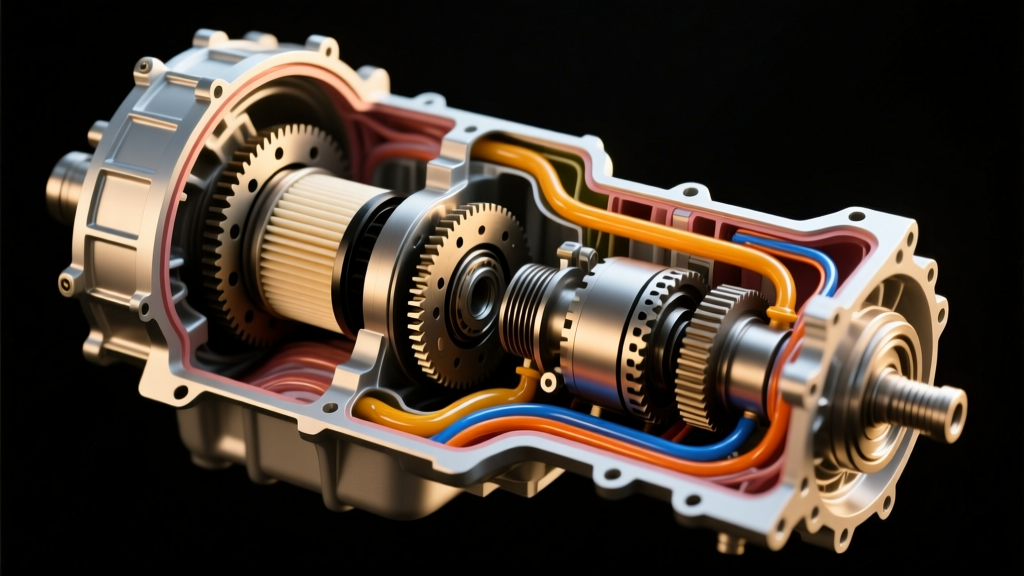
The primary objective of the heat exchanger is to manage thermal loads. However, when incorrect fluid is present, cooling transmission fluid effectively becomes a mechanical impossibility due to altered viscosity, foaming, and restricted flow dynamics through the cooler lines. Misidentified or mixed fluids lose their specific thermal stability, leading to rapid oxidation, varnish buildup, and ultimately, catastrophic clutch pack failure. This guide details how to troubleshoot overheating symptoms by systematically identifying the fluid currently in your pan.
Visual and Olfactory Diagnostics: Identifying What is in the Pan
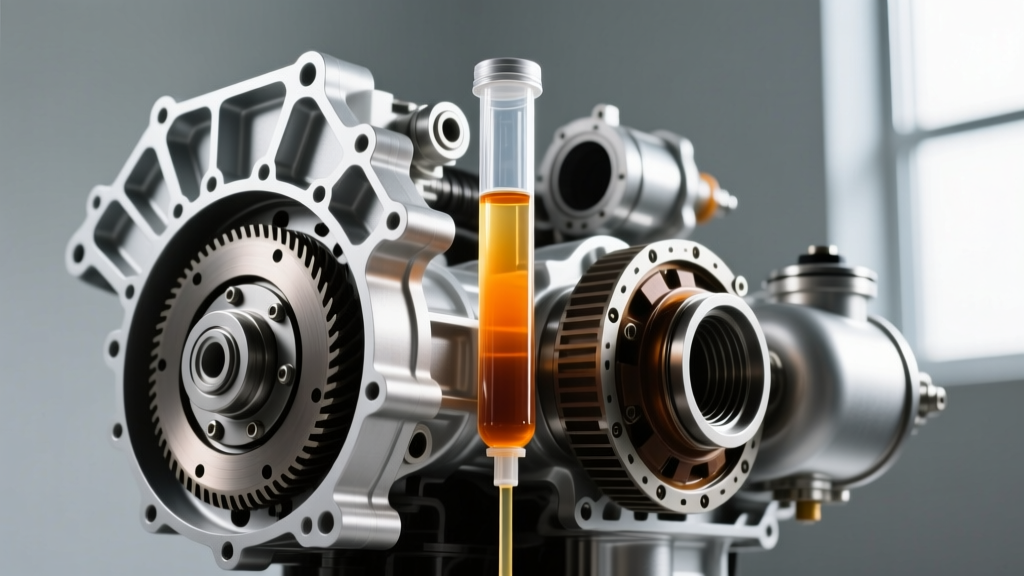
Before dropping a pan or performing a machine flush, you must identify the fluid currently in the system. While color is not a definitive chemical indicator (as dyes can fade or be altered by heat), it is the first step in the diagnostic triage.
- Dexron VI / Mercon LV (GM / Ford): Typically a translucent, vibrant red when new. As it ages, it turns a darker brick red. It has a distinctly sweet, slightly petroleum-like odor. If it smells burnt (like toasted marshmallows), the friction modifiers have failed.
- ATF+4 (Chrysler / Stellantis): Dyed red initially but is notorious for turning brown or even black very early in its service life due to its unique synthetic base stock and additive package. It has a sharp, distinct chemical smell that differs from Dexron.
- ZF LifeguardFluid 8 / Mopar ZF 8&9 Speed: Naturally amber or pale yellow. It is not dyed red. If a ZF 8HP transmission has red fluid, it has likely been incorrectly serviced with a generic "multi-vehicle" ATF, which is a primary culprit for ZF shudder and overheating.
- CVTF (Continuously Variable): Often green, amber, or blue depending on the OEM (e.g., Nissan NS-3 is greenish). It lacks traditional friction modifiers and relies on high shear-stability polymers to grip the steel belt and pulleys.
How Wrong Fluid Destroys Cooling Transmission Fluid Efficiency
Why does fluid type dictate thermal management? It comes down to kinematic viscosity and shear stability. Modern transmissions are designed with specific micro-valves and cooler bypass circuits calibrated to a precise fluid thickness at operating temperature. If a thicker, older-generation fluid (like Dexron III) is used in a system requiring a low-viscosity fluid (like Dexron ULV or ZF LG8), the fluid will not flow through the transmission cooler efficiently.
When the flow rate drops, the system struggles with cooling transmission fluid, causing the bulk fluid temperature to spike past 220°F (104°C). Furthermore, incompatible friction modifiers cause the TCC to micro-slip. This slip generates immense localized heat directly inside the torque converter, overwhelming the cooler's capacity.
Thermal and Viscosity Comparison Chart
| Fluid Specification | Kinematic Viscosity @ 100°C | Primary Application | Thermal Breakdown Point |
|---|---|---|---|
| ACDelco Dexron VI (P/N 10-9395) | ~5.8 cSt | GM 6L80, 8L90 | ~240°F (115°C) |
| ZF LifeguardFluid 8 (P/N 1071.298.968) | ~5.5 cSt | ZF 8HP45/70/90 | ~250°F (121°C) |
| Valvoline CVT Fluid | ~7.2 cSt | Jatco CVTs (Nissan/Subaru) | ~230°F (110°C) |
| Generic "Multi-Vehicle" ATF | ~6.5 - 7.0 cSt | Not Recommended | ~215°F (101°C) |
Data sourced from Transmission Digest technical bulletins and OEM fluid specifications.
Symptom Matrix: Overheating vs. Shudder vs. Slipping
When diagnosing a drivability concern, cross-referencing the physical symptoms with the fluid condition can pinpoint whether the issue is a mechanical failure or a fluid misidentification problem.
| Symptom | Fluid Condition / Type Error | Probable Root Cause |
|---|---|---|
| TCC Shudder (35-50 MPH) | Amber fluid in a GM/Ford; Red fluid in a ZF | Wrong friction modifiers causing TCC apply slip. |
| Delayed Reverse Engagement | Dark, opaque, smells burnt | Overheating due to restricted cooler flow from high viscosity. |
| Limp Mode (P0218 Overtemp) | Fluid level correct, but foaming on dipstick | Incompatible base oils mixing, causing aeration and loss of cooling. |
| Harsh 2-3 or 3-4 Shifts | Correct color, but high mileage | Sheared polymers; fluid has lost viscosity and pressure control. |
Step-by-Step Verification Protocol for 6L80 and ZF 8HP
To accurately diagnose fluid-related thermal issues, you must verify the fluid level and condition using the exact OEM procedure. Guesswork leads to misdiagnosis. Below are the protocols for two of the most common transmissions on the road.
GM 6L80 / 6L90 Verification
- Temperature Check: Use a bi-directional scan tool to monitor the Transmission Fluid Temperature (TFT) sensor. The fluid must be between 86°F and 122°F (30°C - 50°C).
- Leveling Plug: With the engine running and the vehicle on a perfectly level hoist, remove the leveling plug located on the side of the transmission pan.
- Torque Spec: When reinstalling the leveling plug, torque to 25 Nm (18 lb-ft). The pan bolts require only 10 Nm (89 lb-in)—overtightening will warp the aluminum pan and cause leaks.
- Fluid ID: Catch the drip in a clean white paper cup. It should be translucent red. If it is brown or smells acrid, the fluid has suffered thermal degradation.
ZF 8HP Verification (Chrysler / BMW / Audi)
The ZF 8HP has no traditional dipstick and uses a specialized plastic pan with an integrated filter and leveling tube.
- Temperature Check: TFT must be between 86°F and 122°F (30°C - 50°C), but ZF strongly recommends checking closer to 104°F (40°C) for optimal expansion accuracy.
- Fill Plug Removal: Remove the 8mm Allen fill plug on the bottom of the plastic pan. Warning: The engine MUST be running, or the torque converter will drain back into the pan, causing massive overfilling upon startup.
- Torque Spec: The plastic fill plug must be torqued to exactly 35 Nm (26 lb-ft). Do not reuse the O-ring; always use a new ZF service kit O-ring.
- Fluid ID: ZF fluid is amber/yellow. If red fluid drips out, the previous technician used a universal ATF, which is known to degrade the ZF mechatronic sleeve and cause valve body bore wear.
For further technical service bulletins regarding ZF thermal management, refer to the ZF Aftermarket portal.
When to Flush vs. When to Perform a Corrective Drain-and-Fill
If your diagnostic steps confirm that the wrong fluid type is present, or the fluid has suffered irreversible thermal breakdown, corrective action is mandatory. However, the method of replacement is critical.
The Case Against Machine Flushing on Overheated Units
If a transmission has been running hot due to incorrect fluid, clutch material and varnish are already suspended in the hydraulic circuit. Using a pressurized machine flush can dislodge varnish from the valve body and push it directly into the mechatronic solenoids or the TCC apply valve, causing immediate mechanical failure. Furthermore, flush machines cannot guarantee the exact OEM fluid is being used, risking further cross-contamination.
The Corrective Double Drain-and-Fill Protocol
For fluid misidentification or severe thermal degradation, perform a double drain-and-fill using the exact OEM part-numbered fluid.
- Step 1: Drop the pan, replace the filter (or the entire pan on ZF/6L80 units), and clean the magnets. Refill with exact OEM fluid (e.g., Mopar ZF 8&9 Speed ATF, typically $35-$45 per quart).
- Step 2: Drive the vehicle for 50-100 miles to allow the new fluid to mix with the old fluid in the torque converter and cooler lines.
- Step 3: Perform a second drain-and-fill via the leveling plug or drain bolt. This achieves roughly 85-90% fluid purity without the risks of pressurized flushing.
By meticulously identifying the fluid type and adhering to strict thermal verification protocols, you can resolve the majority of shifting and overheating complaints without resorting to unnecessary hard-part rebuilds. Remember, in modern drivetrains, the fluid is not just a lubricant; it is a liquid component of the hydraulic control system.