The 2026 Landscape: What Cars Still Have Manual Transmissions?
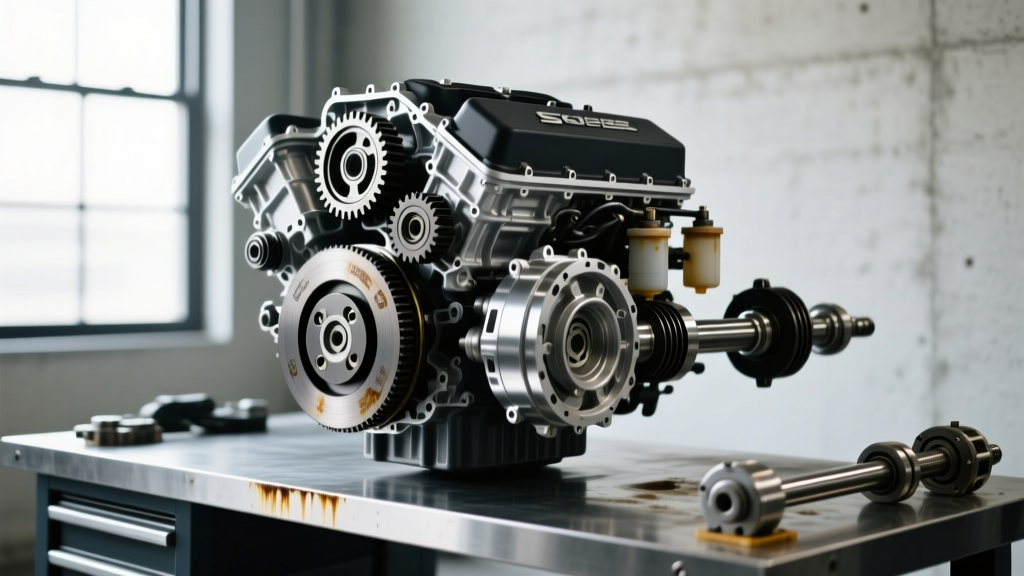
Enthusiasts and purists frequently ask, what cars still have manual transmissions as we navigate the heavily electrified and automated 2026 automotive landscape? While the industry has overwhelmingly pivoted toward dual-clutch automatics, CVTs, and single-speed EV reductions, a dedicated tier of performance vehicles continues to offer three-pedal engagement. Notable 2026 holdouts include the Porsche 911 GT3 (utilizing a refined Tremec-derived 6-speed), the Honda Civic Type R (featuring a rev-matching 6-speed manual), the Subaru WRX, and the Mazda MX-5 Miata. For these vehicles, the manual transmission remains the ultimate conduit for driver-to-chassis performance feedback.
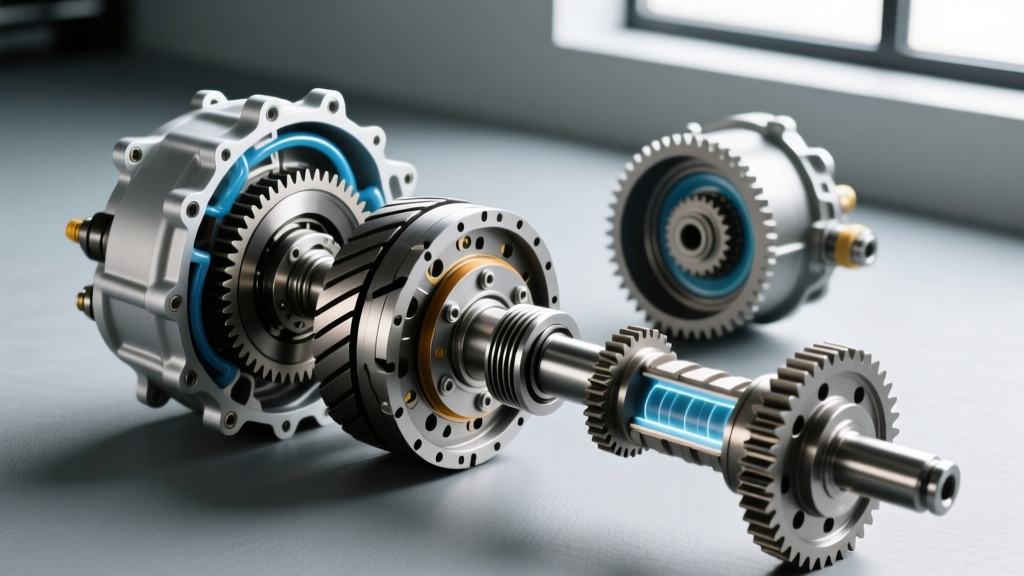
However, comparing manual vs automatic performance is not just about 0-60 mph times; it is fundamentally about how each drivetrain manages torque delivery, shift dynamics, and long-term reliability. When performance degrades, the diagnostic pathways for a manual clutch assembly versus a modern automatic torque converter are vastly different. This guide provides deep-dive symptom diagnosis and troubleshooting protocols for the most common performance-robbing faults in both transmission architectures.
Performance Fault Isolation: Manual Slip vs. Automatic Shudder
When a vehicle exhibits a loss of forward acceleration relative to engine RPM, the immediate suspicion is clutch slip in a manual or torque converter clutch (TCC) failure in an automatic. Diagnosing these requires a methodical approach to hydraulic pressures, friction materials, and electronic controls.
Manual Transmission: Diagnosing Clutch Slip & RPM Flare
In a high-performance manual like the Honda Civic Type R or a Tremec T56 Magnum-equipped track car, clutch slip manifests as an uncommanded RPM flare under wide-open throttle (WOT), typically in 3rd or 4th gear. The engine revs freely, but vehicle speed does not proportionally increase.
- Hydraulic Bypass & Delay Valves: Many modern manuals utilize a Clutch Delay Valve (CDV) to smooth engagement for novice drivers. A failing CDV or a worn internal seal in the Clutch Master Cylinder (CMC) can prevent the clutch fork from achieving full clamp load. Diagnostic Test: Measure clutch pedal free-play. Spec is typically 0.50 to 0.75 inches. If free-play is zero, the release bearing is pre-loaded against the pressure plate diaphragm, causing micro-slipping and rapid friction disc glazing.
- Flywheel Runout & Hotspotting: If the clutch assembly was recently replaced, check the dual-mass or single-mass flywheel runout. Using a dial indicator, measure the friction surface while rotating the crankshaft. Maximum allowable runout is generally 0.004 inches (0.10 mm). Exceeding this causes localized hotspotting, leading to severe shudder and slip under high-torque loads.
- Clamp Load Verification: Performance pressure plates (e.g., Sachs XTend or Exedy Stage 1) require precise torque sequencing. M8x1.25 pressure plate bolts must be torqued to 22-25 lb-ft in a crisscross pattern to prevent diaphragm spring distortion.
Automatic Transmission: Diagnosing TCC Shudder in the ZF 8HP
Conversely, modern automatics like the ubiquitous ZF 8HP (found in BMW, Audi, and Stellantis performance models) prioritize fuel economy by locking the torque converter clutch (TCC) as early as 2nd gear. When performance degrades, this results in a rhythmic, 40-60 mph shudder that mimics driving over highway rumble strips.
- Fluid Friction Modifier Depletion: The ZF 8HP relies on specific Lifeguard 8 fluid. Over 60,000 miles, the friction modifiers shear and degrade. The TCC cannot smoothly modulate slip, resulting in a P0741 (TCC Stuck Off) or P0742 code. Diagnostic Test: Use an advanced OBD-II scanner to monitor TCC slip RPM. Under steady-state cruise, slip should be less than 20 RPM. If slip oscillates between 50-150 RPM, the lock-up clutch is shuddering.
- Mechatronic Sealing Sleeve Leaks: A known failure point in the ZF 8HP70 is the mechatronic sealing sleeve (OEM Part# 24117588181). The rubber degrades, causing internal hydraulic pressure drops that prevent the TCC apply piston from fully engaging. This requires dropping the integrated plastic transmission pan/filter assembly (torque pan bolts to exactly 10 Nm in a spiral pattern upon reinstallation).
Shift Dynamics: Synchro Grind vs. Valve Body Faults
Performance is also defined by shift speed and quality. A manual transmission relies on mechanical synchronizers, while an automatic relies on electro-hydraulic solenoid mapping.
Manual Synchro Diagnostics: If a Tremec-based 6-speed exhibits a 'crunch' or grind during 2nd-to-3rd gear upshifts, the carbon or sintered-bronze synchro rings are failing to match the gear speed. This is often exacerbated by incorrect fluid. While some older manuals accept ATF, modern high-performance manuals require specialized fluids like Tremec MTL or Red Line MTL to provide the correct coefficient of friction for the synchro cones. Always verify the exact fluid capacity; for example, the T56 Magnum requires exactly 3.0 quarts.
Automatic Valve Body Diagnostics: In a GM 10L80 or ZF 8HP, harsh 1-2 or 2-3 upshifts under WOT are rarely mechanical gear failures. They are typically caused by sticky pressure control solenoids or degraded adaptive shift tables. Performing a 'Transmission Adaptation Reset' via the dealer-level scan tool forces the TCM to relearn clutch fill volumes, often curing harsh shift complaints without hardware replacement.
Diagnostic Data Matrix: Manual vs. Automatic Performance Faults
| Symptom | Transmission Type | Likely Culprit | Diagnostic Test / Spec |
|---|---|---|---|
| RPM Flare under WOT | Manual | Clutch disc glazing / Weak pressure plate | 4th Gear Load Test; Check CMC for internal bypass |
| 45-55 MPH Driveline Shudder | Automatic (ZF 8HP) | TCC Lock-up clutch wear / Fluid shear | Monitor TCC Slip RPM (Target: <20 RPM) |
| 2-3 Gear Crunch/Grind | Manual | Worn Synchro Rings / Incorrect Fluid | Verify Fluid Spec (e.g., Tremec MTL, 3.0 qts) |
| Harsh 1-2 Upshift (Auto) | Automatic (GM 10L80) | Sticky Pressure Control Solenoid / Adaptive Map | TCM Adaptation Reset; Check Line Pressure PSI |
| Vibration in Neutral (Clutch In) | Manual | Failing Throwout Bearing / Pilot Bearing | Auditory Isolation; Replace with OEM Sachs/Exedy |
2026 Repair Economics and OEM Sourcing
When troubleshooting confirms a hard part failure, the economic reality of manual vs automatic performance maintenance diverges sharply. A complete clutch replacement (OEM Sachs or Exedy kit, including flywheel, CMC, and CSC) for a 2026 Subaru WRX typically ranges from $1,200 to $1,800 in parts and labor. The mechanical simplicity allows independent specialists to perform the job with a standard engine support bar and transmission jack.
In contrast, addressing internal performance faults in a modern automatic requires specialized clean-room environments and OEM software. Replacing a failed mechatronic valve body in a ZF 8HP, or performing a full torque converter replacement to cure severe TCC shudder, frequently exceeds $3,500 to $5,500. Furthermore, these repairs require proprietary fluid fills and dealer-level coding to reset the transmission's security and adaptation modules.
For DIY mechanics and independent shops sourcing OEM components, platforms like RockAuto remain invaluable for cross-referencing OEM part numbers (such as the ZF sealing sleeve or Honda CMC assemblies) at wholesale pricing. For overarching engineering specifications and fluid standards, consulting the ZF Group aftermarket portal or the Porsche USA technical documentation ensures that performance benchmarks are met precisely.
Final Thoughts on Drivetrain Longevity
Understanding what cars still have manual transmissions is only the first step; knowing how to diagnose their unique mechanical symptoms separates the casual driver from the true automotive enthusiast. While automatics offer superior benchmark lap times via lightning-fast electro-hydraulic shifts, the manual transmission provides an unmatched, transparent mechanical link. By adhering to strict torque specifications, utilizing exact OEM fluid formulations, and performing proactive hydraulic diagnostics, owners can ensure their 2026 performance vehicles continue to deliver power to the pavement exactly as the engineers intended.