The Confusion: What is an Automatic Manual Transmission?
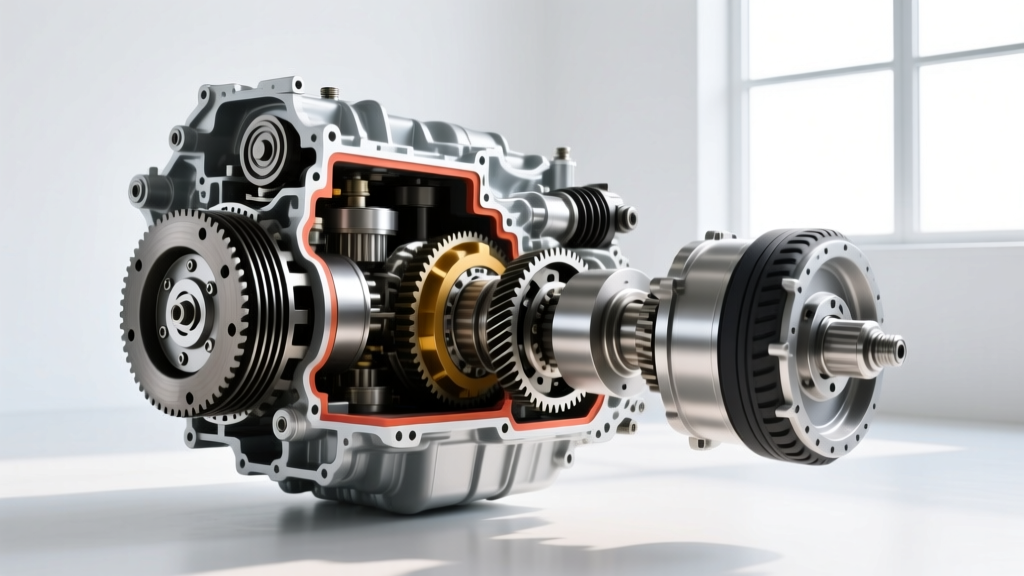
When beginners start researching performance vehicles or heavy-duty trucks, they often encounter a confusing piece of terminology: the Automated Manual Transmission (AMT). If you are currently trying to figure out how to drive an automatic manual transmission car, you are likely looking at vehicles equipped with single-clutch robotized manuals (like the early Smart ForTwo, Fiat Dualogic, or Corvette C5/C6 F50 Graziano) or heavy-duty commercial setups like the Eaton UltraShift. Unlike a traditional torque-converter automatic (e.g., the ZF 8HP) or a Dual-Clutch Transmission (DCT like the Porsche PDK), an AMT is literally a standard manual transmission with a computer-controlled hydraulic or electromechanical actuator bolted to the bell housing to operate the clutch and shift forks for you.
In 2026, as the automotive industry pushes toward complex electrified drivetrains and lightning-fast DCTs, the AMT has largely fallen out of favor in passenger cars due to its inherent drawbacks. However, understanding how to operate one—and more importantly, understanding why automotive purists actively avoid them in favor of a true three-pedal setup—is crucial for any aspiring enthusiast.
How to Drive an Automatic Manual Transmission Car (The Basics)
If you find yourself behind the wheel of an AMT-equipped vehicle, the driving experience can feel jarring if you are expecting a smooth traditional automatic. Here is a beginner-friendly breakdown of how to operate it:
- Starting Off: Put the vehicle in 'Drive' or first gear via the selector. Because there is no torque converter to multiply engine torque at idle, you must apply the throttle deliberately. If you are too gentle, the clutch engages slowly, causing excessive wear. If you are too aggressive, the car lurches forward.
- Managing the 'Shift Shock': Single-clutch AMTs must temporarily cut engine power and physically disengage the clutch to change gears. This results in a noticeable pause or 'head-nod' effect during upshifts. To smooth this out, experienced AMT drivers learn to slightly lift off the accelerator pedal right before the computer initiates a shift.
- Low-Speed Crawling: This is where AMTs struggle most. In stop-and-go traffic, the actuator constantly slips the clutch to keep the car moving at 3-5 mph. This generates immense heat and accelerates clutch wear. Many AMTs feature a 'Hill Hold' or specific 'Traffic' mode to manage this, but it is never as seamless as a traditional automatic.
The Pivot: Why Enthusiasts Choose True Manual Transmission Advantages
Once drivers experience the hesitant shifts and expensive maintenance of an AMT, they inevitably ask: Why not just learn to drive a true manual? The manual transmission advantages are vast, ranging from sheer mechanical reliability to unmatched driver engagement. Let us break down the exact engineering and financial reasons why a traditional H-pattern shifter remains the gold standard for driving enthusiasts in 2026.
1. Drivetrain Weight and Rotational Mass
Performance is heavily dictated by weight, particularly rotational and unsprung mass. An Automated Manual Transmission requires heavy hydraulic pumps, fluid accumulators, electronic Transmission Control Units (TCUs), and complex wiring harnesses. For example, the Graziano V10 AMT found in older exotic cars can weigh upwards of 210 lbs with its ancillary systems. In contrast, a robust, aftermarket-proven Tremec T56 Magnum manual transmission weighs in at a relatively svelte 135 lbs. By eliminating the hydraulic actuation hardware, you not only reduce overall vehicle weight but also lower the polar moment of inertia, allowing the car to rotate more eagerly through corners.
2. Long-Term Reliability and Repair Costs
The most significant manual transmission advantage is long-term financial predictability. AMTs are notorious for catastrophic, wallet-draining failures. The hydraulic actuators and robotic shift modules (such as the infamous SAM module in older Smart cars or the Selespeed pumps in Alfa Romeos) operate under immense pressure—often exceeding 1,500 PSI. When the internal seals blow or the electric pump burns out, the car is immobilized.
Conversely, a true manual transmission is a purely mechanical device. Wear items are limited to the clutch disc, pressure plate, throw-out bearing, and synchronizer rings. A high-quality Exedy Stage 1 clutch kit typically costs between $300 and $600, and an independent shop can perform a swap in a single day. Rebuilding a manual gearbox with new synchros and bearings usually maxes out at $2,500. Compare this to replacing a failed AMT actuator or TCU, which frequently exceeds $6,000 to $10,000 due to proprietary software coding and dealer-only parts.
AMT vs. True Manual: Cost & Spec Comparison
| Feature | True Manual (e.g., Tremec T56 Magnum) | Automated Manual (e.g., Graziano / F50) |
|---|---|---|
| Clutch Actuation | Driver's left foot (Hydraulic master/slave) | Computer-controlled electro-hydraulic pump |
| Fluid Capacity & Type | 3.9 Quarts (Tremec HPF or Dexron III) | Varies (Often specialized hydraulic fluids like Tutela CS Speed) |
| Torque Capacity | 700 lb-ft (Standard Magnum) | 450 - 600 lb-ft (Depending on application) |
| Common Failure Point | Clutch disc wear, synchro crunching | Hydraulic accumulator loss, pump burnout, TCU solder failure |
| Average Major Repair Cost | $800 - $2,500 | $4,500 - $12,000+ |
3. Total Vehicular Control and Rev-Matching
No computer algorithm can perfectly replicate the human brain's ability to read the chassis. When you learn to drive a true manual, you unlock the ability to perform advanced driving techniques that AMTs simply cannot execute safely or smoothly. Rev-matching and **heel-toe downshifting** allow the driver to manually blip the throttle to match engine RPM to wheel speed during aggressive braking zones. This stabilizes the chassis, prevents drive-wheel lockup, and reduces wear on the transmission's synchronizers.
Furthermore, a manual transmission allows for clutch-kick oversteer or slipping the clutch to pull a vehicle out of deep snow or mud—situations where an AMT's computer will detect 'slippage,' assume a fault, and aggressively cut engine power or refuse to engage the gear to protect itself. As Car and Driver frequently notes in their enthusiast reviews, the analog connection of a mechanical clutch provides a layer of feedback through the pedal that no electronic actuator can simulate.
The 2026 Market Context: The Manual as a Premium Experience
In 2026, the automotive landscape has shifted dramatically. With the proliferation of heavy EV platforms and ultra-complex 10-speed automatics, the manual transmission has transitioned from a budget 'base model' necessity to a premium, enthusiast-focused option. Automakers like Porsche, Honda, and Toyota now reserve their most engaging, track-focused trims exclusively for manual transmissions. According to Hagerty's valuation data, modern sports cars equipped with manual transmissions consistently command a 15% to 30% premium on the collector and used markets over their automatic or DCT counterparts.
While knowing how to drive an automatic manual transmission car might be a neat party trick or a necessity for operating specific commercial fleet vehicles, it is a technological dead-end for the passenger car enthusiast. The robotized manual was a bridge technology—a compromise born in an era before dual-clutch systems were affordable and before modern torque-converter automatics could shift in under 100 milliseconds.
Final Verdict: Skip the Robot, Row Your Own Gears
If you are currently cross-shopping a vehicle with an AMT against a traditional manual, the choice should be clear. The manual transmission advantages are undeniable: superior mechanical simplicity, drastically lower maintenance costs, reduced drivetrain weight, and an unfiltered connection to the machine. Learning to operate a clutch pedal takes a few hours of practice in an empty parking lot. The reward is a lifetime of driving engagement, total control over your vehicle's power delivery, and the satisfaction of mastering one of the last truly analog skills left in the modern automotive world. Skip the actuators, grab a heavy shift knob, and row your own gears.