The Enduring Appeal of the Manual Transmission
As we navigate the 2026 automotive landscape, the manual transmission has largely been relegated to niche sports cars, dedicated off-roaders, and entry-level economy vehicles. Yet, the enthusiast community remains as passionate as ever. When researching what cars are still made with manual transmission options today, you will find that iconic nameplates like the Porsche 911, Subaru WRX, Honda Civic Si, and Ford Bronco continue to offer three-pedal setups. According to automotive analysts at Car and Driver, while the overall market share of manuals hovers below 2%, the cultural and mechanical significance of the manual gearbox remains monumental.
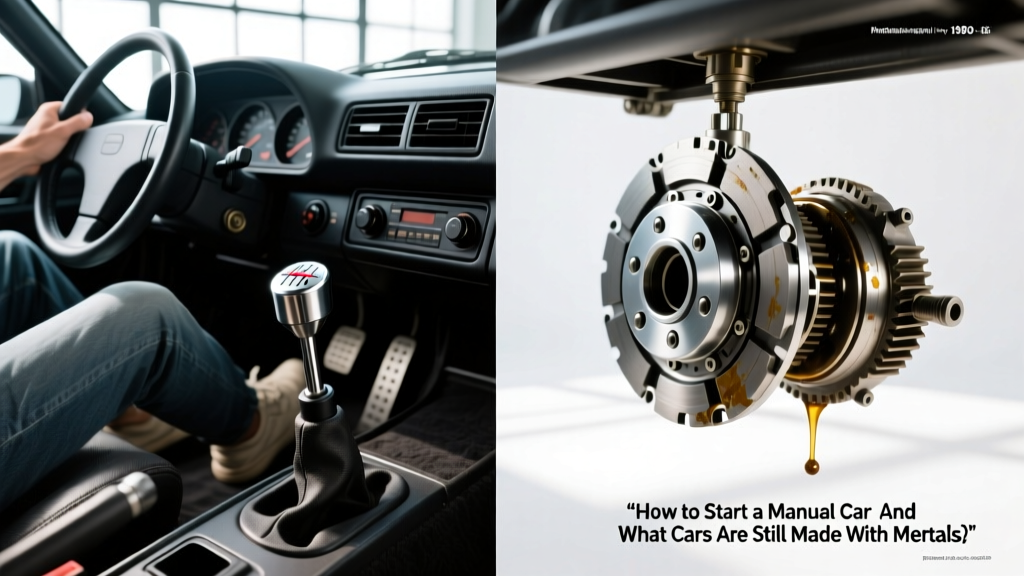
Whether you have just purchased a low-mileage enthusiast classic or are taking delivery of a brand-new 2026 manual-equipped sports car, mastering the starting sequence is your first hurdle. Unlike an automatic, where you simply press the brake and push a button, a manual transmission requires a synchronized dance between your left foot, your right hand, and the vehicle's hydraulic and electrical safety systems.
Understanding the Clutch Interlock System
Before turning the key or pressing the ignition button, it is vital to understand why a manual car requires specific inputs to start. Modern manual vehicles are equipped with a Clutch Pedal Position (CPP) switch, commonly known as a clutch interlock switch. This safety device prevents the starter motor from engaging unless the clutch pedal is fully depressed.
This system serves two critical purposes:
- Safety: It prevents the car from lurching forward or backward if the transmission is accidentally left in gear.
- Mechanical Preservation: Depressing the clutch disconnects the engine from the transmission, relieving the starter motor from having to overcome the parasitic drag of the gearbox's internal shafts and gear oil, which is especially thick in cold weather.
Step-by-Step: How to Start a Manual Transmission Car
Follow this precise sequence to start your manual vehicle safely and smoothly, minimizing wear on the starter ring gear and synchros.
- Verify the Parking Brake: Before touching the pedals, ensure the mechanical handbrake or electronic parking brake is fully engaged. This is your primary safeguard against rolling.
- Confirm Neutral: Grab the gear shifter and wiggle it laterally. If it moves freely side-to-side across the center gate, the transmission is in neutral. If it feels locked in a specific plane, the car is in gear.
- Depress the Clutch Pedal: Using your left foot, press the clutch pedal all the way to the floor mat. You must push past the point of resistance to fully actuate the CPP switch located at the top of the pedal travel.
- Depress the Brake Pedal (Optional but Recommended):strong> Press the brake with your right foot. On push-button start vehicles manufactured after 2018, the brake pedal must often be depressed alongside the clutch to satisfy the immobilizer and start-stop logic.
- Engage the Starter: Turn the ignition key to the 'Start' position or press the push-button ignition. Hold it only until the engine catches (usually 1 to 2 seconds). Releasing the key too early causes a starter grind; holding it too long damages the starter Bendix gear.
- Modulate the Clutch: Once the engine is idling smoothly, slowly release the clutch pedal only if you have verified the car is in neutral. If you plan to drive immediately, keep the clutch depressed and shift into first gear.
Diagnostic Table: When the Starter Won't Engage
If you have pressed the clutch to the floor and the engine does not crank, do not immediately assume the starter motor is dead. Use this diagnostic framework to isolate the failure point.
| Symptom | Probable Cause | Diagnostic Test | Estimated Fix / Cost |
|---|---|---|---|
| No click, no crank, dash lights stay bright | Failed Clutch Interlock Switch (CPP) | Use a multimeter to test for continuity across the switch terminals while pressing the pedal. | Replace switch (e.g., Standard Motor Products SLS-39). $15 - $45. |
| Single loud click, dash lights dim slightly | Weak Battery or Poor Ground | Load test battery; check voltage drop across engine-to-chassis ground strap. | Charge/Replace Battery or clean ground terminals. $120 - $250. |
| Rapid clicking sound, engine doesn't turn | Insufficient Cold Cranking Amps (CCA) | Measure battery voltage during cranking; if it drops below 9.6V, the battery is failing. | Replace AGM or Lead-Acid Battery. $150 - $300. |
| Starter spins (whirring) but engine doesn't turn | Failed Starter Bendix / Broken Ring Gear | Remove starter and bench test; inspect flywheel/flexplate teeth through inspection cover. | Replace Starter Motor or Flywheel. $250 - $800+. |
Advanced Wrenching: Clutch Pedal Free Play and Hydraulics
To ensure your clutch interlock switch functions properly and your transmission shifts smoothly, the hydraulic clutch system must be maintained to exact specifications. Many modern manual cars utilize a concentric slave cylinder (CSC) or an external hydraulic slave paired with a master cylinder mounted on the firewall.
Measuring Pedal Free Play
Clutch pedal free play is the distance the pedal travels before you feel the resistance of the clutch master cylinder pushrod engaging. If there is zero free play, the clutch may slip under heavy load because the release bearing is constantly applying pressure to the diaphragm spring. If there is too much free play, the CPP switch may not register full depression, and the transmission will grind when shifting into reverse or first.
Expert Spec: For most modern hydraulic clutch systems (such as those found in the Mazda MX-5 Miata or Subaru BRZ), the specified pedal free play at the friction pad is between 0.4 and 0.6 inches (10mm to 15mm). Measure this with a steel ruler from the pedal pad to the steering column shroud.
Adjusting the Master Cylinder Pushrod
If your free play is out of spec, you must adjust the pushrod connecting the clutch pedal to the master cylinder. 1. Locate the pushrod under the dash. 2. Loosen the locknut (typically a 12mm or 14mm flare nut wrench is required to avoid rounding the soft brass/plastic fittings). 3. Thread the pushrod in or out to achieve the 10-15mm free play. 4. Tighten the locknut to 8-10 Nm (6-7 lb-ft). Over-torquing can strip the threads or crack the pedal assembly.
Hydraulic Fluid and Bleeding Specifications
The clutch master cylinder usually shares a reservoir with the brake system or has a dedicated small tank. Always use the fluid specified on the reservoir cap—typically DOT 4 or DOT 5.1 (e.g., Bosch ESI6 or Castrol SRF). Never use DOT 5 silicone fluid, as it will destroy the EPDM rubber seals inside the slave cylinder.
When bleeding the clutch hydraulic system to remove air that causes a 'spongy' pedal and starting-interlock issues, the master cylinder mounting nuts on the firewall should be torqued to 12-15 Nm (9-11 lb-ft). If you are replacing the external slave cylinder, the banjo bolt for the hydraulic line requires a new crush washer and a torque spec of 25-30 Nm (18-22 lb-ft).
Mastering the Machine
Starting a manual transmission car is a tactile experience that connects you directly to the machine's mechanical reality. By understanding the electrical interlocks, maintaining proper hydraulic pedal free play, and following a disciplined starting sequence, you ensure the longevity of your starter motor, flywheel, and synchros. As you explore the dwindling but incredible list of what cars are still made with manual transmission options in 2026, remember that the true joy of the three-pedal setup begins the moment you successfully fire up the engine and slot the shifter into first gear. For more in-depth driving techniques, the experts at Hagerty Media offer excellent tutorials on rev-matching and heel-toe downshifting once you are on the road.