The Drivetrain Blind Spot: Heavy-Duty Front Axle Neglect
As we navigate the 2026 freight and heavy-haul landscape, drivetrain maintenance has become a highly data-driven endeavor. Yet, a glaring blind spot remains in many independent and fleet maintenance schedules. When a drivetrain vibration, binding sensation, or gear whine arises, it is remarkably common for owner-operators and fleet mechanics to immediately pull up a Mack rear differential diagram to trace the power flow through the S462 or S400 series tandem axles. The rear axles are the workhorses of the drivetrain, but the front drive axle—often a robust Mack FX1411W or a Dana Spicer SPL110—operates in a significantly more hostile environment.
Neglecting front differential fluid and service while obsessing over the rear axle is a costly paradigm. The front differential endures extreme articulation angles, water fording, road salt intrusion, and the dynamic stresses of steering. Failing to service this component turns a routine maintenance task into a catastrophic front-end failure, easily transforming a $350 fluid swap into a $7,500 axle replacement and days of grounded-vehicle downtime.
Why the Front Differential is the Forgotten Sibling
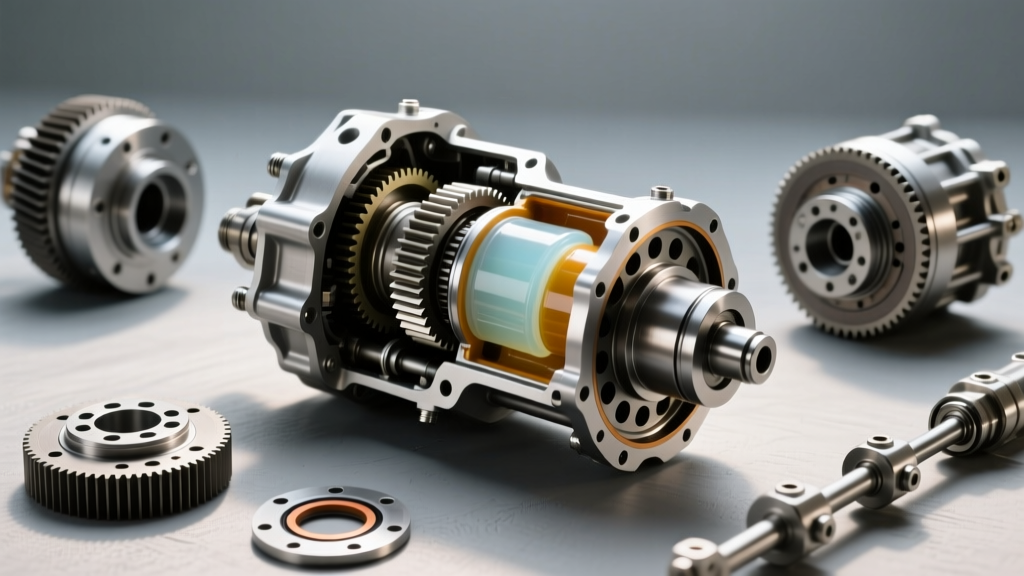
When technicians study a Mack rear differential diagram, they are usually diagnosing issues related to the inter-axle differential (the "power divider"), which is unique to tandem rear setups and prone to specific failure modes if the diff lock is misused. The front axle, by contrast, is a single-reduction or hub-reduction unit that lacks a power divider. Because it is mechanically simpler, it is often wrongly assumed to be "maintenance-free" between major overhauls.
This assumption is fundamentally flawed. The front differential housing acts as a sump for the ring and pinion, but it also lubricates the inner axle shafts and the steering knuckle kingpin bearings (in certain integrated designs). If the 75W-90 or 80W-140 gear oil degrades, the resulting metal-on-metal friction generates microscopic ferrous shavings. These shavings circulate through the housing, embedding themselves into the bronze bushings and roller bearings of the steering knuckles, leading to premature kingpin failure and catastrophic tire wear.
2026 Front Differential Fluid Service: Complete Cost Breakdown
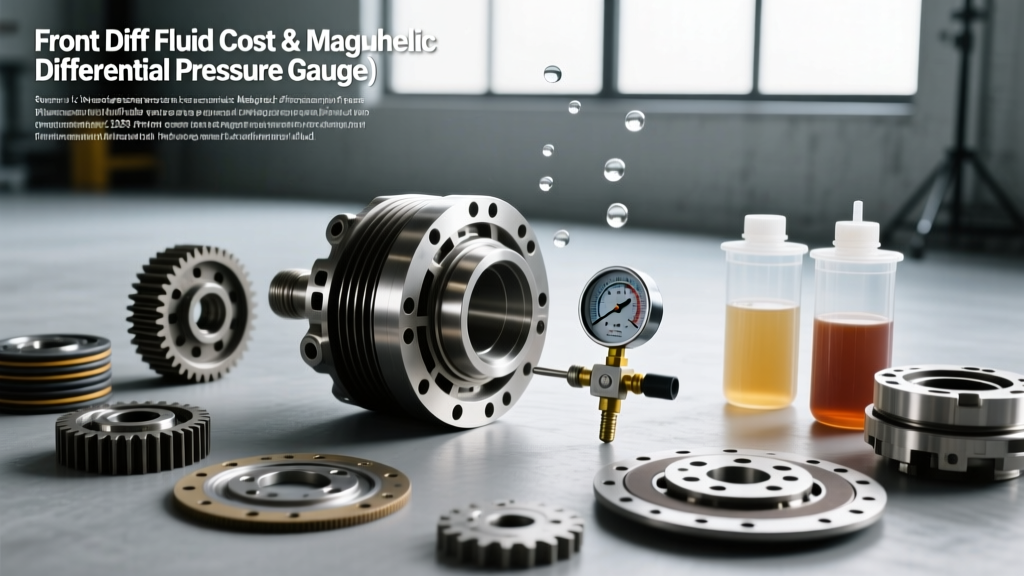
Understanding the financial impact of front axle maintenance requires looking at the actual costs of parts, labor, and fluid in the current market. Below is a comprehensive cost analysis for a standard Class 8 heavy-duty front drive axle (e.g., 16,000 to 20,000 lb capacity) fluid and filter service.
| Service Provider Tier | Fluid & Parts Cost | Labor Cost (Est.) | Total Estimated Cost | Warranty / Guarantee |
|---|---|---|---|---|
| DIY / Owner-Operator | $140 - $180 | $0 (2.5 Hours) | $140 - $180 | None |
| Independent Heavy-Duty Shop | $160 - $210 | $185 - $250 | $345 - $460 | 90-Day / 10k Miles |
| OEM Dealership (Mack/Volvo) | $220 - $280 | $275 - $350 | $495 - $630 | 1-Year / Unlimited Miles |
Analyzing the Numbers
The variance in parts cost primarily stems from the choice of lubricant and the inclusion of a magnetic drain plug upgrade or axle breather cap replacement. In 2026, synthetic API GL-5 / MT-1 gear oils like Mobil Delvac 1 Synthetic Gear Oil 75W-90 or Shell Spirax S6 CXME 75W-90 are the industry standard. A typical front axle requires between 12 and 16 quarts (3 to 4 gallons). At roughly $35 to $45 per gallon for premium synthetics, the fluid alone represents a significant material cost.
Labor rates at heavy-duty truck dealerships now frequently exceed $175 per hour. A proper front diff service—which includes draining, inspecting the magnetic plug for gear spalling, flushing with a lightweight solvent if contaminated, and refilling to the exact level—takes approximately 1.5 to 2.0 hours of billed shop time.
Fluid Specifications, Capacities, and Part Numbers
Using the correct fluid is non-negotiable. The extreme pressure (EP) additives required to protect the hypoid ring and pinion gears will quickly deplete if a standard GL-4 manual transmission fluid is mistakenly used. Always verify the axle tag, but general specifications for modern heavy-duty front axles include:
- Viscosity Grade: SAE 75W-90 (Preferred for fuel economy and cold-weather flow) or SAE 80W-140 (For severe heavy-haul, high-ambient temperature operations).
- Performance Standard: API GL-5 and MIL-PRF-2105E.
- Standard Capacity: 14.5 Quarts (13.7 Liters) for typical Dana Spicer SPL110 / Mack FX1411W axles.
- Differential Cover Gasket: Mack Part # 25174288 or Dana Spicer Kit # 34963-10 (Cork/Rubber composite).
- Axle Breather Valve: Mack Part # 25174299 (Crucial to prevent pressure buildup and seal blowouts).
For authoritative lubrication charts and capacity matrices, fleet managers should regularly consult the Dana Lubrication Recommendations portal or the Mack Trucks Parts and Service documentation hub.
Precision Service: Torque Specs and Procedure
A front differential service is not simply "drain and fill." The geometry of the front axle means the fill plug is often located behind the steering linkage or shock absorbers, requiring specialized fluid transfer pumps and flexible hoses. Furthermore, over-torquing the fill and drain plugs can crack the cast-iron or nodular-iron differential housing, leading to slow weeping leaks that eventually result in dry-axle seizure.
Critical Torque Specifications
- 3/4" NPT Drain / Fill Plugs: 45 - 55 lb-ft (Do not exceed; use a calibrated torque wrench, not an impact gun).
- Metric Flange Bolts (if equipped): 35 - 40 lb-ft.
- Differential Cover Bolts (10-bolt pattern): 25 - 30 lb-ft, tightened in a crisscross star pattern to ensure even gasket compression.
Expert Insight: Always remove the FILL plug before removing the DRAIN plug. If the fill plug is seized or stripped, you do not want to discover this after you have already drained 14 quarts of gear oil from a truck sitting in a muddy yard.
The True Cost of Deferred Maintenance
Why do some fleets risk skipping this service? The answer is short-term cash flow preservation. However, industry data highlighted by publications like FleetOwner Magazine consistently shows that deferred drivetrain maintenance is a leading cause of unscheduled roadside breakdowns.
If the front differential fluid is allowed to degrade, the hypoid gear pattern shifts as bearing tolerances expand due to heat and wear. The ring gear begins to chatter against the pinion. Once the metallurgy starts spalling, no amount of fresh 75W-90 will save the axle. A complete front differential rebuild—including a new matched ring and pinion set, master bearing kit, and axle shaft seals—routinely costs between $5,500 and $8,200 in parts and specialized labor.
When you factor in the cost of a heavy-duty tow ($800 - $1,500) and the lost revenue of a grounded Class 8 truck (averaging $1,000+ per day in missed freight contracts), the ROI of a $350 bi-annual front differential fluid service becomes mathematically undeniable.
Final Verdict: Protecting Your Drivetrain Investment
While studying a Mack rear differential diagram is essential for diagnosing tandem axle power-divider issues, it should never distract from the equally critical front drive axle. In 2026, with the rising costs of raw materials and heavy-duty replacement parts, proactive front differential fluid service is one of the highest-ROI maintenance procedures a fleet or owner-operator can perform. Stick to premium API GL-5 synthetics, adhere strictly to torque specifications, and replace your axle breathers at every fluid change to ensure your front axle survives the harsh realities of the modern road.