Bridging the Gap: Automotive Reviews vs. Powersports Reality
If you have been browsing automotive forums for a 'LuK clutch review,' you have likely found endless discussions about RepSets for Volkswagen, Ford, and Chevrolet. LuK, a premier brand under the Schaeffler Group, is an absolute titan in automotive dry clutches, dual-mass flywheels, and clutch release bearings. But what happens when your clutch problems are on two or four off-road wheels?
While Schaeffler does manufacture OEM CVT components and dry clutches for premium motorcycles (such as BMW Motorrad), the vast majority of ATVs, UTVs, and dirt bikes rely on entirely different architectures: wet multi-plate and dry CVT systems. Applying automotive diagnostic logic to a Polaris RZR or a Honda CRF450R will leave you stranded on the trail. This beginner-friendly explainer bridges the gap, teaching you how to accurately diagnose slipping, chatter, and dragging on your powersports machine using professional-grade metrics and real-world troubleshooting frameworks.
The Powersports Clutch Landscape
Before grabbing your wrenches, you must identify which clutch system your machine uses. Misdiagnosis often stems from treating all clutches as if they operate like a standard manual car.
- Wet Multi-Plate Clutches: Found in 95% of motorcycles and utility/sport ATVs (e.g., Yamaha Grizzly, Honda Rancher, Kawasaki KX). These feature alternating friction and steel plates bathed in engine oil to manage extreme heat.
- Dry CVT (Continuously Variable Transmission):strong> Found in most side-by-sides and snowmobiles (e.g., Polaris RZR, Can-Am Maverick). These use a primary drive clutch, a secondary driven clutch, and a Kevlar-reinforced drive belt.
- Dry Multi-Plate Clutches: Rare in off-road, but found in specific street/enduro bikes like the BMW R1250GS or Ducati Monster. These operate similarly to automotive clutches but in a much smaller, multi-plate footprint.
Symptom 1: High-RPM Slipping (The 'No-Go' Problem)
Slipping occurs when the engine RPMs climb, but vehicle speed does not increase proportionally. This is the most common complaint among beginners and indicates a failure in friction retention.
Diagnosing Wet Multi-Plate Slipping
If your ATV or motorcycle is slipping, the friction material has likely worn past its service limit, or the oil has lost its friction-modifying properties. To diagnose this, you must remove the clutch cover and measure the friction plates using a micrometer.
- OEM Thickness: Typically 3.00 mm.
- Service Limit: Usually 2.60 mm to 2.80 mm (check your specific service manual).
- The Oil Factor: Did you recently change the oil using standard automotive 10W-40? Car oils contain friction modifiers designed to improve fuel economy. These modifiers will coat your clutch plates and cause immediate slippage. Always use oil certified to the JASO MA or MA2 standard, which guarantees the absence of friction modifiers.
Pro Tip: If your friction plates are within spec but the bike still slips, inspect the steel plates for a 'blued' or rainbow tint. This indicates overheating. Once steel plates lose their temper, they must be replaced alongside the friction plates.
Diagnosing CVT Slipping (UTVs and Side-by-Sides)
On a Polaris or Can-Am, slippage is rarely a 'clutch' issue in the traditional sense; it is almost always a drive belt issue. As the belt wears, it rides lower in the primary sheave, altering the gear ratio and causing a lag in acceleration.
- Measurement: Use calipers to measure the belt width. A new OEM belt for a Polaris RZR 1000 measures roughly 31.5 mm. The service limit is typically 29.8 mm.
- Glazing: Inspect the sides of the belt and the inside of the aluminum sheaves. If the belt looks shiny and smells burnt, it is glazed. Clean the sheaves with Scotch-Brite and isopropyl alcohol, and replace the belt ($120 - $180).
Symptom 2: Clutch Chatter and Judder Under Load
Chatter feels like a violent vibration or pulsing through the chassis when you slowly release the clutch lever or when the CVT engages at low speeds. This is caused by uneven friction surfaces or inadequate clamping force.
Warped Steel Plates and Weak Springs
In wet clutches, chatter is almost always caused by warped steel separator plates. To check this, place a steel plate on a piece of flat glass and attempt to slide a 0.10 mm feeler gauge underneath it. If the gauge slides through, the plate is warped and must be discarded.
Additionally, clutch springs fatigue over time due to extreme heat cycles. When springs sag, they fail to apply adequate pressure to the clutch pack. Below is a diagnostic chart for common clutch spring measurements:
| Spring Type | OEM Free Length | Service Limit | Estimated Replacement Cost |
|---|---|---|---|
| Standard Coil (Honda CRF / TRX) | 41.2 mm | 39.5 mm | $35 - $50 |
| Heavy Duty (Barnett / EBC) | 43.0 mm | 40.5 mm | $65 - $90 |
| CVT Secondary Torsion (Polaris) | N/A (Pretensioned) | Inspect for metal fatigue/sag | $80 - $120 |
Symptom 3: Clutch Dragging and False Neutrals
Dragging occurs when the clutch fails to fully disengage, even when the lever is pulled completely to the handlebar. Symptoms include the motorcycle lurching forward when shifted into first gear, difficulty finding neutral, and the rear wheel spinning while the bike is on a stand with the clutch pulled in.
The Notched Clutch Basket
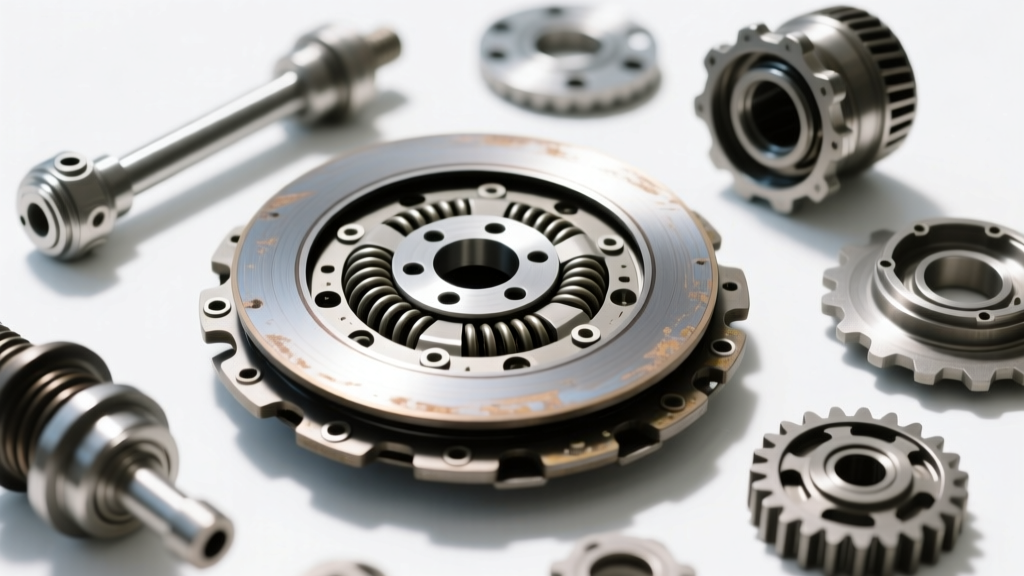
The most common cause of dragging in high-mileage ATVs and motorcycles is a notched inner hub or outer clutch basket. The tabs on the friction and steel plates slam against the soft aluminum basket during aggressive shifts, eventually carving deep grooves (notches) into the metal. When you pull the clutch lever, the plates get stuck in these grooves and refuse to separate.
- The Fix: For minor notching, you can carefully dress the aluminum tabs with a flat file to allow the plates to slide freely. For deep grooves, the basket must be replaced. An aftermarket billet aluminum basket (like Hinson or Wiseco) costs between $250 and $400 but offers a lifetime fix to the notching problem.
Incorrect Cable or Hydraulic Adjustment
Before tearing the engine apart, check your free play. A mechanical clutch cable requires 10 mm to 15 mm of free play at the lever. If the cable is too tight, the release bearing constantly rides against the pressure plate, preventing full engagement and causing premature wear. For hydraulic clutches (common on modern KTM and Husqvarna dirt bikes), ensure the master cylinder pushrod has a minimum of 0.5 mm clearance to allow the fluid to return to the reservoir.
Essential Tools and Torque Specs for Beginners
Diagnosing and replacing powersports clutches requires specific tools. Attempting to remove a clutch center nut with an impact wrench without securing the hub will often strip the transmission output shaft or damage the internal gears.
- Universal Clutch Holder: A tool like the Motion Pro Clutch Holder ($45) pins into the friction plates to hold the hub stationary while you break the center nut loose.
- Primary Clutch Puller (CVT): Polaris primary clutches require a specific puller. The standard thread for most modern Polaris RZR and Ranger models is M14 x 1.5. Never use a standard automotive bolt to pull a CVT clutch; you will strip the crankshaft threads, resulting in a $1,500+ engine teardown.
- Torque Wrench: Precision is mandatory. For example, the Honda CRF450R clutch center nut requires exactly 59 lb-ft (80 Nm), while the 6mm clutch spring bolts require only 10 Nm (7.2 lb-ft). Over-torquing the spring bolts will snap the heads off inside the pressure plate.
When to Replace: OEM vs. Aftermarket Upgrades
When your diagnostics confirm that replacement is necessary, you will face a choice between OEM and aftermarket kits. OEM kits (Honda, Yamaha, Polaris) offer predictable, smooth engagement and are perfect for trail riding and utility work. However, if you are running high horsepower, larger tires, or racing, OEM plates will slip under the added load.
Aftermarket manufacturers like EBC Brakes and Barnett offer specialized friction materials. EBC's CK series uses Kevlar-based friction material that handles extreme heat without fading, while Barnett's Carbon Kevlar kits are the gold standard for high-horsepower sport quads and drag racing applications. Expect to pay between $115 and $185 for a complete friction plate kit, and an additional $60 to $90 for heavy-duty springs.
Final Thoughts on Powersports Diagnostics
While a standard automotive LuK clutch review won't teach you how to rebuild a Yamaha YFZ450R wet clutch or tune a Polaris RZR CVT, the fundamental principles of friction, heat management, and mechanical tolerance remain exactly the same. By using a micrometer to measure plate thickness, verifying JASO MA2 oil compliance, and checking clutch basket runout, you can accurately diagnose any powersports clutch issue. Arm yourself with the right pullers, adhere strictly to factory torque specs, and your machine will shift smoothly for thousands of miles to come.